

11 Discontinued Light Beers Your Grandparents Probably Remember

Light beers often get a bad rap, dismissed as weak and watery, but if you're looking for something crisp and refreshing on a summer's day, you couldn't go far wrong. Most people have their brand of choice, but there are some discontinued light beers your grandparents probably remember but are no longer on the market. This can be disappointing for anyone who remembers them fondly. We've tried and ranked some of the most popular light beers, but nothing compares to an old favorite.
These discontinued light beers went away for a number of reasons. In some cases, there were changes with the brewery and the whole brand or line went away. Other times, they fell out of favor for one reason or another and disappeared while the overarching brand kept going strong. Some seem to be almost forgotten, while others still have a following of fans that miss them.
We're about to step back into beer history, remembering 11 discontinued light beers that haven't been on liquor store shelves in years. In some cases, we're not too sorry to see the back of them, but others are still missed and times drinking them on a hot day are recalled fondly by their fans. Whether you have a favorite now defunct light lager that you want to see on this list or you're just interested in beer history, we've got all the details for you.
Bud Ice Light
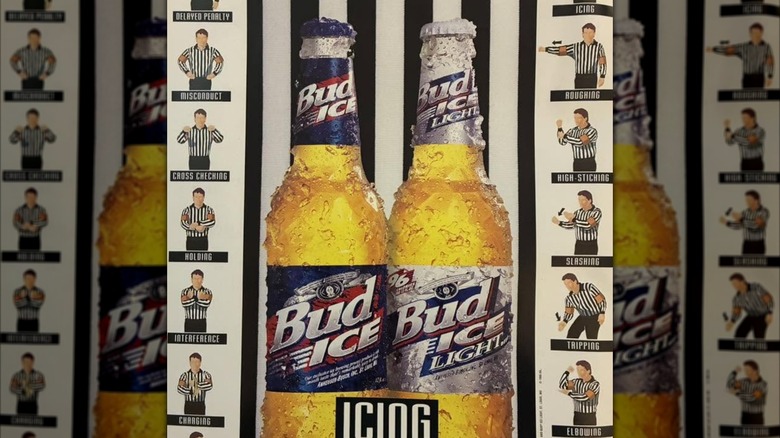
Most people are well aware of Bud Light. It was even named the most popular light beer in a Mashed survey. But, what about Bud Ice Light? This discontinued light beer is unknown to many, but it had its fans back in the day.
To understand it, you need to know what an ice beer is. There was a fad for this style of beer in the '90s, with Bud Ice and Bud Ice Light popping up in the middle of the decade. Ice beer is chilled during the brewing process until ice crystals form within it, but the beer isn't frozen solid. The crystals are then skimmed out, which leaves you with a stronger, more robust beer. Of course, by then making light versions of these beers, you're missing the point, which may have been why Bud Ice Light eventually disappeared in 2010.
Old reviews don't paint it in a particularly favorable light, with one Beer Advocate reviewer describing the taste as "mostly water" and saying that it was "really lacking any beer qualities." Perhaps the world never needed light versions of ice beers, but it got them anyway. Such is the reality of capitalism. But, we're sure that some people enjoyed Bud Ice Light in its prime. For better or for worse, many of us will never know how it tasted.
Hamm's Special Light
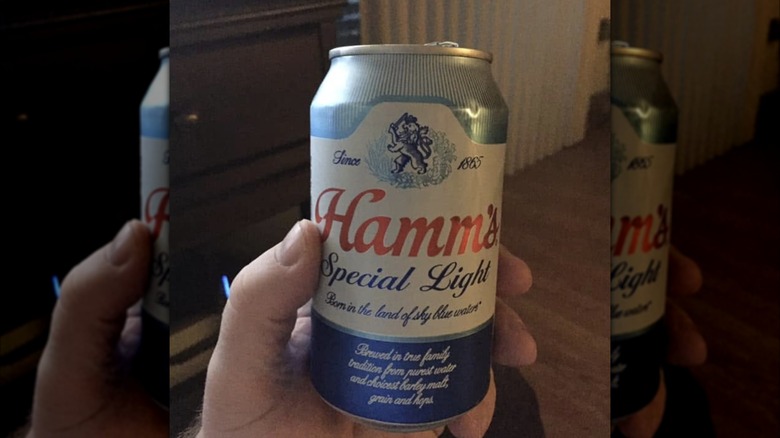
Hamm's Special Light hailed from the historic Theodore Hamm Brewing Company in Minnesota, which started producing beer in the 1860s. Over the years, however, this brewery changed hands, going on to be owned by Pabst, and then later by Molson Coors, where it became part of the Miller brand. All this may have played a role in it disappearing from shelves, since big brands like this are usually very interested in their bottom line and will cut any products that aren't performing. In 2021, it was announced that Hamm's Special Light would be one of 11 beers being axed by Molson Coors.
With a 3.8% ABV, this light lager was pretty typical for its style: crisp and refreshing without too strong a flavor. A Beer Advocate reviewer said it had "no offensive tin aftertaste like some other light beers" and noted its crisp finish and drinkability that made you "keep going back for more." Another said "This has way more flavor, though, than Miller Lite, Coors Light or Bud light."
For many people, a beer like this one retiring didn't even reach their radar, but some were disappointed. One Facebook poster describes Hamm's Special Light as their favorite ever beer and talks about keeping a stash of cans that they're slowly working through. With that classic old school branding and people who are still holding a torch for the crisp taste, it's a shame this beer is no longer around.
Aspen Edge
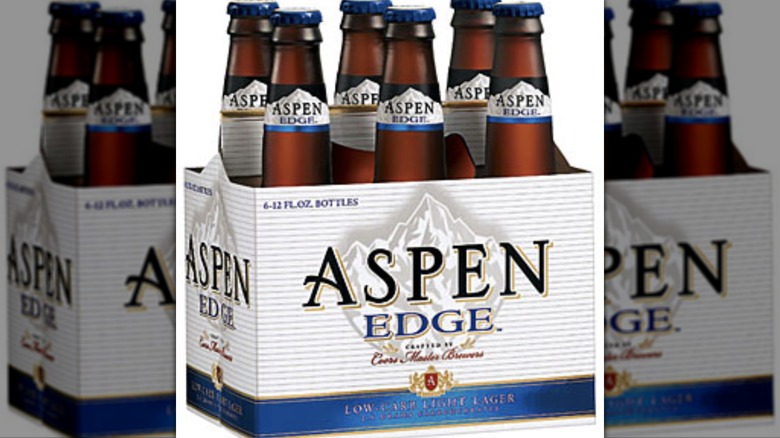
From the Molson Coors brewery came Aspen Edge. This light beer was announced in 2003 and hit stores in 2004. It was billed as a particularly low-carb beer, which makes sense, since we were deep in the Atkins Diet era back then and all carbs were considered evil. Still, it wasn't a huge success, and it disappeared back into the Rockies from whence it came in 2006.
Part of the reason for its lack of sales may have been the taste — or lack thereof. Looking at Beer Advocate reviews, people mention its lack of basically any discernible flavor again and again. According to one reviewer, it "tasted exactly like water" with just a little hint of grain, while another likens it to seltzer. Sure, this made it extremely crushable and refreshing, but at this point, you might as well save the money and actually drink water instead.
Not many people will remember Aspen Edge, as it was only around for a couple of years. Its main selling point was its low carb content, but this clearly wasn't enough to keep it going.
Miller Lite Ice
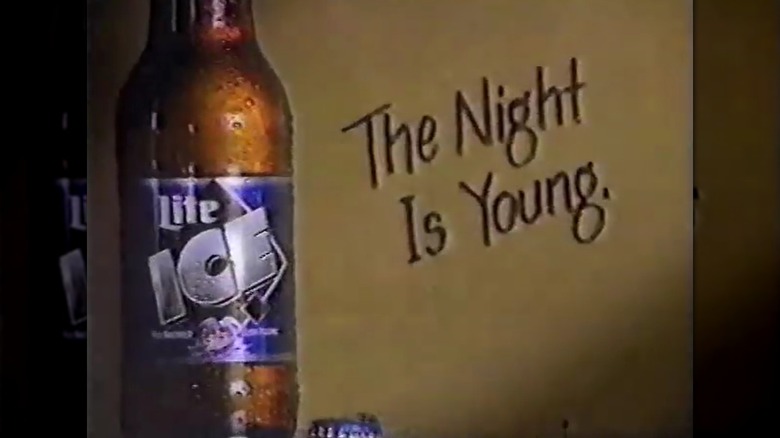
Miller Lite Ice was part of that ice beer trend we mentioned along with Bud Ice Light. It was a big deal back in the '90s, but when did you last hear about an ice beer? Probably not for a while, so it's understandable why this one disappeared. If you like Miller Lite but would prefer it stronger, this probably would have been up your alley, but now you'll never know.
One of the myths about beer you can stop believing is that you can tell the strength of a beer by how dark it is. Some folks think that dark beers are always stronger than lighter ones, but ice beers prove that wrong. They're generally stronger than other lagers, and even light ones can pack a punch. Miller Lite Ice had an ABV of 5.5%, which is significantly stronger than other light beers, which usually sit around 4% or below.
The idea of a stronger light beer might sound good, but its old reviews weren't all that promising. "This is the worst tasting beer I have ever had," said a Beer Advocate reviewer. Another simply said, "no words for this swill." So, perhaps the world isn't missing out on much with this beer no longer in it.
Southpaw Light
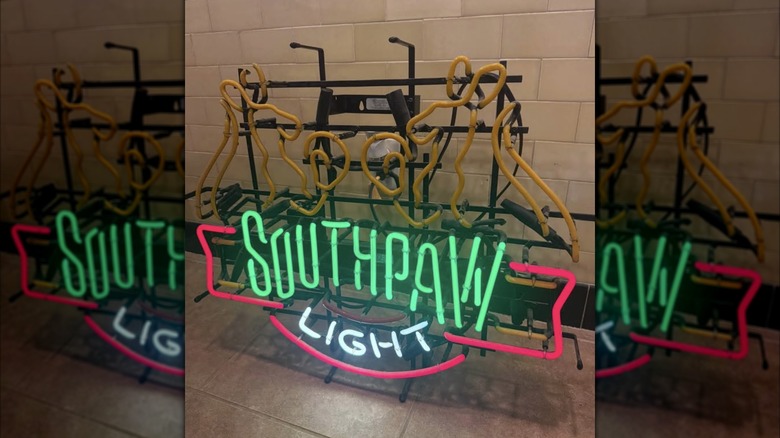
Southpaw Light came from the folks at Miller. At 5% ABV, this is fairly strong for a light beer. But, this wasn't enough to keep it in circulation. In fact, perhaps it was because of this that the line ultimately failed: It was a light beer in name, but may have lacked the crushable nature of those lower in alcohol.
Its retirement wasn't widely publicized, as this was a low-profile brand to begin with. However, in 2013, when Miller discontinued Miller Chill, its lime-flavored lager, it was noted the brand had also recently done away with Southpaw Light. So, without much fanfare, it disappeared to the great brewery in the sky.
One Beer Advocate reviewer remembers it as "a light beer that didn't taste light," while others don't exactly rave about it but don't trash it either. Maybe that's the problem. It was just ... fine. Not a memorable drink either way with not enough going for it to keep people coming back.
Pabst Blue Ribbon Light
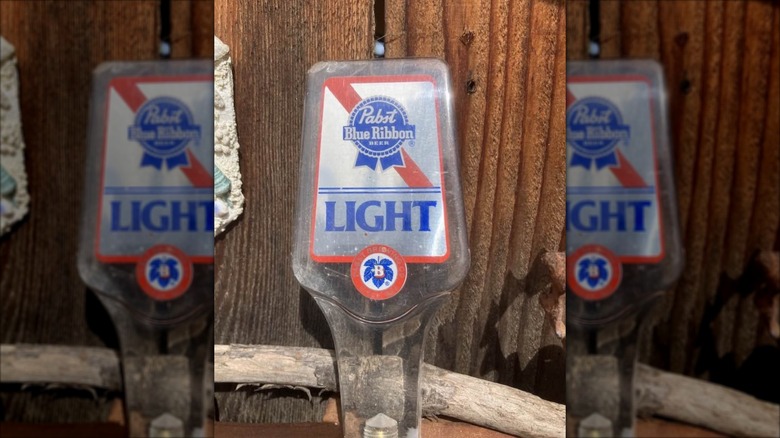
The truth of Pabst Blue Ribbon beer is that before becoming known as a hipster beer, it was on the brink of going under. So, with that in mind, it makes sense that the brand might be quick to cut any products that aren't doing as well as they'd like. This might be why Pabst Blue Ribbon Light was discontinued.
You might be thinking, wait, I had a PBR Light just the other day. But, unless you have an old stash, that isn't true. There is currently a Pabst Light on the market, but this isn't the same beer as the old Pabst Blue Ribbon Light, which is no longer on the market. Pabst Light isn't just a rebranding of this retired beer, though. The two are distinctly different.
Released in 2025, Pabst Light is made to a totally fresh recipe. The new Pabst Light is made with North American malted barley and El Dorado hops, which give it a crisp smoothness. The old PBR Light used a blend of Cluster, Galena, and Willamette hops and was higher in carbs and calories than the new version. It's great that PBR fans have a light beer option once more, but anyone who loved the original Pabst Blue Ribbon Light isn't guaranteed to feel the same way about Pabst Light.
Olympia Light
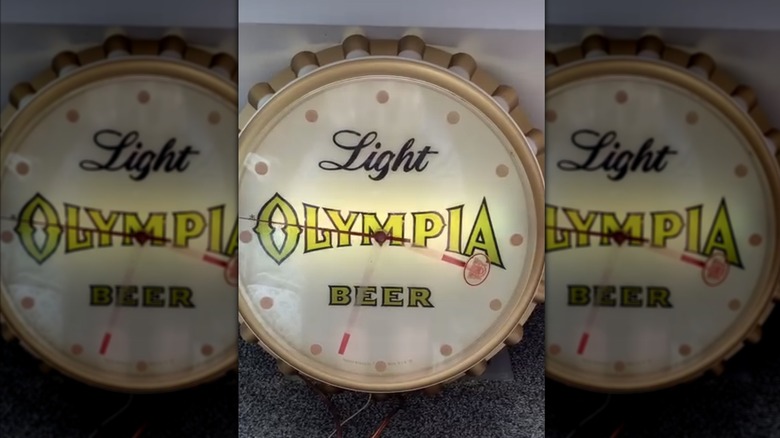
Olympia Light was the lighter counterpart to Olympia Beer, a brand hailing from the Pacific Northwest. Brewed in Washington state, it was a familiar sight across the region and beyond. Olympia Light offered a lower-calorie option, though, like all light beers, this means a lighter flavor and a thinner texture.
Olympia Beer was first brewed in 1896 and was in production until 2021, retaining a vintage, old world charm throughout the years. But, tastes change and people move on. The company was taken over by Pabst and production moved away from the PNW and into California. Ultimately, in 2021, it was announced that production of not just Olympia Light but all Olympia beers would be put on pause. And, sadly, since then there has been no sign that it's going to come back on the market.
Maybe one day we'll see Olympia Light back in stores, but for now the name lives on in Olympia Vodka and the beer is on the backburner. The goal of the company was to bring production back to Tumwater, WA, but declining sales put that on pause and what the future holds is a mystery, as ever.
La Crosse Light
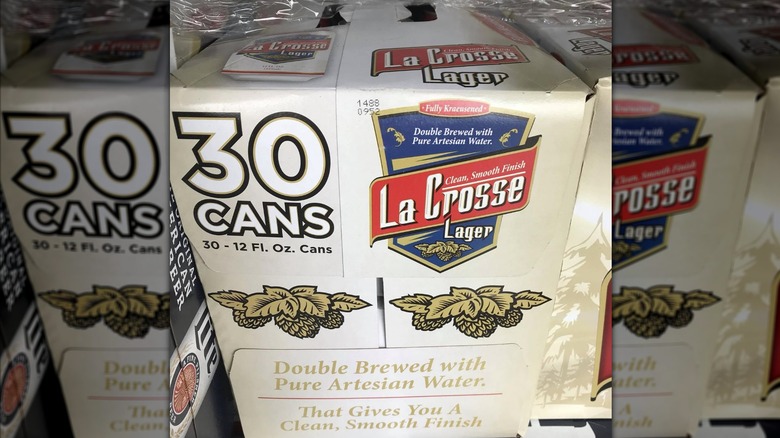
La Crosse Light came from the City Brewing Company, which dates all the way back to 1858. Its first brewery was founded by a man named Gottlieb Heileman in La Crosse, Wisconsin, which is where this beer got its name. Despite being part of a long brewing heritage with a vintage appeal, La Crosse Light is no longer available.
The 4.7% ABV is on the higher end of the spectrum for a light lager, and this means it was a little more flavorful than some of its competitors. This could be partly responsible for its demise, because people who are looking for light beer often want that barely there flavor and crushability, while people who want a more robust beer don't go for a light.
"The flavor delivers a fairly solid maltiness considering that it's a light beer, and some notes of grain are clearly noticeable," a Beer Advocate reviewer wrote. "Floral and spicy hops are present as well, and it's fairly well balanced by a firm bitterness." So, it may be that it just wasn't light enough for light beer fans.
Sam Adams Light
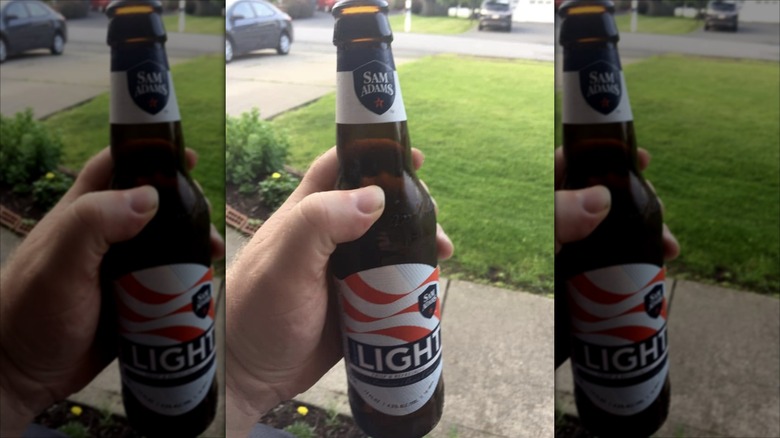
Samuel Adams' founder Jim Koch started brewing beer in the 1980s, in the kitchen, from his great great grandfather's recipe. The company was at the forefront of the craft beer revolution and, down the line, Sam Adams Light became part of the company's offerings.
At 4.2% ABV, it was a fairly typical strength for a light lager. It was brewed to have a crisp maltiness and floral notes from the hops, but its reviews were mixed. "I love the regular Sam Adams but when they converted it to a light beer, it was a total swing and miss," said a reviewer from Beer Advocate. "The iconic char taste is gone and there is nothing but sour water left," they added. Other reviewers were more keen on it, with one declaring it their number one light beer and describing it as flavorful but not too heavy.
Despite having fans, it was retired. Now, Samuel Adams makes American Light, with some former Sam Adams Light fans seeing it as a great alternative. Others think it's blander and generally has less about it than Sam Adams Light, which is bad news for anyone who liked the original just the way it was. It seems a shame that a solid light lager should be discontinued and replaced with something that doesn't taste as good, but sometimes that's just the way it goes down.
Red Light
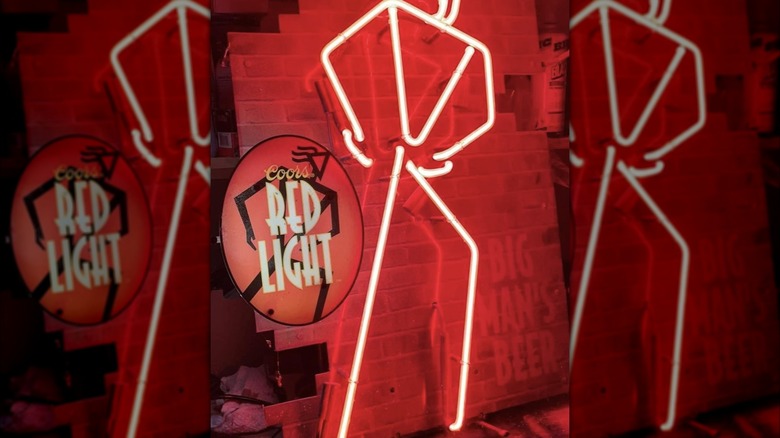
Red Light — or Coors Red Light — was only available for a limited time in the mid-1990s and is somewhat of a mystery, with limited information available about it. We've found a test printing of one of its cans from 1995, so it seems that it was in production at this time. One review on Untappd suggests it was only available in Colorado, where Coors hails from, but other reports suggest it launched nationwide.
This was an American red lager with a 4% ABV, which is fairly typical for a light beer. Ratings are mixed, with some giving it four or five stars and others one or less. Overall, its Untappd rating is 2.3 out of 5, which doesn't suggest that it was a great beer, but we appreciate an option beyond a classic pale lager. There are many different types of beer, after all, and the fact that light beers are mostly identical can get old.
Coors Red Light might be a bit of an enigma, but still has people who remember it. One Redditor wrote about it being a favorite of theirs during the '90s and being disappointed that it went out of production. After that, they gave up on lagers and moved over to ales, which may say something about the drink's complexity. It's a shame we lost this from the light beer lineup.
Meister Bräu Lite
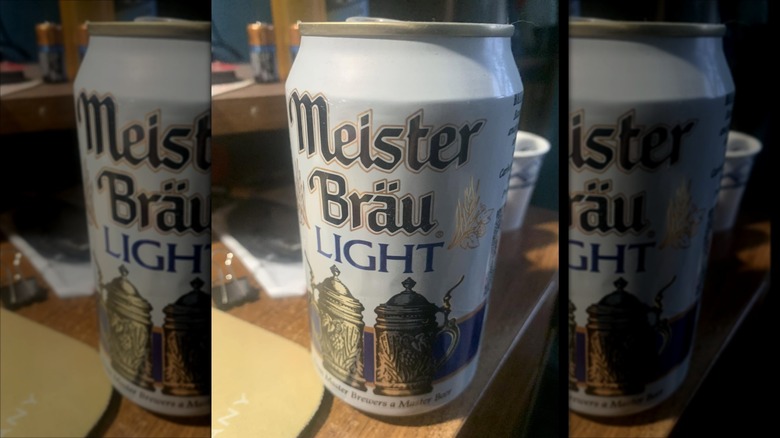
Meister Bräu was founded way back in 1891. It was originally known as the Peter Hand Brewing Company, but when it was bought by investors in the 1960s, the brewery was renamed Meister Bräu after its bestselling beer. By 1967, Meister Bräu Lite was on the market, and was later sold as Meister Bräu Light. The brand itself continued on until 2005, but Meister Bräu Lite disappeared long before that.
The brand has a pop cultural legacy, appearing in "National Lampoon's Christmas Vacation" and having the actor who played Norm from "Cheers" as its spokesperson. It also has a link to Miller Lite that most people don't know. Meister Bräu was bought by the Miller Brewing Company in 1972 and its light beer recipe was tweaked and sold under the new name Lite Beer by Miller, before later becoming Miller Lite. The reason that Miller Lite is spelled like that is that it took the spelling from Meister Bräu who had trademarked the "Lite" spelling.
So, in fact, Meister Bräu Lite never really went away, but was rather rebranded as Miller Lite and became a bestselling light beer. While you can discover all this with some deep research, it's not a widely known fact. Meister Bräu basically pioneered light beer as we know it, but didn't get the credit that it deserved.