

3 Ways Beginners Can Easily Identify Quality Gin (And What To Avoid)
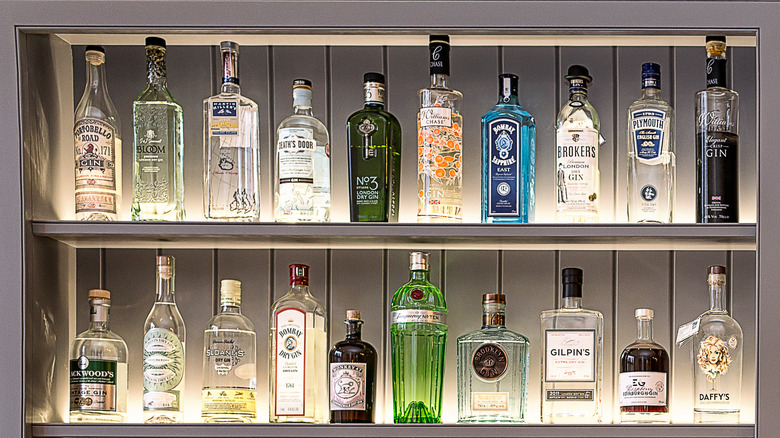
Gin bottles, with their distinctive graphic designs and timeless appeal, often seem like works of art. For many, the same could be said for the bottles' contents. But if wine is made from grapes and good whiskey is aged in barrels, what exactly goes into making gin?
Legally, gin is defined as a distilled spirit of at least 40 percent alcohol by volume (ABV) with juniper being its main flavor. In the EU, the legal minimum ABV for gin is 37.5 percent, but otherwise, juniper remains the dominant requirement. Its clean, crisp flavor makes it a versatile liquor that is used in a variety of classic cocktails, most notably, perhaps, the gin and tonic.
But what about its production processes? What other flavors can be expressed in gin? In an exclusive interview with Mashed, Rob Masters, co-founder and head distiller at The Family Jones Distillery, gives us the lowdown on what to look for in quality gin, and also what to avoid. Never again make the same mistakes that other people do when drinking gin. For a beginner, it comes down to this: Study the label to learn how it's made (and its ABV), be mindful of flavors (versus flavorings), and when in doubt, ask the experts what they prefer and use that as a starting point.
Juniper is what makes it gin
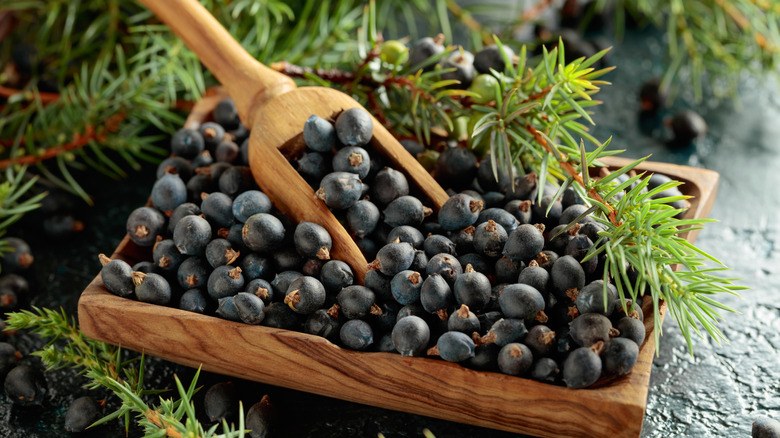
While gin packaging is often quite striking, beginner gin drinkers should zoom in on the label. According to Masters, "A quality gin will tell you what's inside — look for a botanical list." Good gin producers will gladly share what botanicals they used in distillation. Pickering's, for example, discloses proudly that they use up to 10 botanicals. However, don't expect exact ratios, as the precise measurements of each botanical are the trade secret of each distillery. Masters adds, "A suspiciously long or short botanical list usually means there's nothing worth sharing."
What botanicals should you see listed? "Juniper has to lead — it's what makes gin, gin," says Masters. This berry is what gives gin its distinctively piney flavor. In fact, gin's forefather in the Netherlands is named after the berry itself, "Genever." Other prominent botanicals in gins today include coriander seeds, angelica root (which contributes a musky note), and citrus peels. Cinnamon, cardamom, and ginger are among other common additions, which is why some people may describe gin as somewhat Christmas-like. "The real question is how well they've been balanced," notes Masters. "A good distiller knows how to let every botanical contribute without any one of them stealing the show."
Higher ABV means you can taste the gin in a cocktail
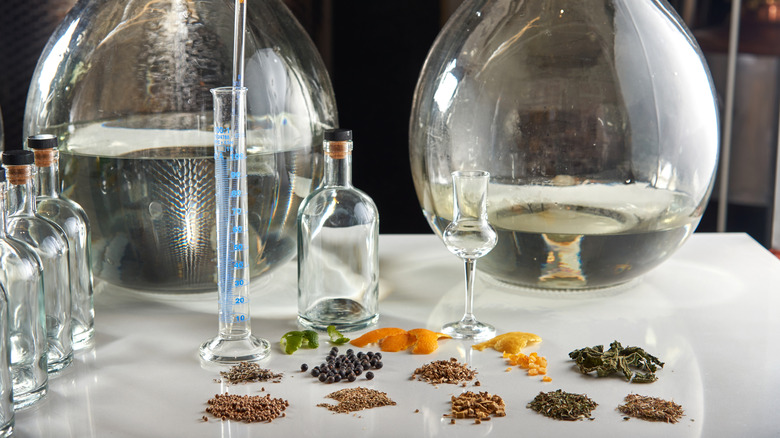
Did you know that liquors vary by their legal definitions? In the U.S., not only do all gins have to taste mainly of juniper berries, but they also have to be at least 40 percent alcohol by volume (ABV) to legally be called "gin". Masters recommends looking for an ABV even higher than that. "A gin at 43 to 47 percent [ABV] has the backbone to hold up in a cocktail." He compares low ABV gin to vodka, which may sound snooty at first, but ultimately makes sense.
Both gin and vodka are colorless spirits, and as such are popular in many cocktails. Vodka is meant to be a versatile, receptive canvas for other flavors, while gin must be juniper-forward, which means that the flavor itself is prized. Lower ABV gins tend to point toward a flavored (read: sweetened) drink, which is "gin liqueur," not technically gin. It follows then that higher ABV gins are generally distilled with botanicals rather than flavorings at the start, and this higher ABV means the flavors carry much better in a cocktail. In other words, if you cannot taste the gin in the cocktail, then why use gin at all?
Make sure it's distilled with whole botanicals
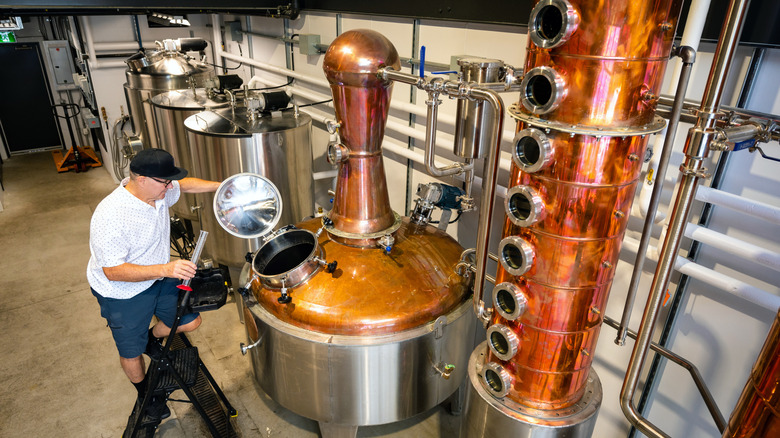
According to Beefeater Gin, like other liquors, gin begins with a base of fermented grains — such as corn, wheat, rye, or barley — distilled into neutral spirits. The distiller then adds juniper berries and botanicals to steep, traditionally in vessels called "stills." Often the botanicals are either soaked (or "macerated") in the alcohol so the flavors disperse into the liquid. Another way is for distillers to place botanicals in trays above the alcohol, allowing the vapors to travel through the botanicals during distillation. Different producers use different methods to distill botanicals and achieve the flavors they desire.
"The best gins are redistilled using whole botanicals — the flavors are integrated and balanced," explains Masters, adding that "lower-quality gins are compounded, meaning flavorings are simply dropped into neutral alcohol." You may think that this gives producers more control over how their product is flavored, but it lacks the craft of distillation, the practice of generations of knowledge. In a world where everything is moving towards ease, automation, and high-volume outputs, wouldn't you want your drink to be made with the care and attention that you deserve?
What to avoid when choosing a gin
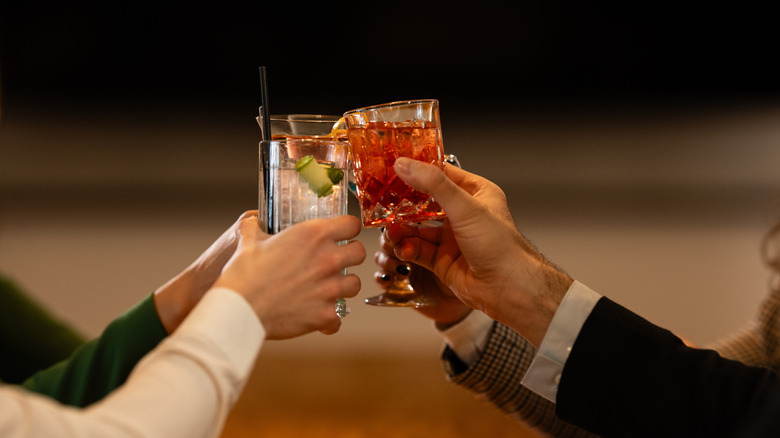
Now that you know what to look for to identify quality gin, what should you avoid? "Skip anything where the marketing leads with everything except the gin: heavy floral gins, overly trendy botanicals, anything that's forgotten what it's supposed to taste like," states Masters. While trends will never go away, remember what the root of gin is supposed to be: juniper. You tried your share of gin and juice back in college and did not like it? "That's gin at its worst: compounded, thin, and rough in a way that properly made gin simply isn't," Masters points out. What if you tried gin and tonic and still were not a fan? Perhaps consider that you may be averse to the quinine in the tonic water, rather than the gin.
If you think juniper is not the most tantalizing flavor for your taste buds, many gin makers balance it out with local notes. Japan's The House of Suntory makes Roku Gin, distilled with sakura flower and leaves, yuzu peel, green tea, and sansho pepper, a type of citrusy Japanese pepper. Monkey 47 Schwarzwald Dry Gin has a distinctively German taste with German lingonberries and a spirit made from molasses, plus other botanicals from the "Schwarzwald" ("Black Forest"). Flavored and spiced gins are not automatically bad, just seek out gin makers that are thoughtful in how the flavors match with juniper.
How to apply these tips at bars and grocery stores
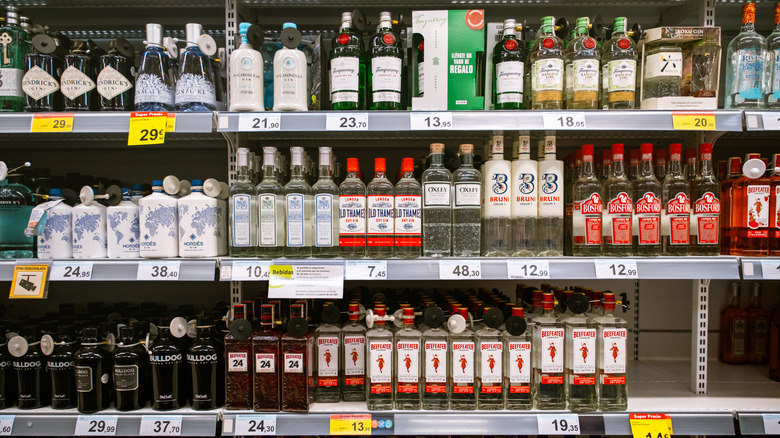
If you're unsure when ordering gin at a bar, Masters suggests asking what the bartender personally likes. If the bartender shrugs, ask to see a few bottles. From there, you can apply the previous tips while looking at the labels. Does it have a straightforward list of botanicals? What is its ABV? Is there any information about its production? "Just because it's a familiar name or high proof doesn't guarantee quality," advises Masters, who recommends ordering a basic gin-based drink like a gin and tonic or a martini, "something simple that lets the gin speak for itself."
What if you want to buy your own bottle of gin to bring home? Masters encourages beginners to reach for a New Western, also known as American or contemporary style. Apart from the use of juniper, these are modern gins that do not necessarily follow traditional gin molds. An example is St. George Spirits' Terroir Gin, which highlights notes of Douglas fir and sage, meant to be reminiscent of Californian forests. "Once you have your footing, move to a London Dry — juniper forward, dry, crisp, and the style most bartenders reach for in classic cocktails." Beefeater Gin, with its signature red-trimmed bottle, is a standard in this category. Then, you have the whole world of gin to explore: Strong Navy Strength, sweet Old Tom, earthy Plymouth, and even the aforementioned Dutch gin precursor, Genever, to name a few.