

4 Of The Best Ways To Perfectly Reheat Burgers
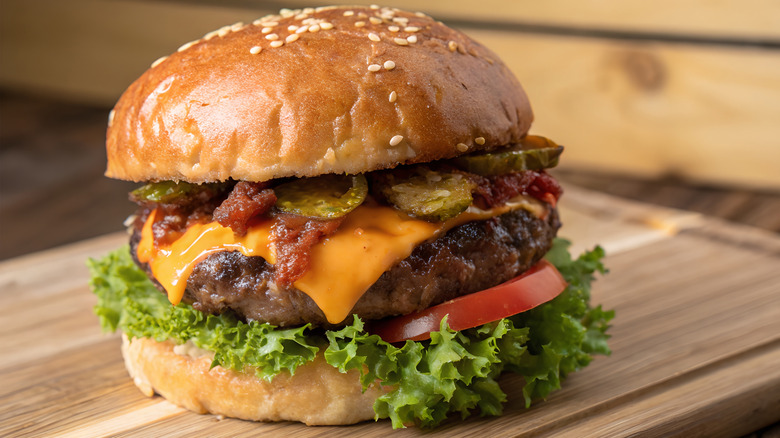
Maybe you ordered a couple too many Big Macs at the drive-through or have a bit of leftover traditional Fourth of July foods from your cookout. But if you're stuck with a lot of hamburgers, don't worry. It's easy to reheat them and make them almost as delicious as the first time around — provided you follow certain guidelines to keep them at their best.
In general, despite social media hacks promising ways to reheat entire burgers in your air fryer, it's best to disassemble the stack before heating. Separate the patty from any ingredients best served cold, such as lettuce, tomato, or pickles, and try to remove any sauces from the bun. Let all the ingredients come to room temperature first by leaving them out for about 20 minutes (long enough for them to lose the chill of the refrigerator but not long enough to be dangerous food safety-wise). If you're working with just leftover cooked patties, such as from a barbecue, you're already a step ahead.
You can make leftover hamburger meat sparkle in other dishes, but if you still want just the burger, you can use practically any heating appliance in your kitchen. An air fryer, oven, frying pan on the stove top, or even microwave will give you a near-perfect reheated burger if you approach it right. For food safety, just make sure it's up to 165 degrees Fahrenheit in the center. Here's what you need to know about each method.
Air fryers crisp burgers well but can dry them out
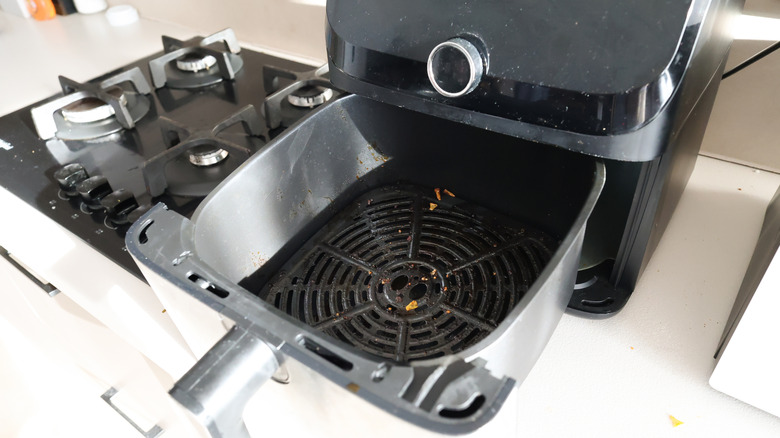
An air fryer is surprisingly good at making reheated burgers taste like they just came off the grill. Preheat the air fryer to 350 degrees Fahrenheit, then place the patty loose inside for three to four minutes, flipping halfway. In the last 30 seconds, add the roll (if you have one). Then, reassemble and add any cold ingredients you've set aside. This method works if the burger already has cheese, but if you want to add some, try to do so in the last minute of reheating.
Air fryers function like high-powered convection ovens. They're good at making food crispy because hot air rapidly circulates around the interior, getting it very hot very fast. This results in the outside getting crispy while staying moister inside than it might in other appliances. A note of caution here: Because air fryers are all about moving hot air, the air can dry out food if you're not careful. An already-dry burger will become even more like a hockey puck in an air fryer, and if a juicy burger is heated beyond a few minutes, it could lose its moisture.
Ovens provide even heat, but a higher temperature can result in dryness
If you are heating up a large quantity of burgers, try the oven for even, gentle heat. Like the air fryer method, you'll want the oven at 350 degrees Fahrenheit, but it'll take a bit longer. Plan for seven to 10 minutes on an aluminum foil-lined sheet pan and flip the patties halfway through. In the last few minutes, add the buns on the same pan until lightly toasted. Here, too, you'll want to keep any toppings away from the heat, but cheese will do just fine (or add cheese in the last few minutes).
By warming the patties slowly with consistent heat, you prevent moisture loss and reduce the chance of the meat getting tough. And if you're really concerned about dryness, consider using a lower heat and longer time (250 degrees Fahrenheit will work, and depending on the burger thickness, it could take anywhere from five to 15 minutes). Or if moisture loss is less of a concern, try putting a patty under the broiler for a few minutes per side. In all cases, though, the downside to firing up your oven is it tends to use more power compared to smaller, countertop units, like an air fryer or microwave.
Add some water to a skillet on the stovetop
Since you can easily cook up a burger in a frying pan on the stovetop, it's only logical that also works to reheat the patty. Heat a skillet over medium heat, then add about ½ cup of water or enough to cover the bottom of the pan. Add the patty and cover, heating for about four to six minutes and flipping halfway through. You can also toast the roll in a pan, but since bread and water don't mix well for structural integrity, use a separate pan for the buns.
When you use this stovetop method, you're helping to keep the patty moist with the added water, as well as imparting a slight sear on the outside. For more flavor, try beef broth. But this approach requires control. It's easy to add too much water, resulting in a waterlogged burger, or let it heat for too long and dry out the meat unintentionally. But if you treat it like a burger cooked from scratch and fry it in oil, you'll just overcook the patty. With a thin fast-food burger, that's very easy to do, especially since they're usually already well cooked throughout.
Use your microwave with caution
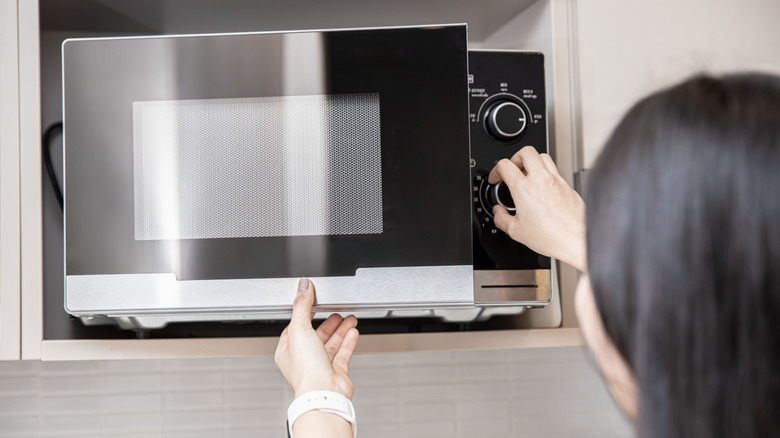
It's not the ideal reheating method, but a microwave will certainly work to warm up a leftover burger. Microwaves have the tendency to dry food out, so you'll have to compensate to keep the patty moist throughout. Place the patty on a microwave-safe plate and cover it with a damp paper towel. Then microwave it in short intervals, checking its temperature after each round. You can even add a small cup of water to the microwave, which will convert to steam and keep the cooking environment moist. Depending on your microwave, this likely won't take more than a few minutes.
This is certainly a fast and easy reheating method, but you run the risk of changing the burger's texture. Methods like the stovetop and oven provide gentle heat over an extended period of time. The microwave gives more heat in a shorter amount of time, which can make your burger tougher and chewier. Use caution with thin patties as they will quickly turn rubbery in the microwave. And keep your roll separate, too, as bread doesn't tend to respond well to being microwaved (a toaster will serve you better in this case).