

Malt Liquor Vs Beer: Here's The Difference
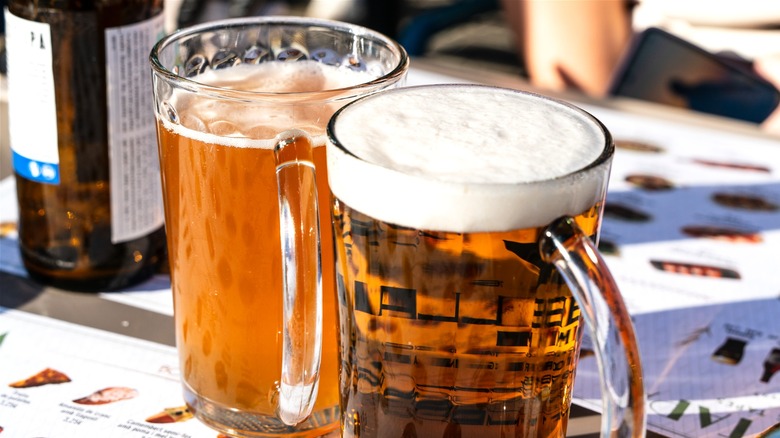
Let's cut to the chase: There's technically no difference between malt liquor and beer, at least in legal terms. Both fall under the same category of malt beverages in the U.S. Code of Federal Regulations. This means that any differences between the two labels depend on convention rather than regulation — in short, what sets malt liquor apart from beer is whatever people have historically agreed upon.
Malt liquor is typically made using the same ingredients as beer but with additional sugar sources like syrups, corn, or rice. This allows brewers to make a beverage with a sweeter flavor profile. That said, there's nothing stopping someone from making their brew sweeter and still calling it beer. Keystone Light's discontinued fruit-flavored spinoffs, for instance, were infused with raspberry and lime flavors to deliver a tangier, more sugary profile. Coors Light is also made with corn syrup but is classified as a beer.
What most folks seem to agree on is that malt liquor usually has a relatively high alcohol content. This is because malt liquor's extra sugars convert into more alcohol during fermentation, which tends to be the main reason for making the beverage. In fact, Clix — often recognized as one of the first malt liquor brands made in the U.S. — was created in response to post-Prohibition Era drinkers complaining that their beers were missing that alcoholic "kick" (via All About Beer).
Malt liquor doesn't always have more alcohol than beer
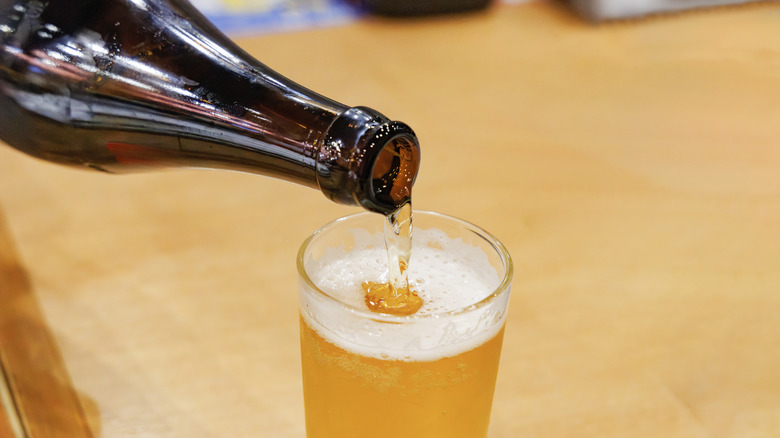
One of the biggest misconceptions about beer and malt liquor is that the latter always has more alcohol. If you look at the alcohol content of different brands today, that's clearly not the case. Mickey's Fine Malt Liquor, for example, contains 5.6% alcohol by volume (ABV), which is certainly higher than Michelob Ultra's 4.2% ABV. Voodoo Ranger Imperial IPA, however, clears Mickey's by a wide margin, hitting 9% ABV as a beer. In fact, many of the best craft beers in every state (not to be confused with the signature beer of every state) have higher alcohol content than many malt liquors.
The "malt liquor" label sometimes depends on whether or not a beverage meets a state's legal criteria for beer. In 2017, the National Agricultural Law Center compiled each state's legal definition of beer in terms of ABV, and the differences can be huge. Colorado, for example, rules that beer must fall in the range of 0.5% to 4% ABV, whereas South Dakota allows for a range of 0.5% to 14% ABV. Other states call for special labels at certain thresholds: In Vermont, beer with an ABV of 8% to 16% must be labeled "specialty beer."
Even then, these laws might not have any bearing on how a brand labels its beverage. Mickey's calls itself a malt liquor despite its home state of Indiana having no upper ABV limit for beer, while Colt 45 — historically recognized as a malt liquor for its 5.6% ABV — calls itself "The Classic American Lager," even though its website URL still mentions malt liquor.
Is beer a type of malt liquor or is it the other way around?
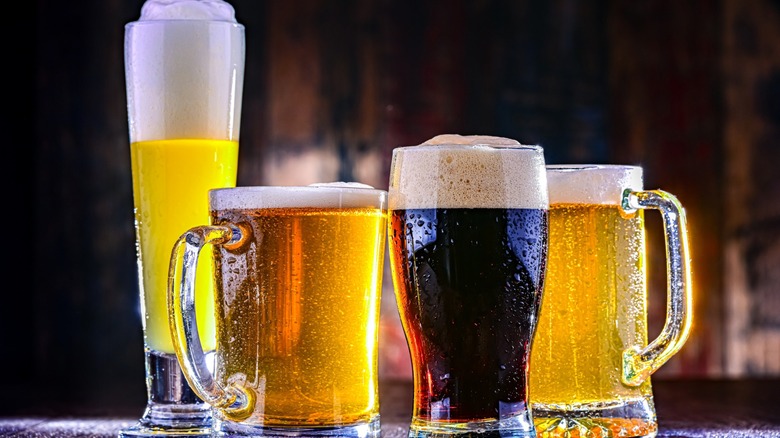
Beer and malt liquor are each considered a subcategory of the other, depending on who you ask. Some folks say that malt liquor is a type of beer, while others argue it's the other way around because beer is made of malt and contains alcohol, thereby categorizing it as a type of malt liquor. So which one is it, really?
If we go by written records in the 1800s, we can see why people might subscribe to the latter viewpoint. Joseph Livesey's A Lecture on Malt Liquor from 1870 and Gallus Thomann's Alleged Adulterations of Malt Liquor: The Whole Truth About Them from 1886 both appear to use beer as an example of a type of malt liquor. When historians refer to ancient alcoholic malt beverages, however, they're more often referred to as beers. The Hymn to Ninkasi, written around 1800 BCE, is widely considered to be a recipe for beer, not a prototypical malt liquor, and some folks have tasted even more ancient beer recipes. Going by this convention, there's an argument to be made for "malt liquor" being a label applied to beer.
Just as the differences between beer and malt liquor appear arbitrary, the categorization of either looks like it's open to interpretation. The one thing people seem to agree on is that they're different, and that's all that matters. If you're talking to a historian, however, you should probably at least agree that "beer" came first.