

Old School 70's Foods That Deserve A Comeback
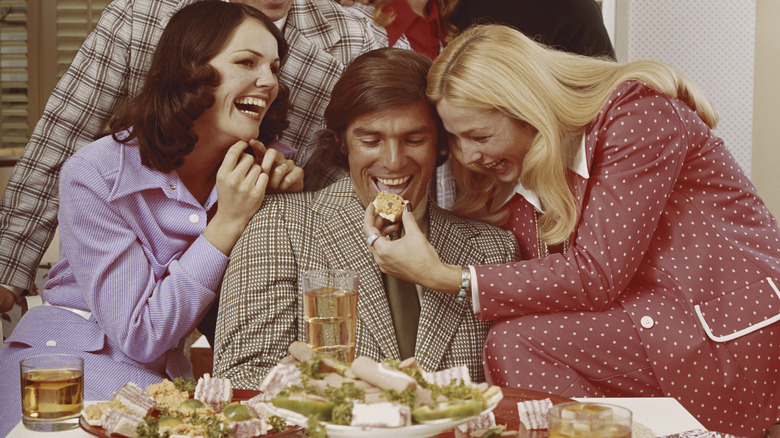
What's groovier than disco music? Food that only could've existed in the 1970s, of course! This was a decade defined by reinvention. Our pantries were full of canned, boxed, and instant versions of sophisticated classics, and we started incorporating energy bars and wellness products into our diets — when we weren't scarfing down bowls of mini marshmallows, sour cream, and mandarin oranges. From the Watergate Scandal to space exploration, the biggest headlines of the '70s didn't only shape history, but the foods in our grocery stores, too.
And, yet, many '70s-era foods have seen better days. When was the last time you fondue'd anything or washed an olive loaf sandwich down with a tall glass of Tang? It's hard to believe that the foods our parents enjoyed as kids are now considered to be historical artifacts. So we have a proposal: Why don't we give these iconic '70s foods a chance at a comeback?
People are drawn to nostalgic foods now more than ever, so there's never been a better time to throw on some platform shoes and boogie your way to the kitchen. You never know: These old school '70s foods just might find their way back into our hearts — and onto our plates.
Fondue
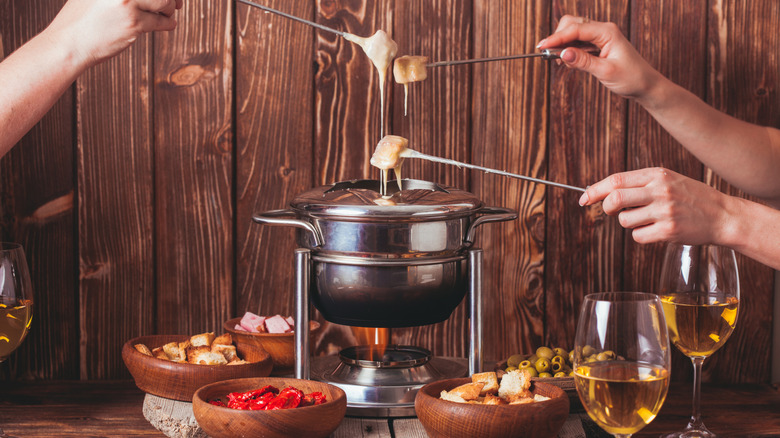
Picture it: Your house, 1975. The room is brimming with disco music, lava lamps, and bell bottoms. At the center of it all is a large pot atop a flickering flame. This is the gathering space, where your party guests congregate. They hold long skewers with a variety of foods on the end: Chunks of rye bread, broccoli florets, caramelized onions, apple slices; when it comes to dipping foods, you're bound only by your imagination. Dipped foods emerge covered in a velvety golden goop — a mixture of melted cheese, wine, and seasoning — leaving guests with a snack that's both savory and tangy.
The beauty of fondue was its simplicity. All you needed was a pot, a flame, and a handful of ingredients to become the party spot in the neighborhood. The communal atmosphere makes fondue just as fun for parties now as it did back in the '70s. As we drift further apart, wouldn't it be nice if we had an excuse to come back together?
"It's a nice treat to sit down for an hour with the wife to cook chicken, pork, and steak bits and then dunk them in sauces for flavor," one Redditor said. We may associate fondue with the Swiss, where the meal was reportedly born, or maybe with the French, since "fondue" stems from the French verb "fondre" (to melt). But, in truth, fondue belongs to everyone — which is why it deserves a comeback.
Hamburger Helper
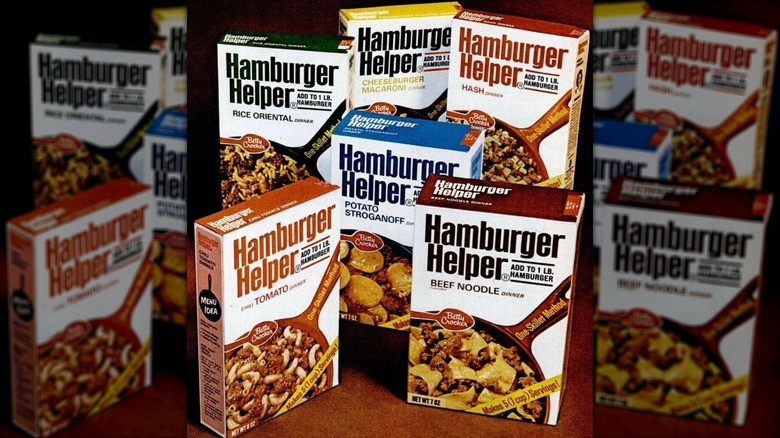
70s cuisine had its fancy moments, but at home, the decade was all about convenience. Housewives became working mothers, which meant saying goodbye to the elaborate aspic-filled suppers of the '50s and hello to frozen, canned, and boxed foods. Nothing epitomizes the convenience craze of the '70s more than Hamburger Helper.
General Mills describes Hamburger Helper as "the undisputed king of boxed dinners" because it helped many families who, the brand says, "were striving to stretch a pound of meat into a dinner for five." This one-pan meal wasn't just quick and easy to make, but filling. These attributes will always be relevant, regardless of the decade.
Although Hamburger Helper is not the pantry staple it once was, it's still an important part of the American dining experience. "Helper," as the product is now called, still lives up to its name as a vital way for families to eat something filling for half the effort and half the cost. Consumers love variety and affordability, which is exactly why Hamburger Helper is still so relevant. "We're also pulling in new households, not just longtime fans," Mala Wiedemann, EVP of marketing and head of R&D at Eagle Foods, told Today in 2025. "With Helper, you can feed a family for under $10 with a box and a pound of beef."
Quiche Lorraine
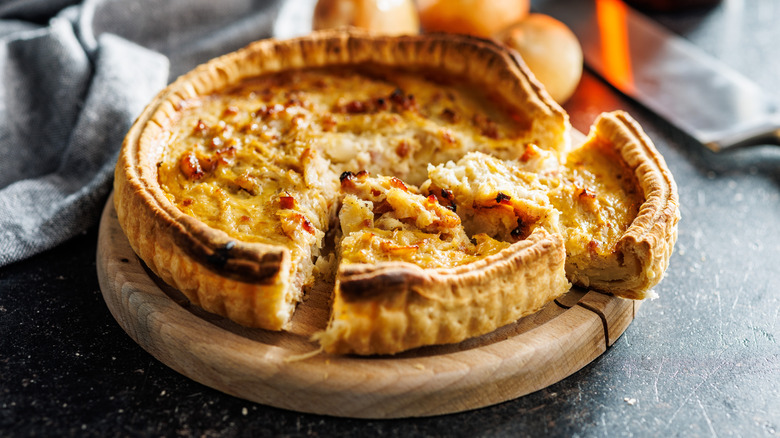
It wasn't unusual to walk into someone's home and smell bacon and eggs, but the only way you'd know there was Quiche Lorraine in the oven was the fragrant hint of nutmeg in the air. Julia Child's take on the classic quiche made the recipe more accessible to amateur cooks, and nothing made a home cook feel more accomplished in the '70s than pulling one of these brunch mainstays out of the oven.
One Redditor acknowledged how Quiche Lorraine "was a popular dish in the '70s ... but not as available in restaurants anymore." Another said "social climbing housewives would serve [Quiche Lorraine] if they wanted to seem sophisticated. Now, it's just standard brunch faire [sic] that some really like, but most ignore." But, why are we ignoring this classically delicious assemblage of eggs, bacon, and custard?
It's possible that Quiche Lorraine's simple ingredients have rendered it "ordinary" in the eyes of modern diners. But, don't be fooled by the quiche's humble appearance: If Julia Child herself repped this classic dish, then surely there's something special about it. Besides, it's been said that Quiche Lorraine helped shepherd in the best meal of the day — brunch — so we just might owe it another chance.
Tang
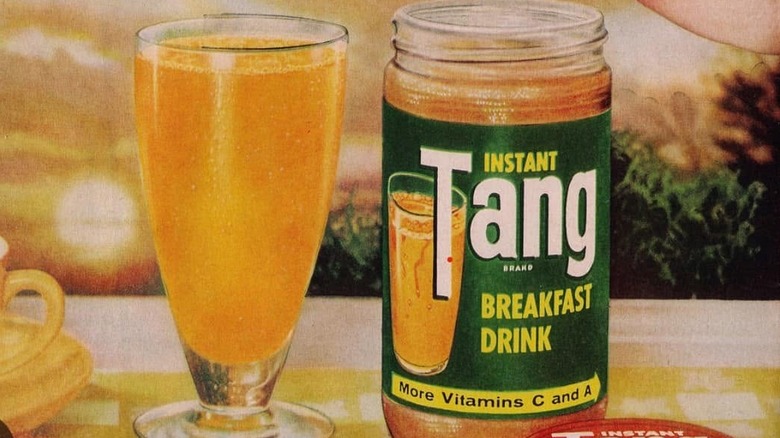
If you're anything like us, thinking about Tang instantly brings a wacky image to mind: Neil Armstrong floating aimlessly in space while sucking down a bright orange beverage. We're not crazy; Tang first gained popularity in the '50s and '60s when NASA provided the powdered drink mix on space flights. The claim that NASA actually created Tang is a myth, but the fervor surrounding the orange drink mix was very real. Buzz Aldrin may not have been a fan of the drink, but the fact that you can still find Tang on grocery store shelves means it hasn't quite lost its allure.
After all, there was a time when Tang didn't only represent the excitement of the Space Race, but the rise of wellness products. Before social media influencers hawked protein powders and energy drinks, there was Florence Henderson telling American shoppers that Tang "has the taste we love, and the vitamin C we need," as noted on Reddit. And who wouldn't believe Carol Brady?
Here's the good news: You can still taste Tang for yourself. These days, Tang is more popular overseas than it is in the U.S., and has been dominant in the Philippines. People clearly still see something special in the powdered drink mix, even if it no longer sends us to the moon. One Redditor had an interesting way to bring Tang back into our lives: "Add some gin or vodka and you'll be in space just like the astronauts."
Ambrosia Salad / Watergate Salad
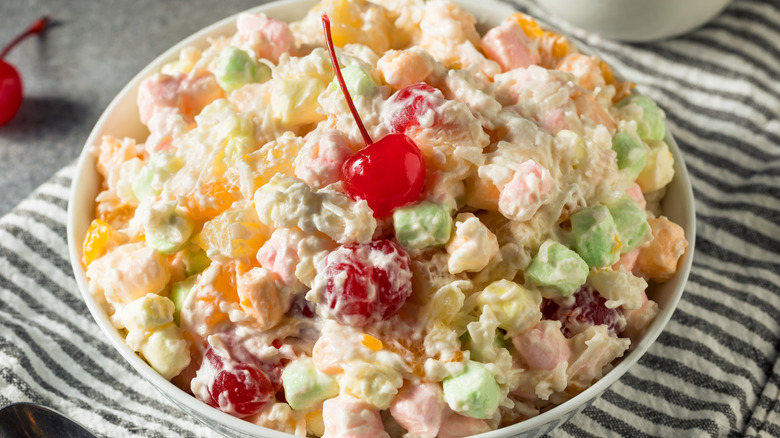
Did you really have a potluck in the '70s if no one brought Ambrosia Salad? You could argue that Ambrosia Salad was to the '70s what Jell-O recipes were to the '50s: A creative fruit-filled dessert that's meant to be light and airy despite layers upon layers of sugary goodness. You could find pretty much any sweet-tasting ingredient in ambrosia salad, but it was usually made with an assemblage of mandarin oranges, Maraschino cherries, pineapple, coconut shavings, mini marshmallows, and cool whip (or sour cream, depending on your fancy).
We can't talk about lettuce-less '70s dessert salads without mentioning ambrosia salad's cousin, the Watergate Salad. If the name didn't make it completely obvious, Watergate Salad was all the rage in certain parts of the country in the '70s. The mixture of pistachio pudding, pineapple, chopped pecans or walnuts, and whipped cream made for a dessert that was as nutty and unexpected as the event it got its name from. Some home cooks even added mini marshmallows to the recipe, tying ambrosia salad and watergate salad even closer together.
Both desserts played on the popular '70s food trend we like to call "let's throw a bunch of random stuff into a bowl and call it a salad." There's no rule saying that our palates must become more refined over time, so maybe ambrosia and watergate salad should regain their places as dessert staples.
Iceberg Lettuce
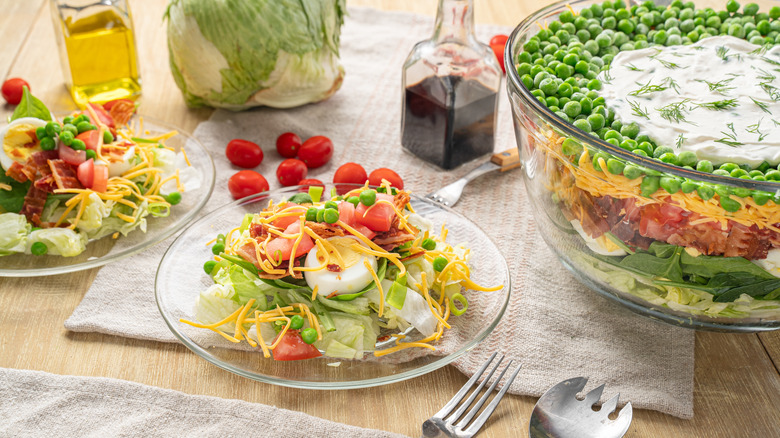
Yes, it sounds a little strange to hold up iceberg lettuce as an "iconic" 70s food, mainly because, well, it's iceberg lettuce. Chances are, it's getting brown in your crisper as we speak. And, on the outside, it doesn't seem to be anything special. Iceberg lettuce is not particularly flavorful, and it's not something we typically season, fry, or shred into a casserole. So why, then, do we consider it to be an important '70s classic? Because it was everywhere.
Food writer, Helen Rosner, defended iceberg lettuce to NPR. "I think even people who are sneering down their noses at iceberg lettuce love it when it's on top of a burger, when it's shredded really finely on a sandwich," she said. It's true: Iceberg lettuce encapsulates the "convenient and durable" dinner trend of the decade. It was also relatively cheap, satisfyingly crunchy, and decently filling, making it a dinnertime staple for busy families. "Don't forget the salad bar," one Redditor said "with julienned carrots, pea salad, and soggy iceberg lettuce."
Iceberg Lettuce ended its reign in the '80s when romaine gained popularity. Unlike iceberg lettuce, romaine is packed with nutrients, including the minerals magnesium, calcium, and potassium, among others. But, what iceberg lettuce lacks in nutrients it more than makes up for in versatility, making it just as deserving for a comeback as any other leafy green.
Salisbury Steak
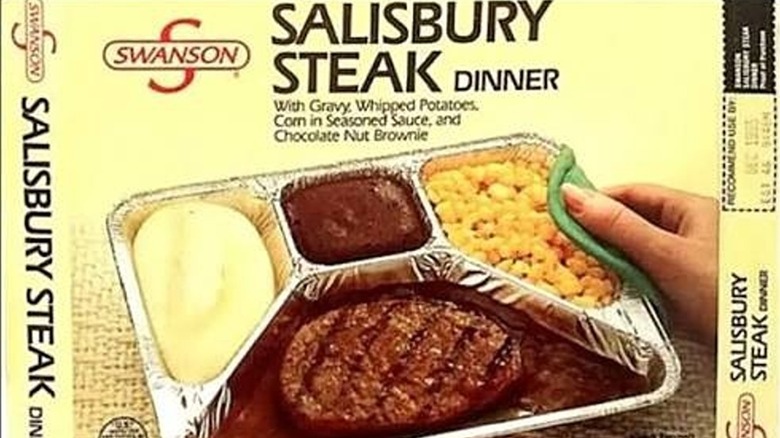
Salisbury Steak is the height of "sounds fancy, but is anything but." Really, it's just a slightly elevated version of a hamburger patty. But, don't count it out as a perfectly acceptable entree. Is there anything more timeless, more elegant, more classically '70s, than gnawing on a recently-thawed steak in front of an episode of The Love Boat?
Salisbury Steak was often found on dinner tables (or TV trays) in the '70s. It was meant to evoke the coziness of a home cooked meal without actually requiring any home cooking. We have Swanson to thank for popularizing Salisbury Steak as a frozen TV dinner option. When given the choice between a quick frozen meal and hours-long dinner prep, tired parents would naturally choose the less strenuous option.
"As I recall, the flavor was 'salt,'" one Reddit user joked about Salisbury Steak TV dinners. We can admit that the frozen meals of our youth weren't always as nutritious or flavorful as the real deal. So even though you can still find Salisbury Steak in the frozen food aisle, you should at least try to enjoy it fresh. After all, just because Salisbury Steak is relatively plain doesn't mean it can't be doctored up.
Harvey Wallbanger
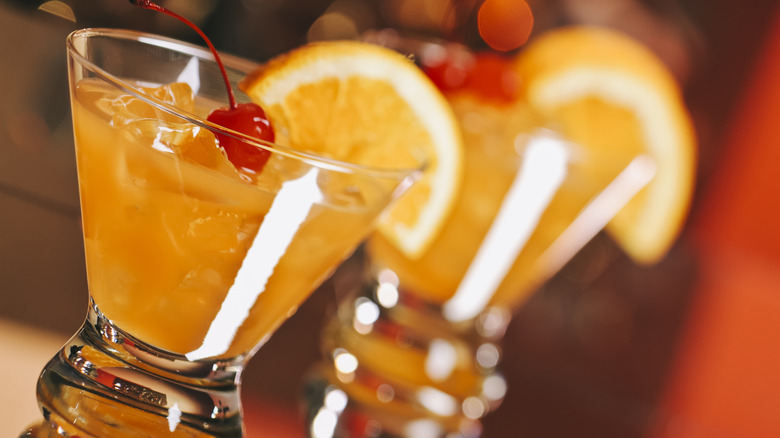
Where in the world is Harvey Wallbanger these days? Judging by the cartoon advertisement created to sell the alcoholic beverage, he may have sailed into the sunset. In the '70s, Harvey was all the rage. For those not in the know, a Harvey Wallbanger consists of orange juice, Galliano liqueur, and vodka, not to mention an orange peel and Maraschino cherry garnish. It may not be everyone's cup of tea, but Harvey made quite the impression in the '70s.
This alcoholic beverage fit right in during the decade's tropical tiki phase, and we can totally imagine serving it alongside charred cocktail wieners, bacon-wrapped pineapple chunks, and Mandarin orange slices. Do you hear that? That's the sound of you sipping a Harvey Wallbanger while the Beach Boys harmonize somewhere nearby. The drink was so popular that it was once advertised as a replacement for the Bloody Mary.
But, paradise couldn't last forever, and Harvey slowly disappeared once the '70s turned into the '80s. If you ask us, there's no reason why this fun, fruity, refreshing drink shouldn't make a comeback at modern swim-up bars. The drink is more versatile than it sounds: "My mother in law made Harvey Wallbanger coffee cake. An absolute delight!" says one Redditor. The fact that some creative cooks use the beverage to flavor cakes and other desserts only makes us crave it more.
Porcupine Meatballs
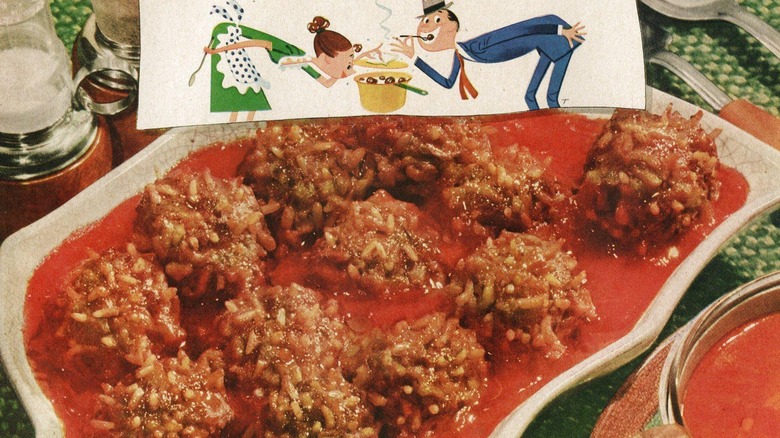
If you grew up in the '70s, your mother might have served this old-timey delicacy. She probably whipped up this odd-sounding meal during your childhood because her mother made it during her childhood. Yes, this four-ingredient meatball dish was a Depression-era classic because it was made of only four basic ingredients: Ground beef, rice, canned tomato soup, and onions. It not only tastes good, but is easily freezable, making it the ideal budget meal.
Porcupine meatballs owe their so-called "quills" to plain 'ol rice, which is mixed with the ground beef to create a savory, slightly furry-looking ball. This meal was a convenient and filling (if not nutritious) dinnertime staple throughout the '70s, but faded in popularity over time as more sophisticated meatball recipes popped up. Now, it may be time for us to update porcupine meatballs for a new generation. "Oh man, I love these things! I think it's time to introduce them to my kid," one Redditor wrote.
If you're looking for fellow porcupine meatball fans, look no further than Reddit. "That's something I hadn't thought of since I was a kid. We used to make them all the time growing up," another Reddit user said. "I should make these again." And, this Reddit user made a tasty suggestion: "They're delicious!!! I'd recommend serving them over mashed potatoes."
Mug-o-Lunch
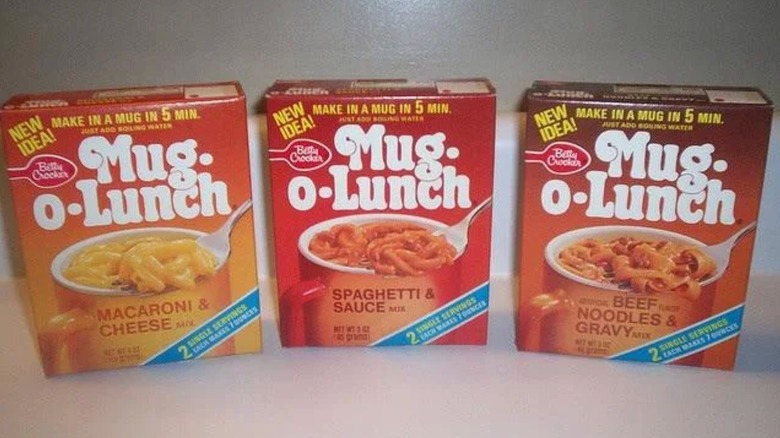
Savory dinnertime staples you can make in a mug — sounds like something you'd find on TikTok, right? Mug-O-Lunch was a cross between a fad and a legitimate time-saving invention back in the '70s. And, as it turns out, we actually have Betty Crocker to thank for Mug-o-Lunch. Again, Mug-o-Lunch epitomizes the convenience-first approach to cooking that dominated the '70s. It really doesn't get easier than pouring dehydrated noodles into a mug, adding boiling water, and stirring until it's creamy and delicious.
Lots of us eat mug-like meals today, but back in the day, Mug-o-Lunch was a groundbreaking concept. You're telling me I can enjoy macaroni and cheese, spaghetti, or beef noodles without lifting a finger? In the time before microwaves, this would've been a fascinating, not to mention tempting, idea to busy parents in the '70s.
"I remember these," one Redditor said. "Wish they could bring them back, so good." Luckily for this person, the concept behind Mug-o-Lunch has survived the '70s, even if Mug-o-Lunch itself did not. Our grocery store shelves are full of single-serving instant soups, stews, noodles, and rice. Betty Crocker hasn't given up on the idea, either, and still produces "Mug Treats" recipes. But, one could argue that we still don't have more elevated versions of Mug-o-Lunch's recipes. There's got to be someone out there who can invent a more delicious and nutritious version of what Mug-o-Lunch had to offer.
Olive Loaf
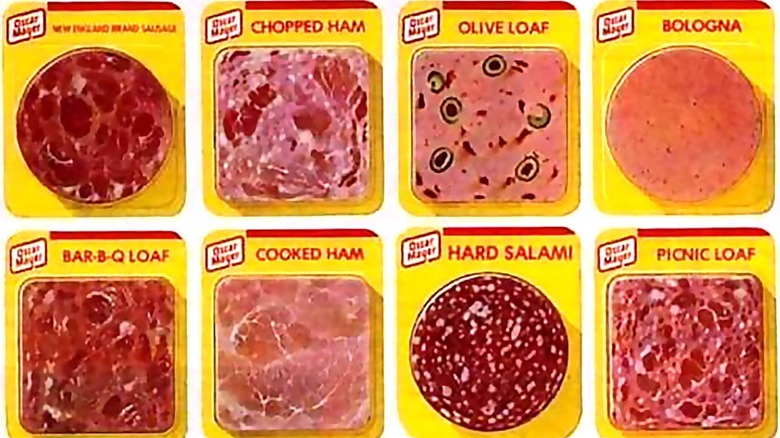
Let's be real: Olive Loaf just doesn't look particularly appetizing. The colors are off-putting, and the flecks of olives and pimentos are polarizing. But, if you manage to look beyond the aesthetic issues, Olive Loaf can be a downright delicious lunchmeat. That's exactly why Oscar Mayer's version of the olive-and-pimento-stuffed deli meat was often found inside Star Wars lunchboxes in the '70s.
Sometimes referred to as mortadella's spicier, Americanized cousin, olive loaf is a fixture of '70s-era lunch fare. At the time, olive loaf was advertised as being cheaper, tastier, and even more sophisticated than standard bologna. This slab of lunchmeat just felt more substantial than ordinary cold cuts. But, as time went on and we learned more about the dangers of processed meats, children started finding apple slices and PB&Js in their lunchboxes instead.
This doesn't mean we don't still yearn for the salty deliciousness of olive loaf, though. "How could I have forgotten about this!?! I need to work The Loaf back into my sandwich repertoire," one Redditor said. Another person on Reddit remembered just how controversial the processed lunchmeat was in their childhood home: "You unlocked a significant portion of luncheon memory for me. I used to love olive loaf," they said. "My Aunt got me hooked but my parents would rarely buy it for me because they thought it was gross." Clearly, we're not the only ones who think olive loaf should make a comeback.
Space Food Sticks
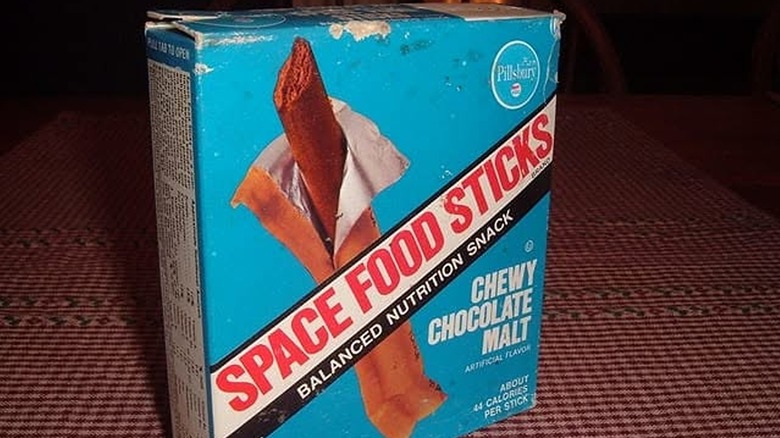
The space craze of the '60s and '70s didn't only affect the way we looked at the stars, but at our dinner plates. Astronauts had a rarified role in society, which means ordinary Joes wanted to look, act, and even eat like them. This included Space Food Sticks, or as they were later called, Pillsbury Food Sticks. Still not clear on what these sticks were? One advertisement said they're "10% complete protein, 68% instant energy, and 13% endurance energy."
We have trouble imagining the Apollo 11 guys chowing down on these gray energy bars, but that doesn't mean the average American didn't shell out good money for them. After all, they were easy to store, perfectly sized for lunchboxes, and, allegedly, packed with energy-boosting ingredients. "They tasted either like magic or Play-Doh, lending them a slightly forbidden air," one Reddit user said. "One was eating something not of this earth."
Space Food Sticks were marketed as an "energy snack," a novel concept in the '70s. Now, of course, energy products are a dime a dozen in grocery stories, giving the long-discontinued Space Food Sticks an opportunity for a comeback (if they can roll out a more appetizing version, of course).