

4 Reasons Alcohol Is Banned For Astronauts In Space
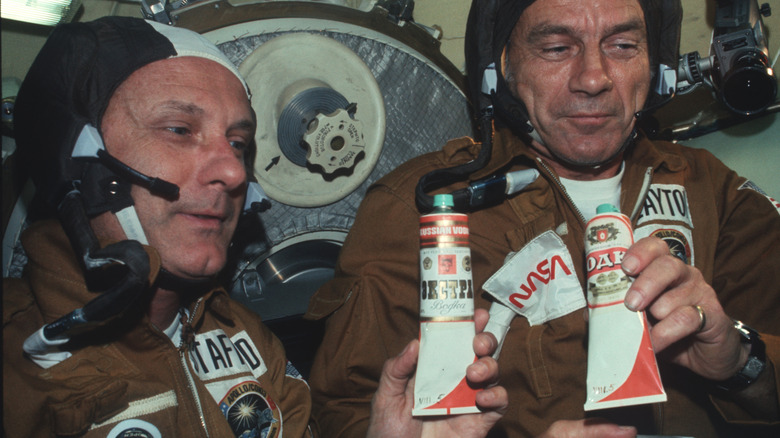
Over 47% of US workers have a drink after a long day at work according to Annual Reviews, but there's one category of worker you won't see included in that statistic: astronauts in space. NASA astronauts, in particular, are banned from drinking booze on missions — alongside bread and soda, alcohol is one of the consumables not allowed on the ISS. Even though they often work 12- to 14-hour shifts and are essentially always on call in case of emergencies, astronauts have to find other ways to unwind.
The ban on alcohol in space began in 1972 after an attempt to add it to the menu of Skylab, the first U.S. space station. Sherry — specifically Paul Masson California Rare Cream Sherry — was initially chosen because it's a rather stable alcohol that's heated during the fermentation process, but the item was pulled before the start of the mission for P.R. reasons.
Despite the ban, alcohol has still found its way into space. French and Russian astronauts, in particular, have had a much more lenient relationship with booze given its cultural importance. There are even documented cases of Americans drinking alcohol, mainly as a means of socializing with other international astronauts. Still, public scrutiny, equipment safety, and astronaut performance are just a few of the reasons alcohol is technically banned in space.
It can damage water recovery systems and other equipment
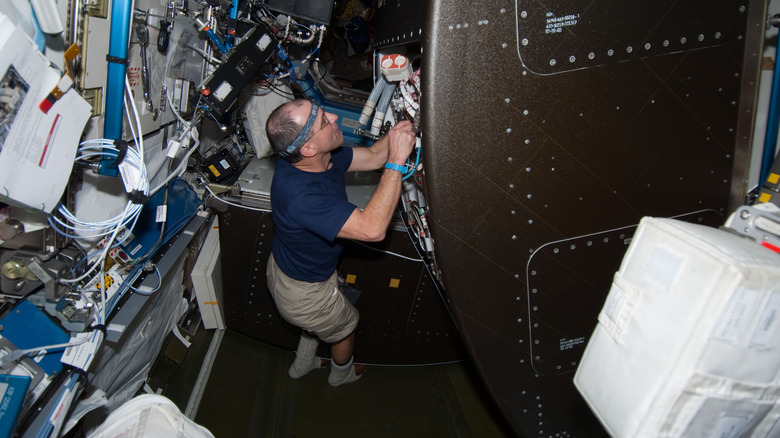
NASA has many rules and guidelines for astronauts, including those that outline the habitability functions on the ISS. On a webpage about food and its impact on the space station's environmental systems, NASA mentions the alcohol ban, even as it extends to flavor enhancers like vanilla extract (which is made by soaking vanilla beans in alcohol). The reason? It might affect the ship's environmental controls or water-treatment facilities.
That's exactly what happened back in 2015. In a paper presented by NASA at the International Conference on Environmental Systems, it reported a concerning increase in ethanol in the Environmental Control and Life Support System (ECLSS) on the ISS. Because of the extra ethanol, it exceeded part of the Water Recovery System's treatment capacity, causing water purification components to wear out more quickly and increasing maintenance demands.
Researchers never found out exactly what caused this, but nevertheless, even personal care products containing alcohol must be evaluated and approved before they're sent to space. In addition to damaging the environmental systems, products containing ethanol undergo scrutiny to "determine flammability impacts in relation to the atmospheric parameters, especially O2 saturation," according to NASA's habitability guidelines. Put simply, the agency doesn't want to accidentally create conditions ripe for igniting the atmosphere of the ISS.
It can affect their ability to do their jobs
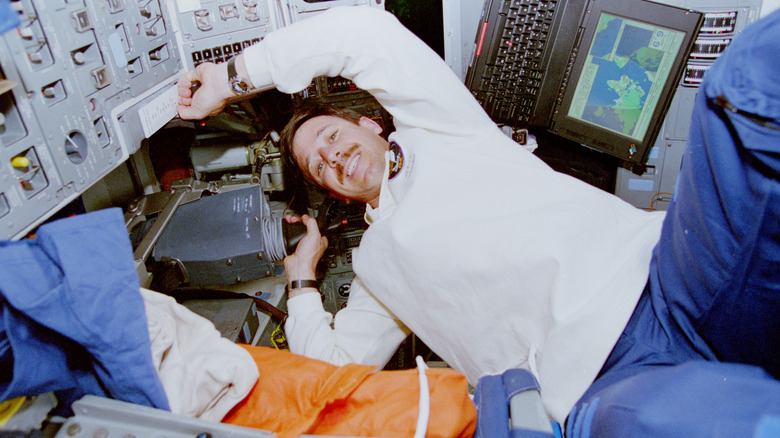
Just like it's illegal to drink alcohol and drive a car, it's also illegal for pilots employed by the federal government to drink and drive a space-faring vehicle. The "Flight Operations" chapter of NASA's Procedural Requirements states that aircrew members have to comply with federal laws around using drugs or alcohol. Not only are they prohibited from drinking on board while they work, but also when they're "on call," or even within eight hours before reporting for duty. Pilots in Command (PIC) are also responsible for ensuring their crew is completely sober and can refuse anyone who isn't.
If you think that's overkill, consider what happened once a committee on astronaut health was formed in 2007. According to Aviation Week, the independent panel found two instances in which "astronauts were allowed to fly even though flight surgeons and other astronauts warned that they were drunk and posed a safety risk" (via NPR).
These days, NASA uses a checklist as part of an astronaut's fitness and readiness assessment, but it also uses a Human Factors Investigators Checklist to determine how someone might contribute to an incident involving astronauts and other NASA employees. In other words, alcohol isn't simply a prohibited substance — it's investigated as a potential human performance factor that could cause an accident or mission failure.
The public might disapprove
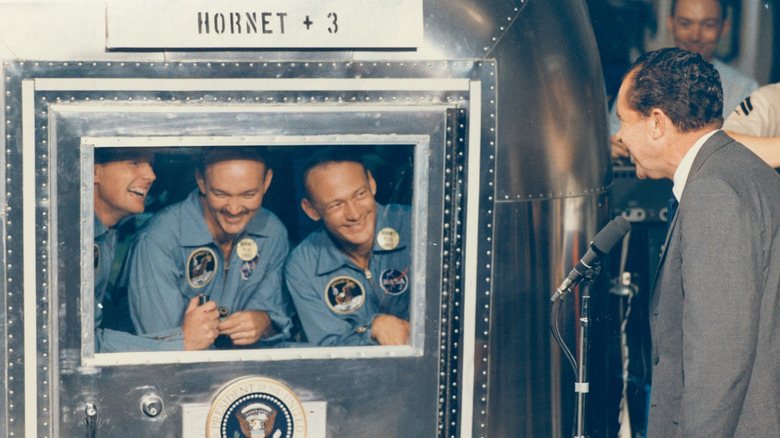
Although Buzz Aldrin's "One giant leap for mankind" speech from the 1969 moon landing is well-known (via NASA), not many people are aware of another historic moment that wasn't broadcast. As he relayed to Guideposts magazine in 1970, "The very first liquid ever poured on the moon, and the first food eaten there, were communion elements" (via The Guardian).
While there are certainly plenty of Americans who might approve of drinking alcohol as part of communion, ongoing NASA lawsuits over First Amendment violations and separation of church and state prevented the broadcast. Even if astronauts drinking wine as part of communion doesn't bother some people, others still frown upon it. As Chris Carberry, CEO of Explore Mars, told Supercluster in 2020, "There's a big chunk of society who are just inherently opposed to alcohol."
Considering much of the general public already thinks sending more astronauts to space should be a lower priority for the space program (via Pew Research Center), throwing alcohol in the mix could pose a P.R. nightmare for NASA — in fact, it already has. In 1997, a fire broke out on the space station Mir, the precursor to the ISS. Only a few months later, the astronaut-piloted resupply vehicle known as Progress collided with Mir. When the public found out about the Russians' onboard stash of the spirit Cognac, major finger-pointing ensued regarding the role alcohol might have played. Faulty equipment was ultimately to blame in both cases, but the media remained skeptical of alcohol in space.
It could get messy (and gross)
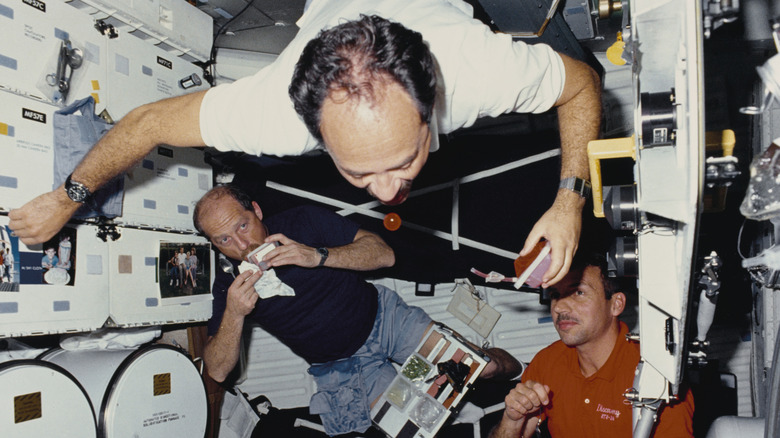
Eating and drinking in space pose a unique set of challenges for astronauts. For one thing, liquids don't behave the same way up there; they form spheres and can escape whatever vessel they're in if it's not optimally designed for zero gravity. Any liquid in space could get messy, but this is especially true of carbonated alcoholic beverages like beer or Champagne. Without gravity, "bubbles coalesce into a few large bubbles that squash the others into a sort of static foam," according to the BBC. The buildup in carbonated pressure could also cause bottles to explode, getting liquid everywhere and potentially hurting astronauts and equipment.
Bringing alcoholic beverages on board could also create a gross experience for spacefarers, whether they drink them or just smell them. According to a 2018 X post from astronaut Chris Hadfield (back when the platform was still known as Twitter), astronauts may experience "chunky bubbles" when drinking carbonated beverages because liquids and gases are all floating around in their stomachs. If they burp, liquid could come up in addition to gas.
Perhaps one of the grossest reasons alcohol is banned in space, however, goes back to that original Skylab menu. In a 2006 oral history interview for NASA, food scientist Charles T. Bourland described a test done with the sherry on a zero-G plane: "As soon as you open the wine, you see people grabbing for their barf bags. For some reason, [that odor] just turns on the barf mechanism." Considering the humble size of astronaut living quarters, it's probably for the best that they're discouraged from drinking alcohol in space.