

How Malbec And Cabernet Sauvignon Differ
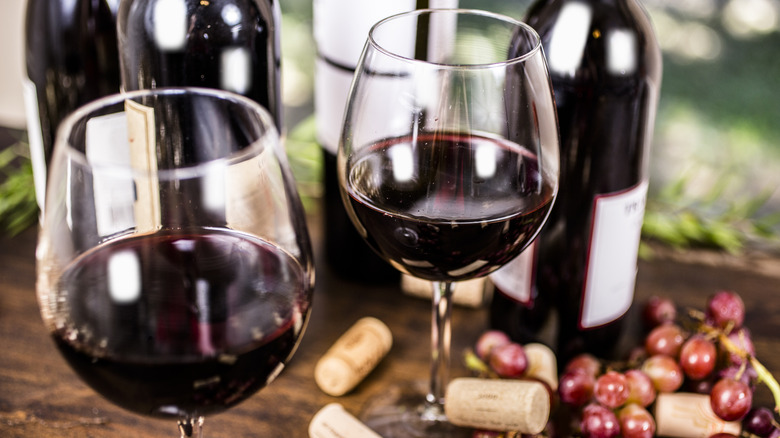
Even after years of taste-testing, budding wine aficionados still find new ways to distinguish between the different flavors grape varietals produce. After accounting for the general differences between red and white wine, one can delve into the granular differences between varietals and the different types of red wines, such as two popular reds: malbec and cabernet sauvignon.
Both malbec and cabernet sauvignon grapes originated in France, though only the latter is still widely grown in the old country, specifically the Bordeaux region. Today it also grows in Napa Valley in the U.S., the Maipo Valley in Chile, and in the Margaret River area in Australia. Malbec grapes originated in the Cahors region, but their unfortunate sensitivity to disease makes them difficult to grow in Europe. However, malbec grapes happen to thrive in the dry, high-elevation climates of Mendoza, Argentina, and thus have become somewhat emblematic of the region. You can also find malbec produced in Chile, South Africa, and in the Pacific Northwest of the U.S. But enough geography lessons for now: Let us get into the actual flavor differences between the two red wines and what suits each.
Malbec is fruitier and more accessible
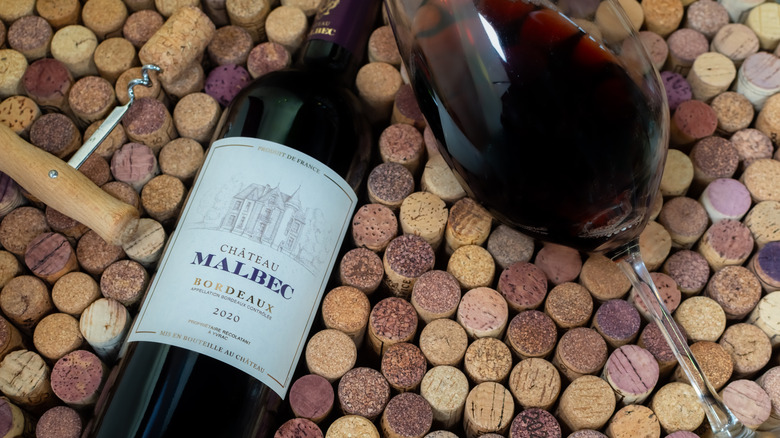
The flavors of malbec wines are often described as fruity, with juicy and ripe notes of darker fruits like plum, blackberry, and black cherry. Some further express notes of cocoa, violet, tobacco, and leather. Hafner Vineyard, in Healdsburg, California, describes the scent of malbec as "cola spice" akin to cracking open a can of cola. With its softer tannins and smoother mouthfeel, it is much easier for newer wine enthusiasts to appreciate a malbec than a cabernet sauvignon, even when it is aged for less time. It pairs well with grilled meats and roasted vegetables, balancing earthy and sweet flavors. Be sure to try it with your next sandwich too, whether it be a Cubano or a vegan burger.
According to Expert Wine Storage, because of their thick skin, malbec grapes need a great deal of sunshine to ripen, which is why malbec wine can taste unbalanced if made from grapes grown in colder regions. The top wineries producing malbec are often in Argentina, namely Catena Zapata and Zuccardi, which are both in Mendoza. Argentine malbecs are generally more fruit-forward, while French malbecs tend to be more structured on the palate.
Cabernet sauvignon is more complex and peppery
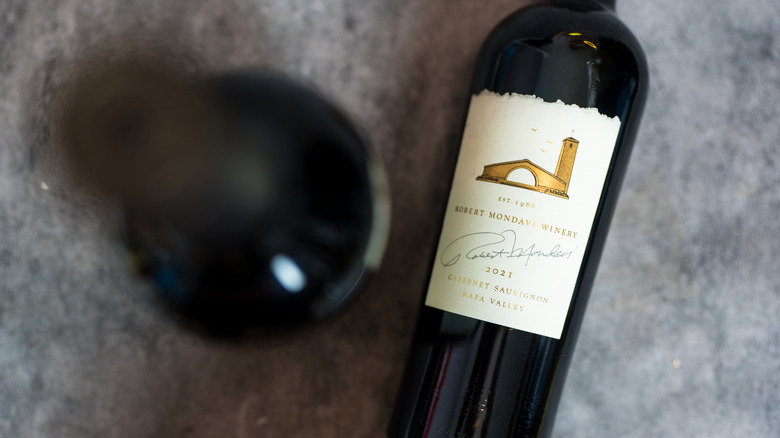
On the other hand, the flavors of cabernet sauvignon are often described as savory, and having notes of cassis, or blackcurrant. It is sometimes described as having "green" flavors as well, like green peppercorn and green bell pepper. This may be because of the grape's parentage, a combination of sauvignon blanc (a green-skinned variety) and cabernet franc (which is also a parent of the merlot grape). It has high tannins and higher acidity than a malbec, and this complexity may be why it is a type of wine that drinks well without food. So if you are looking to gift a bottle of wine for a special occasion, a cabernet sauvignon is a good bet. But if you are still after suitable food pairings, note that it can help balance fattier cuts of meat like brisket, rich sauces, and strong cheeses. Perfect, then, to pair with a burger.
Several top wineries around the world produce stellar cabernet sauvignon. In Europe, look for bottles from Château Margaux and Château Latour in France. In the U.S., Robert Mondavi and Caymus Vineyards of the Napa Valley are renowned. The main downside of cabernet sauvignon is its price point, as it is often more expensive than many other red wines. This may be because it is often oak-aged and cellared for a longer time.