

How To Order Wine Like An Expert
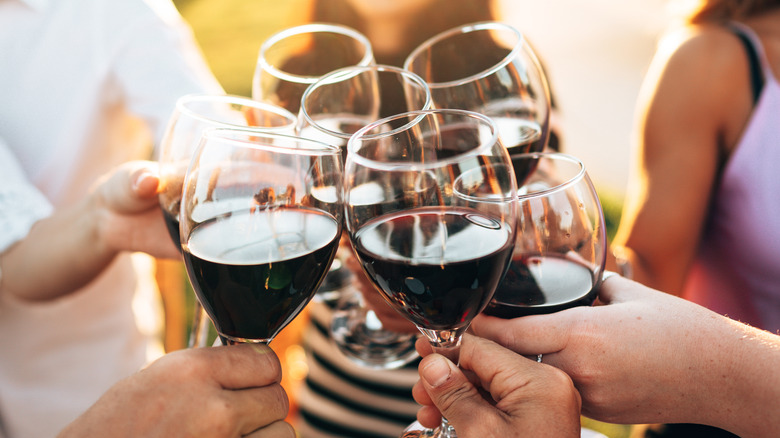
Whether ordering a bottle to share with friends at a bar or choosing something to pair with dinner, selecting wine can be daunting. Learning how to order wine like an expert gives you the confidence and knowledge to choose a glass or bottle you're genuinely going to enjoy. But ordering wine like an expert doesn't mean you have to pretend to be one. Rather, it's about knowing what you like, how to communicate it, and not being afraid to ask when you don't know.
As a former bartender, food and drink writer, and general wine enthusiast, I have a pretty good track record at ordering wine I like, but I wanted to give you some true expert insight. So, I talked to a selection of sommeliers and winemakers to get to the crux of the matter.
Annie Edgerton of Edgerton Wine Appraisals and Wine Minx Annie is a certified sommelier and a 30-year veteran of the wine industry as an appraiser, writer, and educator. Kiara Boccia-Fenlason is a sommelier and winemaker at Mia Marie Vineyards. Elia Chuaqui is a sommelier at Hudson Local, a wine bar and restaurant in New York City. And Peter E. Hopkins is a winemaker and owner of Non Nocere Wine. Thanks to their decades of experience and insider insight, you'll soon be ordering wine like you know what you're talking about.
Don't stress if you don't know much about wine — nobody knows everything

When you're about to order, you might worry about what you should know about different types of wine or whether you can pronounce the name on the menu. But we're here to tell you to give yourself a break. If you feel like you don't know much about wine, don't sweat it. Even the experts don't know everything, and you can still end up with a bottle you enjoy with little to no prior knowledge.
"Don't let your feeling that you don't know that much about wine intimidate you," says Annie Edgerton. It's easy to be daunted by choosing wine, especially in a fancy restaurant or high-end wine bar, but here's the secret: nobody but you cares how much or little you know about wine. "A good bartender or sommelier will know how to ask the right questions to help you choose a wine you'd like," she adds. Edgerton also notes there's really no such thing as being wrong about wine or making the wrong choice. If you like a particular wine, then it's a good choice for you, even if it's not everybody's cup of tea.
"Take the pressure off; wine is meant to be approachable and fun," Kiara Boccia-Fenlason remarks. "People have been drinking it for thousands of years; it's a beverage to build community and memories over." And if you're feeling sheepish about your lack of knowledge, sometimes honesty is the best policy. Tell the somm or server you don't know much about wine, and they can guide you.
Have wine varieties or regions you've enjoyed in mind
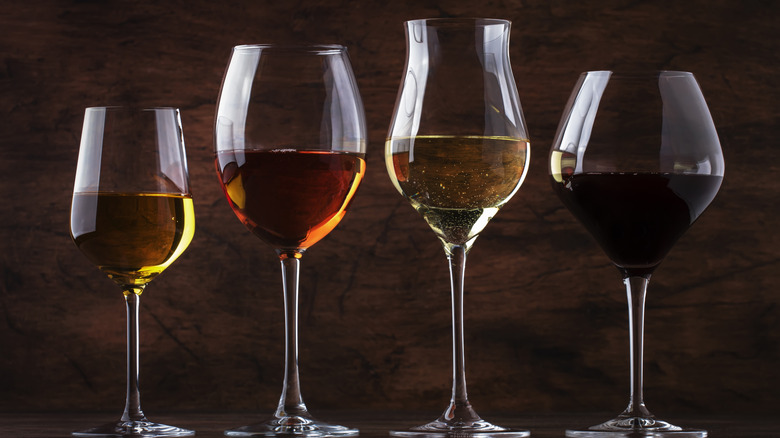
Before you head somewhere you know you'll be ordering wine, think about some varieties (such as pinot noir or chenin blanc) you like or some regions you've enjoyed bottles from. Don't worry what your favorite wine says about you; if there's something you've had before and liked, let it be known. With these in mind, you might see something on the menu right away you think is a safe bet, or you can use them to ask for recommendations.
If you're asking for recommendations, explaining what you like is extremely helpful. "Tell us what you typically drink, what you've enjoyed recently, or even what you tend to order when you're not drinking wine," suggests Elia Chuaqui. "From there, we can start to understand your palate," she says. A good sommelier or bartender at a wine bar should be able to work out what you'll enjoy from this kind of information.
But remember varieties aren't everything — region matters, too. For instance, if you love passion-fruit-forward sauvignon blanc, you'll have better luck with bottles from warm countries rather than cold ones. "Once you become familiar with a couple regions you enjoy, remember them, and it makes ordering wine a lot easier, and you will see a big difference in your confidence looking at wine lists," says Kiara Boccia-Fenlason. Even a small amount of knowledge about what you're into can go a long way.
Avoid picking wine solely on its reputation

Although it's good to have some idea of what you like when you order wine, picking a variety just because you've heard of it isn't a good idea. Even if you ultimately like the variety, this technique will leave you stuck in a rut.
"A lot of times a wine will get ordered just because the person ordering has heard of the varietal before or is comfortable saying the name," Kiara Boccia-Fenlason remarks. "I have even seen that on our wine list at our tasting room, people can be way more ordering a sauvignon blanc than they might be ordering a falanghina." You don't always have to go for the obvious choice, and admitting you don't know everything will open new doors. After all, curiosity and a desire to learn are how experts become experts; you can't just fake your way through that step.
"The biggest mistake is ordering based on reputation rather than preference," Elia Chuaqui says. "People often gravitate toward a familiar appellation, grape, or price point because they assume it guarantees a certain experience, but wine is far more nuanced than that." Just because you've had one garnacha you like, it doesn't mean you'll love every bottle. And just because a particular wine is expensive, you're not necessarily going to love it.
Get good at communicating what you like

The main way to end up with a wine you enjoy is to get good at communicating what you like. Ordering like an expert doesn't always mean pointing to a bottle on the wine list, no questions asked. Sometimes, it's the ability to tease out the options you'll love. Sure, you can tell your sommelier, server, or bartender which varieties you've liked before, but getting a little more specific about your preferred characteristics is even better. "If you can communicate the following: do you want a lighter-bodied wine or a fuller-bodied wine; do you prefer fruit-forward or more savory; and are you leaning towards a 'drinker' or a 'thinker;' that gives the somm a great place to start," says Annie Edgerton.
Peter E. Hopkins suggests you should "be able to tell them where you are on three spectra: sweet to bitter, acidic to creamy, and carbonation level." He also says that if you can share your three favorite fruits, a vegetable, and a dessert, it provides a jumping-off point for further discussion.
"It can also be helpful to describe what you're looking for in terms of structure or texture — something fresh and linear, round and generous, savory and complex, or aromatic and expressive," Elia Chuaqui tells us. But don't worry if you're not sure about that. "A good sommelier should be able to ask the right questions and do the translation for you," she adds.
Ask your sommelier or bartender for recommendations

All our experts agree that asking for recommendations can help you end up with an interesting glass or bottle. Explaining what you like is one thing, but it also means the sommelier or bartender might try to adhere to your specific preferences. Whereas, if you have a fairly wide range of preferences, asking what they're into right now might mean you get some of the most exciting wine on the menu.
Elia Chuaqui suggests reframing "What's your favorite wine?" into "What are you excited about right now?" She notes these are two very different questions that will get you different responses. "Asking what they're excited about often opens the door to something interesting — perhaps a new producer, an unusual appellation, or a bottle that has particular character," says Chuaqui. "It also creates a conversation rather than turning the interaction into a simple recommendation."
Annie Edgerton agrees. "I ask what is drinking really well right now. A good somm will be enthusiastic about certain bottles, and the more your conversation can lead to a perfect bottle for the evening, the more future opportunities can unfold," says Edgerton. It takes a lot of knowledge to become a sommelier, so you can rely on them for good recommendations.
Try things outside your comfort zone
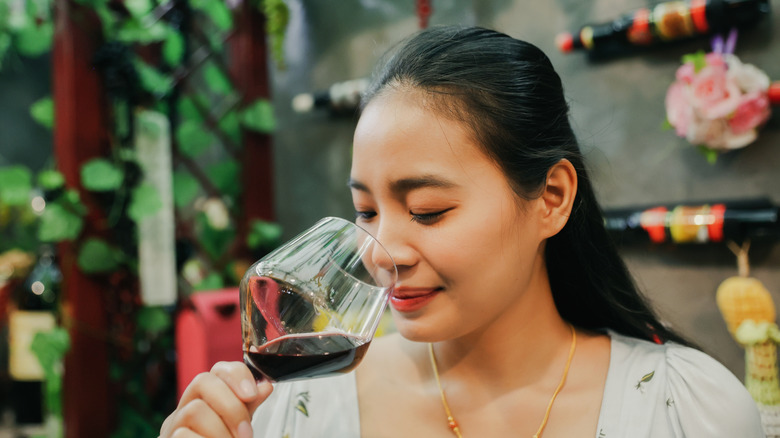
While it might seem as though you need to pick wine you know about to order like an expert, the opposite is often true. Those in the know are excited to try new wines and more likely to order outside of their comfort zone. Explaining you'd like to try something different and giving some context for the types of wines or flavor profiles you like can end up with a big payoff.
"Your preferences are a starting point, not a boundary," says Elia Chuaqui, advising drinkers to stay curious and explore different options. "The most rewarding wine experiences often happen when you give a professional enough information to understand your palate, and then allow them to take you slightly outside of your comfort zone," she tells us.
Trying unique varieties with less big-name recognition — like these underrated red wines from 2026 — can give you more bang for your buck, and you might find a new favorite. According to Annie Edgerton, customers should know there is far more out there than the obvious choices, like chablis or chianti. "Yes, those wines can be brilliant, but their popularity has diluted their ability to be as consistently compelling as they once were," she explains. "People are doing brilliant things with wine all over the world, so sticking to the same regions or varieties is a mistake. Please take the advice from your trusted merchant or somm and try wines that are unfamiliar," Edgerton advises. "You may end up gobsmacked."
Think about food pairing, but don't sweat it
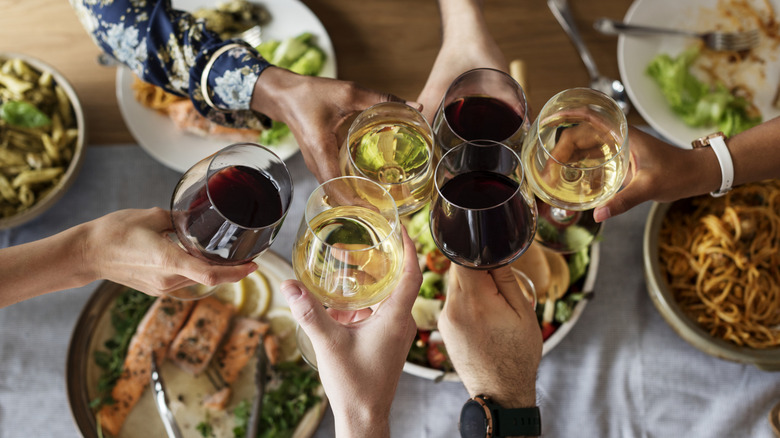
One area where many people lack confidence is ordering wine that will pair well with their food. You might understand what kinds of wine you like but start to get confused when faced with the prospect of pairing them. While it's a good idea to consider whether the wine will go well with what you're eating, try not to get too hung up on it.
"There's a common phrase in wine that states, 'If it grows together, it goes together,'" Peter E. Hopkins tells us. "The best pairings are simple and found nearby within a region where a certain type of wine is made," he says, giving examples such as mushrooms and Burgundy or cilantro and sauvignon blanc. "[This] is an extension of the concept of 'terroir,' whereby geology, geography, climate, weather, and human input all sum to influence a food or wine," Hopkins remarks.
However, if this seems a bit too overwhelming, Kiara Boccia-Fenlason has a simpler strategy. "I have a very easy rule for pairing: Pair what you like to eat with what you like to drink," she shares. "Of course, some wines are more suitable for certain foods that will enhance your experience, but if you are not looking for a classic experience, you can never go wrong by choosing two things you enjoy." If you want a classic pairing and you're unsure, you can also ask your server or sommelier for advice.
Communicate your price range clearly
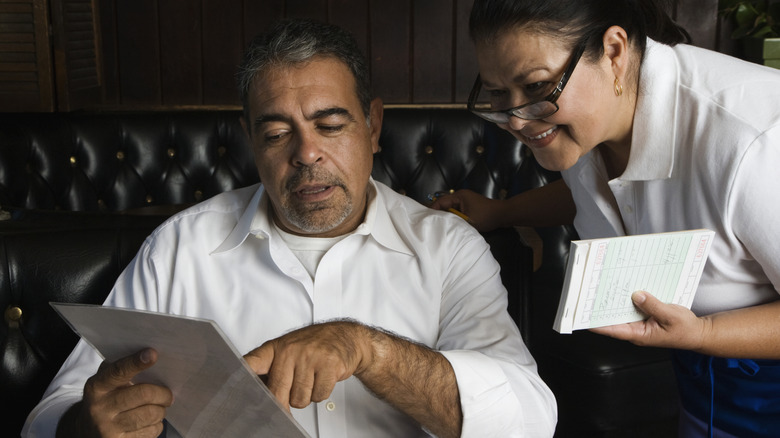
One way choosing wine can be daunting is feeling like you've been pushed to go over your price range. For the most part, however, wine professionals want to help you find a bottle you love within your budget. There are plenty of quality and even award-winning wines that are affordably priced. More often than not, when you wind up spending more than you wanted, it's a case of miscommunication or feeling uncomfortable talking about the cost.
"Wine lists are made with everyone's budget in mind," says Kiara Boccia-Fenlason. "Winemakers and sommeliers alike are excited to share with you the wine list they have so carefully produced or put together, so they are happy to find something for you that you will enjoy, no matter your price point." It's just a matter of making that budget clear from the outset.
There's nothing wrong with having a maximum price in mind, but we also understand talking about money can be uncomfortable, especially if you're on a first date or having dinner with people you don't know well. "If you want to be subtle, point to a wine price while the somm is looking over your shoulder and say, 'I'd like to stay in this range,'" Annie Edgerton advises. Being clear about how much you're willing to spend will help avoid you leaving a bar or restaurant feeling like you were ripped off.
Consider whether it makes sense to order by the bottle or the glass
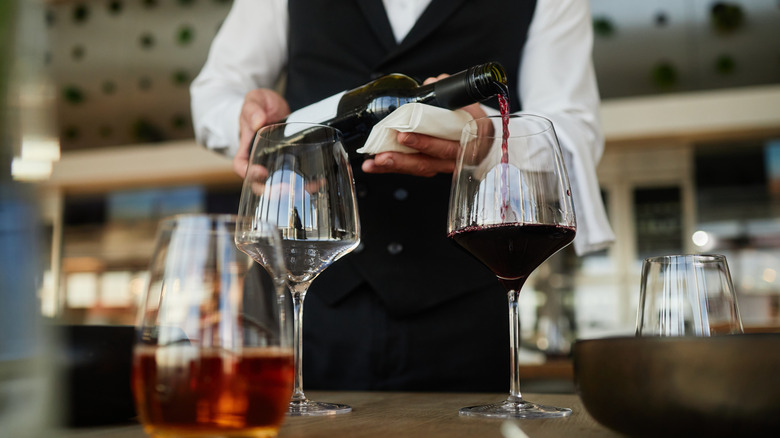
Deciding when to order by the bottle or the glass is important. You may get slightly better value for money ordering a bottle, but it doesn't always make sense. Be sure to get the opinions of anyone else you're dining or drinking with rather than making the decision by yourself.
Although wines by the glass (BTG) can be moneymakers for establishments, it doesn't necessarily mean it's the wrong choice. "At their best, in high-volume establishments, BTG wines offer the customer an exciting rotation of both new selections and refreshed classics that are all crowd-pleasers within their category," says Peter E. Hopkins. This means you can try a great glass without committing to buying a full bottle. "When you're by yourself, or the only patron selecting wine, you can double down on a second glass of the wine you just loved, try another BTG wine, switch to beer, or opt out altogether," he adds.
"It used to be that bottle prices were more competitive versus glass to encourage diners to choose the bottle," says Annie Edgerton. "Nowadays that's not so common," she tells us, meaning there's not as much incentive to opt for a full bottle unless everyone in your group wants the same thing and you're going to get through five glasses. "The glass is ideal when you're dining alone, when your table has different preferences, or when you're deliberately exploring," Elia Chuaqui notes. "That said, if you're with two or more people drinking the same wine, the bottle often makes more sense both economically and experientially."
Get to know less common wine regions or grape varieties

One thing that will help you order with more confidence is getting to know some less common wine regions and grape varieties. This means you can branch out from the most obvious choices on the wine list without always having to ask for recommendations.
"The small producers of northern California in Napa and Sonoma counties are doing really amazing things," says Peter E. Hopkins. "Typically, they get their hands on the best fruit possible because of past winery or vineyard connections and ferment the wine exactly the way they want, drawing on mentorships and learning each vintage," he notes. He adds that drinking from any independent and local wineries is usually worthwhile, as they may be doing more creative things than your average large-scale wine producer.
Touching on underrated grape varieties, Kiara Boccia-Fenlason frequently recommends Trebbiano di Lugana, a delicate white wine from Northern Italy. "It's so refreshing, with a beautiful minerality and rich body that makes it versatile for pairing," she notes. There's no single correct option when trying something new. Note down anything you like, and then you can refer back to it later when you aren't sure what to order.
Check for flaws in the wine when it arrives
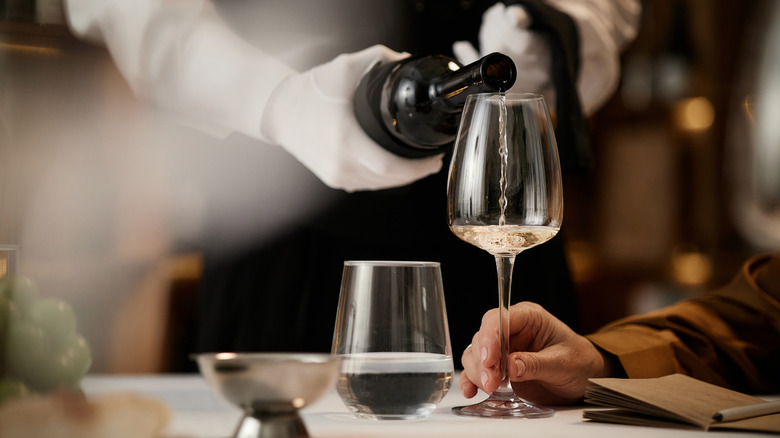
When a bottle of wine arrives at your table, and the server or sommelier pours you a little to taste, many people get freaked out. They don't know what they're tasting for and what to do if they think it tastes wrong. Luckily, once you know why you're tasting the wine, the whole process is less intimidating, so you can relax and not worry about what to do.
"The tasting is primarily an opportunity to confirm that the wine is sound and free of faults — not to determine whether you personally like the wine," Elia Chuaqui explains. "You're looking for signs that something is wrong with the bottle: cork taint, excessive oxidation, volatile acidity, or other obvious flaws."
Annie Edgerton acknowledges many people aren't sure how to taste these flaws in wine, but it's okay to speak up if something tastes wrong, even if you're not sure exactly what or why. She recommends telling the sommelier something doesn't taste right and that while you're happy to pay for the wine, you'd like to choose something else. "That gives them the opportunity to taste it to confirm a fault," Edgerton explains. She adds that if there really aren't any issues with the wine, "You might get the bottle on your check, but in all likelihood they'll serve it by the glass at the bar." One of the phases of becoming a true wine snob is learning how to taste flaws, so there's still time for you yet.