

This Hearty Stew Kept Sailors Fueled In The 1700s
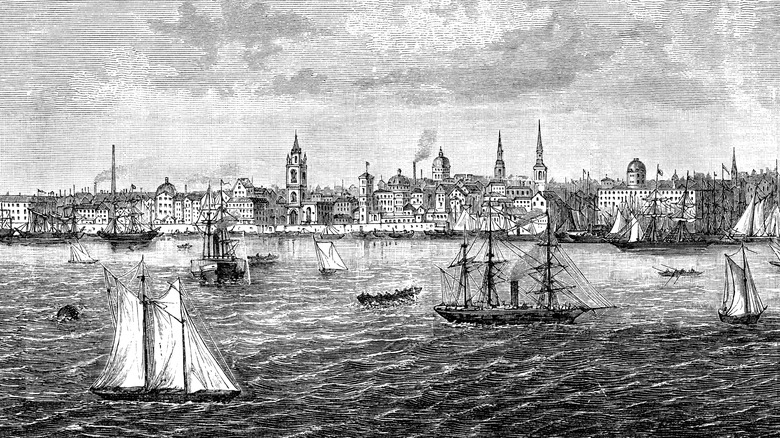
Inhabitants of the port city of Liverpool, England (where the Beatles once frequented pubs and restaurants) are sometimes referred to as "scousers." At first blush, it may sound like a term for people who engage in some mysterious activity known as "scousing." However, the nickname actually alludes to an obscure dish that was once common in the area: lobscouse. This stew of preserved salt meat with potatoes and vegetables is traditionally made with leftovers, making it easy to cook at sea. In fact, it helped sustain sailors in the 18th century.
Lobscouse with hardtack. This durable, nearly flavorless biscuit nourished people for generations. (It even helped soldiers survive the Civil War.) Like the salt-preserved meat used in lobscouse, hardtack could last a long time — important for sailors who traveled the world for months at a time without stopping to replenish food supplies.
Due to its makeshift nature, lobscouse took different forms. One version appears Janet Schaw's book, "Journal of a Lady of Quality." Written in the 1770s, it recounts an ocean voyage from Scotland to various parts of the world. In it, Schaw described the dish as "salt beef hung by a string over the side of the ship, till rendered tolerably fresh, then cut in nice little pieces, and with potatoes, onions and pepper, it is stewed for some time, with the addition of a proportion of water" (via the University of North Carolina at Chapel Hill). It's also been made with mutton or lamb. Nowadays, you could try making it in a slow cooker as you might with a classic beef stew recipe.
Lobscouse dates back to at least 1706, but its exact origins are murky
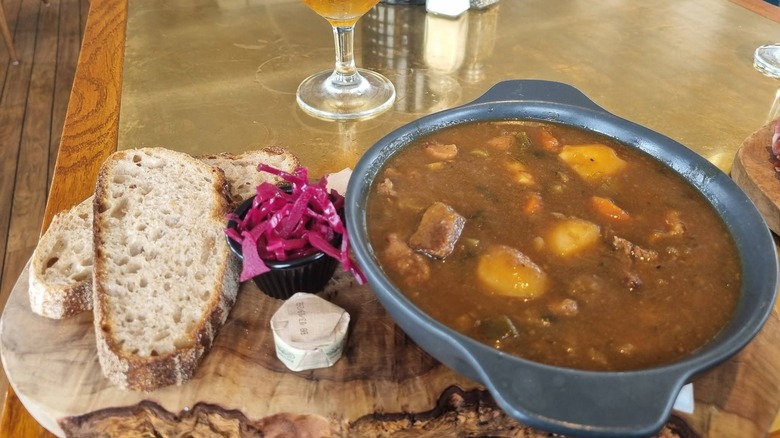
Unfortunately, nobody seems to know exactly where the stew came from. The earliest known use of the "lobscouse" occurred in 1706, but the word's origins are unclear. Competing theories say that "lob" was a regional term for "boil" or that it's derived from the Norwegian stew lapskaus.
Some people believe the dish started off as a seafood stew. For instance, Travels with Darley writes that lapskaus was made with fish and that Norwegian Vikings brought the dish with them to Wales. Lamb and beef later became popular proteins for the stew, this theory says, because they were highly accessible in Wales and England.
Others contend that the stew likely originated in Britain and made its way to northern Europe. According to Taste of History, documented word usage provides supporting evidence of that account. A variation of "lobscouse" wasn't recorded in Germany until 1878. That's more than a century after Scottish novelist Tobias Smollett referenced the stew in 1751's "The Adventures of Peregrine Pickle." The exact story, though, remains elusive.