

9 Mistakes Beginners Make With Blackstone Griddles
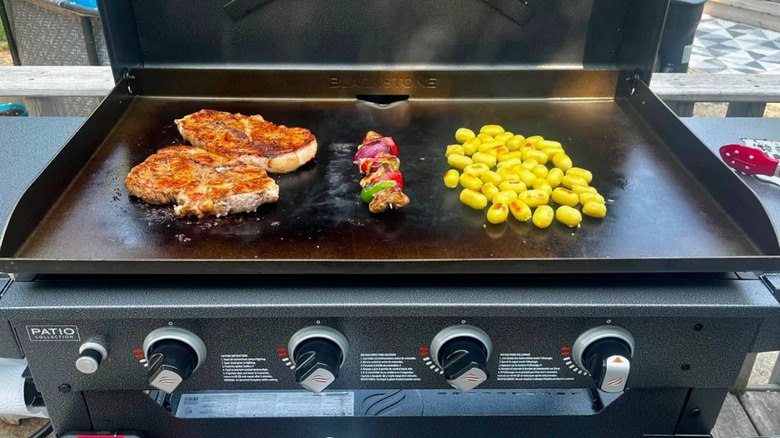
Blackstone griddles are all the rage. In fact, the hashtags #Blackstone and #Blackstonegriddle have over 1.2 billion views on TikTok. There you'll find how-tos on making everything from smash chicken caesar tacos and cheesesteak sandwiches to breakfast smash burgers and even pizza. But, what keeps people coming back to this TikTok famous flat top is the fact that it's so convenient to use. Not only can you crank out a meal in a short amount of time, but its vast surface area allows you to prepare a lot of food at once. And, you don't have to worry about flare-ups, like you do with gas grills.
But, the Blackstone can also be tricky to use; and it's easy to make mistakes, especially if you've never used a flat top grill before. In fact, there are a lot of little nuances that go into using a Blackstone correctly that beginners may not realize or may struggle with initially. So, whether you're new to using outdoor griddles or you just need a refresher course, you've come to the right place.
We talked to three experienced grillers who gave us the inside scoop on the most common mistakes people make when using their flat top grill. Below you'll find insight from Johnny Brunet, a former short order cook and founder of Griddle 101; Benton Palmer, a teacher, backyard grilling expert, and founder of Grill This Smoke That; and Dylan Clay, a grilling and barbecuing enthusiast and founder of Barbecue FAQ.
Cooking with the heat up too high
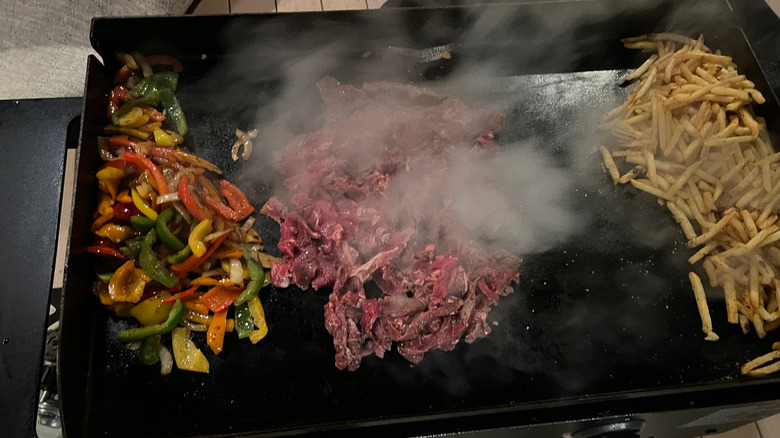
Perhaps the biggest mistake people make when using a flat top grill, like Blackstone, is setting the temperature too high. This can cause the outside of your food to burn while the inside is still raw, said Benton Palmer. "When learning to use a griddle, start with the heat lower than you think you will need."
You may also want to get to know your griddle and determine just how hot it gets on each setting, added Johnny Brunet. "You can't cook by the control knobs alone because low, medium, and high mean different things on every griddle. For example, a four-burner griddle on low will often be hotter than a two-burner griddle on low. Outdoor temperature also plays a huge role — low in Ohio in November is very different from low in Florida in July ... I always recommend using an infrared thermometer so you know the actual surface temperature."
You also want to avoid preheating your griddle for too long, Brunet added. "Once the griddle reaches your target temperature, you're ready to cook. Check it after five minutes of preheating, don't wait 15 or 20 minutes."
And, if you're unsure which temperatures to use, Brunet offered some general guidelines. He suggested aiming for about 300 to 325 degrees Fahrenheit for eggs and omelets, 375 to 400 degrees Fahrenheit for general cooking, and 450+ degrees Fahrenheit for simple smash burgers and flavorful, juicy steaks.
Failing to season your Blackstone
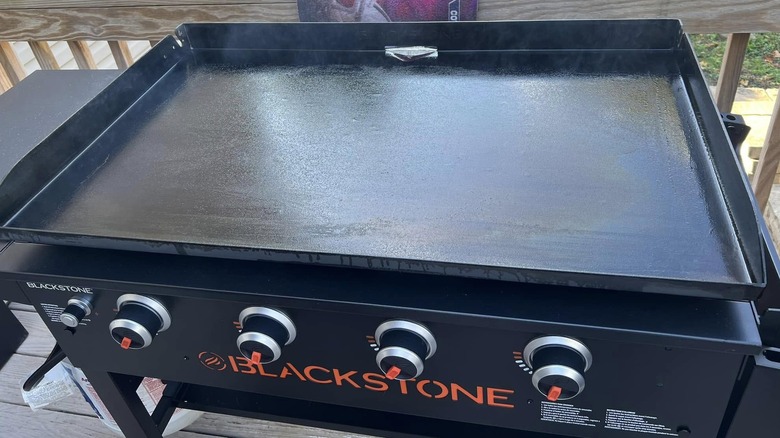
Each flat top should be seasoned before it's used. Seasoning helps create that non-stick cooking surface that flat tops are known for and helps prevent issues, like flaking and rust. You'll also want to season your griddle from time to time throughout its lifetime, too, especially if you have spots where the seasoning is starting to strip off of the griddle.
"Seasoning griddles is much like seasoning a cast iron pan," said Benton Palmer. "First, clean it with soapy water, rinse it well, and ensure it is completely dry. Add a very light coat of oil that has a high smoke point — I prefer avocado oil — spread it evenly across the whole surface [and] turn on the burners to high heat."
Palmer said at that point the surface will start to smoke as the oil polymerizes. Once the smoke begins to dissipate, he suggested adding another very thin layer of oil and repeating this process four or five times.
Just make sure you're using only a thin layer, added Dylan Clay. If the oil is too thick it'll be gummy and likely flake off, he said. "If you're a perfectionist and the edges aren't completely blackened you can even use a handheld butane [or] propane torch and heat those sections and then apply oil to them." As for what to cook for the first time on your Blackstone, Clay strongly advised choosing bacon. "There's so much fat and grease that it'll only help to promote a better seasoning."
Overcrowding your food on the cooking surface
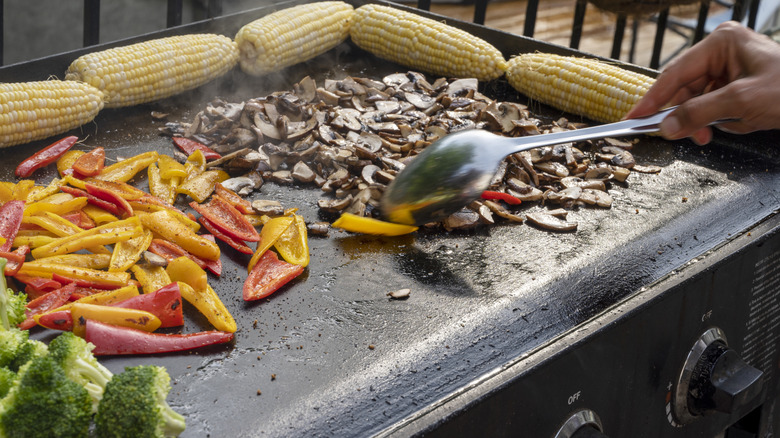
Depending on what size Blackstone you have, you usually have a large surface area to work with. Yet, many people still overcrowd their food, add too many items at once, make mounds of food, or put foods together that need to be cooked at different temperatures. This can result in food that isn't finished on time or parts that don't get as brown as you might like.
"Overcrowding is definitely problematic," said Dylan Clay. "The more food you add to the surface the more you're going to cool it down. The whole goal of cooking on this surface is to promote browning or 'Maillard reactions.'"
So if you add tons of vegetables to cook at the same time as steak or chicken, the veggies are going to leech moisture or water and cool down the cooking surface and your meat won't get nearly as good of a sear, Clay said. "More or less you're 'boiling' the veggies with the meat versus getting a proper sear on the chicken and caramelizing the veggies."
Also, make sure everything's in a single layer and not stacked up, said Benton Palmer. "It's important that everything is evenly exposed to the heat so that things finish at the same time."
Failing to establish cooking zones with different temperatures
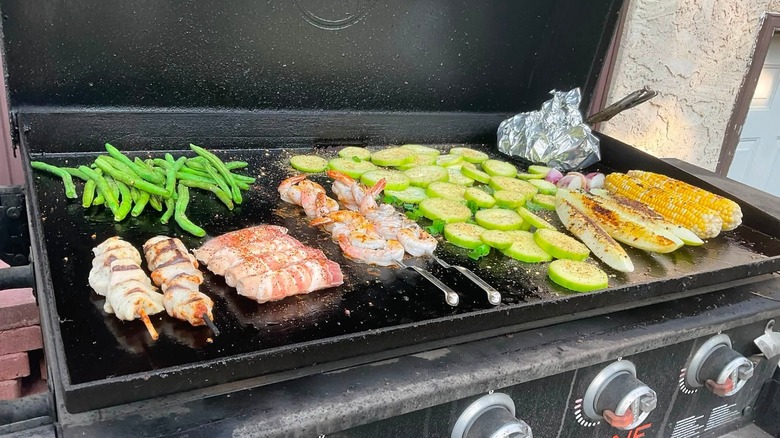
Heat zones are one of the biggest advantages of cooking on a Blackstone, said Johnny Brunet. For example, you might keep the two left burners on high and the two right burners on low, so you can sear a steak on the hot side, then move it to the cooler side to finish cooking while basting it with butter.
"I also turn burners completely off during a cook," added Brunet. "For breakfast, I usually cook eggs last because they cook so quickly. If the griddle is still too hot, I'll turn off one of the center burners and cook the eggs using the residual heat ... That usually puts me right around my target temperature of 325 degrees Fahrenheit."
That said, Brunet doesn't recommend preheating only half the griddle. "I always preheat the entire cooktop evenly to reduce the chance of warping. Once it's fully heated, I'll adjust burners up, down, or off depending on what I'm cooking."
Also, every flat top grill is different, including different Blackstone models, so check your owner's manual to understand where the burners are and which dial controls each one, suggested Benton Palmer. "Like most backyard cooks, I often make the left side of my griddle a 'warm' zone with the burner set to low or sometimes turned off, and then I move things over there that get finished first. It's a great way to stage things so everything's ready to serve at the same time."
Neglecting to tend to your food by flipping or stirring
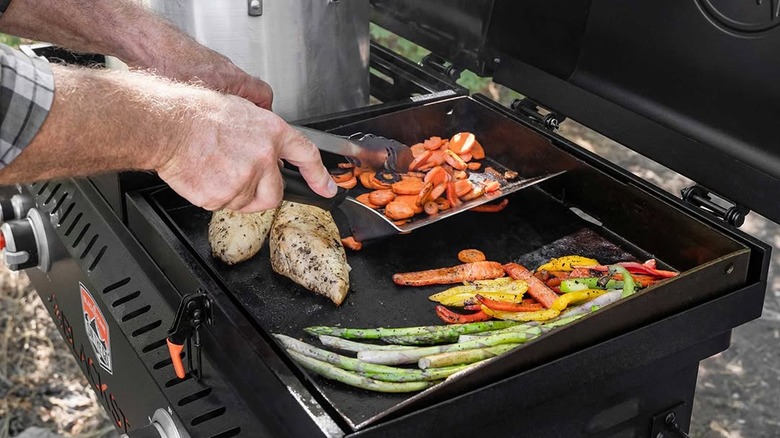
Flipping, turning, or stirring your food on the Blackstone is somewhat of an art. You want to leave your food in one place long enough to get some color or a good sear, but you also don't want to neglect it or forget about it or you are not going to like the results.
Flipping promotes more even cooking and speeds cook time, said Dylan Clay. "With veggies if you leave them in place for too long you're apt to burn them ... Charred food can be good but having all your veggies taste bitter isn't ideal."
Basically, when you're using a Blackstone, you should monitor the temperature and cooking time, moving it around or turning down the heat to avoid letting anything scorch, said Benton Palmer. "Keep in mind that the heat is only coming from the bottom when cooking on a griddle so you will need to flip, turn, and stir all items."
That said, you don't want to overwork your food either, said Johnny Brunet. "For chicken, steak or ground beef I don't flip very often because I want to develop a good sear. Hash browns are one of the best examples of a food that gets overworked. Most people flip them far too often. I recommend letting them cook untouched for about eight minutes before flipping them once. On the other hand, fried rice and stir-fries require frequent tossing with two spatulas so the sauces and seasonings are evenly distributed."
Forgetting to manage and dispose of your grease
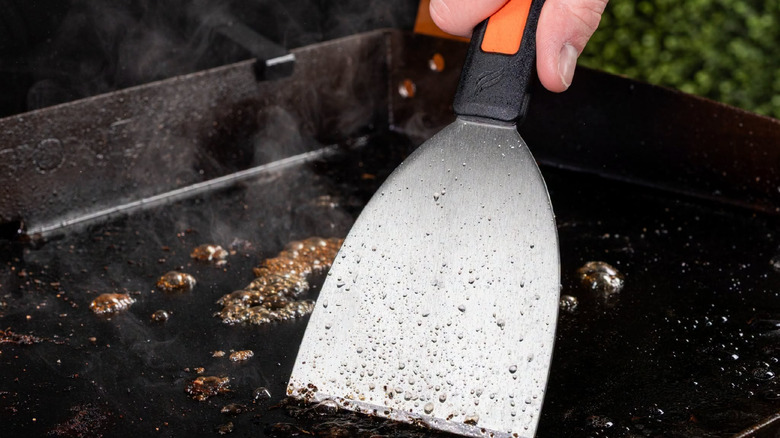
Probably one of the biggest mistakes people make with their Blackstone is forgetting to clean it and dispose of the grease after each use. But, if you don't take the time to clean it each time you cook something, old food particles can ruin the flavor of your next cook. Also, leaving your griddle surface dirty attracts bugs and rodents and can lead to rust or the seasoning flaking off, said Benton Palmer. "Users should clean and oil their griddle after every cook in order to keep it looking and cooking great."
Fortunately, cleaning the Blackstone is relatively easy, said Dylan Clay, especially because the griddle is designed with a convenient way to get rid of excess grease via the upper portion of the flat top. To clean your Blackstone, turn the burners to low and scrape the loose food toward the grease cup and wipe the surface with paper towels, said Johnny Brunet. Then, add a few tablespoons of water to steam stubborn bits loose, scrape again, and wipe the surface completely dry. He suggested finishing the cleaning process by applying a very thin coat of cooking oil to protect the seasoning, turning the griddle off, and emptying the grease cup so it's ready for the next cook. "Scraping throughout the cook also helps keep grease under control and makes cleanup much easier," said Brunet.
Choosing the wrong foods for the griddle
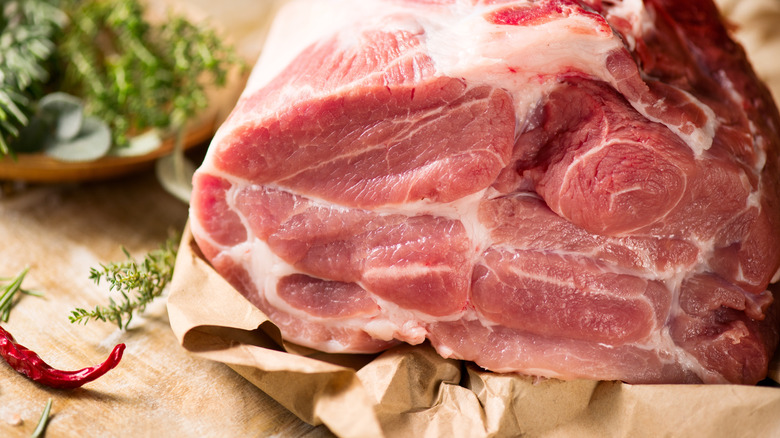
One of the great things about a Blackstone is that it's so versatile; and with a little creativity you can cook just about anything on its surface. But, not everything cooks well on Blackstone. For instance, thick cuts of meat, like briskets or roasts ,don't perform well on a flat top. Instead of trying to force your Blackstone to do something it wasn't designed for, focus on cooking the things that turn out really well on this type of cooking surface.
"The foods I'd avoid are large cuts of meat that rely on indirect heat, such as pork butt, ribs, or a whole turkey breast," said Johnny Brunet. "Those are much better suited for a smoker or an oven. Even with chicken breast, I prefer slicing it into thinner cutlets so it cooks more evenly on a flat-top."
As for what you should use a Blackstone for, Brunet said his top three beginner meals are smash burgers, a crispy fried rice, and a big breakfast. "These meals really showcase what makes a griddle special. You can cook large batches of fried rice, make two pounds of bacon without filling your house with smoke, cook a dozen pancakes at once, and make restaurant-quality smash burgers with ease. Smash burgers are probably the signature Blackstone meal. The high heat creates an incredible crust while keeping the burger juicy."
Having too many griddle accessories and failing to keep them simple
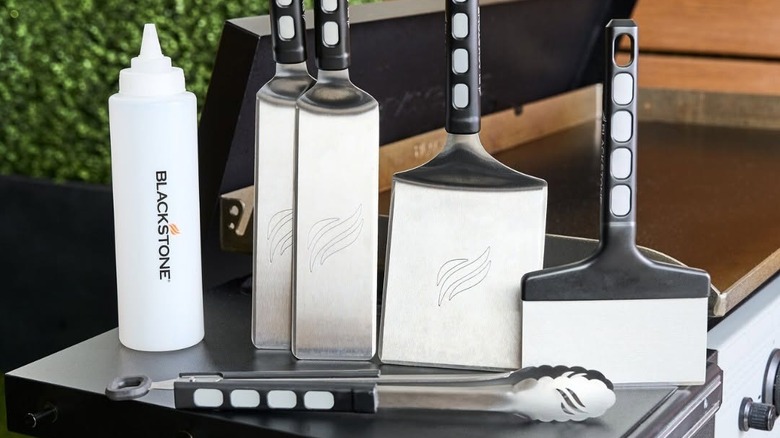
If you're just getting started with Blackstone cooking, you probably don't want to invest in a lot of accessories until you know exactly how you will be using the griddle and what would make your experience more seamless and enjoyable. After all, dumping a lot of money into a bunch of gadgets is just going to take up valuable storage space or clutter your house or garage. Instead, keep your accessories simple, said Jonny Brunet. He suggested starting with just three essentials: Metal spatulas, tongs, and an infrared thermometer.
As you become more accustomed to Blackstone cooking you may decide you want a melting dome or steaming cover. This makes melting cheese and steaming veggies a breeze and they often have a handle so you're not at risk of burning your fingers like you would with a metal bowl. Another nice tool is a burger smasher due to its perfect shape and easy-to-use handle. That said, a spatula can work just as well, but can sometimes be hard to wield for those who are shorter or in a hurry. Some people also like to use egg rings, warming racks, aluminum insert trays for the grease trap, and a silicone mat for when the Blackstone isn't in use. But, wait until you've used your Blackstone a few times before getting a bunch of gadgets and accessories. You'll be better able to tell what you truly need.
Not protecting your griddle with a hard cover
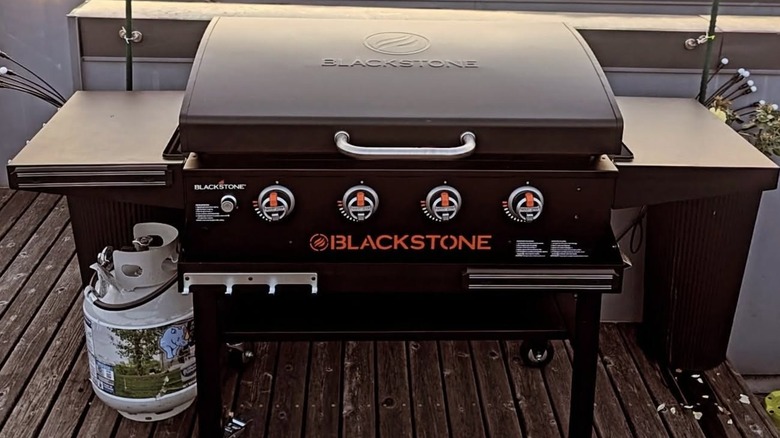
Getting a Blackstone grill is a big purchase, with some flat tops costing as much as $500 or more. That's why it's so important to protect your investment from bugs, critters, and the elements. The last thing you want to see is rust start to form on your cooking surface, because a rusty Blackstone griddle alters the food's flavor and could flake into your meals if left untreated.
"If I could recommend one accessory to every Blackstone owner, it would be a hard cover," said Johnny Brunet. "Most newer models include one, but many older models do not. A soft cover is [also] helpful, but the hard cover does a much better job protecting the cooking surface."
If you live in a colder climate, Brunet said it's perfectly fine to leave the griddle outside with proper protection. "However, storing it in a garage during the winter is even better. If space is limited, you can simply remove the cooktop and store that indoors. It's a little heavy and usually easier with two people, but it helps keep the cooking surface in great condition for spring."
He also said not to worry about an uneven-looking cooktop. This isn't an issue and not a sign of poor care. In fact, Brunet said it's completely normal for a seasoned Blackstone to have different shades of black and brown. "The only time you should be concerned is if you see rust developing."