

7 Banned Foods Everyone Was Eating In The '70s
Food evolves with society. People's wants and needs regarding food and nutrition change along with the economic, social, cultural, or ecological trends. Quite simply, foods that are widely loved and eaten today could lie forgotten on shelves and pantries ten years or so from now. It could be for many reasons, like rising costs in food production, manufacturing processes becoming obsolete, and scientific research revealing that a certain food is harmful to our health. You reading this today will undoubtedly look fondly back on some of your favorite foods that would no longer be around 50 years in the future.
But, before we get ahead of ourselves, let's go back to the past in — the 1970s, to be exact. It was a time when food was fun and colorful, seafood was abundant and cheap (sadly, thanks to overfishing), and diet-friendly food and drinks were being made to align with the public's rising interest in fitness. Find out what everyone was eating during that decade, why some of them ended up getting banned, and what it means if you find similar products in supermarkets today.
Sodas sweetened with cyclamate
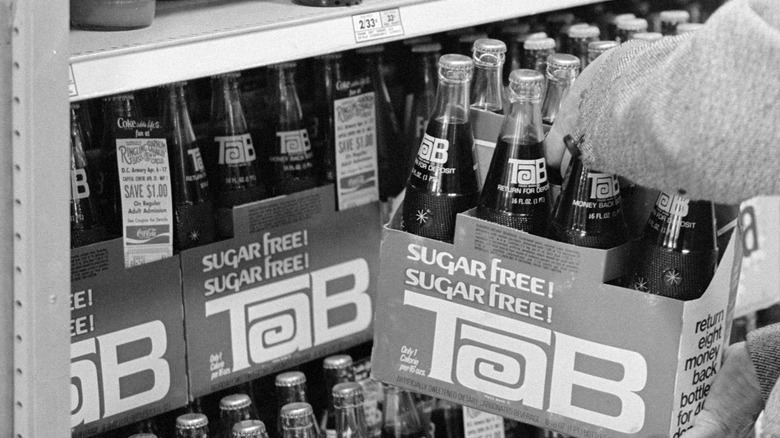
The diet soda craze started in the 50s with No-Cal, then soared in the 60s when beverage giants started using artificial sweeteners to accommodate people with diabetes and entice weight loss enthusiasts. Coca Cola launched Tab and Fresca, Royal Crown Cola made Diet-Rite, and Pepsi came up with Patio/Diet Pepsi. Out of the available artificial sweeteners, cyclamate quickly became the sweetener of choice by beverage manufacturers.
Cyclamate was discovered in 1937 by chemist Michael Sveda, who accidentally licked the sweet substance from his unwashed hands while taking a smoke break. Cyclamate was the ideal sweetener. It was cheap, versatile, and had zero calories, despite being 30 to 50 times sweeter than table sugar. But, its popularity was short-lived. In 1969, a troubling discovery about cyclamate's links to cancer prompted the FDA to revoke its GRAS (generally recognized as safe) status. Soda companies had to comply with the new regulation and immediately switched their formulations to saccharin.
The ban on cyclamate was announced in October 1969, but its effectivity was not until February 1, 1970. Stocks of sodas with cyclamates could have remained in the market between those months and in people's pantries shortly after. Fortunately, people who continued to drink them didn't have to worry. Recent research shows that the original findings were misleading (scientists injected 350 cans' worth of diet soda per day into the test subjects) and don't prove that cyclamates are carcinogenic. Despite several attempts otherwise, cyclamate continues to be banned in the U.S.
Canned food with lead-soldered seams
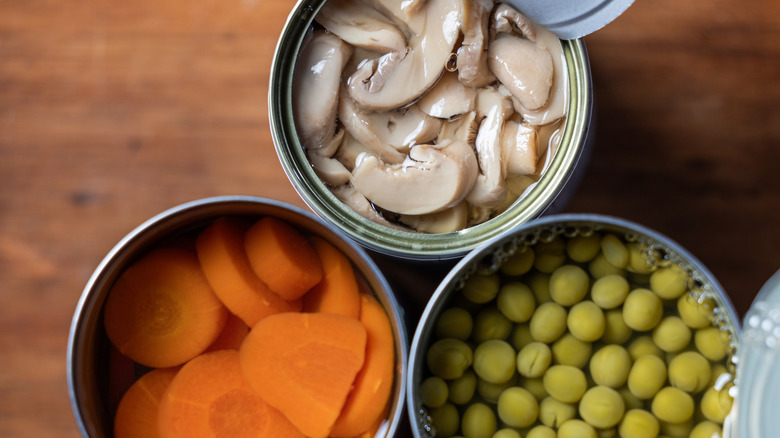
Before electricity and refrigerators were invented, people searched long and hard for methods to make food last longer. The French started by testing bottles as containers while the English used pottery and iron. Then, in 1809, Nicholas Appert developed heat-sealing for sterilizing containers; the following year, Peter Durand applied this method on tin cans, laying the groundwork for present-day canning.
There have been many setbacks in the history of canning. There was the horrendous discovery of spoiled meat in hundreds of cans produced by a Romanian company in 1852, the difficulty of opening tin cans prior the invention of can openers, and the persisting risk of botulism outbreaks due to improper canning methods, which has already led to some of the biggest food recalls in U.S. history. By the 1970s, however, one major setback was that people in this era were eating food from cans that had been sealed with lead solder.
According to the FDA, 90% of canned food was lead-soldered in 1979 (via The Washington Post). The longer they were kept, the higher the chances that lead leached into the food within. Subsequent research corroborates this: Data shows that 78% of the US population in 1976-1980 had low-level lead exposure, which is enough to produce effects like deteriorating IQ and adverse behavior in children. It wasn't until 1991 that the FDA prohibited lead-soldering in U.S. canning factories, and in 1994 that it banned all lead-soldered canned food from circulating in the market.
Maraschino cherries, red M&Ms, and food and beverages with Red No. 2 dye
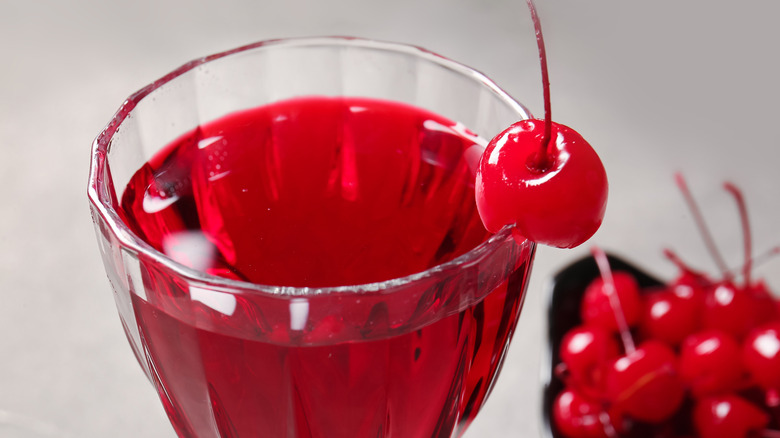
Artificial dyes have been widely used in food, drinks, and cosmetic products for decades. One of the most frequently utilized artificial color additives in the 70s was Red No. 2. It was found in maraschino cherries, soft drinks, candy, cereal, ice cream, and more. The dye commanded a $4 million market and was used in $10 billion worth of food products by 1976, according to The New York Times. Red No. 2 could be found in such a wide variety of food, everyone was likely consuming it in the early to mid-1970s.
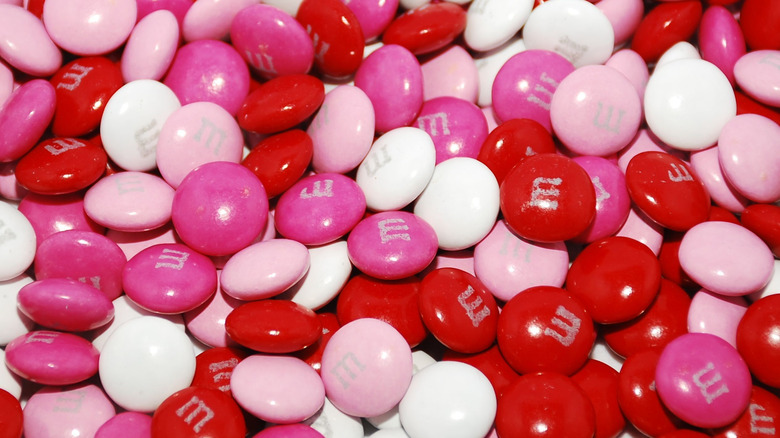
Red 2's dominance abruptly ended, however, when a research study at the Moscow Institute of Nutrition claimed that it caused tumors in rats. A widespread health scare followed, made worse by news headlines claiming things like drinking too much strawberry soda could lead to abortion in pregnant women or cancer. The FDA finally banned Red No. 2 from food products in 1976 (if you ever wondered why Mars discontinued red M&Ms for more than 10 years even though they never used Red No. 2 dye in the first place, this is why).
The research that led to Red 2's ban was later proven to be terribly flawed and insufficient, but the FDA continued to enforce its ban. Decades later, the agency would also prohibit four other artificial dyes, including another crimson, Red No. 3, in 2025.
Violet candies, food, and drinks with Violet 1 dye
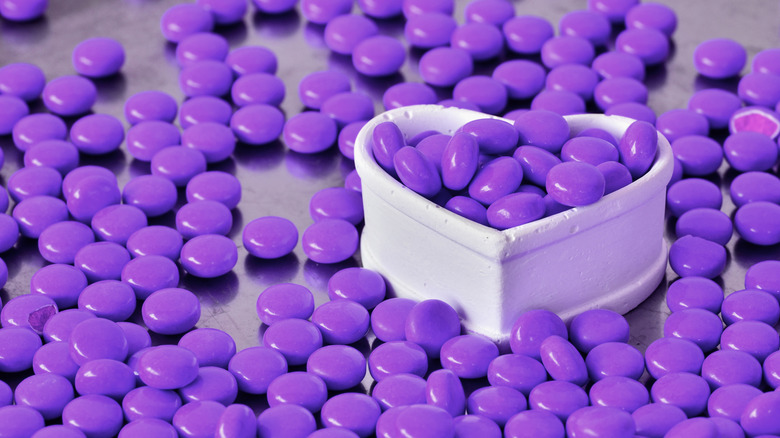
When whispers about the alleged adverse effects of Red No. 2 starting to gain traction in 1969, the year the Moscow research linking the additive to cancer tumors in rats was conducted, forward-thinking manufacturers immediately looked for possible alternatives for the bright red dye. They found benzyl violet, also known as FD&C Violet No. 1.
Just like Red No. 2, Violet No. 1 was widely used in a variety of food, beverages, cosmetics, and pet food. It was also the dye the USDA used for stamping inspection grades on beef carcasses. According to The New York Times, the agency's meat stamping activities constituted 30% of all Violet No. 1 use in the U.S. until the early 1970s.
Considering that the country's regulating agency for food safety was using the purple dye, one would think that it has undergone and passed extensive testing for toxicity and other concerns attached to artificial food additives. And, so, it was surprising when the FDA suddenly pulled the plug on Violet No. 1 in 1973. The catalyst this time were Japanese researchers who allegedly discovered that the dye is carcinogenic. The FDA cancelled the certificates for Violet No. 1 and banned it from food, medicine, and cosmetics manufacturing. However, since the agency didn't order a recall of all dye-laced products already in the market, people would have continued eating candies, ice cream, grape-flavored drinks, and other Violet No. 1-dyed food, perhaps until the mid-70s.
White abalone
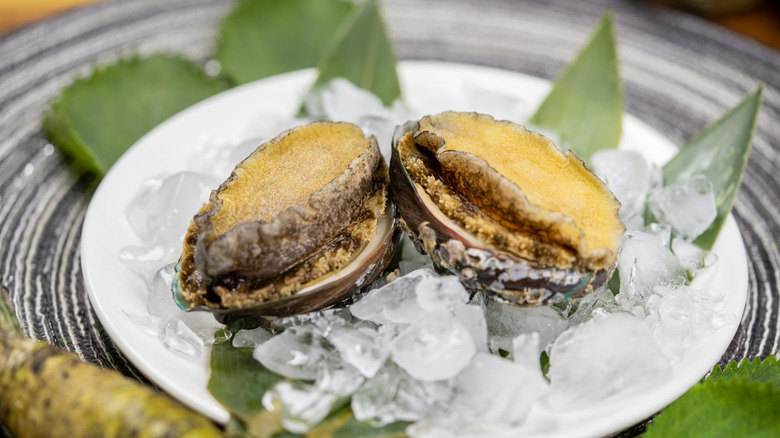
White abalone was wildly popular and a staple in seafood restaurants from the 60s to 80s. This period of commercial fishing along the California and Mexico coasts was brief, but, unfortunately, also intense. According to the National Oceanic and Atmospheric Administration (NOAA) website, 99% of the white abalone population in Southern California has all but disappeared due to overfishing between 1970 and 1980. The highest annual harvest was 65 metric tons in 1972 (via SFGate). But, by the 80s and 90s, underwater surveys revealed that the white abalone population dwindled from up to 5,000 per acre to less than one. Harvests drastically decreased to one metric ton per year until 1995.
To save white abalone from extinction, the California Fish and Game Commission started closing all commercial and recreational fisheries in 1996; then, in 2001, white abalone was officially declared an endangered species. This meant that harvesting, importing, and eating white abalone became illegal. If you see abalone in menus today, that would be any of the legally available varieties, like red, green, or black abalone.
What made this once-popular, endangered sea snail so special? White abalone is succulent and more tender than other abalone species. Many describe the texture and flavor as a cross between a scallop and squid. It was usually sautéed with butter or stir-fried. The iridescent shells were also collected and used to make jewelry and decorative items.
Sassafras tea

Sassafras is native to Eastern North America and widely acknowledged for its medicinal benefits. The tea from its roots and bark were used to treat common ailments, like fever, diarrhea, and arthritis. People also believed it could help cure kidney and urinary tract issues, even syphilis. It was also given to women recovering after childbirth. In more recent times, safrole oil was also used as a flavoring additive for root beer.
Despite the long history of medicinal and recreational uses of sassafras, it was eventually banned by the FDA when subsequent research revealed that sassafras oil or safrole is carcinogenic. In its pure form, the oil's toxins can be absorbed through the skin and cause adverse effects, like skin and eye irritation, nausea, diarrhea, and vomiting. Looking back on its historical uses, it's remarkable how sassafras was so widely used when modern research says ingesting as little as 5 ml can be toxic to adults.
Sassafras oil or safrole was officially banned in 1960, which prohibited it from being added in food and beverages. Then in 1976, the agency banned growers from selling and transporting the bark and roots, which are used for making sassafras tea, across state lines. But, despite the warnings and headlines against sassafras, there are many who still make the tea and enjoy it at home.
Margarine with partially hydrogenated fats
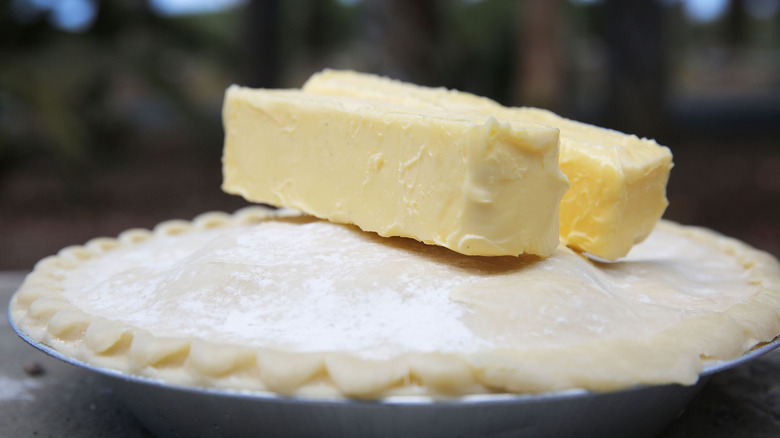
Today, it is widely known that the consumption of trans fats, whether synthetically made or from natural sources, increases the risk of obesity, heart attacks, and other serious illnesses. But, in the 1970s, a dairy product rich in partially hydrogenated oils (PHO), which is a major source of trans fats, took off in the U.S.: Margarine.
When butter became scarce during World War 2, margarine had slowly overtaken it in popularity. Even Eleanor Roosevelt was said to have enjoyed it with her toast. By 1970, the National Geographic says the average American consumed ten pounds of margarine annually. In the next two decades, margarine became a staple, not just in grocery shelves, but also in everyday baking and cooking in American households.
But, of course, scientists and health professionals eventually caught up and started educating the public that trans fats should be avoided at all costs. The 1990s was a decade of rising health consciousness in the country, and in the succeeding years, margarine makers reformulated their products to reduce, if not entirely remove PHOs. The FDA also stepped up and removed the GRAS status of PHOs in 2015. The agency gave manufacturers until 2021 to completely get rid of PHOs from their food products.