

The Biggest Changes To Ever Hit Starbucks
Whether you like it or not, Starbucks — just like many other fast food chains — is one of the many fibers that constitute the tapestry of America's urban and suburban locales. Go to an airport? There's a Starbucks. Pop by the mall? There's a Starbies. Drive to the grocery store? There's another one. Stay at a hotel? It's serving the Siren. It's everywhere. But while the corporate giant may seem like a steady presence in U.S. consciousness, it's actually gone through a surprising amount of change throughout its decades-long history.
Since the early 1970s, Starbucks has been slinging coffee to customers thirsty for a caffeine fix. And while you might want to brush up on everything that's wrong with Starbucks, it's also worthwhile to explore the launches, policy changes, and design decisions that have grown its presence. Go ahead and browse this bit of coffee shop history before you read up on the rules you should know before ordering at Starbucks. Once you're done, you may just find yourself inspired to take a trip and order something new or even make note of everything that's changed since you last stopped by.
Espresso drinks differentiated the chain
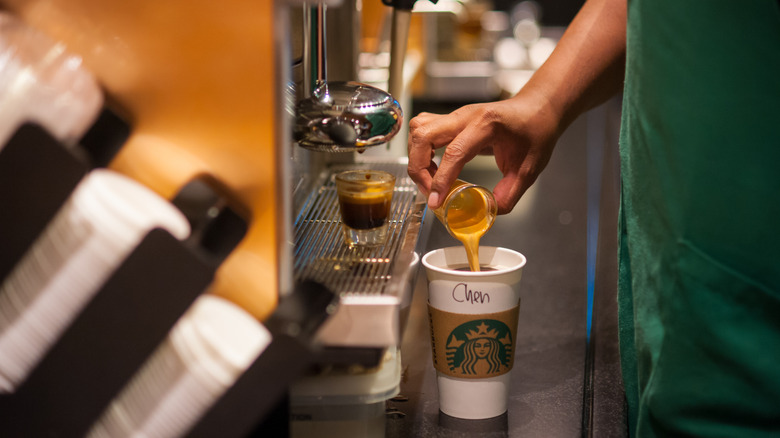
Before there was the modern American cafe complete with specialty beverages, endless customizations, and high-speed Wi-Fi, the humble coffee shops of yore simply offered brewed drip coffee and not much else. But Starbucks, then in its early form, decided it was time to innovate.
In 1982, Howard Schultz was hired as Starbucks director of retail operations and marketing. The next year he traveled to Milan where he was captivated by the Italian espresso bar concept and devised a plan to introduce European coffeehouse culture to Seattle. In 1984, Starbucks gave the proposition a trial run and started slinging lattes and espresso at its downtown location. The concept popped off, inspiring Schultz to found his own company, Il Giornale, in 1985, which used Starbucks beans for its coffee and espresso offerings.
Two years later, Il Giornale acquired Starbucks and became the Starbucks Corporation, all thanks to that fateful trip to Italy. The addition of the espresso bar made Starbucks a destination. And it fundamentally changed the game for the American coffee shop scene, bringing Starbucks into a new era — one with greater variety than basic drip coffee.
Personal cup discounts hit the scene in the 1980s
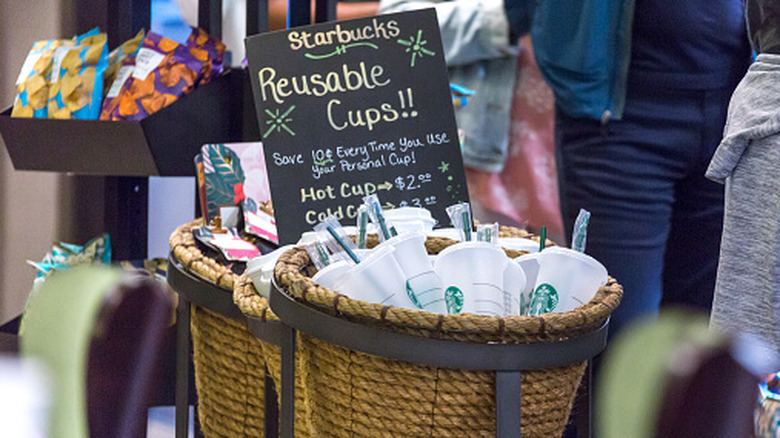
Talk of climate change seems to be everywhere nowadays, but Starbucks was ahead of the curve when it came to monitoring its environmental footprint. In 1985, the chain rolled out a policy offering a 10-cent discount to customers who brought in a personal cup for their coffee. Apart from the interruption caused by the COVID-19 pandemic, Starbucks has maintained the program for decades now. More recently, the chain has begun offering Starbucks Rewards members double stars for using a personal cup in addition to the 10-cent discount.
In 2024, Starbucks took the personal cup program to the next level, allowing customers to use their own vessels for drive-thru and mobile orders, subverting the longstanding in-store-only policy. The chain doesn't have a stellar record when it comes to sustainability, however, and CNBC reported in 2022 that the chain plowed through a whopping 7 billion disposable cups worldwide per year. Nevertheless, Starbucks continues to press forward with various initiatives like providing its own reusable cups and offering recyclable takeaway cups.
Picking up your morning pick-me-up got faster with the introduction of the drive-thru
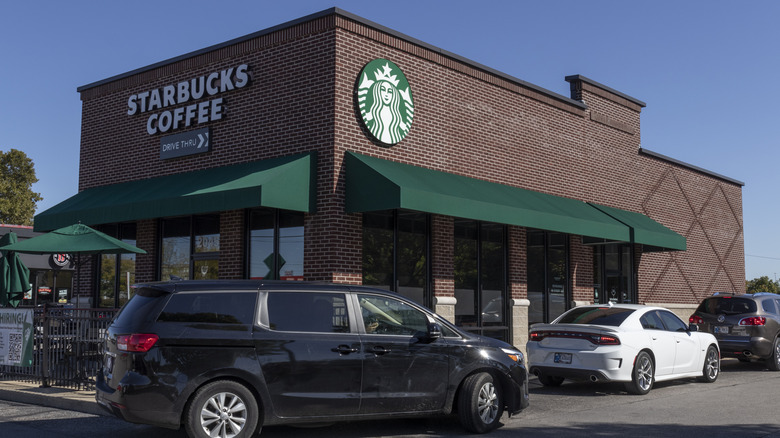
For ages, coffee was something you brewed in your own kitchen or leisurely sipped on at a diner. And then it morphed into a version of the European third-place coffeehouse culture. But there's no denying that many Americans move through life at breakneck pace. And Starbucks knew it had to keep up.
The chain debuted the Starbucks drive-thru in 1994, testing the concept in car-centric Southern California. Fixing up customers' caffeine fix while they waited in the comfort of their vehicles became the convenience-culture innovation coffee drinkers didn't know they so desperately needed. By the end of 2005, nearly 15% of the chain's U.S. footprint offered a drive-thru option.
As of 2025, nearly 60% of coffee in the U.S. is bought in the drive-thru lane, according to the National Coffee Association. Even though this seems to indicate that zipping up to the window is the fastest route to a caffeine boost, there is at least one reason you should skip the Starbucks drive-thru.
Alternative milk helped the chain reach more customers
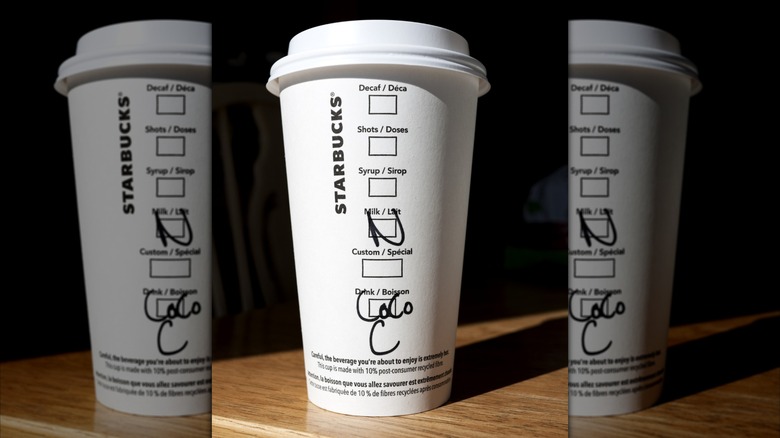
Hit up an old-school diner, order a cup of joe, and your customization options are likely limited to cream and sugar. But for those with lactose sensitivities or plant-based dietary preferences, dairy just won't cut it. So, in 1997, Starbucks rolled out soy milk on its menus to reach those who can't or won't sip on cow's milk.
More recently, as the restaurant industry began to take more notice of allergies and the rise of lifestyle choices like veganism, plant-forward beverages have hit the mainstream. In 2015, Starbucks introduced coconut milk to its roster. The following year, almond milk hit the scene. In 2019, the chain tested oat milk to great success and formally launched it in 2020.
To really solidify its stance on alternative milk, Starbucks rolled out signature drinks like the Almond Milk Honey Flat White, the Coconut Milk Latte, and the Oat Milk Honey Latte. And in 2024, it officially cut the non-dairy milk upcharge, allowing customers to sip on their beverage of choice without the extra cost.
Starbucks started selling coffee beans in grocery stores
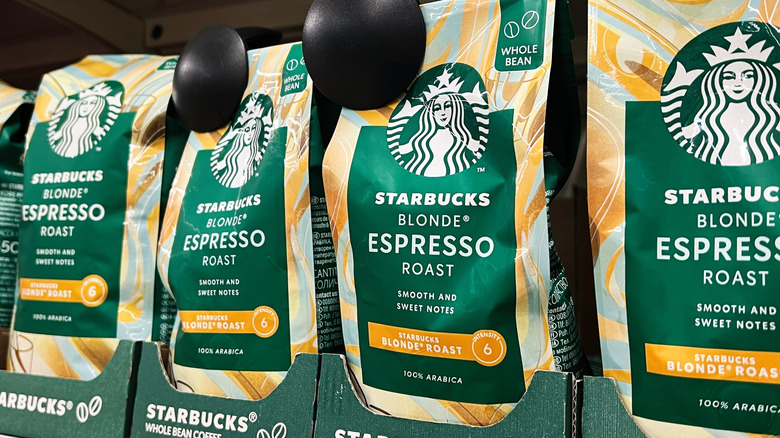
There's something special about coffee from your cafe of choice. Whether it's the ambience that somehow enhances the taste or the unique roast, it can be difficult to recreate the vibe in your own kitchen. But after a few decades in business, Starbucks finally found itself in pantries and next to percolators all across the U.S. thanks to its retail grocery coffee program.
The decision wasn't made lightly because in the late '90s Starbucks was known for its in-store experience and customer service. Nonetheless, the coffee chain partnered up with Kraft Foods Inc. (which also produced coffee for the budget-friendly Maxwell House brand) to roll out Starbucks beans on tens of thousands of grocery store shelves throughout the country. Starbucks also had certain parameters for its retail products, such as packaging and shelf life, which helped its loyal customers recreate the coffeehouse taste at home. Over time, it also expanded into bottled beverages like Frappuccinos and the ready-to-drink Starbucks favorite that came to grocery stores a couple of years ago.
The early Starbucks Rewards program encouraged customers to keep coming back
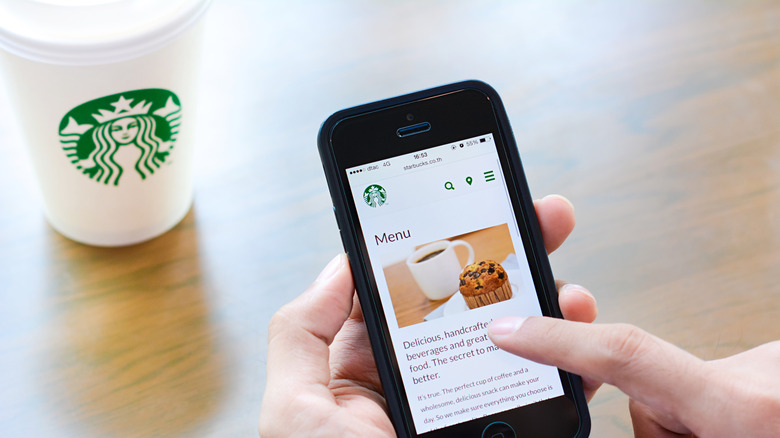
Nowadays, it seems like every chain restaurant pushes smartphone apps to roll out deals and instill loyalty. But when Starbucks launched its rewards program back in 2008, it felt innovative. It began with the Starbucks Card rewards, followed by the Starbucks Gold Card a few months later. In 2016, the coffee giant switched to a purchase-based structure, and by 2018, the Starbucks Rewards app was the most downloaded among quick-service restaurant loyalty apps.
Despite its popularity, structural changes have caused customers to raise eyebrows. Updates made it clear there was less bang for your buck, like in 2019 when Starbucks required customers to earn 150 points to get a free drink instead of 125. A revamp in 2026 has received significant pushback. It features a three-level tier structure: Green, Gold, and Reserve. The distinct benefits for each tier make it less accessible than previous iterations of the rewards program. It also eliminates a key benefit of earning double stars when you reload your Starbucks card in-app.
"[Starbucks] knew that very few people were going to do the math to see how much of a scam this really is," one Redditor expressed in frustration. "The new system is about only giving real loyalty to the people who are basically calling Starbucks their second home."
A simplified logo signified a new era
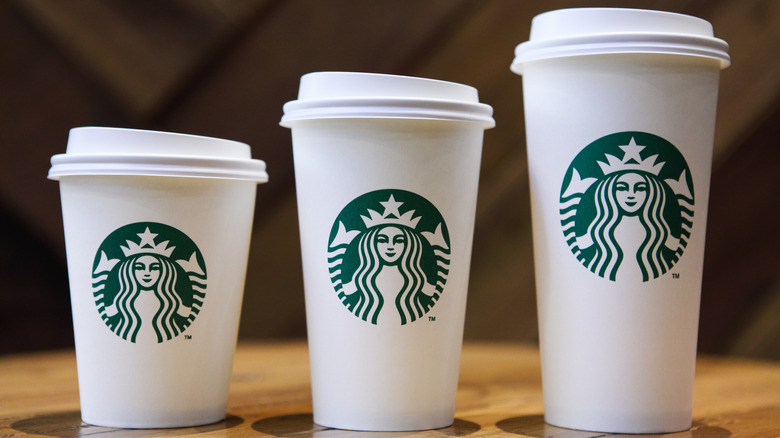
Starbucks has always sported a siren on its logo, but she's taken a few different forms over the years. Starting in 1971, the siren was always pictured between the words "Starbucks Coffee." The two-tailed mermaid was the creation of corporate artist Terry Heckler and former creative partner of Starbucks co-founder Gordon Bowker. The maritime design drew inspiration from Seattle's oceanside geography and the nautical history of the coffee industry.
But in 2011, Starbucks simplified the logo, dropping the text. It was a marker of a new era as the chain hit its 40th anniversary, and since then the stylized siren has stood on the cups solo. Without being pigeonholed by the word "coffee," the mermaid symbol can now stand for all the other beverages and food the chain offers. Nonetheless, the redesign came at a time when other global companies like Apple were getting a minimalist makeover, and some argue that the simplification was more of a brand dilution. Even the biggest coffee nerd, however, might not have picked up on the Starbucks logo detail people can't believe they've never noticed.
Starbucks acquired Teavana, marking an expansion of its menu
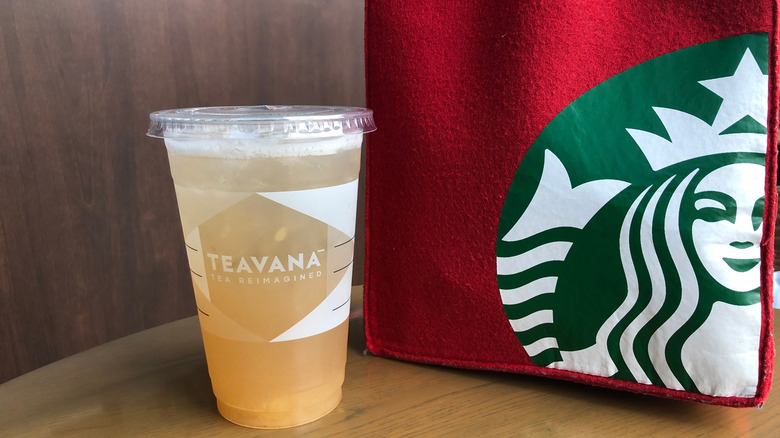
By the early 2010s, Starbucks was leading the pack in chain coffee and espresso. But the company had room to grow in another crucial area: tea. Starbucks had previously acquired Tazo in 1999 for just over $8 million, but the brand's core focus was grocery store products. To really become a major player in the tea industry, Starbucks had to branch out.
So, in 2012 Starbucks bought out high-end beverage brand Teavana for $620 million in cash. A Starbucks financial release announcing the acquisition explained, "Together, Starbucks and Teavana will jumpstart the next wave of growth in this dynamic category, leveraging Starbucks core competencies of real estate, design, and store operations and integrating these with Teavana's world-class tea authority, global sourcing capabilities, merchandising, and best-in-class retail store unit economics."
At the time, Teavana had over 300 brick-and-mortar locations in shopping malls, capturing a key audience Starbucks needed to tap into. The acquisition introduced a new and improved tea roster that complemented the chain's robust espresso menu.
Refreshers captured the afternoon beverage market
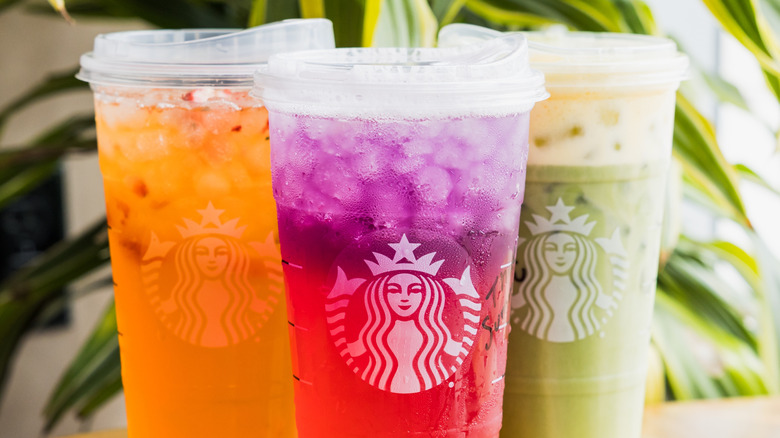
Coffee or tea? Those seem to be the go-to options at cafes. But after customers have had their a.m. caffeine fix and the morning rush has passed, who needs another beverage? Why stop by a coffee shop twice in a day? Enter the Starbucks Refresher.
Launched in 2012, Refreshers were a brand new menu category that was neither traditional coffee, tea, nor soda. Instead, Refreshers introduced several flavors featuring fruit juice, real fruit pieces, ice, and a jolt of caffeine from unroasted green coffee extract.
Refreshers have been a worthwhile investment, as the chain notes that they're responsible for bringing customers in even after they've had their morning cup of joe. In the nearly 15 years since they launched, Refreshers have become a $2 billion asset for Starbucks — its second most-profitable after espresso beverages.
Cold brew revolutionized Starbucks' iced coffee roster
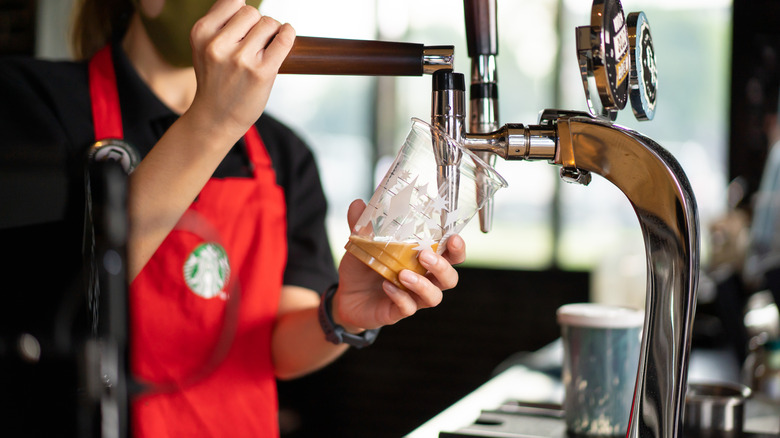
Drop into any coffee shop and you can all but guarantee cold brew will be on the menu. But flash back one decade, and the iced beverage wasn't so ubiquitous. When Starbucks rolled out cold brew in 2015, it was a rather novel concept.
The launch of cold brew (followed by velvety-smooth nitro cold brew in 2016) transformed the chain's cold coffee offerings. One of the many untold truths of Starbucks cold brew is that slowly steeping coffee in cool water produces a richer flavor than coffee brewed hot and poured over ice. "Iced coffee and espresso beverages have a stronger, roastier flavor with a bit of nuttiness that comes from brewing with hot water," Michelle Sundquist from Starbucks' research and development team told Nation's Restaurant News ahead of the cold brew release. "Our cold brew is smooth and rich. It's very refreshing, with chocolate and light citrus notes."
Starbucks offloaded Tazo to narrow its tea focus
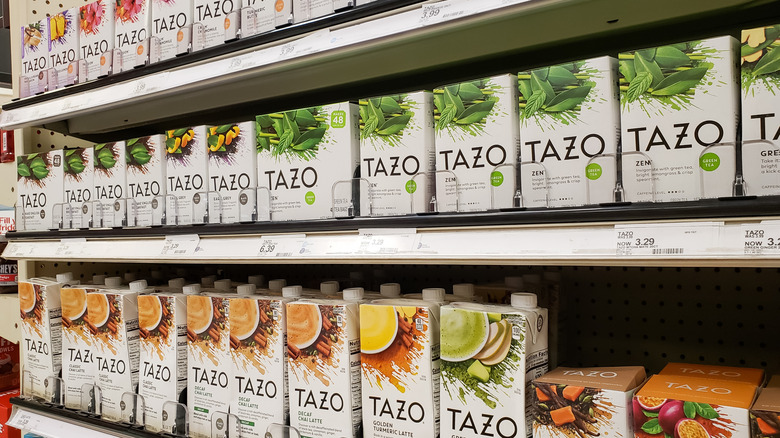
Five years after the coffee giant acquired Teavana, Starbucks decided it was time to say goodbye to the tea brand that got them into the game in the first place: Tazo. In 2017, Starbucks sold its Tazo tea brand to Unilever for a jaw-dropping $384 million. Considering the coffee chain purchased Tazo for just over $8 million in the late '90s, you could say it was a pretty good return on investment.
Unilever welcomed the deal with the coffee giant, noting Tazo's appeal to millennials, similar to its other brands like Ben & Jerry's, Seventh Generation, and Dollar Shave Club. Meanwhile, the move helped Starbucks hone in on its Teavana offerings, which logged well over $1 billion in sales the year leading up to the announcement. For comparison, Tazo made a measly $112 million during the same time frame. Considering how nearly a decade later Teavana beverages still make up a serious portion of the menu, it's safe to say offloading Tazo was the right call.
Strawless lids changed the coffee cup game
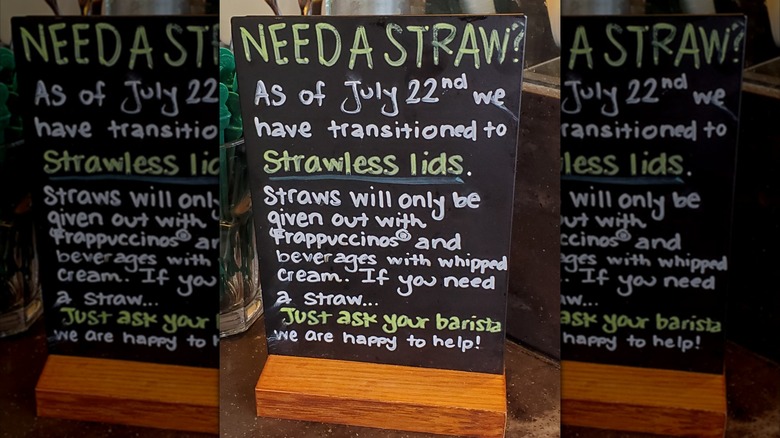
There's something almost ceremonial about punching a plastic straw through its paper sleeve, then puncturing the lid and finally taking a long, luxurious sip of an ice-cold beverage. It's a ritual everyone who has indulged in fast food has participated in. But in the name of eco-consciousness, Starbucks launched a design that changed the cold coffee cup game.
In the style of children's sippy cups and disposable hot coffee vessels, Starbucks started testing strawless lids in a handful of North American cities like LA and Indianapolis in 2019. The following year came the widespread rollout, and the updated design reportedly uses roughly 9% less plastic than the old lid-and-straw combo.
Though not all beverages received the new lid (like the whipped cream-topped Frappuccinos, which get a domed lid and straw to preserve fluffiness), you're all but guaranteed to have sipped out of one of these strawless designs in the past few years. In fact, it's become so ubiquitous that other chains ranging from national to local have started following suit.
Ariana Grande's Cloud Macchiato kicked off an era of major celebrity collaborations
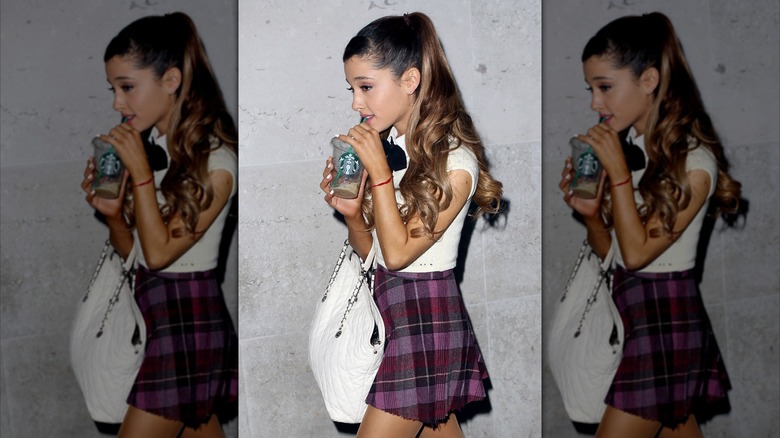
In the post-pandemic age of social media, celebrity collaborations are everywhere. Open your phone, and you'll inevitably see an influencer or bona fide famous person promoting a food or beverage brand. But in 2019, the concept had yet to completely dominate. So when Starbucks launched a new beverage line in partnership with Ariana Grande — who was still in the early stages of her meteoric rise to success — the collab was a bold strategy.
Grande's Cloud Macchiatos came in two flavors: cinnamon and caramel. Served hot or iced, the "cloud" aspect of the drink could be attributed to the hefty layer of fluffy foam on top. Though fans delighted over the collaboration, critics were more attuned to the shortcomings of the partnership. As writer Katherine Gillespie wrote for Paper Magazine, based on Grande's paparazzi photos, "I'm certain she generally avoids milk-based Starbucks drinks anyway (she's a cold brew gal), which makes this whole collaboration even more of a chilling and cynical charade." As for its flavor, Gillespie wrote, "The Cloud Macchiato tasted like any other novelty Starbucks drink: overpriced, sickly sweet, and inherently basic — but was perversely enjoyable for those same reasons."
Nevertheless, the collaboration has spurred other partnerships, like Khloe Kardashian's protein latte to complement the rollout of her Khloud Protein Popcorn in Starbucks stores. And ahead of the premiere of "The Devil Wears Prada 2," the coffee chain rolled out a line of drinks inspired by the characters.
The COVID-19 pandemic brought big changes to Starbucks' service model
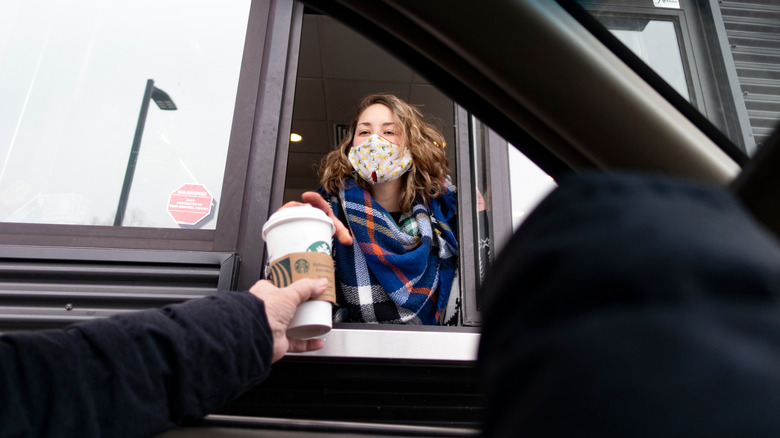
The world as humanity knew it was thrown for a loop during the COVID-19 pandemic, but the restaurant industry was hit particularly hard as chains were forced to change protocols and adapt to new hygiene standards. During that time, Starbucks pulled back the use of personal cups in stores and removed condiment bars. Though carried out in the name of safety, these policy changes made customers' morning coffee ritual a little less personal.
But even after pandemic-era standards eased as life returned to normal, Starbucks opted not to reinstate the condiment bars. It prevented customers from further modifying their beverages with self-serve milk, creamer, and sweeteners, and was done in the name of efficiency since condiment bars were hard to keep clean and stocked. Nonetheless, many customers felt the move sanitized and removed a quintessential aspect of the coffeehouse experience. Eventually, in 2025, the condiment bar came back. And after five years, it was a welcome change for loyal customers.
Back to Starbucks is trying to bring the chain back to its roots
Starbucks was seriously falling from public favor when the chain hired new CEO Brian Niccol in 2024. For some customers, it had become a soulless corporate giant churning out basic coffee at increasingly higher prices — a far cry from the cozy European coffeehouse vibe it was cultivating back in the '80s and '90s. But with Niccol at the helm, the chain has begun to shift its mission to reclaim its space in the coffee industry. And to do that, Starbucks has been going back to its roots.
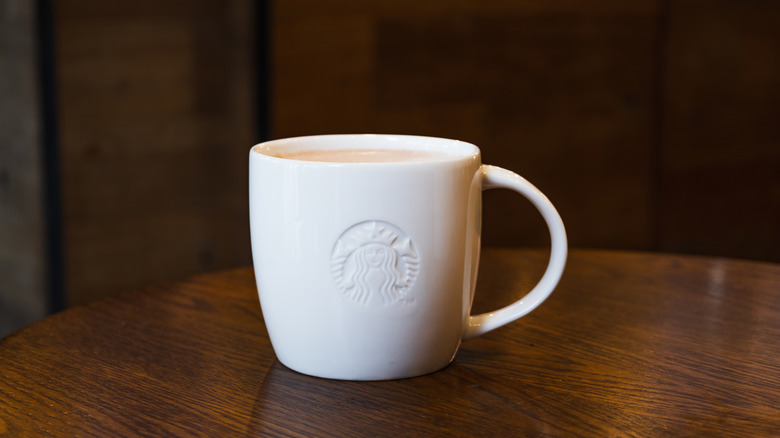
With Niccol's "Back to Starbucks" plan came a hard reset in an attempt to bring back the old-school Starbucks feel customers loved: ceramic mugs for in-store drinks, writing on to-go cups, and reinstating the condiment bar. But only time will tell if "Back to Starbucks" will bring the chain back into competition with the growing market of niche, independent coffee shops that pepper urban locales.