

11 Chain Restaurant CEO Scandals That Made Headlines

It is unusual for the general public to know the name, much less recognize the faces of the chief executives of famous restaurant or fast-food chains. Recognizable CEOs are more common in tech, where people like Steve Jobs and Mark Zuckerberg are, by default, brand representatives for their respective companies. But, this doesn't mean that restaurant chains are immune from CEO scandals, and ethical or moral misconduct historically causes stock declines and sows distrust among investors. Scandals usually spread quickly on social media too, which has practically become the world's modern-day town hall.
Simply put, if a CEO of a well-known restaurant chain or fast-food chain commits corporate fraud, makes tone-deaf statements, or is revealed to have committed something deeply unethical or immoral, the public will know about it. Business can also suffer because once a restaurant chain gets a bad reputation, even if only by association, it usually sticks. Burger King has proven that executives can be effective brand spokespersons. But when a CEO makes poor choices, their scandals can become a chain's biggest PR nightmare. Here are 11 examples.
McDonald's CEO's itty bitty bite backfired on his Big Arch promo
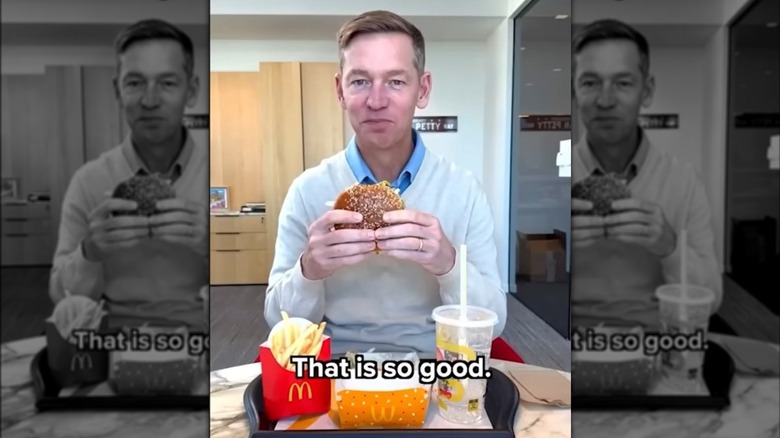
As clichéd as it sounds, actions do speak louder than words, and a CEO's actions can have a resounding impact on a restaurant chain. The viral Instagram video of McDonald's CEO, Chris Kempczinski looking unenthusiastic as he tasted the Golden Arches' newest burger proves this. The video shows the CEO introducing one of McDonald's new menu items, the Big Arch. He reveals the components of the burger and gushes over its humongous size before finally taking a bite — and it's a teeny, tiny bite. The funniest part? He says, "That's a big bite for a Big Arch!"
The video sparked a hilarious social media trend of people nibbling on the edges of their food and saying, "Hmm, that's a big bite!" The CEOs of competing fast food chains also capitalized on Kempczinski's viral moment. They recreated his video, but they made sure to take a huge bite (and in Wendy's CEO's case, four) of their own burgers.
Kempczinski laughed off the incident, but the backlash was real. It delivered the message that if the CEO himself can't seem to stomach his burger, then it mustn't be good. "He didn't eat the rest of it," one Instagram comment said, while another went, "Not a single calorie was consumed in this video."
Chipotle's CEO faced backlash for tone-deaf statements
CEOs are often afforded a lot of trust and authority. Everything they say is given a lot of weight, so they are expected to at least give honest and accurate public statements. If they don't, customers will think that they are being lied to, and that the brand is not worthy of their trust and patronage.
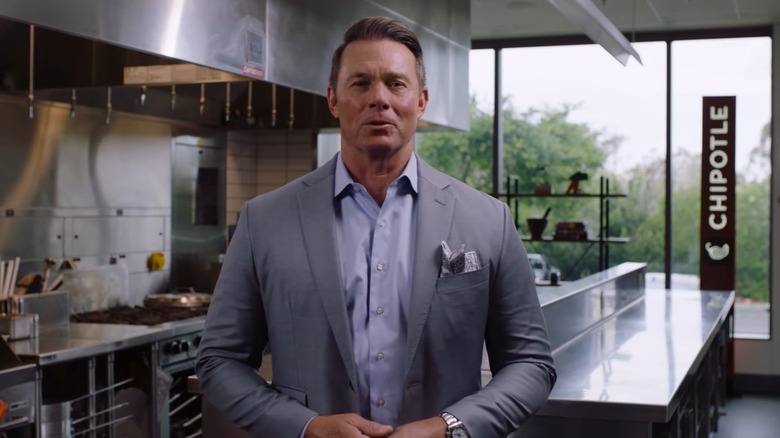
Chipotle's current CEO, Scott Boatwright, made this mistake in May 2026 when he addressed concerns that Chipotle's portion sizes have gotten a lot smaller in a podcast with Yahoo! Finance. He said customers unhappy with the contents of their burritos and bowls should just ask for more. "Full stop, no questions asked ... I promise you there's never a team member on that line that's going to say no," he said. People immediately went to the nearest Chipotle to find out if it's true, and well ... it is, but sometimes at an extra cost. Some locations can give you more of the base ingredients, like beans and rice, but the chicken and meat will be surcharged. Some customers felt deceived by this, which chipped a bit at Chipotle's image.
Jimmy John's CEO faced backlash for big game hunting
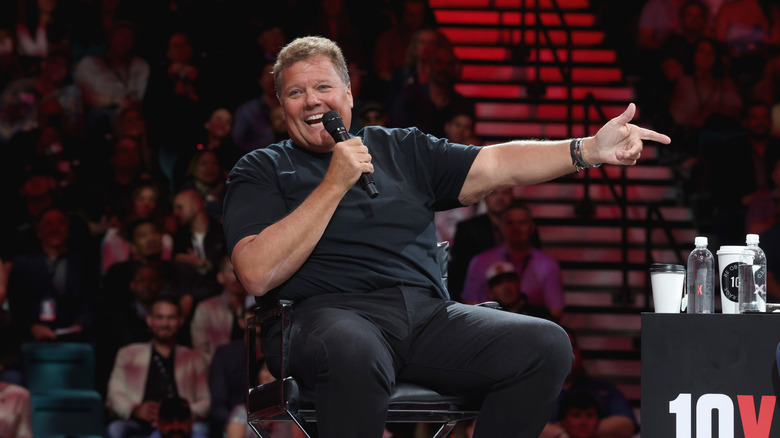
CEOs of major brands are judged not only by their business acumen but also how they conduct themselves in their private time. Any activities they do outside the office, no matter how long ago it happened, can still reflect positively or negatively on their company. Jimmy John's learned this the hard way when photos of former CEO and founder Jimmy John Liautaud on various hunting trips surfaced in 2020.
"Just a friendly reminder that the owner of JIMMY JOHNS uses the money made from his sandwich shops to KILL ENDANGERED ANIMALS!" the caption on a Facebook post read. It spurred a boycott campaign which spread quickly on X, with thousands calling to #BoycottJimmyJohns. But, this wasn't the first time Liautaud received criticism for big game hunting. Photos of him posing with downed elephants, bears, and rhinos spread on social media, but as Liautaud told the Chicago Tribune in 2015, those days are firmly in the past. He also said all the hunts he had participated in were legal.
When this story resurfaced in 2020, Liautaud was no longer the CEO or major shareholder for Jimmy John's. In 2016, Roark Capital acquired 65% of the sandwich chain; and in 2019, Inspire Brands became its new and current owner. Today, Liautaud remains affiliated with Jimmy John's as an adviser for Inspire Brands.
Papa Johns' CEO resigned after saying a racial slur
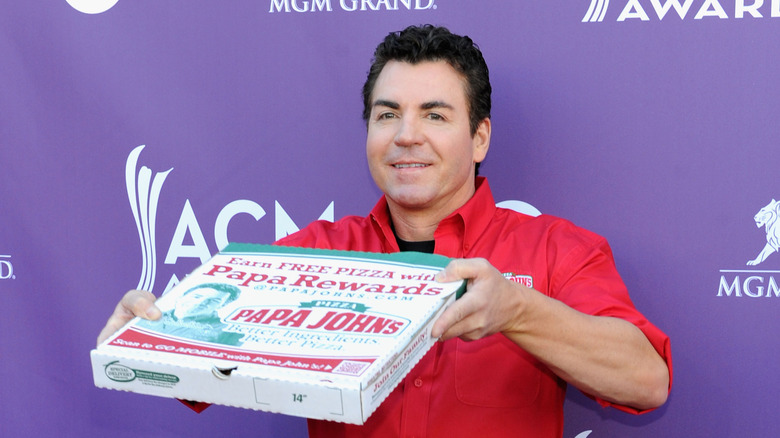
Racism is never a good look for a brand, a lesson that John Schnatter, founder and former CEO of Papa Johns (now sans apostrophe), learned in July 2018. Forbes reported that he used a racial slur in a conference call which, ironically, was a PR exercise with a marketing agency on how to steer clear from racist groups online. Worse, Schnatter uttered the N-word while alleging that Colonel Harlan Sanders said it himself without any backlash. After other news outlets picked up the report, Schnatter apologized in an official statement and then resigned as Chairman of the Board later that day.
Just a few months earlier, Schnatter had been in the middle of another PR nightmare that may have cost the chain its sponsorship deal with the NFL. During an earnings call in November 2017, Schnatter tactlessly blamed the NFL's supposed failure to handle players who took a knee in protest during the national anthem as the reason for Papa Johns' slow sales. He added that the protests "should have been nipped in the bud" early on, which didn't sit well with people who supported the players' cause.
Papa Johns tried to do damage control on X, but the company's statement pandered so much on both sides of the argument that white supremacists christened Papa Johns the official pizza of the alt-right. Schnatter resigned as CEO of Papa Johns in December; then in February 2018, Papa Johns and the NFL ended their 18-year partnership.
McDonald's CEO's fraternization scandal cost him over $105 million in severance pay
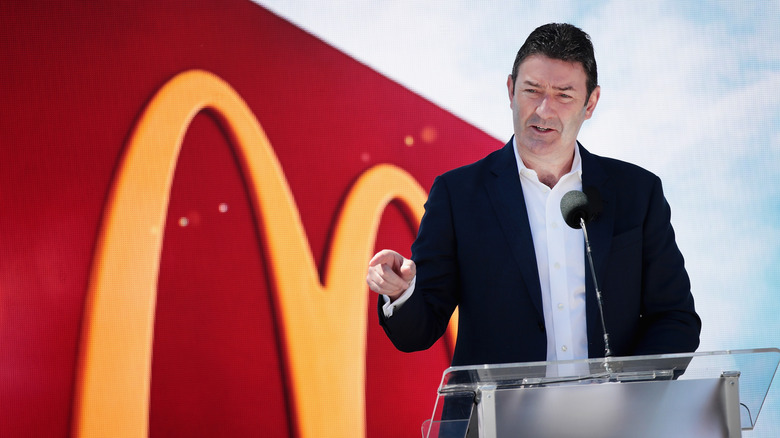
In November 2019, McDonald's faced one of its biggest corporate scandals that proves how the C-suite is inherently part of a brand. The fast-food chain fired its own CEO, Steve Easterbrook, after it became known that he had a consensual relationship with a subordinate. McDonald's has a strict non-fraternization policy, and it was enough grounds for his termination.
Despite the scandal, McDonald's awarded Easterbrook a hefty severance package worth $105 million after his firing. But, a few months later, the company sued Easterbrook for allegedly concealing the full extent of his violations: That he had relationships with not just one but three other employees while sitting as CEO. McDonald's conducted a second investigation after receiving an anonymous tip, and it was discovered that the CEO had obtained sexually explicit photos of three employees. He also granted six figures-worth of company shares to one of the employees he had been involved with.
Easterbrook's controversy also shed light on the pay disparity in the industry. He, an executive fired for misconduct, was still granted millions in cash and equity. McDonald's board argued that had it known about the severity of Easterbrook's violations, they would have forfeited his severance. The SEC sanctioned and fined Easterbrook $400,000 in civil penalties; and in December 2021, Reuters reported that Easterbrook agreed to return his $105 million severance package to McDonald's.
FAT Brands founder and CEO went to prison for falsified tax returns and fraud
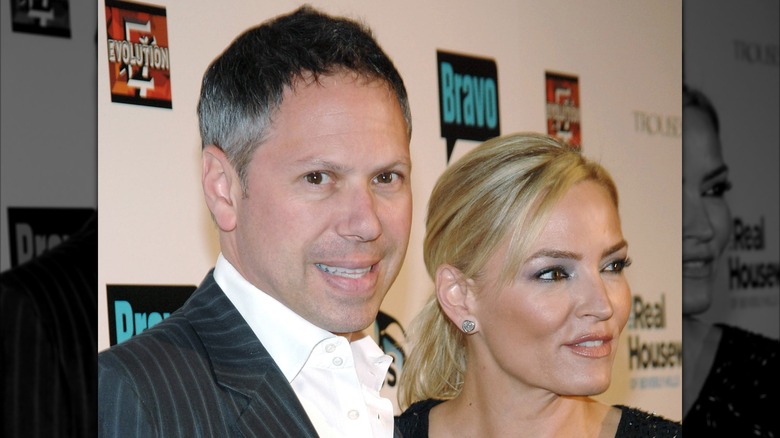
Of all the CEOs on this list, FAT Brands' Andrew Wiederhorn has the longest list of controversies dating back two decades. Weiderhorn was a self-made millionaire from Portland who first accumulated wealth after founding an investment and holding company. Toward the late 90s, it was revealed that he and a co-conspirator had drained pension funds from union groups across Portland, a scandal that was once considered the largest pension fund fraud in the country. Law enforcement unearthed his scheme (Wiederhorn would loan millions from the companies he controlled via an accomplice, and those loans would simply be forgiven later on) and convicted him on charges of tax evasion and payment of an illegal gratuity. Wiederhorn went to jail for 15 months, from 2004-2005.
After his release, Wiederhorn's family relocated to Los Angeles, where he took over management of Fatburger and later founded FAT Brands, a franchising company that bought and franchised struggling bars and restaurant chains in the following years. Then in 2023, Wiederhorn was once again investigated for failing to declare $47 million in personal income and evading taxes. He and FAT Brands' former CFO allegedly disbursed funds disguised as shareholder loans for his personal use (the loans, as before, were later forgiven). He stepped down as CEO after news broke about the SEC's investigation, but he returned in 2025 after all charges were suddenly dropped.
Buca di Beppo executives served jail time for fraud
Buca di Beppo is another publicly traded restaurant chain whose executives allegedly misused company earnings for personal use. There had been early signs of accounting fraud within the company, which some employees attempted to report to Human Resources and higher officials. Unfortunately, it turned out that the CEO, CFO, and controller were all in on the scheme.
Buca di Beppo's then-CEO, Joseph Micatrotto was investigated by the SEC in 2024 following a tip from an employee turned whistleblower. According to the SEC, Micattroto made illegal ATM withdrawals worth $131,000, billed Buca di Beppo for a long list of personal expenses (which included airline tickets, luxury dog kenneling, his son's wedding dinner, two house remodeling projects, and a villa in Italy), and colluded with the CFO and controller in misappropriating the company's funds.
Once the SEC made its investigations known, Buca di Beppo fired Micatrotto and his co-conspirators. They were soon after sued for corporate fraud, specifically for inflating Micatrotto's income through inappropriate accounting and under-declaring his taxable income. All three pled guilty in June 2006, and were sentenced in March of 2007. The former CEO was ordered to pay over $1 million in fines and repayments to Buca di Beppo, as well as sentenced to 13 months in prison with three more years of supervised time. The CFO and controller were also given prison sentences and were ordered to pay six figures in fines and repayments.
Sweetgreen CEO was under fire for fatphobic comments
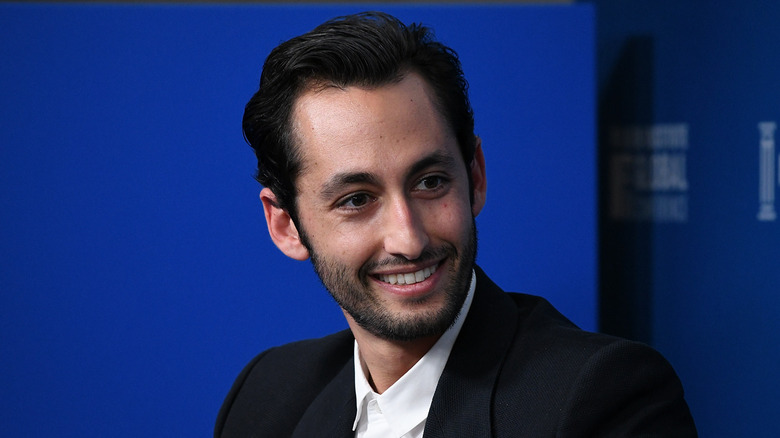
Back in 2020, the co-founder and CEO of the popular salad chain Sweetgreen, Jonathan Neman, faced a lot of backlash over a now-deleted LinkedIn post about what he believed people truly need to do to survive the COVID-19 pandemic. He wrote, "78% of hospitalizations due to COVID are Obese and Overweight people. Is there an underlying problem that perhaps we have not given enough attention to? Is there another way to think about how we tackle 'healthcare' by addressing the root cause? (via Entrepreneur)"
While there is some truth to what Neman said — comorbidities like obesity did make the symptoms of COVID infection more severe and deadly — it was clear that he was setting up obesity as a "root cause" for the fatalities. He also said that COVID is staying and "no vaccine nor mask will save us," implying that only good health will. The problem with this statement is that "good health" in this context means "not overweight." Neman's post left readers confused and offended because it sounded like people should eat salads to avoid succumbing to COVID.
With the public calling Neman out as fatphobic and elitist for ignoring systemic factors like a problematic healthcare system and expensive food costs, the CEO issued an apology in a conference call to his employees. But, he also doubled down on his statements, emphasizing Sweetgreen's mission of building healthier communities by providing access to real, freshly sourced, and nutritious food.
Animal rights activists pressured a Denny's CEO to support animal welfare
In January 2023, the non-profit organization, Animal Equality U.S. put Denny's on blast for allegedly neglecting its pledge to source only 100% crate-free pork back in 2012. Gestation crates are narrow, seven-by-two feet metal crates used to house pregnant pigs — a cruel practice in pork production that abuses sows. After ten years passed without meaningful updates on the chain's progress, Animal Equality accused Denny's of abandoning its promise and demanded that the chain take immediate action.
Animal Equality published full-page advertisements in two newspapers directly addressing Denny's CEO, Kelli Valade. "You told the media Denny's is 'committed to the highest possible welfare of animals.' But mother pigs in Denny's supply chain live in cages so small they can't even turn around," the ad read, demanding that the CEO walk the talk.
The ad was a response to Valade's statements at the 2024 Wall Street Journal World Food Forum. She said that Denny's understands the advocacy, however, she wondered if there are underlying motives apart from concern for animal welfare. Nevertheless, Animal Equality was able to secure a renewed commitment from Denny's to phase-out gestation crate-pork and update shareholders on its progress.
Shake Shack CEO faced backlash after the chain received $10 million PPP loan during COVID
In April 2020, Shake Shack's former CEO Randy Garutti and founder Danny Meyer published a letter on LinkedIn saying that the fast-casual chain is returning the $10 million stimulus package it received from the Paycheck Protection Program (PPP). The LinkedIn post came a week after the PPP announced that it is temporarily stopping loan applications because its initial $349 billion funding had run out after just two weeks.
The backlash against Shake Shack and other restaurant chains that received millions in loan assistance was fierce and swift. Thousands of independent restaurants, bakeries, cafes, and other small businesses did not receive a PPP loan, but these large companies that already had millions in the bank were seemingly prioritized. But, despite the outrage, Shake Shack did technically qualify for the loan. The program's only requirement was that a restaurant location must have less than 500 employees, and each Shake Shack restaurant only has around 45.
Garutti and Meyer said that Shake Shack fortunately gained additional capital that would ensure the chain's stability, and that's why they decided to return its $10 million loan. The restaurant industry was severely crippled by the pandemic, and heroic efforts to support the restaurant industry and its workers were met with gratitude and acclaim. Shake Shack's reversal didn't get a massively positive reaction, but it did save them from further criticism from peers and customers.
Shake Shack founder and no-tipping advocate was sued for alleged price fixing and mishandling tips
Shake Shack's founder, Danny Meyer, is the CEO of Union Square Hospitality Group, a company that owns several New York-based restaurants, bars, event spaces, and other food and hospitality businesses. He is a famous advocate against tipping culture; he even started a no-tipping policy for key USHG restaurants in 2015. But, ironically, later that year, Meyer got sued for allegedly mishandling tips.
The lawsuit alleged that in Meyer 's restaurants, the gratuities customers typically intend for front-of-house employees, like servers and bussers, are pooled, then shared with the back-of-house, non-service, and even managerial-level employees. Additionally, the USHG restaurants reportedly charged a 20% service charge for private events, but service staff didn't receive those gratuities. Two years later, Meyer agreed to settle for nearly $700,000, which was distributed to 220 service employees who joined the class-action lawsuit.
Meyer made headlines again in 2023 when he told CNBC it's okay not to tip in certain situations. "If you're just taking out food and it was just a transaction — I give you money and you give me a cup of coffee — I don't think there's any obligation to tip whatsoever," Meyer said. It's not the most scandalous headline pertaining to a restaurant chain CEO, but his input certainly added to the ongoing debates about tipping, specifically the expectations for takeout orders.