

Brazilian Vs American Steakhouses: 5 Of The Biggest Differences
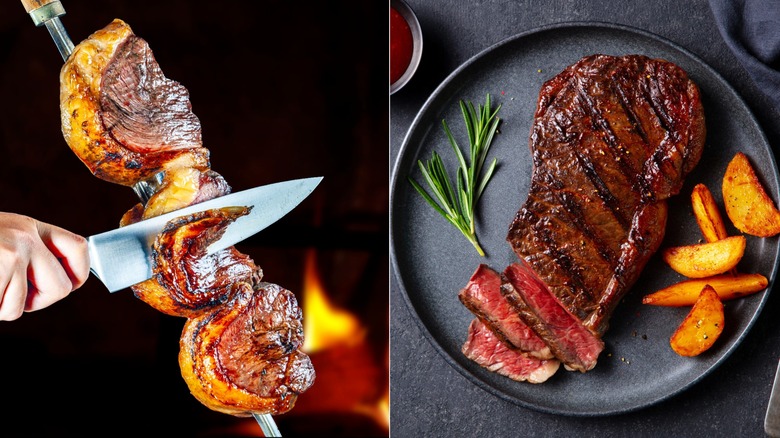
When a special occasion rolls around, few things match the pomp and circumstance of a meaty dinner to celebrate. These days, you have a whole variety of options to choose from. If you are looking at a good ol' steak, perhaps consider a style from the South. And no, we are not talking about the Southern states of the U.S. We mean much further south, from Brazil. The untold truth of Brazilian steakhouses, also known as rodizios or churrascarias, is they first appeared in the U.S. in 1995 via Rodizio Grill's debut in Colorado.
But what sets a Brazilian steakhouse apart from an American steakhouse? Its meats are often grilled rotisserie-style over open flames, and the salad bar includes Brazilian specialties and side dishes. But what truly makes the experience unique is the way the meats are served at rodizio-style buffets. Waiters make their way across the dining room floor with large skewers of meat, ready to stop at your table so you can enjoy an all-you-can-eat feast. This stems from its history in the gaucho culture of southern Brazil. Gauchos (AKA Brazilian cowboys) would cook meat over open flames and share them with each other, and this tradition soon became a popular way for everyday Brazilians to enjoy grilled meat. Eventually, it spread beyond Brazil's borders, and we can now enjoy this culinary delight in the U.S.
The meat is prepared differently
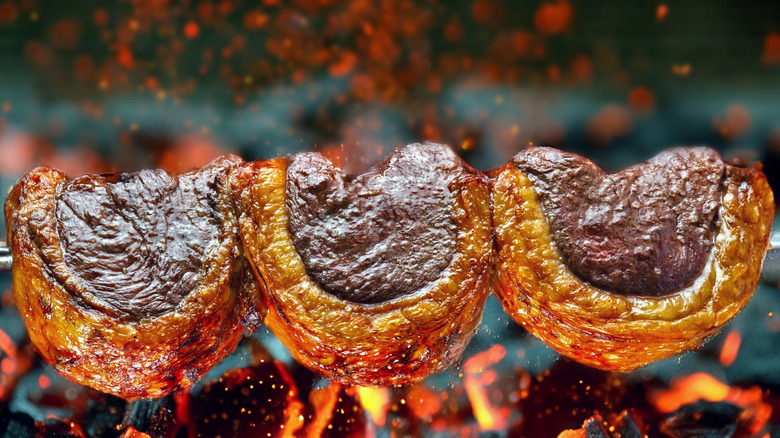
Brazilian steakhouses pride themselves on grilling meats over open flames, which gives the meat a more rustic and smokier flavor. A unique method they use on top of this is to grill the meat rotisserie-style. Imagine a kebab, but instead of bite-sized chunks of meat, there are steak-sized hunks of meat threaded on a skewer instead. This allows the cooks to prepare large amounts of meat at the same time, which then gets sent out into the dining room to be served rodizio-style (rounds of all-you-can-eat meat brought to your table). Each skewer holds one type of meat; for example, one skewer may be full of bavettes, and another will have picanha, a Brazilian beef cut butchers say America is sleeping on.
In American steakhouses, meat is not usually cooked in bulk amounts nor rotisserie style. It is very often prepared according to order, depending on the precise cut and doneness that was requested by the diner. The meat is cooked in pans like carbon steel or cast iron, or directly on a flat top, griddle or, like its Brazilian counterpart, on a grill. American steakhouses may also employ the reverse sear technique, which is especially useful for grilling thick steaks.
The meat is also served differently
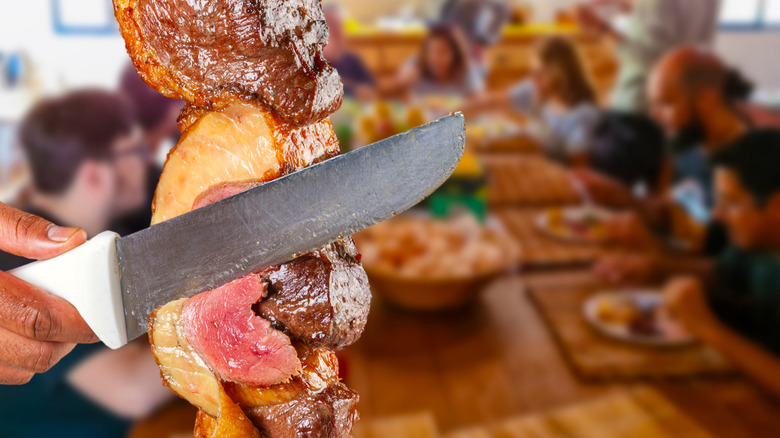
When Brazilian steakhouses grill meat on giant skewers, it's not just for ease of preparation. It is also a way for waiters to serve the meat to diners. Each skewer has multiple portions of a single type of cut (like sirloin or ribeye), or a single type of protein (like beef, pork, or lamb). The waiters then take these skewers to the dining room and stop at each table, slicing off however much the diners want. This way, diners can try different cuts of meat to see what they prefer, before loading up on their favorites in subsequent rounds, or rodizios, later. Brazilian steakhouse meats range from famous picanha, also known as rump cap; fraldinha and alcatra, bottom and top sirloin respectively; and extend to other varieties like lombo, pork loin often crusted with Parmesan; and cordeiro, bone-in lamb chops cut from a rack.
Meanwhile, American steakhouses expect diners to focus on one specific cut of meat for their meal. If you already know what you want or have a more limited appetite, this is a far more sensible option to go for. Not only will you get to order exactly what you want, you can specify the exact doneness you prefer, ensuring your meal is precisely to your specifications.
Enjoy all you can eat at a Brazilian steakhouse
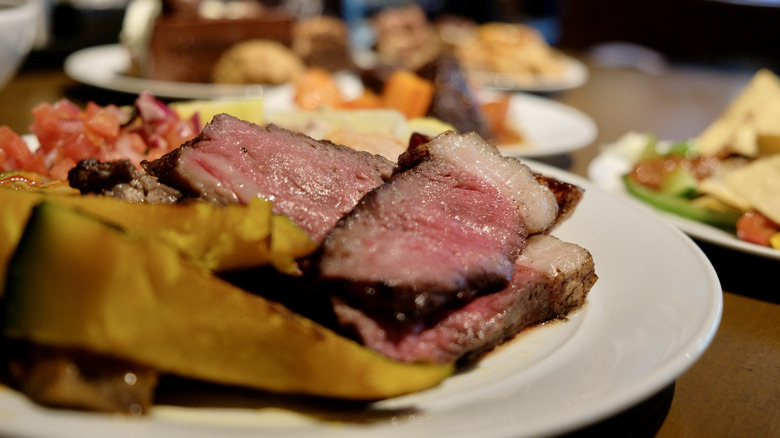
The biggest pull of Brazilian steakhouses is the rodizio concept, which is essentially an all-you-can-eat affair. While you may pay a higher price upfront for the experience, you will be able to access all the delicious meats the waiters bring around the dining room. Each diner gets a token or card that is red on one side and green on the other. Waiters stop at all the tables with the green side of this token displayed. So if you are currently chowing down on some food, flip the token over to the red side and the waiters will know to skip you. Note that even if the green side displayed, you are not obligated to partake every single time a waiter stops with food. Take what you want and politely decline what you do not.
In American steakhouses, diners often focus on just one entrée per person. This works best if your dinner party is not the sharing kind (a totally valid position to take!), or if you are not very big eaters. This means everyone can order exactly what they want prepared the way they want it, and no one has to wait for their favorite meat to make the rounds.
Brazilian steakhouses offer a salad and side bar
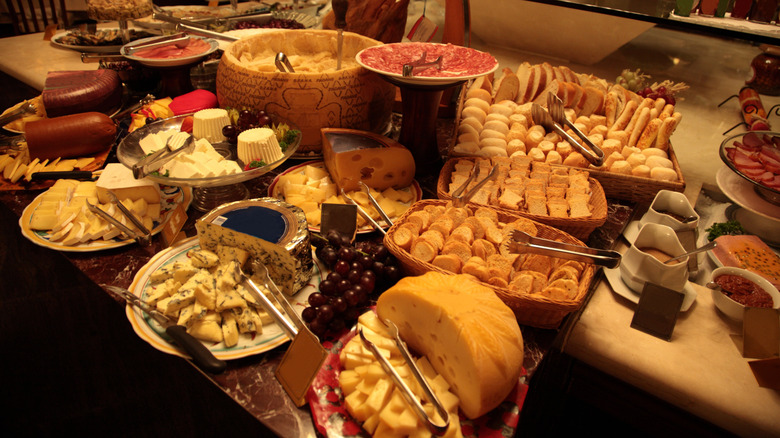
An attraction at Brazilian steakhouses is its well-stocked salad bar. We say salad bar, but it is kind of a misnomer because it does not just have mixed salad greens and dressing. It can also include all sorts of cured meats like prosciutto and salami, along with a selection of cheeses, and additional items like marinated artichokes and palmitos (hearts of palm). You can also help yourself to traditional Brazilian dishes like feijoada, a black bean stew; farofa, made from toasted cassava meal; and moqueca, a hearty fish stew. The waiters will also bring around sides like pão de queijo (made with tapioca flour and cheese) and banana frita (you guessed it, fried bananas).
Diners at American steakhouses order sides and appetizers à la carte. Depending on the restaurant, you can get all sorts of salads, soups, and platters of specially prepared items, like raw oysters or roasted mushrooms. You can order your own appetizers or sides or order them for the table to share.
American steakhouses are quieter and more secluded

Dining at Brazilian steakhouses is inherently a much more social and interactive experience than dining at an American steakhouse. By sheer virtue of the rodizio, it is absolutely natural to peer around the dining room at other tables to see what is coming up next for your dinner party. Among the secrets of a Brazilian steakhouse is you are encouraged to interact with the waiters who are your guides as you navigate the revolving selection of meats and sides. It is also a great place for you to come with a large group of friends for a livelier celebration, where you can mill about and explore the rodizio meats and salad bar together.
American steakhouses are starting to catch up with the practice of sharing plates, as evidenced by appetizer platters meant to be enjoyed by the whole table. Even larger pieces of meat can be served already cut for the dinner party to try together. On the whole, however, its atmosphere is less boisterous than a Brazilian steakhouse, letting a group enjoy their dinner in a calmer, quieter environment. Each type of steakhouse has its own charms, and once you consider the priorities of your dinner party, you will know which style suits your group the best.