

How Much Costco's Kirkland Signature Canadian Whisky Cost In 2021 Vs 2026
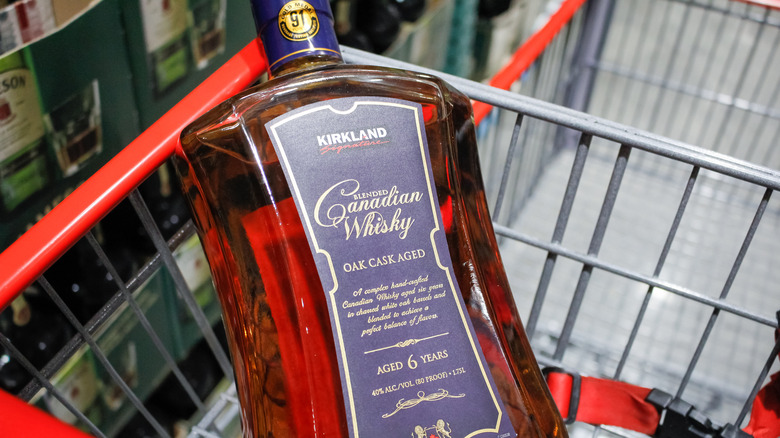
It seems like every time we go to buy groceries (or anything else for that matter), the price tags just keep getting higher. That trend stems from a number of issues, including increased operating and labor costs, international conflicts, climate-related weather events, and some good old fashioned inflation. If you're looking for some relief from soaring food bills, you might find it at Costco — and not just when it comes to the chain's famous $1.50 hot dog combo. Some of its liquor prices have also remained quite flat over the past few years, whether we're talking about the cost of Kirkland Signature Kentucky Bourbon or the retailer's Canadian whisky.
Much like the bourbon, the price of Costco's Blended Canadian Whisky hasn't changed much in the last five years. As reported by Forbes at the time, in 2021, the prices for a 1.75-liter bottle started at under $20 in some states but went up to just under $30 in others. One Reddit user also cited the price as being "around $20" in a post from 2021. As of the time of writing in 2026, the price of the Kirkland whisky is just about the same, ranging from $17.99 to $29.99. Per Warehouse Runner, a price tracking aggregator that compares data from Costco locations across the United States, the average price for a bottle is currently $19.72.
How Costco is able to keep its liquor prices so stable
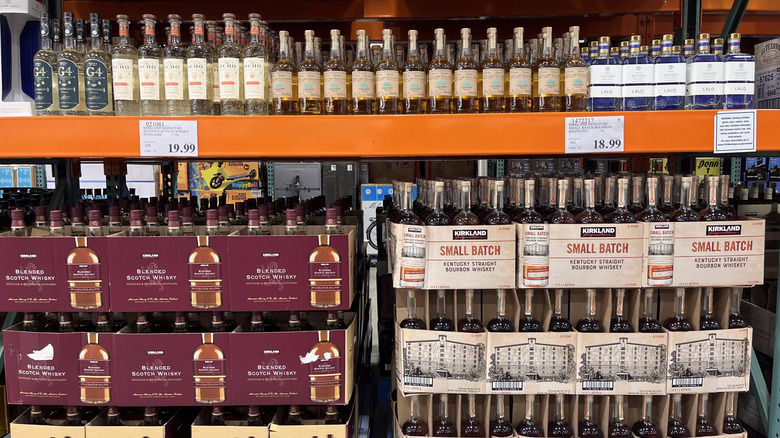
Costco's Blended Canadian Whisky is aged for six years in oak casks, and is frequently praised by reviewers for its quality and taste, making it one of the best Kirkland Signature liquors you can buy. In fact, it's been favorably compared to the much pricier Crown Royal Canadian whisky — and is reportedly even made in the same facility. So, you may be wondering: What makes Costco's Kirkland spirits, so cheap?
Turns out, there are a few factors. First of all, the company saves money by selling the booze under its own private label, a strategy that allows it to work directly with manufacturers, avoid the middleman markups, and purchase items in bulk. Costco is then able to pass those savings directly on to its customers. Secondly, the retailer doesn't let the profit margins on products exceed 15%. Compare that to markups other stores may be charging you on groceries, and you're sure to notice the difference. For liquor specifically, it's common to see retail markups of 25% to 50%.
Lastly, of course, is the revenue stream every Costco member is well aware of: its membership fees. Because the warehouse store makes money through its membership model, it's better equipped to weather those storms of inflation, tariffs, and other unexpected shifts in the economy. It's an added layer of security that keeps customers coming back — and paying for the privilege to do so. And hey, the proof is on the price tags.