

What Is The Typical Lifespan Of A Samsung Refrigerator?

If you're in the market for a new refrigerator, chances are longevity ranks high on your list of necessities, maybe even higher than storage space or new technical features. While Samsung is one of the largest names in the kitchen space, it's also an overpriced appliance brand. Samsung fridges range from $699 for a basic model to upward of $6,400. But that's if you want a 30-foot fridge with all the bells and whistles, like Samsung's digital family hub, its SmartThings software that helps optimize energy consumption, or the ability to make four types of ice. The real question is, realistically, how long should these refrigerators last? According to the brand's website, a Samsung fridge should last 10-15 years on average. That lifespan tracks with other labels, as the U.S. Department of Energy explains that the average refrigerator should last 12 years.
Of course, a suggested timeframe isn't a guarantee. Some fridges may quit years before you expect, while others could last their full projected lifespan — it just depends on the make and model of your appliance. Models with ice makers, water dispensers, and upscale technology are more likely to need repairs down the line. In fact, Consumer Reports revealed in 2023 that 31% of refrigerators with ice makers develop an issue within five years, as leakage, space, and upkeep can become hassles over time.
Maintaining your Samsung refrigerator

While a decade of fridge life sounds promising, getting the most out of your Samsung appliance requires more than just installing it and letting it run. If you want your refrigerator to reach its expected lifespan, you'll need to do some maintenance. For one thing, Samsung recommends a deep clean every six months to keep the inside of your fridge in tip-top shape. It has a few deep spots that can trap spills and other ingredients, so staying on top of this will eliminate further issues. At the same time, the company also suggests replacing the water filter every six months to avoid faulty water pressure and bacteria buildup.
Sometimes life gets in the way and you may occasionally forget to dump out old food, but many of Samsung's refrigerators come with crisper drawers equipped with a humidity control setting, allowing you to preserve your produce. More importantly, the temperature setting helps prevent mold growth in your fridge, as long as you adjust the settings accordingly. Of course, seasonal care is also paramount. As the weather gets warmer, you can trap heat in your fridge without even realizing it, so consider leaving a 2-inch gap on all sides of the appliance to ensure air circulates properly. Routinely practiced together, these simple tasks can help you get the most out of your Samsung fridge.
What if your Samsung refrigerator breaks?
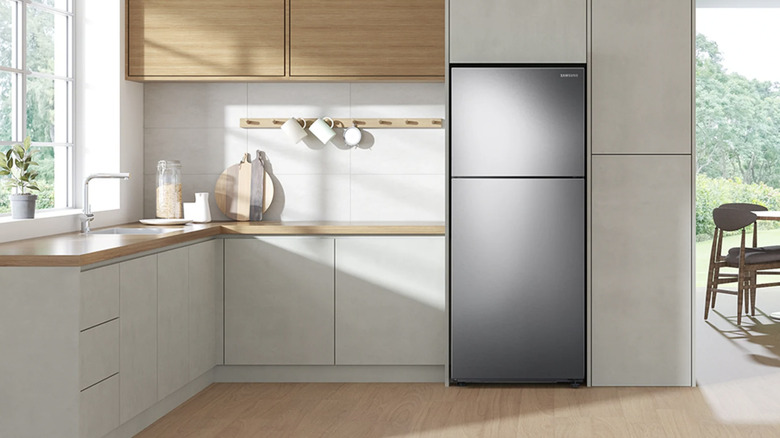
Samsung's refrigerator warranty can provide peace of mind when making this large purchase, but before you swipe your card, it's crucial to know the extent of what's provided. Most Samsung refrigerators come with a one-year warranty that covers parts and labor. Occasionally, the brand offers a two-year version. Samsung also provides a five-year warranty for parts and labor on sealed refrigeration systems, as well as 10-year coverage on digital inverter compressors. Even though the coverage varies by model, it's important to know when yours expires, as customers have reported complaints within the first few years.
As one Reddit user wrote, "I'm an owner/operator of an appliance repair company and see a lot of new Samsung refrigerators with either a bad compressor or the ice maker is broken." A 2026 Consumer Affairs review echoed this sentiment: "The refrigerator's ice maker stopped working and repeatedly freezes over — a known issue with this model," they wrote. "Samsung previously sent a technician who 'sealed' the ice maker box, but the problem returned. When I contacted Samsung again, they refused to send another technician and instead offered only $300 toward purchasing a new refrigerator." A Samsung fridge can last you over a decade, but that's not always a guarantee. Knowing how to maintain it and what your warranty covers can make your investment more worthwhile.