

What British Sailors Added To Their Rum In The 1700s
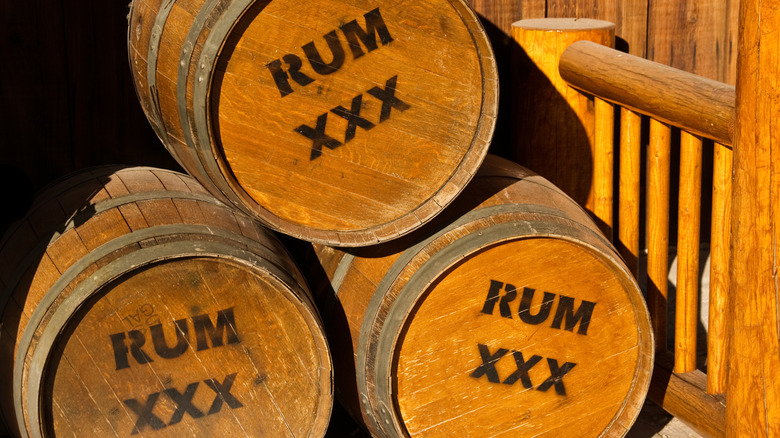
It might seem surprising in the modern era, but one of the most important parts of a British sailor's rations in the 18th century was booze. The Royal Navy distributed a pint of rum per sailor per day, starting as far back as the 1650s. However, they didn't always drink the spirit straight. By the mid-1700s, it had become common for sailors to add three ingredients, creating what some consider the first cocktail: water, sugar, and lime juice.
To understand the reason for these additions, it's important to first understand the history of alcohol and British sailors. Beer and wine had long been served on naval ships, in part to make stored water more palatable on long voyages. This was gradually replaced with longer-lasting rum, following Britain's establishment of a colony in Jamaica. However, rum's higher alcohol content presented issues of its own, including sailors saving up rations to drink multiple allotments at once and becoming too intoxicated or rowdy to fulfill their duties.
In 1740, Vice Admiral Edward Vernon developed a solution that changed the course of maritime drinking habits. He ordered that all rum rations be diluted with water. Vernon allowed sailors to purchase limes and sugar to flavor the rum concoction, a combination sometimes viewed as a boozy precursor to whiskey sour cocktails. The mixture soon took the name "grog", which had been part of Vernon's nickname for the grogram-fabric cloak he was known for.
Citrus was used to flavor rum, not for health (yet)
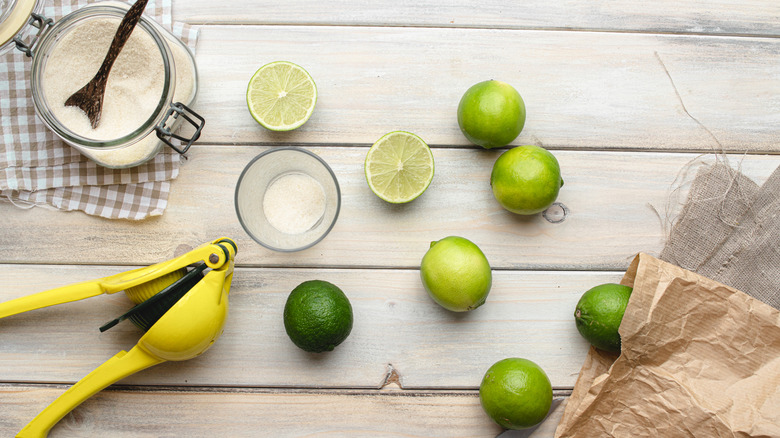
Those with some knowledge of sailing history are likely familiar with the use of lime and other citrus juices to combat scurvy, a vitamin C deficiency that causes fatigue, bleeding gums, and even death in severe cases. James Lind's experiment aboard the HMS Salisbury, which first suggested a link between citrus and scurvy prevention, didn't take place until 1747, years after British sailors began adding lime to their grog purely for taste-related reasons. Lemon (not lime) juice became a mandatory supply on Royal Navy ships in 1795, more than half a century after Vernon's order.
If you're curious to try the grog 18th-century British sailors were drinking, it's easy to recreate. Pusser's rum is seen as the standard choice and closest to what the Royal Navy served until the ration was discontinued in 1970. Traditionally, it was diluted with four parts water to one part of rum, then flavored with sugar and lime juice to taste.
The life of a sailor has changed dramatically since the 1700s. Technological advances have made conditions on naval ships much easier. There is no longer a need to rely on the foods sailors were stuck eating during long sea voyages, such as dried and salted fish or "ship biscuits", another term for hardtack crackers. Nutritional progress aside, the water, sugar, and lime British sailors were adding to their rum centuries ago aren't much different from what some modern mariners still enjoy in cocktails.