

Tips For Cooking With Cheap Wine

Wine can bring complexity to a dish in a way no other ingredient totally matches. Red wine brings deep, rich notes, while white wine has more of an acidic brightness. But, whatever variety you choose, you don't necessarily want to spend a fortune on it. That's why we've gathered these tips for cooking with cheap wine, helping you level up your meals without having to reach for a top-shelf bottle.
There's nothing wrong with using cheap wine in your cooking. It loses a lot of its nuances in the pot, so a $70 bottle of French Pinot Noir is only going to go to waste in a spaghetti sauce. However, you can go wrong when using lower quality wines. Make bad choices and you may end up with a dish that's underwhelming or has a pronounced bitterness. However, it's not about avoiding cheap wine altogether but knowing how to use it.
Picking the right wine for the dish is vital, as is knowing the character of the wine and understanding how that might become pronounced when you cook it down. We have advice on how to pick and cook with inexpensive wines to get the best results. Once you learn how to cook with cheap wine, you can use it more freely as an ingredient without blowing your grocery budget.
Cooking with cheap wine is fine, but try to avoid the most inexpensive

Yes, this article is all about cooking with cheap wine, but that doesn't mean you have to choose the most inexpensive bottle in the store. There are some cheap wines that sommeliers recommend, while others aren't worth drinking or cooking with. You don't have to use exceptional wine, but the very cheapest bottles sometimes don't react well in cooking, so you won't get the best results.
You might have heard the advice to always cook with wine that you would drink, but this isn't necessarily true, depending on how expensive your taste is. If you never drink a bottle worth less than $50, you can lower your standards for wine you intend to cook with. In fact, once cooked down, expensive wines tend not to taste any more complex than affordable ones. It's more about choosing a wine that you might generally enjoy drinking. For example, if you love a New Zealand Sauvignon Blanc, you'll probably appreciate it in cooking, even if the bottle you opt for is cheaper and less flavorful than one you'd enjoy drinking.
While we can't give you an exact price range to opt for, if you steer clear of the very cheapest offerings, you should end up with a decent wine for cooking. We don't mean you have to go for a mid-range wine. More like the middle of the cheap wine spectrum. What this means to you may depend on your budget.
Steer clear of cooking wine

You go to the store to look for cheap wine to cook with and come across cooking wine. It might seem to make sense to pick up a bottle. After all, it says that it's wine for cooking with and that's exactly what you need — plus it's cheap. However, cooking wine is best avoided. It would be better to use the cheapest regular bottle of wine in the store, if that's the only other option you can afford.
On paper, it sounds like exactly what you need for cooking with, but cooking wine is the lowest of the low. It starts off its life as a low quality wine. The kind of stuff that wouldn't sell if it was marketed as regular wine. Then, it has salt, sugar, and preservatives added to it, making it totally undrinkable, if it wasn't already this way.
What's more, those added ingredients can throw off the balance of whatever you're cooking. If you don't account for the fact that cooking wine contains at least 1.5% salt, it can leave you with an overly salty dish. And, if you're buying wine to use in dessert, that added salt will dramatically change the flavor profile. Cooking wine isn't fit for purpose. Choose a regular bottle of wine, instead, even if it means making a trip to a liquor store, depending on where you live.
The acidity of the wine matters more than the price point

Wine brings various things to a dish. It adds more rich flavor, like stock does, and can bring a level of sweetness to whatever you're cooking with. It also adds some acidity to a dish, in the same way that vinegar or a squeeze of lemon juice does. When cooking with cheap wine, the acidity of the wine actually matters more than how much it costs.
When wines are not acidic enough, they can leave the finished dish a little flat. You may find yourself needing to add some lemon juice or a splash of vinegar to balance it out. Or, if you're not experienced in tweaking dishes to balance the flavors, you may just end up eating an underwhelming meal, wondering where you went wrong.
However, you can have too much acidity in cheap wine used for cooking. When wines are very crisp without much sweetness to balance them out, when they're cooked down, they may end up overly sour. So, actually, what you're looking for is a well-balanced wine with both sweetness and acidity. Anything that's dry and crisp might end up overly acidic in the finished dish, while a sweet wine with very little acidity could fall flat and leave you in need of extra acidic ingredients. Any citrus notes in a wine are a good sign, alongside sweet, fruity notes.
Avoid cheap wines that are overly tannic
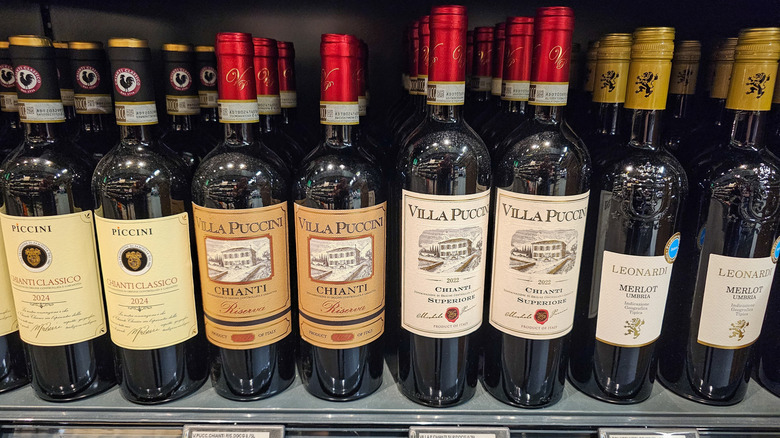
If you choose to cook with a cheap wine that's overly tannic don't expect the best results. While tannins are often prized in wine, bringing complex bitterness and a drying feeling on the tongue, when you're buying at the lower end of the price spectrum, they're not always delivered with subtlety. You may end up with intense tannins that don't cook down well.
Tannins in wine can come from the grapes themselves or from the oak barrels some wines are aged in. All wines have some level of tannins in them, but certain varieties are more tannic than others, such as Cabernet Sauvignon and Shiraz. Red wines tend to be more tannic than white wines, since they're aged with the tannin-containing skins. However, you can find very oaky white wines, such as Chardonnay aged in oak barrels.
Wines that have high levels of tannins or a particularly oaky finish often impart a bitterness to the finished dish. While small levels of bitterness can be pleasant in certain dishes, particularly when balanced with sweetness and acidity, too much bitterness just doesn't taste good. Since cheap wines from varieties that are often considered tannic can be overly heavy on the tannins, it's generally better to stick to lighter-bodied cheap red wines for cooking with and avoid any whites that are aged in oak.
Consider cheap boxed wine for cooking
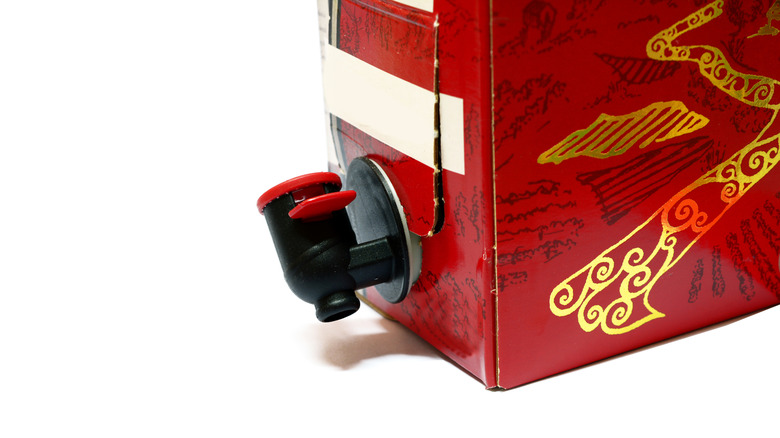
Boxed wine is often the cheapest option in the store, ounce for ounce. However, it's not considered particularly sophisticated. If you brought a box as a gift for someone who was hosting you for dinner, you'd probably get a few odd looks. However, you should absolutely consider using boxed wine for cooking, and not just because it's cheap.
Some cooks report very little difference between the same dish made with boxed wine and an expensive bottle, so it's really not worth dropping too much cash on something that's just going to simmer away in the pot. However, the other important reason why it's great for cooking with is that it has an internal airtight bag.
While most wine will spoil after a few days of being open, a box of wine is totally sealed up in that weird little bag inside the cardboard. So, you can use a little for cooking with and then leave it until you need it again with no deterioration in quality. It's actually the perfect thing for cooking with, because if you use a third of a bottle of a cheap wine that you don't want to drink, the rest will either go to waste or you'll need to freeze it. Boxed wine, on the other hand, can just chill until the next time you cook with it.
The style and flavor are more critical than the price

You might find that an expensive wine is actually worse than a cheap wine to cook with if the flavor and style aren't right for what you're making. So, if you carefully select a low-priced bottle, you can end up with something that tastes great in your recipe for a fraction of the cost.
The style of the wine is important. Sparkling wines usually aren't the best choice because they're harder to measure without the bubbles throwing things off. They're usually high in acidity, which can give good results in some dishes, but can also result in excessive sourness, particularly if you'll be reducing it. The variety of the wine makes a difference, of course, but there's not just one good variety to look out for. It's more about the flavor profile than saying that Pinot Grigio is always good and Nebbiolo is always bad, for example.
Sweet wines can be hit or miss. Once reduced, they can make certain dishes overly sweet. However, if it's the sort of dish you might throw a bit of sugar into to balance out the acidity, like a spaghetti bolognaise, then the sweetness can come into its own. Dessert wines will be too sweet for savory dishes, but that doesn't mean you have to go for a dry wine. That said, dry wines that are described as crisp or acidic will bring a pleasant zing to whatever you're cooking.
Cheap wine that's been sitting out can give mixed results

Some people say that you should never cook with old wine, but this is a way that you can save even more money if you're on a budget, compared to buying a fresh bottle. We don't believe that you should never cook with wine that's been sitting out, but it can give you mixed results.
If you're wondering whether you can cook with old wine, consider how long it's been open for. If it's been open for five days or less, it shouldn't be an issue at all. You can treat it as you would any other bottle of wine that you'd just opened. When wine is older, this is where it gets more contentious. Sometimes you can cook with a bottle of wine open for so long that it's starting to smell like acetone and have the recipe come out tasting not much different than the same dish made with freshly opened wine.
However, good results certainly aren't guaranteed. Whether or not it turns out well can depend on all kinds of factors, such as the age of the wine, how long you're cooking it for, its natural flavor profile, and — honestly — the luck of the draw. If you're willing to take a gamble on spoiled wine, go ahead, but it might be a good idea to have a food delivery app loaded on your phone just in case.
Long braises are particularly forgiving of cheap wine
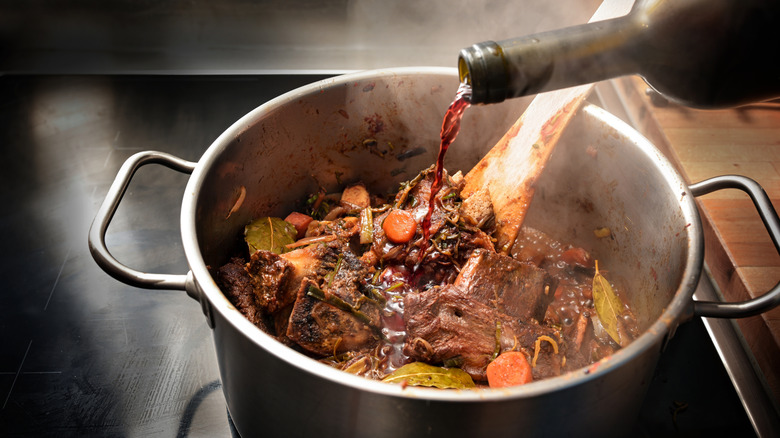
It's not just the wine itself that matters when you're using a cheap option, but how you cook with it. When you use a long, slow braise with wine or other methods where it simmers for a significant amount of time, it becomes less and less distinguishable from the pricey stuff. It's when you won't be cooking wine for long, or not at all, that you need to use a bottle you'd happily drink.
Celebrity chef Alex Guarnaschelli cooks with cheap wine for exactly that reason. "I will reach for the cheap bottle that's in the door of my fridge when I'm making a braise, where the wine will cook for a long time," Guarnaschelli told Food & Wine. "I save good wine for finishing a dish, when you can really taste it." She likened this to olive oil, where you might cook with an affordable bottle and save the bougie one for drizzling over a dish just before serving.
One of the biggest mistakes you can make cooking with wine is using a cheap wine for finishing a dish. There aren't that many recipes that call for wine to finish a dish, but these kinds of recipes need a high quality wine that tastes good as is. If you reach for the cheap stuff, you'll likely end up spoiling your meal.
Create balance in your own way when using cheap wine
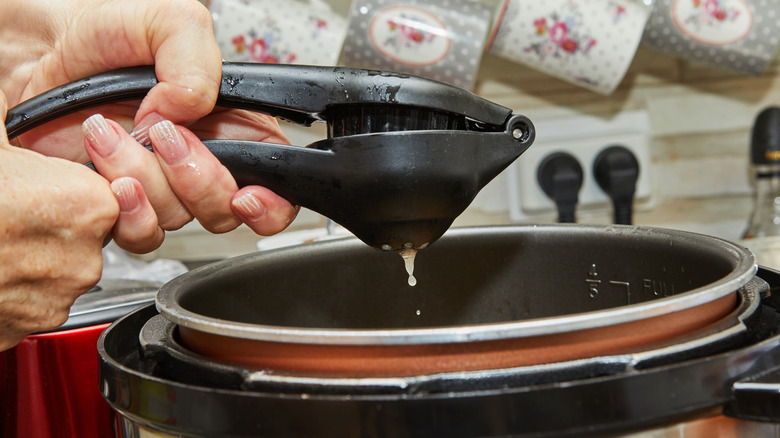
No matter how much you attempt to buy a balanced bottle, cheap wine often isn't that. Part of why it doesn't command a higher price is that it might be overly acidic, particularly sweet, or heavy-handed on the tannins or oaky flavors. That doesn't mean your dream of a delicious dinner is over, it just means you have to create balance in your own way.
The wine's acidity has a big impact on the finished dish. If the wine doesn't have enough acidity, you can add lemon juice or vinegar to the recipe to brighten it. On the other hand, overly sour notes can be balanced out by throwing in some sugar or other sweet ingredients. If your dish ends up bitter, a little extra salt can soften this. One weird ingredient that can balance cheap wine is pickled pepper and its brine. And you can use this same wisdom to level out a dish made with a too-sweet wine. Basically anything acidic will help fix this.
Ultimately, you can use the same tricks you would to balance the flavors in any other dish, but apply it to wine. Because cheap wines often lack the balance that expensive ones have, you just need to give them a helping hand. You still get the complexity that wine gives to a dish, but you push it in the right direction.
A cheap wine you like trumps an expensive wine you don't

People often suggest that you should cook with wine you like to drink, but it's not exactly that simple. When you're cooking with cheap wine, you might not love the wine by itself, but it should be of a variety that you like. Particularly if it's a type of wine you might pair with the dish you're cooking. A cheap wine that fits this bill is better than expensive wine you're not a fan of.
Say you hate Chardonnay. You don't like the oakiness that many bottles have and you're not a fan of its chalky minerality. Just because you're putting it in a pot and simmering it for an hour, it doesn't mean you're suddenly going to like Chardonnay and enjoy food cooked with it, even if you use an expensive bottle. On the other hand, you love a sweet Riesling and even a dish cooked with a bottom-shelf bottle is going to appeal to you more.
So, when picking a low-cost wine to cook with, opt for a variety that you usually like, even if it's cheaper than you'd drink. Some of the less favorable notes will be smoothed down by the cooking process, but the core character will remain.
Don't reduce cheap wine as much as you would expensive wine
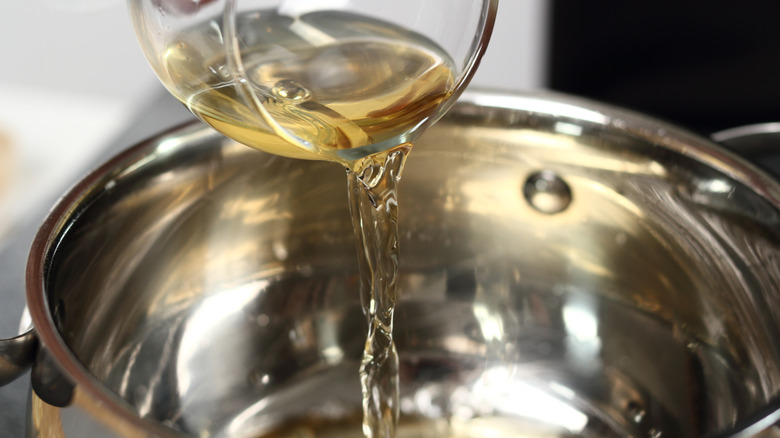
When you're cooking with wine, some dishes call for a large amount of reduction. This is a process in which you simmer the wine before adding any other liquids, allowing the alcohol to cook off and the flavors to intensify. However, when you're cooking with cheap wine, you don't necessarily want to intensify the flavors too much.
Some recipes call for wine to be reduced to about a third of its original volume. In this process, whatever the wine is bringing to the party will intensify. If it's tannic, it can become very bitter and if it's sweet, it can become sickly and syrupy. So, it's better to reduce lower-priced wines less than you would expensive ones that have flavors you want to concentrate and intensify.
Try reducing wine less than directed, perhaps by ⅓ or ½, cooking it until it doesn't taste like raw wine anymore, but before it really concentrates and compounds its flavors. Dishes that call for other liquids, not just wine, can also help to mellow it so that it doesn't end up too intense.