

4 Underappreciated Meat Cuts Anthony Bourdain Wanted Americans To Embrace

American chef, author, and culinary travel documentarian Anthony Bourdain was never shy about his opinions. His brutally honest take on chicken bordered on legendary. But he also had an incredible enthusiasm for the countless variety in world cuisine and food culture he shared through his books and television series, like Travel Channel's award-winning "No Reservations," which few may know bombed when it first aired. And it was through Bourdain that many American readers and viewers were introduced to cuts of meat not typically served in the United States.
Cheek, offal, feet, and tail are commonly found in dishes the world over. You often see them in simple street foods, which Bourdain strongly advocated for. He was both influenced by and had an influence on street food culture, in turn inspiring travelers to step outside of their comfort zones and give these unique foods a try. Whether at a street-side stall, in someone's home, or dining at a restaurant, Bourdain gamely tried any food that was served to him, especially if it was something he'd never had before. But how does one partake of meat cuts like pig cheek or ox tail? Let us break it down for you.
Cheek
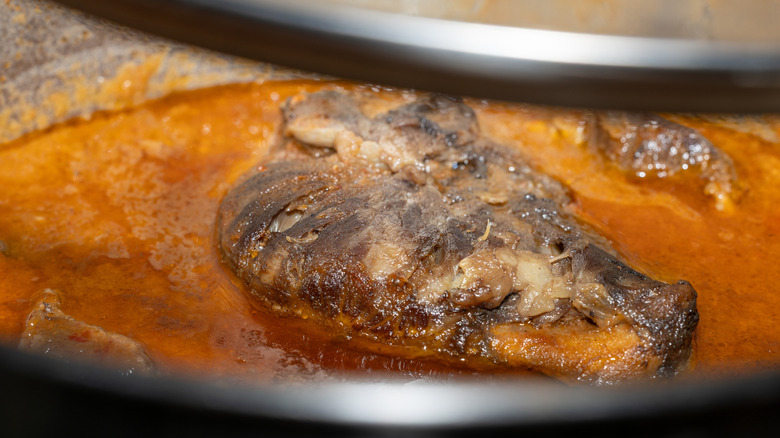
It was the deeply influential British chef, Fergus Henderson, who popularized what he called nose-to-tail eating in the U.K. Anthony Bourdain gave this philosophy a try in episode 22 of the first season of his Food Network show "A Cook's Tour," when he visited his friend Henderson's London restaurant, St. John. Excited when served an entire pig's head, Bourdain dug right into the juicy pig's cheek. "Look at this," he said as the camera zoomed in. "The cheek is, of course, one of the most delightful segments." During a visit to Prague for "No Reservations" in 2010, Bourdain again ate pork cheek, this time under less high-end circumstances at a festive traditional backyard pig slaughter with locals. The meat was dipped in salt and mustard and washed down with lots of beer.
Pork is not the only cheek American foodies should consider. Beef cheek and fish cheek also have culinary uses, including braises, stews, and dumplings. Beef cheeks can be easily swapped for short ribs or brisket. Fish cheeks are especially good fried and put into a sandwich or paired with fries for traditional fish and chips.
Offal
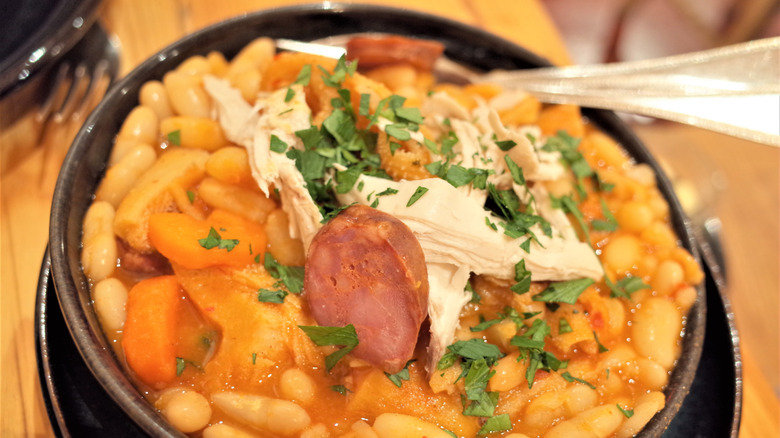
Offal is basically a fancy way of saying organ meat. Liver, kidney, lung, stomach, pancreas, and tongue are examples of offal, and yes, they are all edible. In fact, several old-school fried foods use offal as the main ingredient. Pan-frying is a quick and convenient way of cooking a lot of organ meats, like chicken or beef liver.
One food Anthony Bourdain tried to demystify was tripe, the name for a ruminant's digestive tract. Tripe often comes from a cow's or sheep's stomachs but sometimes other animals as well. In 2003, Bourdain mentioned Normandy's tripe à la mode de Caen (tripe Caen style) in his New York Times article. A trip to Portugal for "Parts Unknown" saw Bourdain eating tripas à moda do Porto (tripe Porto-style), a traditional stew of offal and white beans. Phở, a Vietnamese noodle soup, is another traditional food that often includes beef tripe that Bourdain thoroughly enjoyed when eating out in Vietnam.
Feet
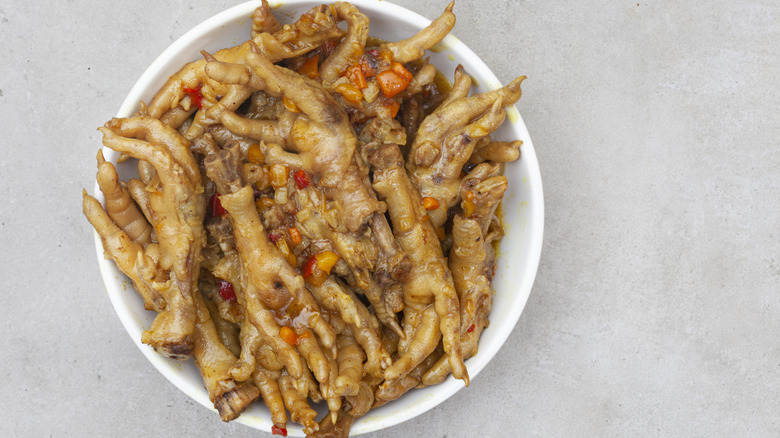
Animal feet, such as pig's trotters, cow's hooves, and chicken feet, are often thrown away as waste, but in many parts of the world they are eaten with gusto. Anthony Bourdain tried trotters, as well as chicken feet, cooked several different ways on his travels. In London, he ate broad beans and trotters at St. John, a Michelin-star restaurant. On the other side of the world, while filming "Parts Unknown," he eagerly dug into a bowl of Bún bò Huế, a traditional noodle dish with herbs, spices, vegetables, and various meats, including pig's feet, which he called, "The greatest soup in the world." In Hong Kong, while filming another episode for "Parts Unknown," Bourdain sat down for a chat with local band David Boring and enjoyed cuisine that included chicken feet, a popular Hong Kong street food.
Why eat feet? For some, like adherents of nose-to-tail eating, it's to ensure none of the animal goes to waste. For others, it's pure enjoyment of the unique textures and flavors. No matter the animal, feet are predominantly made up of bone, cartilage, tendons, and skin. There is often little meat, but trotters and feet are high in protein-rich collagen, which turns to gelatin when cooked. They are also quite flavorful. Pig's trotters, in particular, are intensely savory and add richness to any broth. Chicken feet are also used in soups and stews and commonly braised or fried.
Tail
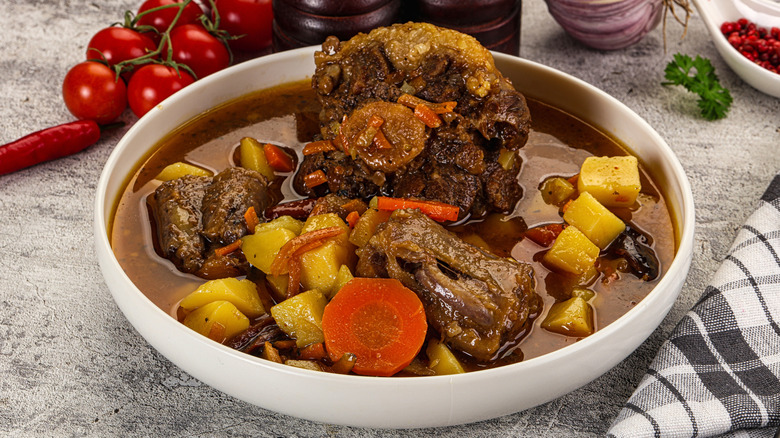
During episode 22 of the first season of "A Cook's Tour," Anthony Bourdain tried pig tail at Michelin-star restaurant St. John in London. "This is just amazing," he said. "It's the perfect balance of lean and fat. This is it. This is what food used to be about and hopefully what it will be about in the future." In the 2010 "No Reservations" holiday special, Bourdain's dinner kicked off with oxtail prepared by Korean American chef David Chang.
Oxtail, or the tail of a cow, is eaten throughout parts of Europe, Africa, Asia, and the Caribbean. Sokkoritang, oxtail soup, is popular in Korea, while a common Jamaican dish is oxtail with broad beans. Oxtail is also a part American soul food. The meat is tender and tastes similar to short ribs. In addition to soups and stews, oxtail is often paired with rice or vegetables. Pig tail is often prepared in similar ways to oxtail but is also braised or barbecued.