

12 Candies Americans Ate In The '60s
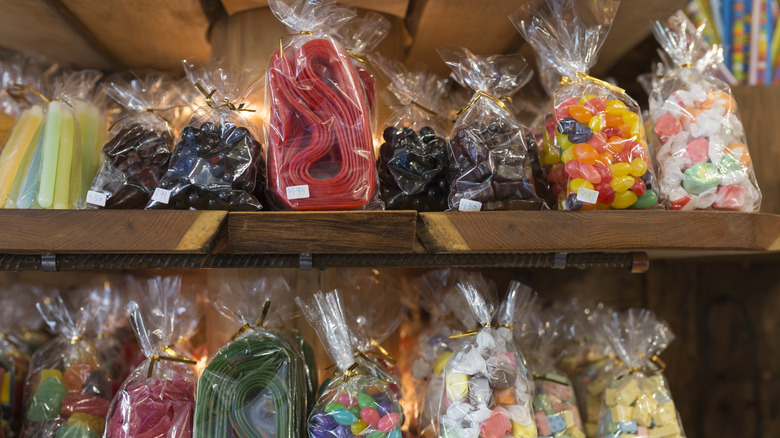
Picture the U.S. in the 1960s, and you might see an era of change: fashion became a lot funkier, music started getting punkier, and astronauts were rocketed into space. But one thing that didn't change? America's appetite for all things sweet.
From chocolatey goodness to chalky mess, there were plenty of candies that boomers, early Gen Xers, and other old-timers recall munching on throughout their youth. While none of the candies on this list made it on the roundup of the most iconic snacks from every decade (instead, a rather savory item represents the '60s), they sure do stick out in one's memory. So, read on. You might just find yourself reminiscing about the taste of one of these sweet treats. Luckily, most of the candies in the list are still in production. As for the ones that aren't ... apologies in advance. Hopefully, a trip to your state's best candy store will make you feel better.
Bit-O-Honey
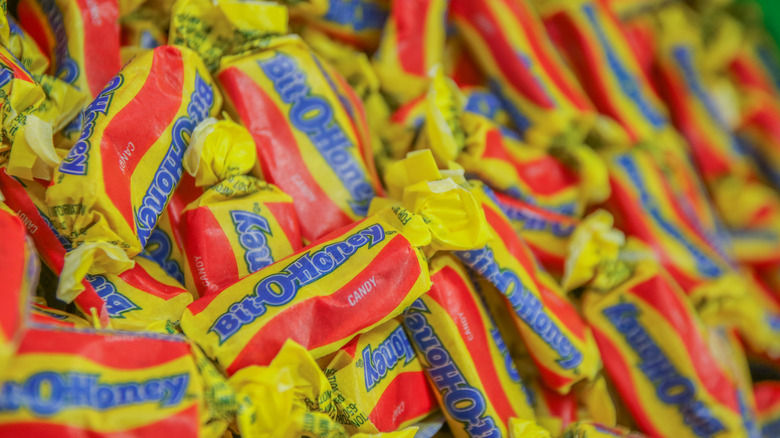
Bit-O-Honey was a big hit in the 1960s. The honey-flavored taffy that came speckled with roasted almond bits was definitely a delight, but you had to chew carefully — fresh out of the wrapper, this candy was particularly tough in the dental department. As one Redditor put it, "They tasted great, but if you tried chewing them too soon they could pull the fillings right out of your teeth." That doesn't sound too pleasant, so that's why some folks swear by letting them warm up in their hand or pocket before popping them in their mouth. Sure, that might sound a little weird, but keeping one's teeth firmly in the mouth is more important than keeping up appearances.
This delightfully chewy taffy was originally manufactured by the Chicago-based Schutter-Johnson Company way back in the 1920s. The candy really took off in the '60s, when Schutter-Johnson merged with the Ward Candy Company. Bit-O-Honey went on to change hands many times, but nowadays, the Spangler Candy Company from Ohio owns the brand, which was added to its family of notable candies, like the famous Dum-Dums lollipops. This hopscotching from candy company to candy company is just one part of the untold truth of Bit-O-Honey. And you're definitely going to want to learn more about the candy's fascinating history.
Oh Henry! Candy Bars
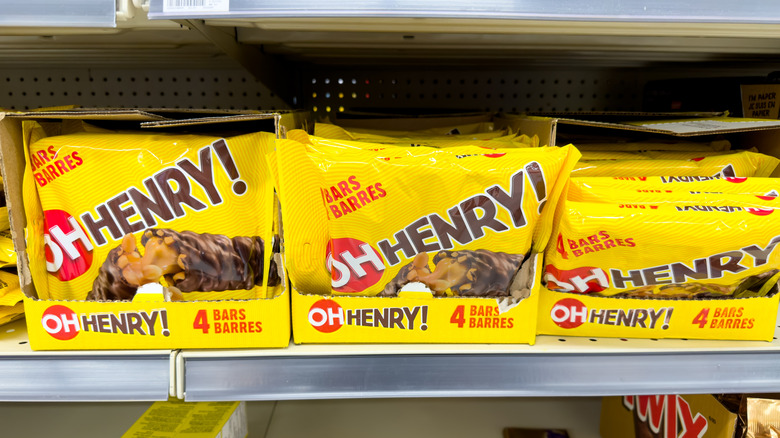
If you craved something chocolatey and indulgent in the '60s, Oh Henry! candy bars were an easy choice. Take a bite, and you're met with an unmistakable combination of uber-salty peanuts, gooey caramel, rich fudge, and a milk chocolate shell. With ingredients like that, it's no wonder these candy bars were so popular.
Oh Henry! actually dates back to 1920 and the Williamson Company of Chicago. Though some folks believe the candy was named after baseball legend Hank Aaron, the story precedes the famous athlete. Candy shop proprietor George Williamson had a loyal customer by the name of Henry, a boy who was often swarmed by girls. Hearing the words "Oh Henry!" so often, Williamson decided to pay homage to the little fellow when he developed the candy bar. In 2018, Nestlé — which then owned the Oh Henry! brand — sold its American confectionery business to Ferrero. Oh Henry! bars seemed to disappear from store shelves for a while, but nowadays folks claim you can find the latest iteration of the sweet treat in the candy aisle.
Aside from its (false) association with Hank Aaron, Oh Henry! candy bars had another pop-culture moment in Season 7, Episode 12 of "Seinfeld," wherein Elaine runs into her old high school nemesis, who happens to be the heiress of the Oh Henry! fortune. Though this episode was a classic, another "Seinfeld" episode made our list of the most iconic food moments in TV history.
Necco Wafers
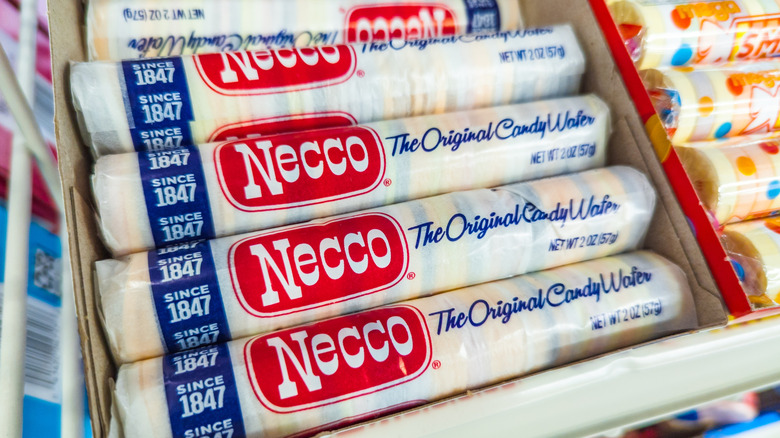
Love 'em or hate 'em, Necco Wafers were ubiquitous among children in the 1960s. These little disks dusted with powdered sugar are practically a time machine. The candy was actually first produced in the mid-1800s with the flavors ranging from citrusy (orange, lemon, and lime) to spiced and herbal (clove, cinnamon, licorice, wintergreen), and of course there's the chocolate Necco Wafer to round things out. Novelty versions like tropical and all chocolate have also been produced.
While some folks loved the chalkiness and quirky flavors, others found more creative uses for the candy. As one Redditor put it, "They made really great bb gun targets. The candy is small enough that you have to do everything right to hit them consistently." They made for easy cleanup too — hit a Necco Wafer and it explodes. Miss one and it'll dissolve over time.
But back in 2018 it looked like Necco Wafers were doomed. The Necco facility in Revere, Massachusetts, closed down suddenly and candy production ceased. Luckily, some months later the Spangler Candy Company based in Ohio bought the Necco brand and soon production began again. The candy is still available today, so Necco lovers can grab a roll the next time they're at the grocery store. You might want to keep them all for yourself, though, because today's trick-or-treaters aren't the biggest fans of this old-school Halloween candy.
Zero Candy Bars
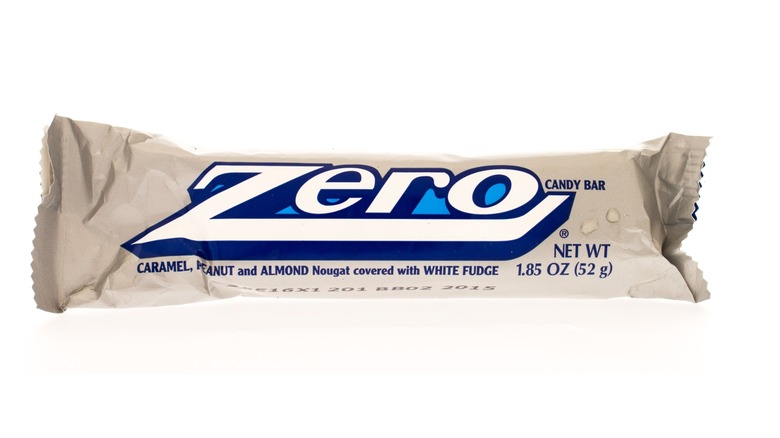
If you're not a chocolate lover, it can be hard to find a quality candy bar that scratches the itch for something rich and indulgent. Oftentimes, you're stuck browsing the fruity and gummy candy as cocoa-covered confections dominate displays. Nevertheless, folks from the 1960s found themselves delighting in Zero Candy Bars.
Zero Candy Bars were the perfect answer to the classic chocolate bar: think gooey caramel, crunchy peanuts, soft almond nougat, and a rich white fudge coating. No chocolate in sight! Though in 1996 Hershey added the brand to its candy line, 60 years ago folks would have been munching on the original recipe from F.A. Martoccio Macaroni Company, which began making the Zero Candy Bar back in 1920.
Despite owning other candy-aisle giants like KitKat, Reese's, Almond Joy, York, and Cadbury, Hershey still offers Zero Candy Bars if you're willing to hunt for them. A couple of years back, one Redditor noted, "I just found a store nearby that carries them. I'm so excited!!!" So, devotees of this chocolate-less candy bar can take heart. The beloved Zero Candy Bar is still in select grocery stores to this very day.
Charleston Chews
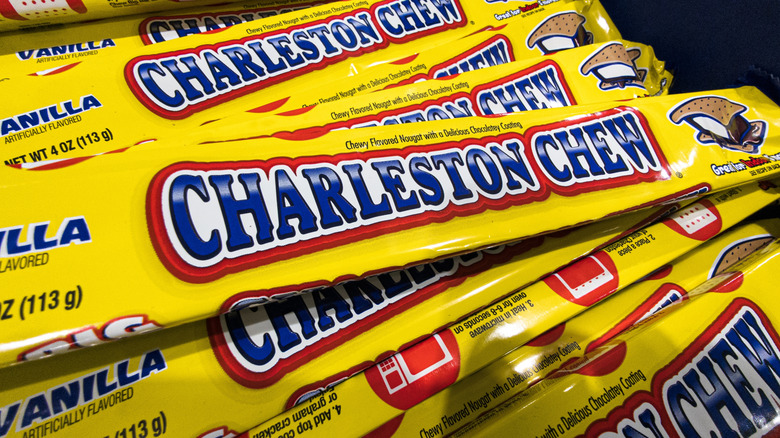
Today's youngins are likely to pass up Charleston Chews when they peruse the candy aisle in favor of more modern chocolatey treats, but back in the 1960s? Charleston Chews were a hot commodity. And for good reason, too. The candy features a fluffy vanilla nougat (or chocolate or strawberry if you opt for one of these variations of the classic) surrounded by creamy milk chocolate that just melts in your mouth. That combination is oh-so-delicious. And for a kid popping into a corner store after school, a Charleston Chew seemed like a good bang for your buck ... or quarter.
For those who are Charleston Chew-curious today, many old-timers swear by a special trick: stick the candy in the freezer before consuming. When frozen, Charleston Chews take on a snappy, crunchy texture that is a delight for your taste buds. Then the nougat and chocolate dissolve, making for a truly pleasurable sensory experience.
Red Hots
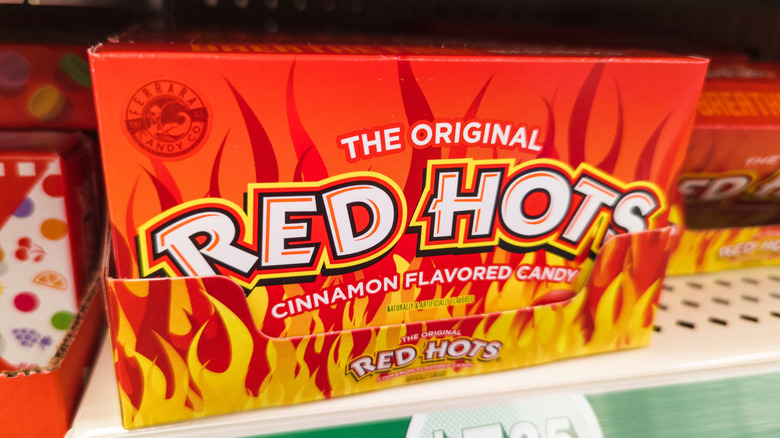
There are times when sugary-sweet candy just won't cut it. There's fruity candy, chocolatey candy, gummy candy, but what about the folks who can handle a bit of heat? For those who needed a spicy little kick in the '60s, Red Hots were the go-to.
Red Hots first hit the scene in the 1930s thanks to the Chicago-based candy company Ferrara. The Red Hots process was unique since Ferrara utilized the cold-panned candy method. Sugar was tumbled in a pan, and the iconic cinnamon flavor and other key ingredients were added as the sugar rotated. Finally, the Red Hots were finished off with a hard candy shell to keep all the flavor packed in that tiny little ball.
Some Reddit users recall dropping by the corner store in the 1960s to grab a pack, and one person in particular noted that they had a specific cinema treat that involved these little cinnamony pearls. "Whenever I went to the local movie theatre in the days of my youth I would buy a large Coke and a pack of those and I would pour those into the Coke," the Redditor explained. Spicy, cinnamon Coca-Cola? Now that seems like a combination worth trying.
Clark Bars
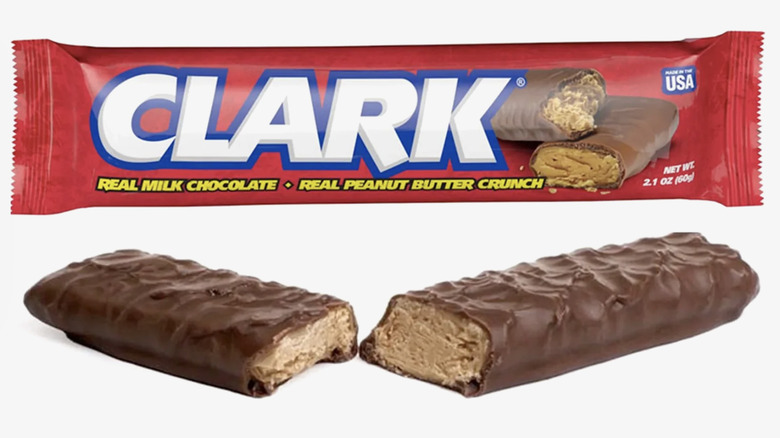
The good ol' Clark Bar, much like many of its chocolate candy peers, had perfected its own take on a truly delicious formula. The original treat included chewy caramel, crunchy peanut butter, and a smooth chocolate coating to boot. These candy bars were a certified classic, especially for folks in the Pittsburgh area where the treat has historically been manufactured. In the 1960s, Clark Bars were definitely popular among Americans, and old TV commercials from that era really hammered home just how irresistible this candy bar was.
These tasty treats date back to 1917, when Irish immigrant David L. Clark formulated his chocolate bars, which some claim were the first "combination" candy bars to find their way into the cultural zeitgeist. The Clark Bar became incredibly popular as it was shipped overseas to troops during World War I, and afterward the candy boomed among the masses.
Clark's family business produced Clark Bars until 1955. In the decades that followed, ownership of Clark Bars changed hands many times — including being sold to the New England Confectionery Co. in 1999, which was also responsible for making Necco Wafers — before production came to a grinding halt in 2018. Luckily, the Boyer Candy Company from Altoona, Pennsylvania, picked up the brand and still makes Clark Bars, though the candy seems to be currently sold out on its website. Apologies to all the fans who were looking for one more taste of the good stuff.
Bazooka Bubble Gum
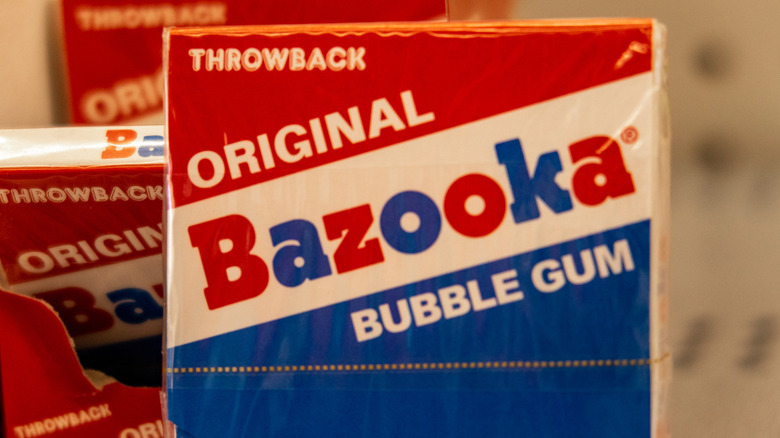
Chewing Bazooka Bubble Gum is like tasting your childhood. That tiny pink brick is hard to bite at first, but quickly gives way to a soft sweetness. The act of chewing a piece of Bazooka Bubble Gum was a whole experience for Americans back in the 1960s. Though it lost its classic tutti frutti flavor seemingly instantaneously, you could still give your jaw a workout while reading the comic on the interior of the wrapper.
Eyepatch-wearing Bazooka Joe was a beloved figure among fans of the chewing gum. His antics were highly anticipated by children as they carefully unwrapped the gum, quickly shoved it in their mouths, and smacked on it loudly as they read what joke the comic character and his gang of sidekicks had to share.
Much to the chagrin of Bazooka Bubble Gum devotees, the brand did away with the comic in 2012. In an effort to modernize, Bazooka Bubble Gum began featuring brain teasers and other activities, along with a code to unlock online content. The brand changed its packaging too, in hopes of attracting today's youth. Luckily, in 2019, Bazooka Bubble Gum released some throwback products that feature the original design and comic.
Sugar Daddy
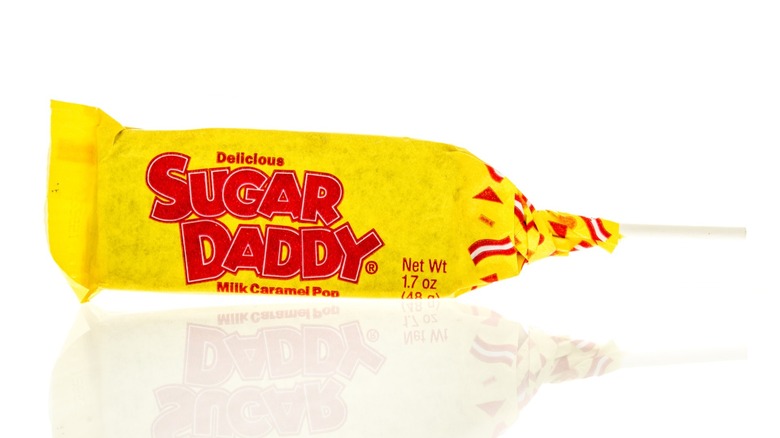
Ask one of today's youths their thoughts on the classic candy Sugar Daddy, and they might just call it old school. But back in the 1960s? It was iconic. Sugar Daddies were essentially a thick hunk of caramel on a stick. Upon the first bite, you break through a glassy coating, and over time it begins to soften.
The Sugar Daddy was a candy you could truly savor. There was no way to scarf these down like a chocolate bar or roll of Necco Wafers. With all the deliberate chewing required, finishing a Sugar Daddy could sometimes feel like a Herculean effort. Nevertheless, this rich and dense sugary candy was a favorite in the 1960s.
However, these candies actually date back to 1925 and debuted with the curious name of Papa Sucker. Luckily, the name was changed just a few years later. The Sugar Daddy ended up having a whole family of other caramel candies, with Sugar Babies following in 1935 and Sugar Mama hitting shelves in 1965.
Bun Bars
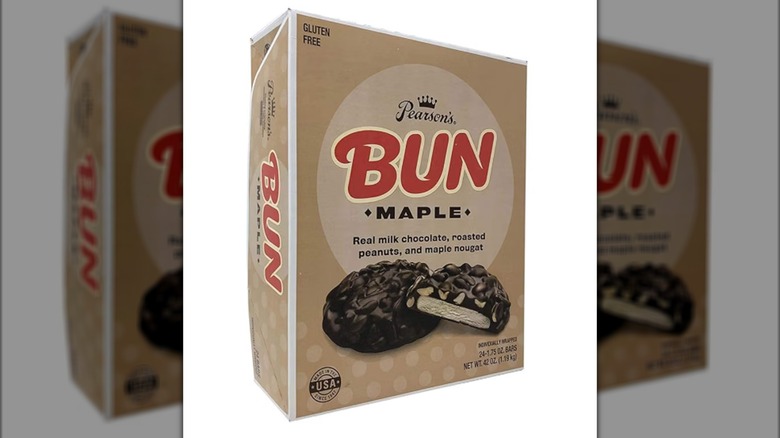
Don't be fooled. The Bun Bar is a far cry from the typical candy bar shape that might be in your mind's eye. Though it contained peanuts, milk chocolate, and either a maple or vanilla chewy center (like many of the other chocolatey candies on this list), the Bun Bar was more of a gob or cluster than a candy bar.
Bun Bars as we know them today first took recognizable form in the 1940s, when they were manufactured by Fort Wayne Candies based in Indiana. According to the Fort Wayne Reader, "By 1957 the Bun Bar was popular enough that it began to appear in retailers' newspaper ads. In 1967 the company was issued a trademark for the advertising slogan 'It's Fun To Eat A Bun.'" In the subsequent decades, the Bun Bar brand changed hands many times, ultimately ending up as a product of Pearson's Candy, which still makes the candy today.
Atomic Fireballs
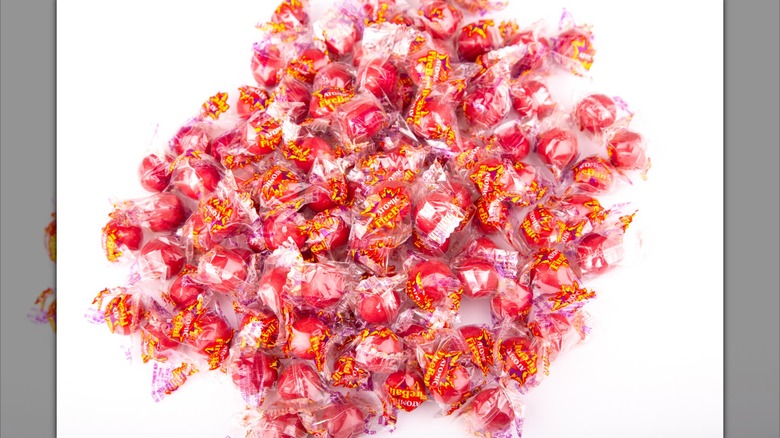
If you mix a Red Hot and a Jawbreaker, what do you get? An Atomic Fireball, of course. These candies take spicy to the max thanks to the addition of capsaicin (the compound found in jalapeños and other spicy peppers). So, it should be noted that it's not the cinnamon that gives Atomic Fireballs their punch.
These spicy candies were first produced in 1954 by Ferrara and quickly took off. The candy packaging was designed to represent a nuclear explosion's massive fireball. The history of this candy — and other items that fall under the "Atomic Toys" category — is well documented by the Oak Ridge Associated Universities' Museum of Radiation and Radioactivity. According to the museum, "In the 1950s, when Atomic Fireballs first appeared on store shelves, it was fairly common to see a photo of the fireball from the latest nuclear test on the front page of a newspaper." By the 1960s, this candy really took off, especially among the more adventurous children. And for folks who are feeling nostalgic about this crazy candy, you're in luck. Ferrara continues to produce Atomic Fireballs today.
Chick-O-Sticks
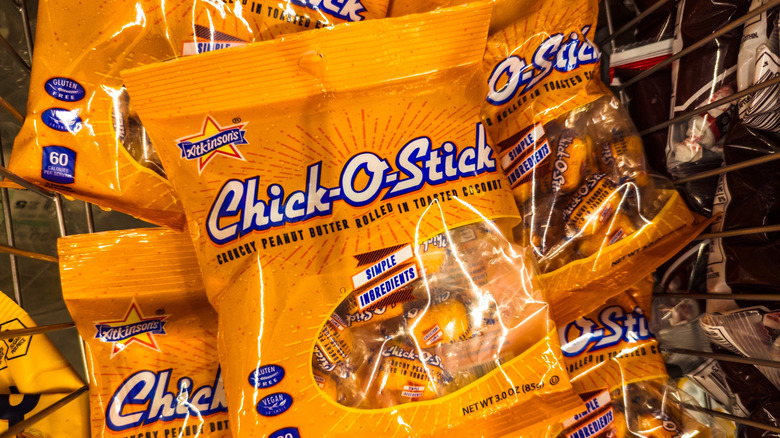
Chick-O-Sticks might be the most unique candy on this list. It's not fruity or spicy, and it's not rich, chewy, or gooey either. Instead, Chick-O-Sticks feature a hunk of honeycombed peanut butter rolled in coconut. Though it might sound odd to the uninitiated, the result is a sweet and slightly crunchy candy bar similar to the inside of a Butterfinger. And these were a big hit in the 1960s.
Chick-O-Sticks are made by family-owned Atkinson Candy and date all the way back to the 1930s, but at the time of their inception they had a rather peculiar name: Chicken Bones. Due to some trademark troubles and the fact that the candy doesn't actually contain any chicken, the name was revised to Chick-O-Stick in the 1950s (thank goodness). And that wasn't the only change the candy underwent — in 2019 Atkinson Candy went back to its roots, updating its formula to include simpler ingredients that more closely reflected the original family recipe. Now, Chick-O-Sticks no longer contain hydrogenated oils, artificial preservatives, or artificial red and blue coloring.
So if you haven't tried a Chick-O-Stick, now might be the time. It's a true delicacy from the Lone Star State, so go ahead and snag one from the candy aisle. And while you're at it, make sure to sample some other Texas foods you need to try before you die.