

15 Candies Americans Ate In The '50s
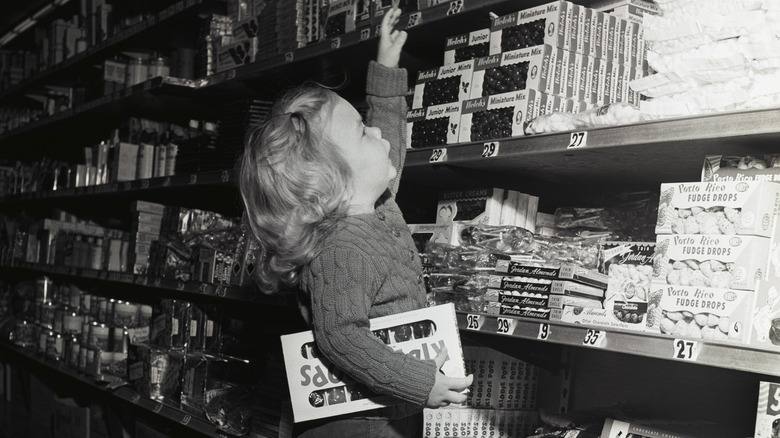
Some people feel guilty about having a sweet tooth, but our sugar cravings have been a crucial element of human evolution. What started as a mechanism to help us seek more energy has turned into astonishing inventions in the culinary world. Due to this inherent sweet craving, dessert was invented earlier than you may think. It's impossible to know for sure when we started concocting treats, but records from ancient civilizations as far back as 2000 B.C. show people combined honey, sesame seeds, nuts, fruits, and other ingredients to make delightful bites.
If our early ancestors could look at our candy aisle at the grocery store today, they'd likely be amazed, and a little baffled. Our crunchy, sticky, chocolatey, fruity, and chewy candies go far beyond any craving they could have imagined.
The modern consumer might expect to be disappointed by the candy offerings of the mid-1900s since the food industry has come so far since then. Yet, many brands we know and love today made their grand debut back then. A lot of folks with sweet teeth could still eat like royalty. Read on to sink your teeth into 15 candies Americans ate in the 1950s to see if your tastes match up.
1. Peanut M&M's
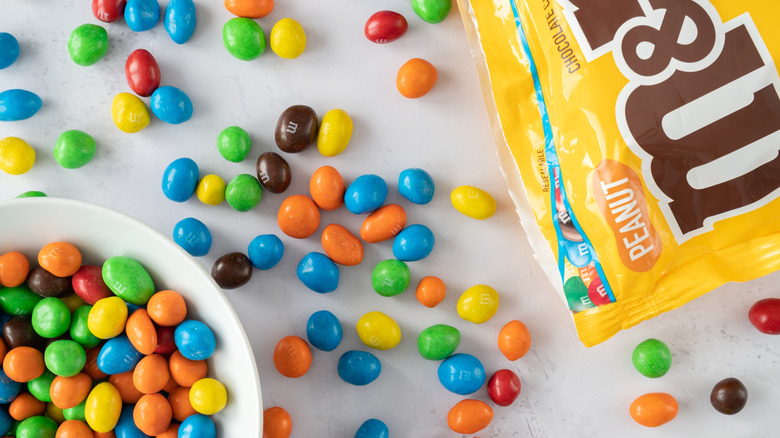
M&M's are proof that sometimes the simplest food inventions are the best. Take a small piece of creamy chocolate, coat it in a shell, and see how many people light up when they crunch into it. Add different colors to the coating, and kids are all over it, too. M&M's are a real crowd-pleaser today, yet the candy's origin dates back to 1941 during World War II.
The real reason M&M's were invented is debated. The candies aimed to solve the problem of soldiers receiving melted chocolate in their rations and care packages. While this was a noble cause, others note that Mars was also eager to boost chocolate sales during warmer months among the general public. The original M&M became such a hit that Mars later added the iconic "m" stamp onto each M&M to distinguish them from copycats.
In 1954, Mars came up with the idea of adding a peanut inside each M&M. With the invention of peanut M&M's also came a slight tweak in branding. The "m" stamp on each candy turned from black to white to make them pop more. Given how big the M&M empire is today, it goes without saying that the release of peanut M&M's was an instant hit in the '50s.
2. Smarties
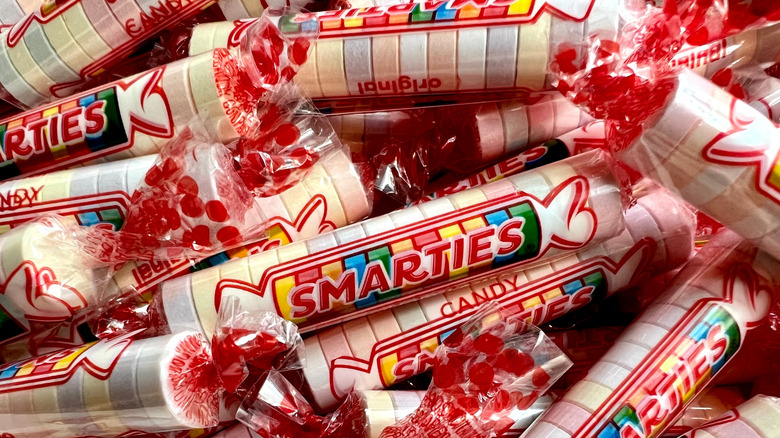
Have you ever wondered what it would feel like to munch on some chalk? For many curious kids, that is a real temptation, and Smarties swooped in to save the day. All jokes aside, Smarties are an alluring candy that's both crunchy and powdery. The comforting pastel-colored tablets wrapped in rainbow packaging are too inviting to resist.
Americans in the '50s were set up for a good time because Smarties were first invented in 1949 by a British man named Edward Dee, who moved to New Jersey earlier that same year. He immediately began producing his candy, and Americans embraced him with open arms. Just 10 years later, Dee was able to move out of his small rental to ramp up production.
The original Smarties packages combined six flavors, which are still sold today. Cherry, strawberry, orange-cream, pineapple, grape, and orange are simple fruit flavors that hit the spot. Today, Dee's daughters run the company to keep his legacy alive. The brand hasn't changed much, but modern shoppers can enjoy twists, like sour and tropical flavors.
3. Tootsie Rolls
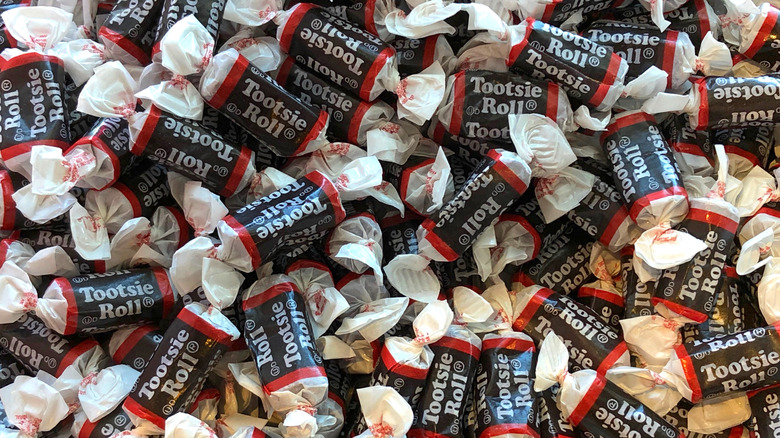
Tootsie Rolls have a long, endearing history. Leo Hirschfield invented them back in 1896 and named them after his daughter. You have to wonder how many Tootsie Rolls she ate throughout her lifetime, since not many kids can say they've had an iconic candy named in their honor. Each candy was thoughtfully rolled by hand and only cost a penny. Interestingly, Tootsie Rolls appeared in many marketing campaigns during both World Wars. The marketing team also recruited celebrities like Frank Sinatra for advertisements, which kept the candy relevant throughout each passing decade.
Tootsie Rolls never struggled with popularity, but the candy got even more attention during the '50s thanks to a feature in Life Magazine, and, more importantly, TV commercials. The brand specifically sponsored children's shows since that would drive the most sales.
Tootsie Pops were also invented in 1931, so 1950s kids could choose two ways to savor this chewy, chocolatey treat. The fruity lollipops were tasty enough on their own, but getting down to that chocolate core felt like you were unearthing treasure.
4. PEZ
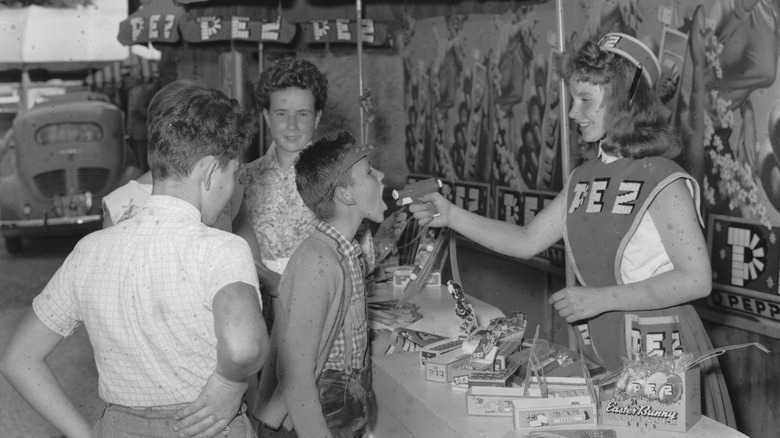
Most candies that were popular during the 1950s were invented in America, but PEZ stands out as a candy that was first created in Austria in 1927. The first flavor was peppermint, and folks could pop one into their mouths when they needed to freshen up. If you've ever wondered how PEZ got its name, it pays homage to its roots. "Pfefferminz" is the German word for peppermint, so PEZ is simply the shortened version that pulls a letter from the beginning, middle, and end of the word. PEZ is certainly much less of a mouthful for American consumers.
It took a while for PEZ to migrate. It expanded throughout Europe, then finally set roots down in New York City in 1952. Kids couldn't wait to get their hands on the fun dispensers. Some noteworthy designs from the decade include Santa Claus, robots, space guns, witches, Popeye, and spacemen. The mint candies were pleasant enough, but the dispensers are what solidified PEZ as an unforgettable brand with passionate collectors throughout the decades.
5. Candy Cigarettes (Candy Sticks)
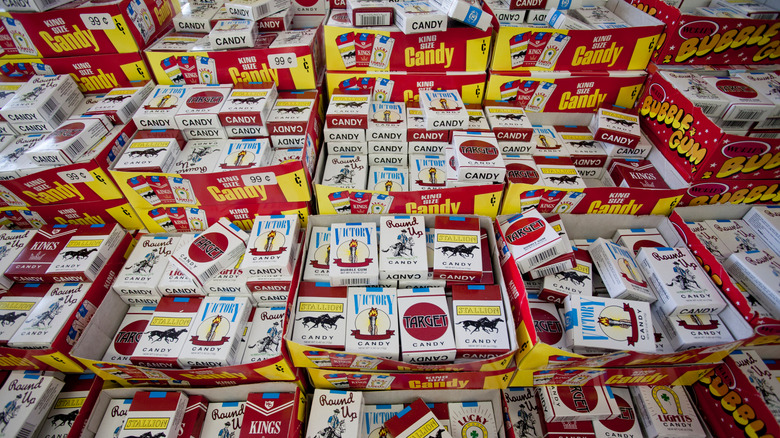
The history of cigarettes is mind-boggling. Forget the shock of learning that doctors used to promote them for wellness. What's even wilder is the fact that candy companies started manufacturing edible cigarettes to get kids used to handling cartons. These harmless cartons containing treats were designed to look exactly like real cigarettes because the top cigarette brands at the time happily collaborated with the designers. It's all part of the real reason candy cigarettes were almost banned a couple of times in American history.
Let's not jump the gun, though. When Candy Cigarettes first debuted in 1952, everyone loved them. Kids could choose from crunchy sugar sticks, bubblegum, and fruity sticks. These candies were sold in Victory, Stallion, Round Up, Kings, and Lucky Lights cartons. Instead of chomping into the candy right away, many kids mimicked adults around them by holding them in their mouths like real cigarettes. The candies themselves are nothing to write home about: The real allure was the packaging. While you can still buy Candy Cigarettes today, they've since been renamed Candy Sticks to distance themselves from further controversy.
6. Peeps
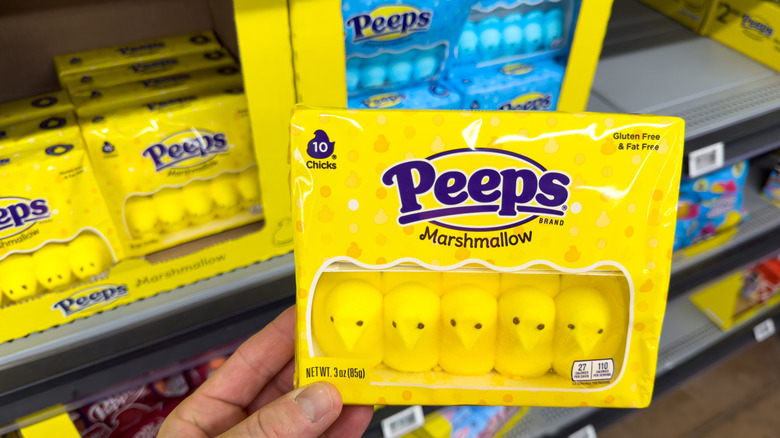
The birth of the cute marshmallow chicks we know today as Peeps isn't clear because the inventors came from a small candy-making business in Pennsylvania named Rodda Candy. What we do know is that these confectioners lovingly designed each marshmallow chick by hand in a process that took 27 hours from start to finish during the 1940s. What's even more astonishing is that up to 80 people worked on these orders during the Easter rush for the local community.
Peeps' story becomes much clearer and bigger in 1953, when Just Born bought Rodda Candy after its owner passed away. With more resources, Just Born took a local gem and used automation to expedite production and make Peeps available nationwide. Although the factories have expanded because of Peeps' wild popularity, it's fascinating that the original machinery was efficient enough to produce a Peep in only six minutes.
Nowadays, 5.5 million Peeps are made per day, and there are over two dozen types of Peeps. Our ranking of 24 Peeps items revealed that the new products are certainly fun, but nothing beats the original yellow Peep that Americans have been eating since 1953.
7. Hot Tamales
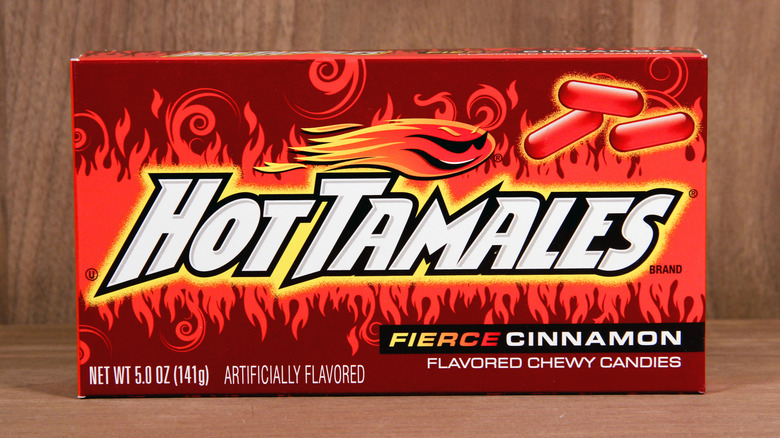
Peeps can be overwhelmingly sweet, so it was wise for Just Born to sell another candy that could capture a different sector of the candy market. Cue Hot Tamales, which were introduced to the public in 1950, just three years before Peeps. This release came 10 years after the company debuted Mike and Ike, which is a similar type of candy. Mike and Ike are chewy, rainbow fruit candies, while Hot Tamales took the same form and texture but tasted spicy instead. These candies were also fiery red instead of rainbow. The candies got their signature chew by incorporating starch into the sugar and corn syrup mixture.
Your first impression of Hot Tamales is spicy, but if you keep chewing, the heat subsides and reveals a pleasant sweetness that keeps you reaching for more. It was the perfect option for folks who appreciate some nuance. According to Just Born's website, Hot Tamales are still the number one cinnamon candy sold in America.
8. Atomic FireBalls
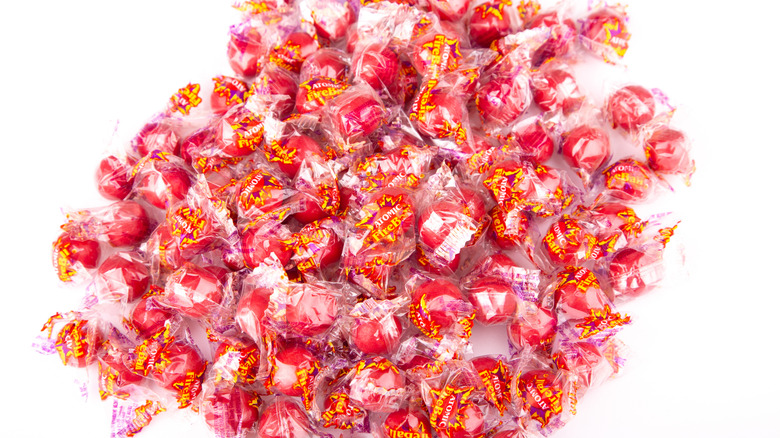
Growing up during the Cold War was a strange experience for American kids. The Atomic Age was both mystifying and terrifying. The future looked bright because scientific advancements promised all kinds of life-changing technology. At the same time, kids were practicing duck-and-cover drills at school. It was a bold move for a candy company to name its new spicy candy Atomic FireBalls, which were created in 1954. The risk paid off, though, because this edgy candy quickly became the company's top-selling product.
Atomic FireBalls infused beloved jawbreakers with spice by adding capsaicin to the formula. The result was a hard ball that was sweet, fiery, and cinnamony, while you savored it for several minutes. It was enjoyable to feel it dissolve on the tongue, and each person had to decide when it was time to try crunching it apart. Kids could dare their friends to take on the heat, while adults could enjoy a nostalgic jawbreaker with a more sophisticated flavor profile. Folks loved these candies so much that they bought boxes that contained 120 FireBalls.
9. Pixy Stix and Lik-M-Aid (Fun Dip)
Giving candy to children has been a hot topic for several generations. Lots of parents have questioned whether there really is such a thing as a sugar rush. Science says no, yet the myth persists because sugar tastes yummy enough to make many children go bonkers in anticipation. The invention of Pixy Stix and Lik-M-Aid, now known as Fun Dip, in the '50s is comical because both candies were guaranteed to be an instant hit with kids, and, at the same time, make adults break into a cold sweat when they saw their child tear one open.
Sugar is a critical ingredient in all candy, but what happens when you just pour flavored sugar into a stick and sell it? Pixy Stix made a killing with its simple blend of sweet dextrose, tangy citric acid, fruit flavoring, and food dye that stained tongues fun colors. Kids could enjoy cherry, orange, grape, lemon, and lime.
Lik-M-Aid was also beloved because kids could lick a sweet stick, dip it into more sugar, and get a double dose of candy. Once the powder was gone, they could crunch into what remained of the stick.
10. Andes mints
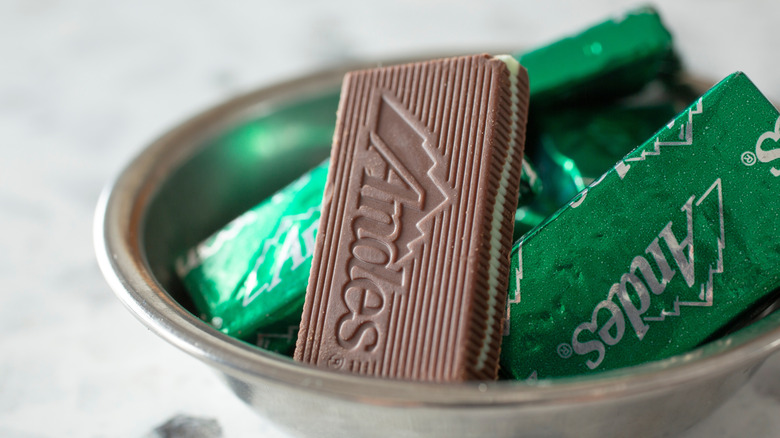
We've all heard jokes about how Olive Garden shouldn't be allowed to brand itself as Italian food. However, the chain has earned its spot in American culture. Out of everything you could order, the free breadsticks landed first place on our ranking of popular Olive Garden menu items. Sure, the endless soup, breadsticks, and salad glimmer in the spotlight, but stop to consider how ghastly you'd feel if Olive Garden stopped handing out free chocolate mints at the end of your meal.
Andes Candies invented its beloved chocolate mints in 1950. The pairing was brilliant because folks could savor the creamy, chocolatey goodness and feel refreshed afterward. These little rectangles of joy are snappy, too, so fans can decide whether to bite into the candy or let it slowly melt on their tongues. There's no denying that Andes mints have been the perfect pick-me-up after a nice restaurant dinner for many decades. Yet nothing is stopping you from buying a big bag at the grocery store to snack on whenever you want.
11. GOOD & PLENTY Licorice Candy
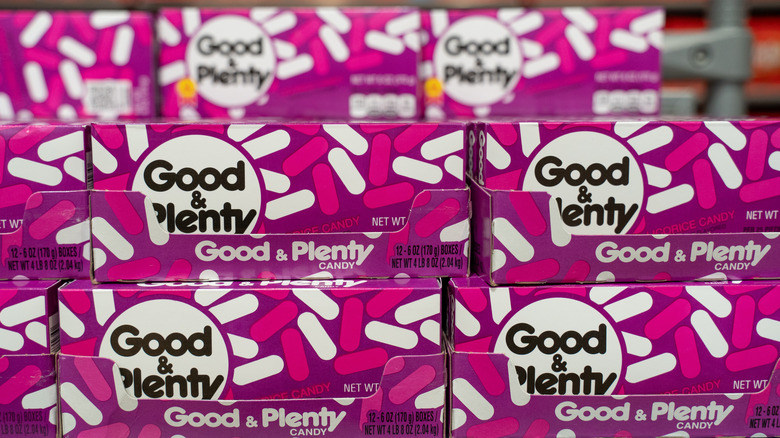
Black licorice haters may find this hard to believe, but GOOD & PLENTY candy has been around since 1893. On Hershey's website, the licorice is touted as one of America's oldest labeled candies. What makes GOOD & PLENTY so fun is the iconic white and pink shells that surround the spicy black licorice. The crunchy exterior that gives way to the chewy licorice is a much more elevated experience than regular licorice on its own.
So how has GOOD & PLENTY stayed relevant all these years, especially given how polarizing black licorice is? The 1950s were all about television, and the brand knew how to capture folks' attention then. During this decade, GOOD & PLENTY developed Choo Choo Charlie as the candy's biggest fan. This cartoon boy was a train conductor, and he and a little girl rode the train while singing a catchy jingle. The little girl sings, "Charlie says," while the boy belts, "Love my GOOD & PLENTY!" The girl repeats her phrase, and Charlie continues, "Really rings the bell!" Not only are these vintage commercials adorable, but the jingle, like many of its time, is also quite the earworm.
12. Dum-Dums
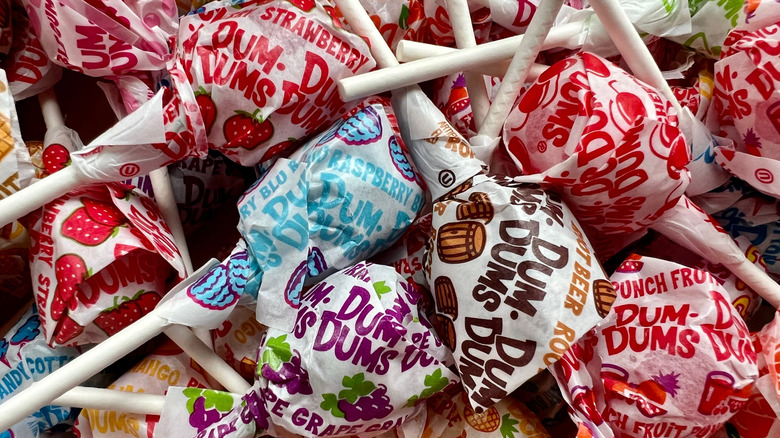
Many of us have enjoyed Dum-Dums in our trick-or-treat buckets or as a reward for braving a checkup with the doctor. These little lollipops may not be the most glamorous candy, but even today, they still have their charm. Dum-Dums are over 100 years old, since the lollipops were first released in 1924.
On Dum-Dums' website, nothing noteworthy happened throughout the candy's history until 1953, when Spangler Candy bought the company and ramped up production. A whopping 84 million lollipops were produced to get Americans hooked on this whimsical candy on a stick. Folks could choose from lemon, lime, orange, butterscotch, cherry, grape, and coconut-pineapple. Just six years later, Dum-Dums were popular enough that the company pumped out two million per day.
As it turns out, the tradition of handing out Dum-Dums in waiting rooms dates back to 1959. Going to the doctor is never fun, but we can at least thank Dum-Dums for the practice of giving out a treat as consolation. Nowadays, Dum-Dums come in over two dozen flavors, so if you're in the mood for a lollipop, be sure to check out our ranking of every Dum-Dums flavor.
13. Charleston Chew
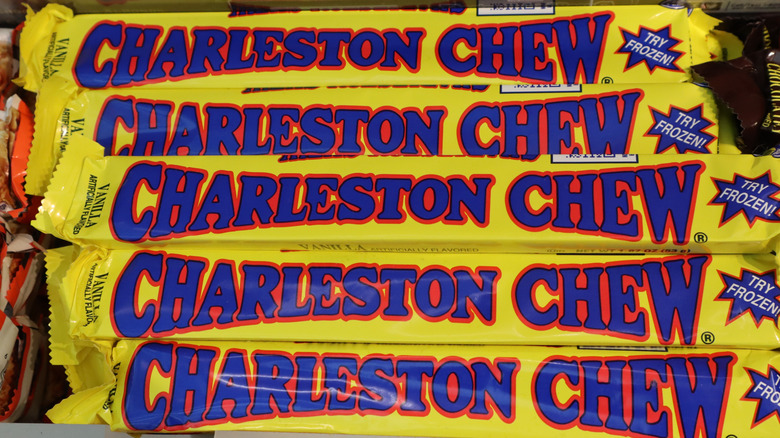
Charleston Chew was first invented in 1922, and its name has a charming backstory. It wasn't invented in Charleston, South Carolina. Rather, the candy was named after the hit dance craze of the time: The Charleston. The dance has remained an important element of the Roaring Twenties, but Charleston Chew managed to become timeless. In fact, it was also featured in Mashed's roundup of candies Americans ate in the '60s.
A major driver behind Charleston Chew's longevity is Nathan Sloane, who revitalized the brand when he purchased the founding company in 1957. He kicked off a major marketing campaign that introduced Americans to "Charleston Crack," which was simply freezing the pillowy candy to make it crunchy. The original vanilla flavor was yummy enough to drive sales, but Sloane also released two enticing flavors: Chocolate and strawberry. The novelty of new flavors and the exciting use of freezers, which had only recently become a household staple, got everyone excited about Charleston Chew.
14. Necco Wafers
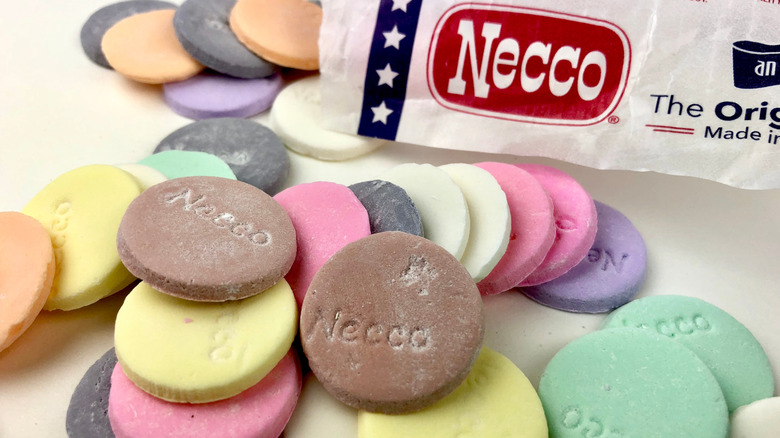
The oldest candy on this list is Necco Wafers. The brand was first invented in 1847, so it's impressive that these candies were still relevant in the '50s, when tons of dazzling new treats were hitting the market. What makes the feat even grander is knowing what a Necco Wafer tastes like. One person compared the candy to communion wafers and even joked that the wafers might make good roof shingles. Surprisingly, Necco Wafers are one of the top old-school candies you can still buy today.
The flavor lineup is also quite bizarre. You might reach for a pink wafer and expect a lovely strawberry flavor, only to get a shock to your system when you crunch on wintergreen, which is minty. In addition, a wide range of flavors is bundled into one package. Licorice, clove, wintergreen, lime, chocolate, cinnamon, lemon, and orange wafers await you. Since the color-flavor pairings aren't the most intuitive, you either have to memorize what's what or embrace the chaos.
Necco Wafers' popularity during the '50s boils down to nostalgia and a sharp increase in advertising. The candy was always in the newspaper, and the brand also timed its campaigns to capitalize on Halloween and Christmas shopping. As wild as Necco Wafers are, you have to admire the commitment to tradition. They may not become your favorite candy, but it's cool being able to have a taste of history.
15. Brach's Pick-A-Mix candies
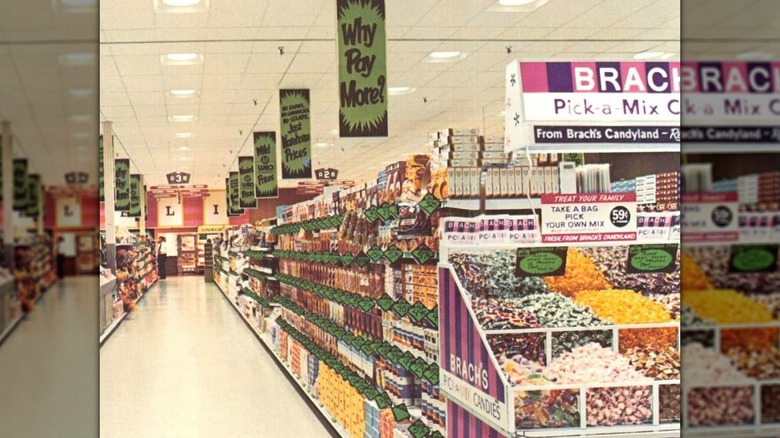
Most of us have used the phrase "like a kid in a candy store" to express our excitement. Back in the day, kids had the best time visiting their local general store to stock up on tons of different candies. Of course, this had to be a special trip that parents went out of their way to make. Brach's revolutionized supermarket candy by introducing its Pick-A-Mix concept, which let shoppers pour their favorite candies into one bag at the supermarket and buy them with the rest of their groceries. Brach's advertised its lineup as chocolates, coconut, jellies, hard candies, and chewies.
While we can thank Brach's for making supermarkets more fun and convenient nowadays, we can also sympathize with the parents who had to drag their kids away from these new, big candy displays every time they tried to get their everyday groceries. Eating candy more regularly also became normalized because we're all human and can only resist temptation so many times.