

7 Meats That Fueled Cowboys In The Old West
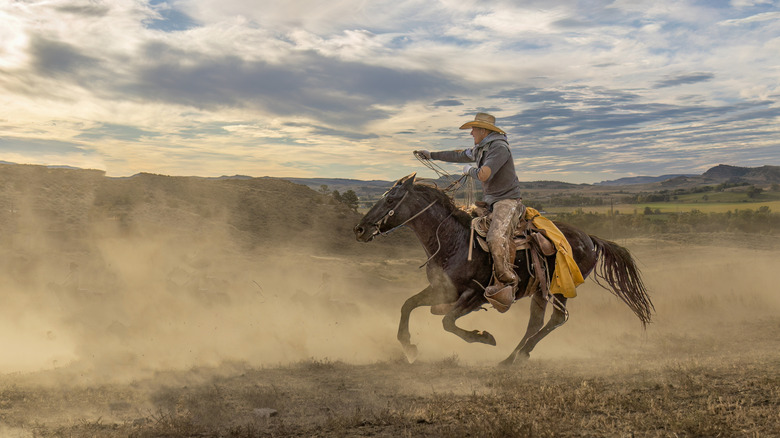
When you think of cowboys, your mind probably goes to rugged figures riding horseback across the wide open plains. And while Hollywood and pop culture may have perpetuated a certain persona for the cowboys of the Old West, they didn't necessarily get every detail right. While it may seem that these wranglers led a glamorous life, the reality was much less appealing for these hardworking ranch hands — especially when it came to their diets.
Meat was an important part of a cowboy's daily diet, but what ended up on their plates depended on one main factor: preservability. Because cattle drives often lasted months, food that could be stored without spoiling was often prioritized over fresher, more delicious alternatives; so those images of cowboys feasting on juicy steaks every night are definitely not the norm.
We spoke with David Davis, chief curatorial officer at The National Cowboy & Western Heritage Museum and Dan Shook, an education ranger with the National Park Service at the Grant-Kohrs Ranch National Historic Site in Montana to get an idea of what meats cowboys really ate in the Old West. Read on to learn more.
Salt pork
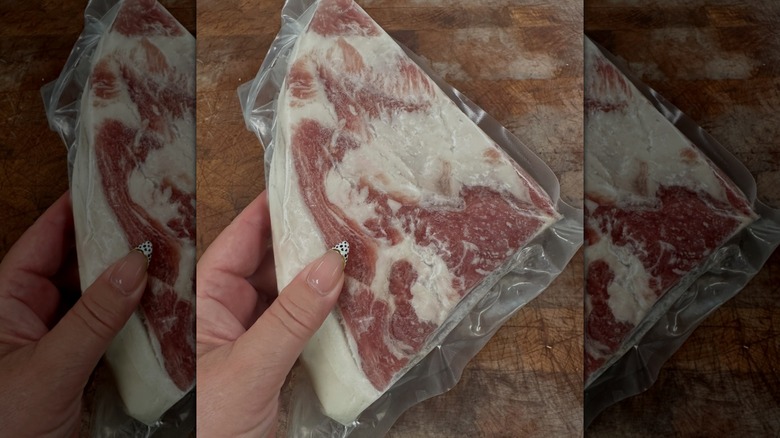
Salt pork, a similar cut to bacon, was a must-have for cowboys and other travelers, like those on the Oregon Trail. These groups coveted this meat not only for its shelf stability, but also its flavor.
Like bacon, salt pork comes from pork belly, and both are cured. Unlike bacon, salt pork isn't smoked, giving it a slightly different flavor. But the real advantage of this meat isn't the flavor; it's that it didn't require refrigeration, allowing cowboys to take it on months-long cattle drives for sustenance.
"[Salt pork] had great shelf life for being on the trail for months at a time and provided a massive number of calories that cowboys needed after riding in the saddle for over 14 hours!" said Dan Shook. "[It] was relatively cheap, easy to obtain, and would remain safe to eat much longer than fresh meat," added David Davis.
While salt pork can be eaten alone, it's also highly versatile. It was often added to beans, stews like salt pork stew, and other dishes to add flavor. Cooks also could use the melted fat to cook other foods, imparting some extra flavor.
Smoked bacon
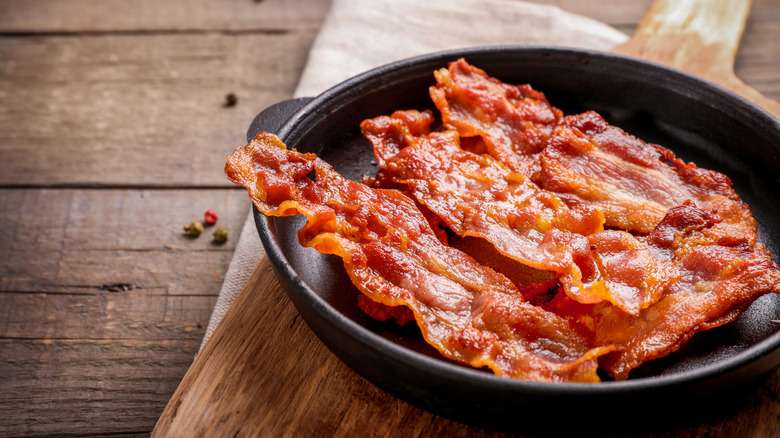
Smoked bacon — the cousin to salt pork — was also a staple on cattle drives. Like with salt pork, "the cook used bacon grease to fry everything and occasionally served it as the main meat when supplies ran low," explained Dan Shook.
Bacon was a staple of the cowboy diet, David Davis added. "These cowboys subsisted mostly on beans, bacon, some dried fruit, [and a limited supply of other staples]," he said. It was such a staple of the cowboy diet that they affectionately nicknamed it "overland trout."
Unlike modern bacon, what the cowboys usually ate was something called "sowbelly," pork from the back and sides of the pig. It was durable and didn't require refrigeration once cured, making it perfect for trail rides. Like salt pork, it had a high calorie content thanks to the presence of a lot of fat, giving the cowboys the energy they needed. Chuckwagon cooks typically fried the bacon over an open flame, using the grease to cook the rest of the meal and serving it alongside other staples like beans and biscuits.
Jerky
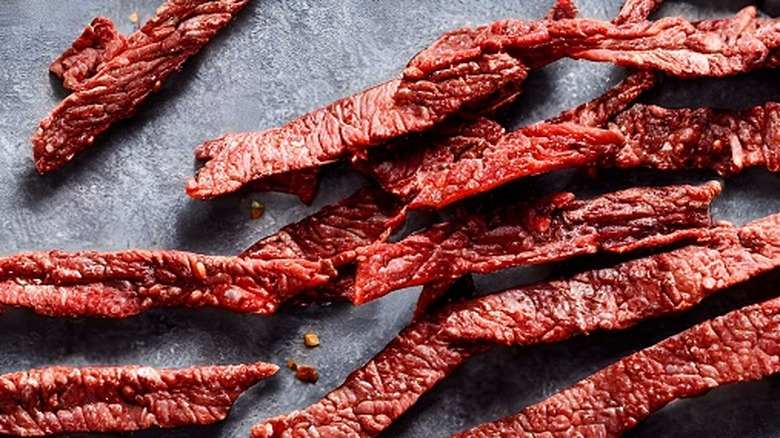
Jerky was a staple for cowboys for a few reasons: It's portable, it's nutritious, and it's shelf-stable. "Dried strips of beef jerky were small enough for cowboys to carry in their saddlebags and eat while working cattle on the trail," explained Dan Shook. Jerky also contains roughly 9-12 grams of protein per ounce, allowing the cowboys to fuel up on the go, and depending on how it was made, the jerky could also last up to a year before spoiling. When making jerky, drying the meat and removing the moisture helps prevent harmful food-borne bacteria from growing, allowing the meat to last longer.
Unlike modern-day jerky that is marinated and tender, the cowboy version was much tougher. Cowboys would often chew it for extended periods throughout the day, and to soften it up, they also added the dried meat to water, creating soups and stews. While beef jerky was most common, the cowboys would also dry and cure other meats like bison, deer, and elk.
Wild turkey
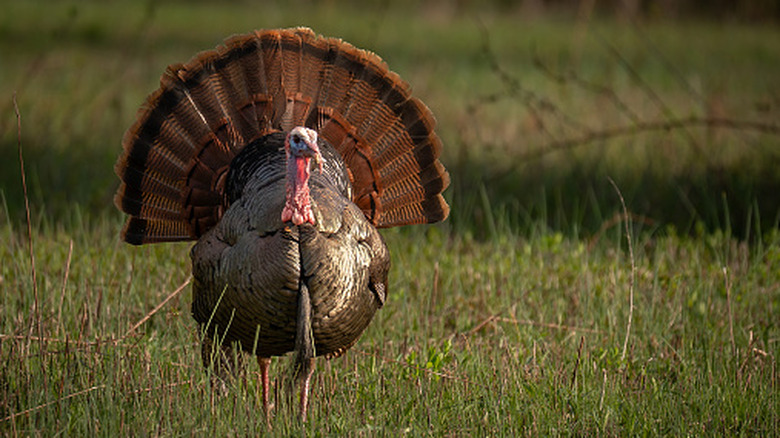
Though it seems like hunting would have been a good avenue for cowboys to add variety to their diets, it was a rare occurrence according to David Davis. "Cowboys didn't have time to hunt as their primary job was to watch the herd and keep it moving," he explained. But sometimes, luck would be on the cowboys' side and allow them to supplement their diets.
"Game would have been taken only on a chance encounter, and [many would be wild turkeys]," he added. Once caught, the turkey would likely be prepared like most meals —roasted over a fire in a Dutch oven — and would need to be consumed quickly to prevent spoilage.
In the early 1700s, turkeys were plentiful, with sometimes between 500 and 1,000 birds in a single flock. By the late 1800s, in the heyday of the cattle boom, however, there had been a steep decline in the turkey population due to commercialized hunting and habitat loss, making it more difficult for cowboys to catch this coveted game.
Deer
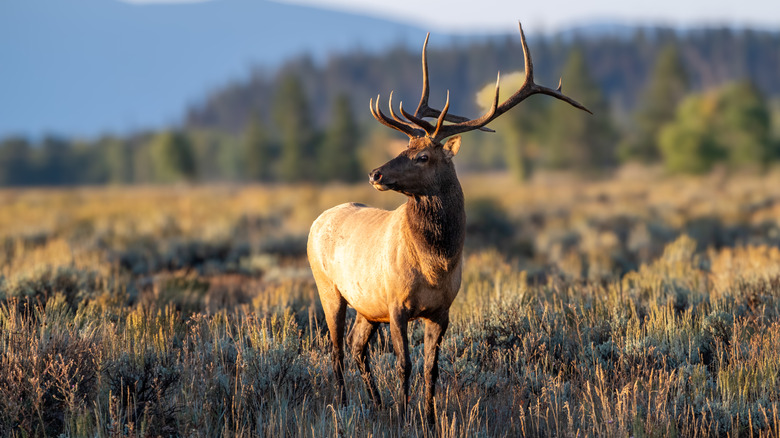
"Cowboys didn't have time to stop and hunt or fish, and most didn't own a gun," said Dan Shook — but there were a few exceptions. "If the trail drive slowed down enough, the cook or a designated cowboy could occasionally fish or hunt wild game like deer."
"If something like a whitetail deer was taken, it would be gutted immediately, and then the carcass allowed to cool as quickly as possible to avoid immediate spoilage," explained David Davis. "Then it would probably be quartered, and the cuts of meat would be made similar to what we are used to today," he added.
Deer meat was sometimes used in soups and stews, similar to other wild game. Regardless of the preparation, a single deer could provide a substantial amount of meat for the crew, making it a valuable addition to the group's supplies. Fresh venison also offered a welcome change from the beans, bacon, and other shelf-stable staples that dominated the cowboy diet.
Beef
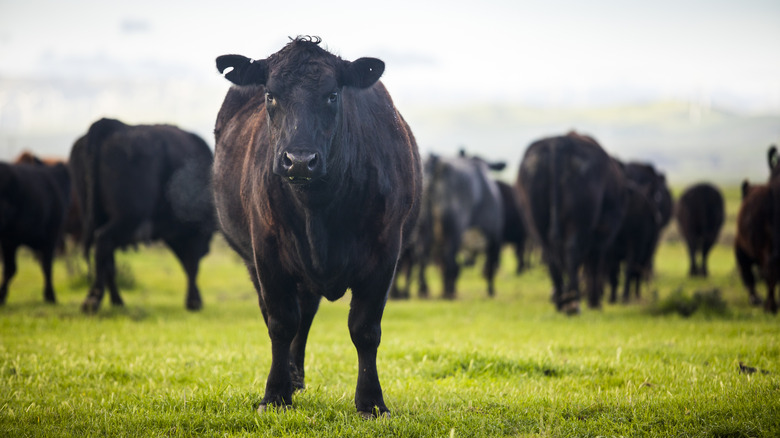
Though it may seem like it would make up the majority of the cowboy diet, it actually was a rare treat for them to indulge in fresh beef. "The taking of fresh beef directly from the cattle herd usually only happened at the very beginning of the drive as a celebratory start," explained David Davis. "Since the cattle were their investment, the trail boss or the ranch owner would usually not want to lose any of the herd to feed the crew," he added.
He offered a caveat: "Additional beef could be taken out of necessity. " Dan Shook offered another exception: "The only times cows were slaughtered on a trail drive were if they broke a leg, went blind, or became too exhausted to keep walking," he explained.
If the cowboys did get access to fresh beef, it typically "would be sliced into steaks and fried or cubed and stewed," said Davis. "Fresh meat had to be consumed within 24-48 hours, or it would spoil from the intense summer prairie heat," Shook added.
Organ meat
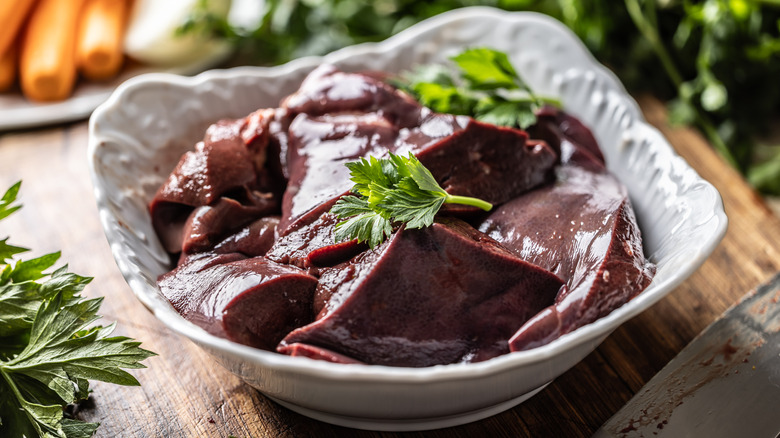
On cattle drives, fresh meat was a luxury. To avoid wasting a single piece, the cook would use every part of the animal — including the organ meat. "If a cow was slaughtered, the crew would eat the entire animal as quickly as they could," said Dan Shook. "The internal organs spoiled the fastest, so the cook would often throw the organs and tougher meat into a Dutch oven to simmer and make a stew," he explained.
Organ meat was also a special ingredient in a celebratory dish, David Davis shared. "The yearly roundup included the taking of a yearling calf and making 'son of a gun stew' that used everything including 'the head, the horns, and the holler,'" he explained. The stew typically also included durable vegetables like carrots, corn, and root veggies like potatoes and turnips.
In addition to the internal organs, there was another element that the cowboys sometimes prepared. "During the roundup, when the young males were castrated and made into steers, the removed testicles were often fried up into the delicacy called '[Rocky] Mountain oysters,'" he added.