

3 Disadvantages Of Making Eggs On A Cast Iron
We may receive a commission on purchases made from links.
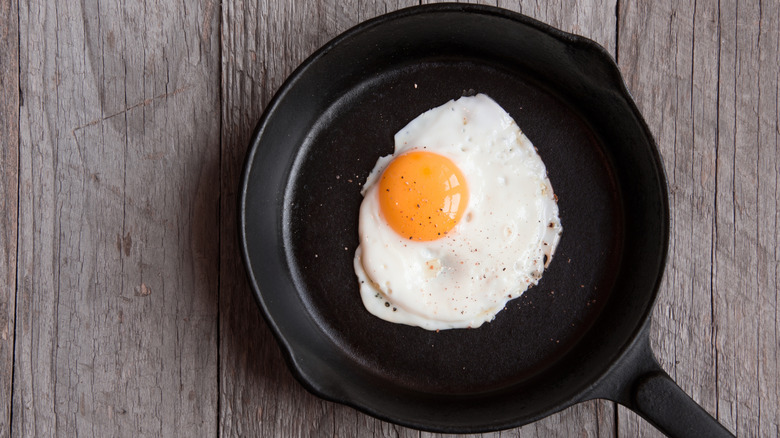
Sometimes, cooking with cast iron can feel like walking on eggshells. A quick internet search brings up tons of conflicting opinions on how (and how not) to clean, season, and cook with cast iron, which is why it's critical to separate the cast iron myths you should stop believing from reality. We're here to clear up one common cast iron confusion: Some warn against cooking eggs in cast iron, while others insist it's your golden ticket to a perfect omelet or crispy fried egg. It's certainly possible to fry up fabulous eggs on cast iron, but it's far from foolproof, and there are several solid reasons to stick to other skillets when whipping up your morning scramble.
From tricky heat control to a stubborn tendency to stick and the challenge of knowing how much fat to work with, there are clear disadvantages to making eggs on a cast iron pan. Although this may sound like bad news for cast iron lovers hoping to become expert egg cooks, understanding the potential setbacks is part of how to avoid them.
Unless your skillet is perfectly seasoned, your eggs are bound to stick
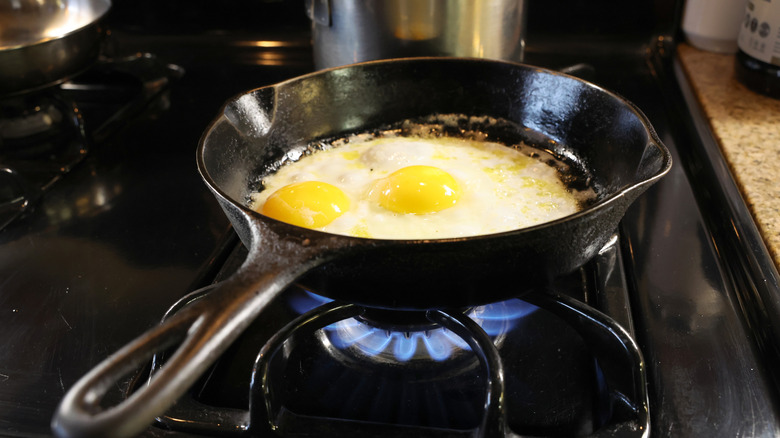
Properly seasoning a cast-iron skillet is a labor of love. The pan will become more stick-resistant with age, but getting there requires patience, time, and consistency. With that in mind, if you cook eggs in cast iron that is less-than-perfectly seasoned, there's a good chance half of your meal will end up stuck to the bottom of the pan.
Anyone who's fried eggs is probably aware of how they tend to stick to pans (even the supposedly nonstick kind). Sticking is the result of food proteins bonding to imperfections on the cooking surface. Since unseasoned cast iron is porous and slightly rough, egg proteins will inevitably adhere to it if the pan isn't well seasoned. When cooking with new cast iron, seasoning it with a coating of oil over heat is a step you cannot skip. Until the pan is sufficiently seasoned, you may want to forgo eggs in favor of recipes with less risk of sticking, such as deep-fried foods or sautéed veggies.
Heat control can be tricky with cast iron
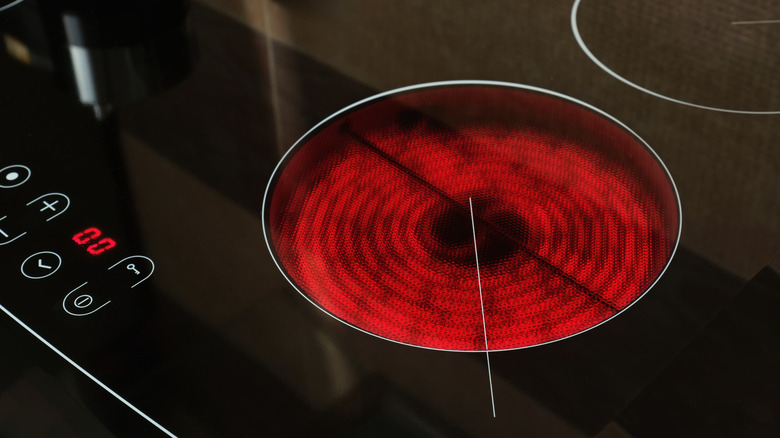
Cooking eggs is a delicate business. The difference between a perfectly creamy scramble and a dry, overcooked pile of battered curds can be a matter of seconds and degrees. While overcooked eggs are totally edible, most people would agree that they're nowhere near as tasty, which is why temperature management is key. Unfortunately, controlling the heat level of a cast iron pan isn't exactly a piece of cake.
First of all, cast iron demands a long and slow preheating process in order to heat evenly (typically at least five minutes over medium-low heat). Heating the pan too fast or adding the eggs before it's fully preheated is a recipe for sticking and tearing. Once it's hot, cast iron retains heat extremely well, making overcooking all too easy. Mastering the art and science of cast iron temperature control is totally possible, but it requires patience and practice. If you're not confident, build your skill by making foods that thrive at high heat, such as steaks and stir-fries.
You can't go light on the cooking fat
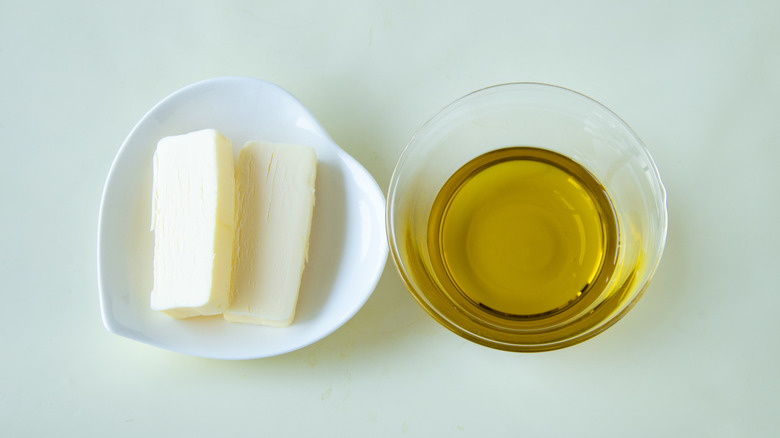
Cast iron becomes less prone to sticking with seasoning and time, but that doesn't mean it's nonstick, and it definitely doesn't mean you can skip the cooking fat. Arguably, clarified butter is the best type of fat for preventing your eggs from sticking to the pan, though a generous dose of your preferred cooking fat works too. Adding enough fat to the pan is essential for several reasons. For one, the fat forms a barrier between the pan and the eggs' proteins, which would otherwise bond to its surface. Cooking fat is also good for further seasoning the skillet.
If you want to fry eggs with little to no butter or oil, a nonstick pan is your best bet. If all of this has you in the market for a new egg skillet, the perfect pan size to cook eggs in depends on how many eggs you typically cook at once (an 8-inch pan is recommended for two fried eggs or a three-egg omelet; a 10-inch pan holds a five- or six-egg scramble). Whether you settle on a nonstick pan or are determined to hone your skills with a cast iron skillet, several sizes and styles are available.