

Fast Food Extras That Aren't Worth The Money
It's a pricey enough prospect just feeding yourself at a fast food joint these days, with all the elevated costs for the basics behind the counter being passed on to customers. But when chains try to shake you down for even more with a bunch of add-ons and top-offs that hike the bill even higher, it starts to feel less like casual dining, and more like highway robbery. There has to be a way to keep your spending in a reasonable range while still enjoying your favorite orders — which is why skipping the extras as a cost-cutting measure is the way to go.
Which extras are heaping more expense onto your receipt when you go deluxe at your fast food eatery of choice? We rounded up a collection of the most expensive add-ons that are the least worthy your money — everything from paying for extra sauces for your chicken nuggets, to doling out too much for bacon to top an already-stacked burger. When you take a helicopter view of these sneaky strategies used by the industry to maximize revenue, it becomes clear that you can live without the supersizing and the tossed-in toppings — and your bank account will be better off, too.
Extra sauces
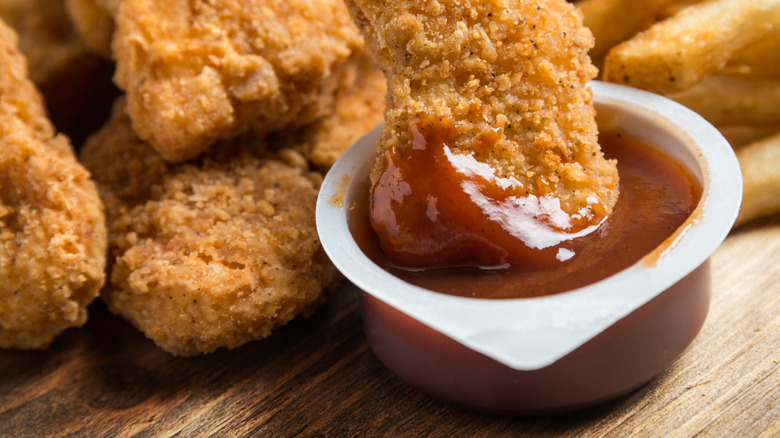
You probably never expected to have sticker shock when asking for sauce to go with your fast food order, but that's what's been happening in recent years. It's become common practice for fast food chains to charge for barbecue sauce, ranch, and even ketchup packets — items that used to be as foundational and free as napkins and straws. Even some McDonald's locations have begun charging for basic ketchup, a move addressed on the corporate FAQ page.
Rising costs for franchisees and chains alike inspired this distasteful practice, setting customers' teeth on edge, and creating a stir in online forums. Consumers who've been stung share stories on Reddit of Domino's charging extra for sauces, while others say they have been shaken down by Raising Cane's for honey mustard sauce, or barbecue at Wendy's.
Sometimes fast food chains introduce new sauces with a price tag: Taco Bell added its 2024 avocado salsa verde and its limited-edition Disha Hot sauce to its already-popular sauce collection, but at 20 cents per packet (the avocado salsa verde was 29 cents per packet in fall 2026). That may sound reasonable, but if it takes three or four packets to get proper coverage, you'll be adding almost an extra dollar to your purchase. Remembering to ask if there's a charge for extra sauce at McDonald's — or any fast food chain you frequent — will help you make an informed choice.
Extra cheese
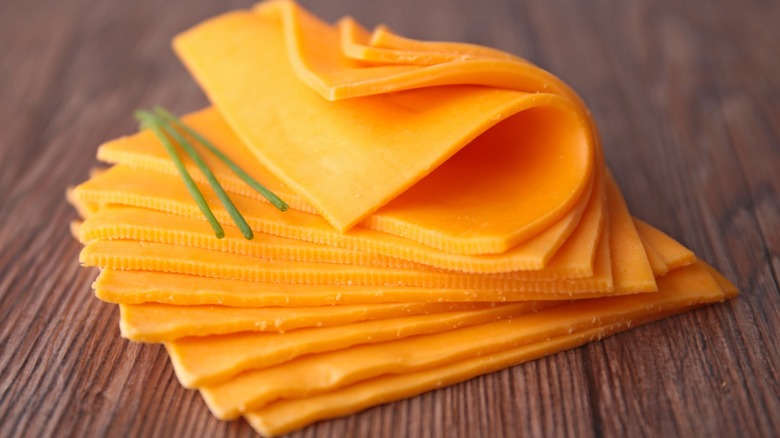
It may not seem like asking for extra cheese would put a huge restaurant chain on its back foot. Regardless, any goodwill that may have been generated by providing additional slices at no charge has gone out the window. Now, if you want more cheese on your patty, you're most likely paying the price. It's enough to make cheeseburger fans wonder if they can do with just the single slice provided by the basic menu.
The cheese tax isn't a small expense, either. A Redditor posted a photo of their McDonald's app screen with a $1.69 charge for one additional slice of cheese; others checked their locations and found the amount to be closer to 75 cents, which is still a considerable increase to the base price of your burger. That's just in the U.S.; in Australia, a news story pointed out that customers have been charged up to $2.55 for extra cheese — almost the amount you'd pay for a whole package in the grocery store.
It's not just burger spots charging for cheese; Chipotle also charges for additional cheese, taking customers by surprise. And Subway has a weird rule requiring workers to charge for double cheese on your meat-based sub sandwich, though it's included in the cost of a veggie patty sub — but only if the customer asks for it. The short story here is to skip the extra cheese, unless you know it won't break the bank.
Large refillable drinks
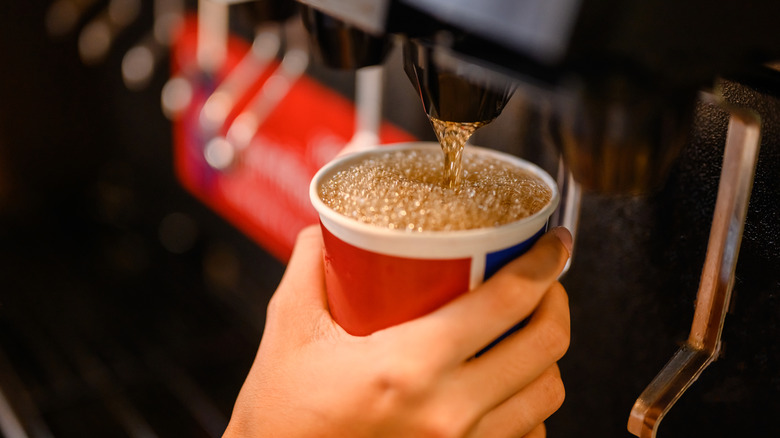
Grabbing a large soft drink with your fast food meal seems like an obvious choice, but you could be paying much more than necessary. Customers are calling out the rising costs of even medium cups; Somehow the industry's biggest names like McDonald's have responded by eliminating their $1 value drinks, which seems counter-intuitive ... until you realize it forces patrons to pay more. Once you know this, it seems like a jab at hardworking diners who end up on the losing end of the equation.
There's a simple hack that fast food aficionados figured out long ago when buying beverages in eateries with self-serve soda fountains: Buy a small and refill it as many times as you'd like. The quantity consumed can end up the same, for a fraction of the price. It does only work if you dine in, though, which leaves drive-thru patrons out in the cold. Nonetheless, with sky-high prices for large soft drinks at some outlets, deciding you can do with a small cup can often mean the difference between a satisfying and affordable beverage, and one that really sucks it out of your wallet.
Extra protein
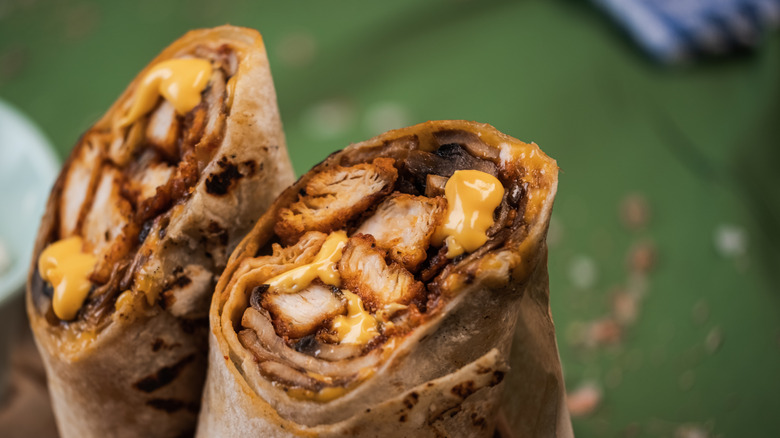
In a world gone gaga for protein-rich diets, adding extra protein to your order has become de rigeur in the fast food world. For health-conscious and fitness-minded patrons, it provides access to extra beef, chicken, and sometimes tofu to maximize your macros. For restaurants, it's a no-brainer of an income source that can add incredible cash flow to the bottom line on a daily basis. And, the price can absolutely add up for diners just trying to scrape together a decent meal in a bag.
Appealing to protein fans is a restaurant strategy that takes advantage of trends in diner habits. Chipotle posts on its social media pages when it offers double protein for customers at no extra charge — a savings of $4.60 for just a basic cup of chicken at the Peoria, Arizona location. These companies know exactly what they're doing: Once you're used to paying extra, but then you get it for free for a while, you'll be more likely to pay extra again when the promo is over. That sort of behavioral herding can empty your piggy bank by adding pork to your bill, so think twice before doubling up your protein quotient.
Value meals
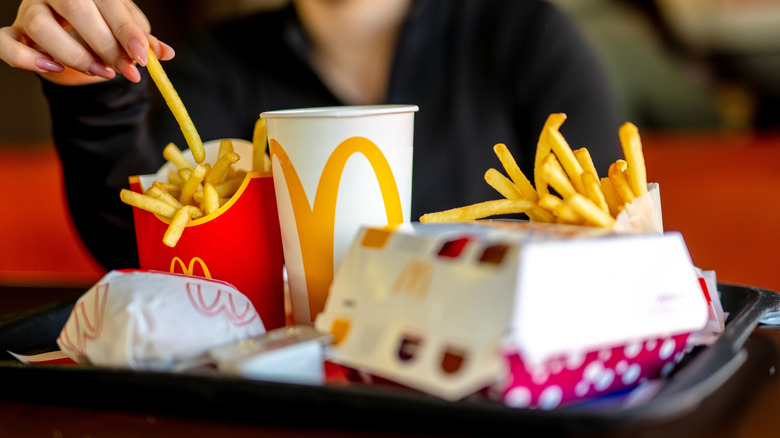
The concept of a value meal used to mean what you got for your money was an actual deal. Combining a burger with fries and a drink modestly reduced the price of each item, enticing customers to buy all three when they may have only come in for the first two. Somewhere along the line, the ever-inflating pricing structure of fast food in general began to tarnish the concept, making these inclusive purchases more cost-prohibitive than cost-effective.
The sketchy nature of value meals has even prompted lawsuits in the past, like the one brought against Chicago-area McDonald's franchises where items in value meals ended up costing more than items purchased individually. The difference may have only been 11 cents, but it seemed like a deceptive practice that took more of the customers' money than necessary. Even when the chain brought back its value menu, long-time fans called out the difference between past value prices and ones that no longer seemed as cost-friendly.
Customers also notice when value meal prices differ between nearby locations. One Redditor complained that two Taco Bell locales in their area with a three-mile separation had a 50-cent differential between the same meals. It's always worth pricing out your order piece-by-piece to see if you can save yourself a little money for the next trip.
The works
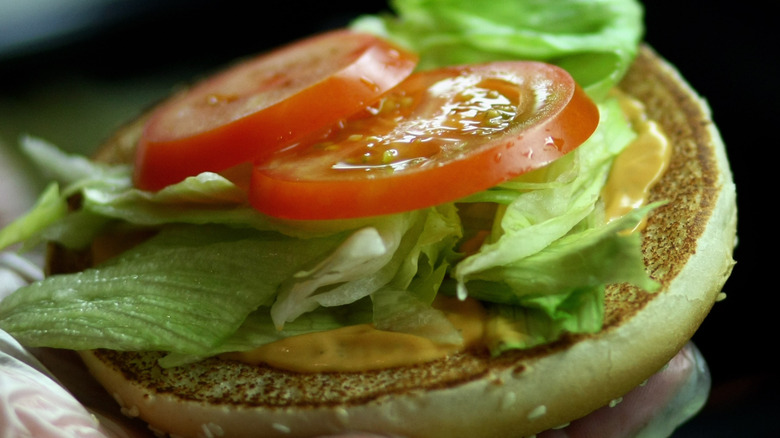
Before you order your burger or sandwich with "the works," it's a good idea to ask how much more that tacks on to your total. In the age of app- and kiosk-based ordering, every topping you include beyond the basic blueprint of the item as listed on the menu comes with its own additional price. But when you have to request the whole set of toppings as an add-on, it's a fast food burger menu red flag that should alert you to the rip-off that's about to take place.
Having to pay more for what should be included by default has made such waves in the fast food world, there was even a 2025 promo launched by Five Guys that made adding all the toppings free. The shift was meant to lure patrons who were tired of shelling out more money just to get veggies on top of the beef. Customers can still remix a list of 15 toppings to make their burger just the way they want, a move that brings needed relief to fast food spenders feeling the pinch.
Consider this your opportunity to consider how much you actually enjoy all of those bits and bobs, and if you can literally afford to live without them. Nobody's ever done cartwheels for additional iceberg lettuce or an extra tomato slice; leaving them off could keep you in the black — instead of driving you into the red — when it comes time to pay.
Extra bacon
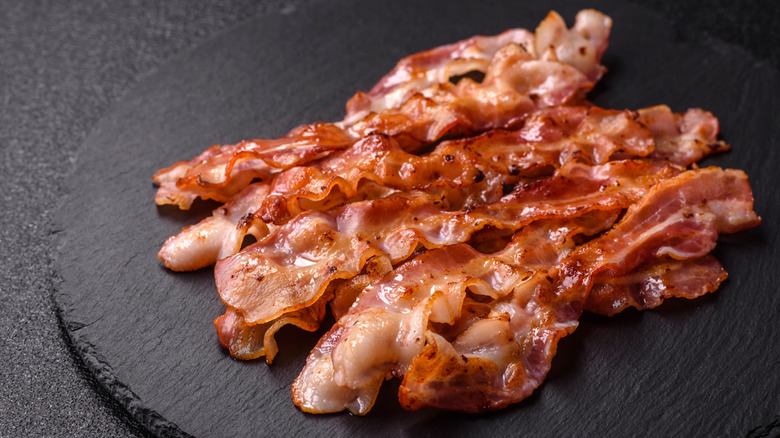
Ah, the tasty possibilities of adding extra bacon to pretty much anything you order these days. The ongoing movement puts this sweet and smoky pork product pretty near the top of the add-ons list, which means fast food chains have begun taking advantage of the allure it holds. You may think it's worth carving out extra space in your finances to jazz up your order with an extra strip or two. But when you find out McDonald's charges $1 or more per strip, you learn how quickly you can deplete your funds — just to transform your cheeseburger into a bacon cheeseburger.
Don't think you'll have it better at Burger King; the chain prices its additional bacon strips at around $1 too, according to the Phoenix-area menu. And at a Carl's Jr. location in the same area, extra bacon costs a whopping $1.29 per piece. But the more egregious breach of trust between the bacon provider and hungry customer happens at Jimmy John's, where additional bacon rings up at throat-clenching $3. Remember when you used to get a whole bargain meal for that price? When you think of it that way, it's really not worth piling on more bacon, no matter how your taste buds might be tingling.
Branded merch
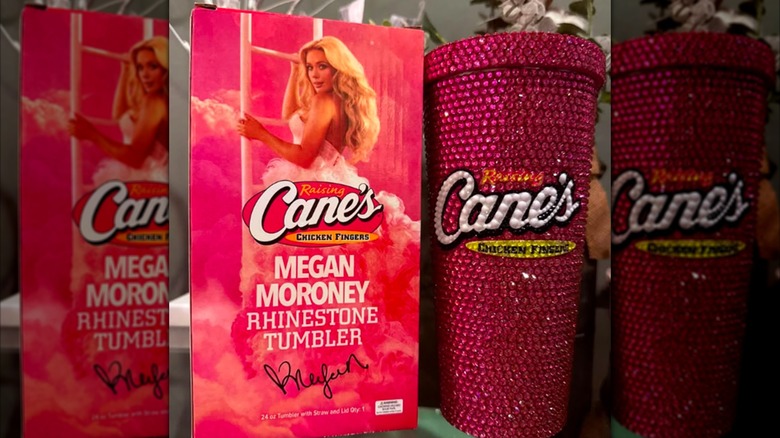
The last thing you need to contribute your hard-earned wages to is the merchandise collection being pushed by any fast food restaurant. The idea of picking up branded shirts, plush mascots, or even logo keychains while choosing your breakfast sandwich means massive money that has nothing to do with fast food or dining. It's just another way for an already lucrative corporate structure to enrich their profits, and should be stricken from your fast food habits — if you want to save money.
If you've never run into the merch display at your favorite fast food restaurant, consider yourself lucky. There are apparel collections and celebrity cross-promotional items at Raising Cane's that can turn you into a walking billboard for the chicken strip eatery. A similar set-up at Chick-fil-A generates cash flow through the till with themed shirts, hats, and cow-patterned play sets that seem clever at first sight, but mean depletion of your dollars if you do anything more than browse.
Obviously, when Culver's creates a cute social media advertising display for its cheese curd stuffies, it's designed to increase your spending on unnecessary non-food purchases. That sort of indiscriminate spending adds up quickly. Even if you think you can't live without that adorable "Eat Mor Chikin" onesie for your little one, know this: You probably can.
Avocado or guacamole
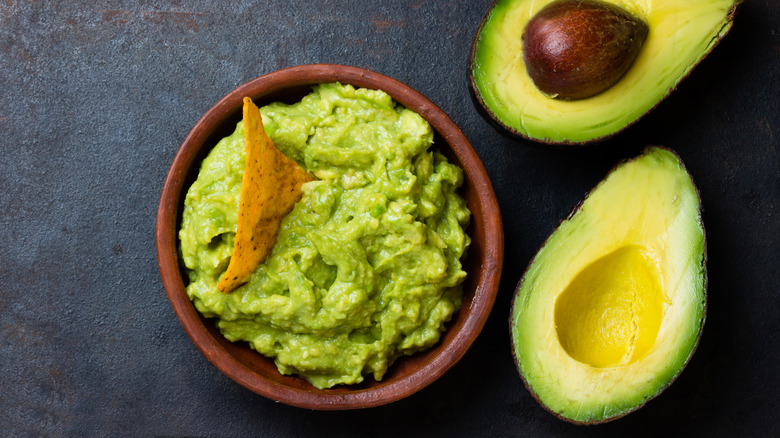
The great guacamole and avocado movement that captivates fast food customers can also be a source of unnecessary financial leakage. Even the most generous assembly line cook isn't going to top your salad with a full avocado, which means you'll be paying a great deal for just a portion. And since avocados seem to be the golden fruit of the produce world, the premium prices that never go down are bound to become an additional expense in your fast food purchases.
But how much? At Subway, adding avocado to your 6-inch sub goes for $1 per serving. At Chipotle in Clearwater, Florida, adding a scoop of guacamole to a burrito tacked on a whopping $2.85 to the order. An upcharge of this size can give pause to even the most devoted guac fan. Knowing you can grab a whole avocado for about the same price as a serving on your sub or a scoop of guacamole on your wrap might keep you from handing over more money.
Dessert
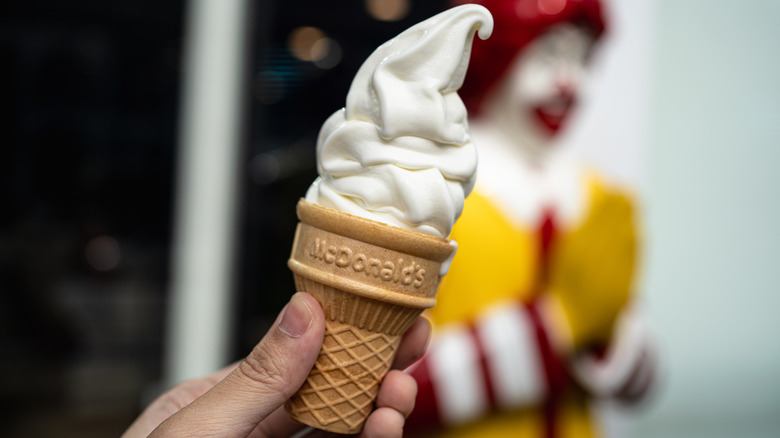
It's pretty tempting to add a cookie or hot apple pie to the bag when assembling your fast food order. But do you really need a sweet treat at the end of a meal that essentially amounts to a savory treat, already? Even if there's a chance that you'll have a hankering for something sugary once you finish your burger or chicken sandwich, ordering dessert before you know for sure could be a waste of perfectly good money.
Depending on your location, indiscriminately including dessert in your Burger King purchase can add as little as 69 cents for a chocolate chip cookie, or as much as $4.49 for a deluxe shake. At Taco Bell, simple cinnamon twists run $1.69, and a two-pack of Cinnabon bites is $2.89. It's not hard to see how quickly the extra costs can add up.
What happens if you find out that you actually do have room for a vanilla cone or a brownie after packing away your main dish? You can always return to the counter and place your order once you know for sure. That way, you aren't spending your money before you know if you want or need to. You can always opt for a homemade treat instead once your fast food run is done, which is usually a cheaper option, as well.
Digital screen upsells
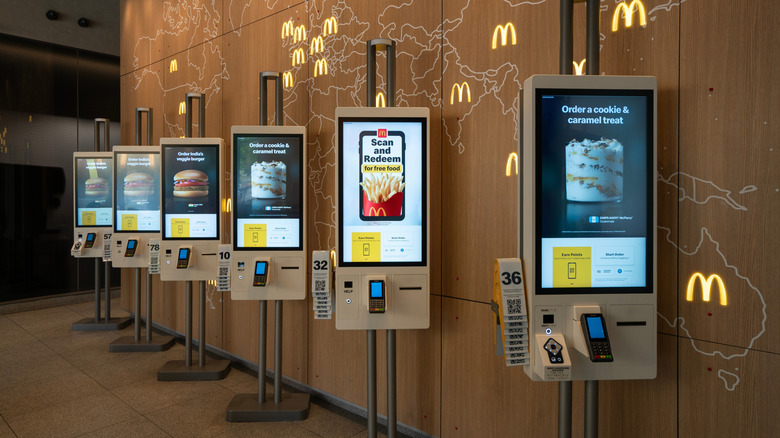
Digital selling is an ideal environment for getting hungry customers to add costly extras to their orders. After all, what's another dollar or three out of your account when you're paying with Venmo or PayPal, where money kind of seems to become an invisible phenomenon? When you order digitally and pay digitally, fast food chains have drawn a direct line between their restaurants and your bank account — and they know the power they have with that connection.
Sneaky prompts on apps, kiosks, and drive-thru screens like "add a pie for $1.99" or "grab fries for just $1 more" are all the more successful when you aren't focused on actual cash leaving your hands. The easiest workaround with this is to make sure you know what you want, before you get to the payment screen; that way, you'll be able to say "no thanks" without being taken by surprise — or being taken for a ride.
Swapped sides
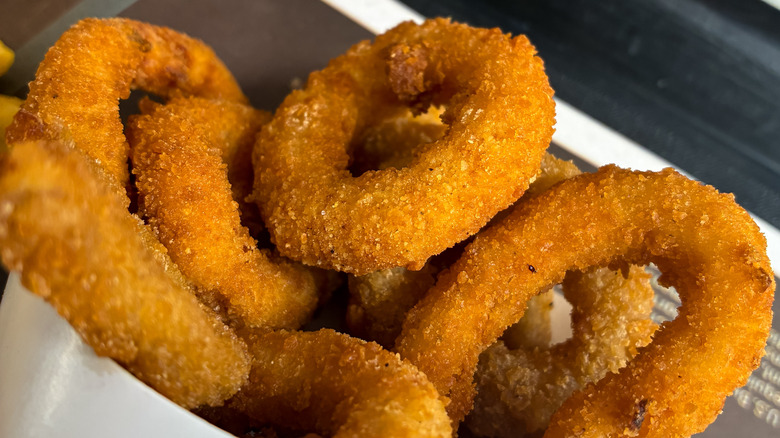
If you have your heart set on fries to go with your burger, but the cashier asks if you'd like to upgrade those to onion rings or cheese curds, it's usually your hunger that makes the decision — and it's your wallet that pays the price. There's no guarantee that the side you swapped for costs the same as the one you swapped out. In fact, the whole idea of a scheme like this is to upsell an order by a nominal amount, and collect just a little more than the customer was planning on spending.
At Culver's in the Phoenix area, for instance, changing out medium fries for $2.99 for medium onion rings for $3.59 increases the price of your meal by 60 cents; make it a medium of the chain's iconic cheese curds for $4.39 instead, and that difference becomes $1.40. It may seem like pennies to you at first, but it's a form of zombie spending that can eat into your funds pretty significantly over time. Restaurant chains are counting on you thinking of the extra as small change, because when accumulated at volume among many diners, it turns out to be a mighty tidy sum.
Tortillas on the side
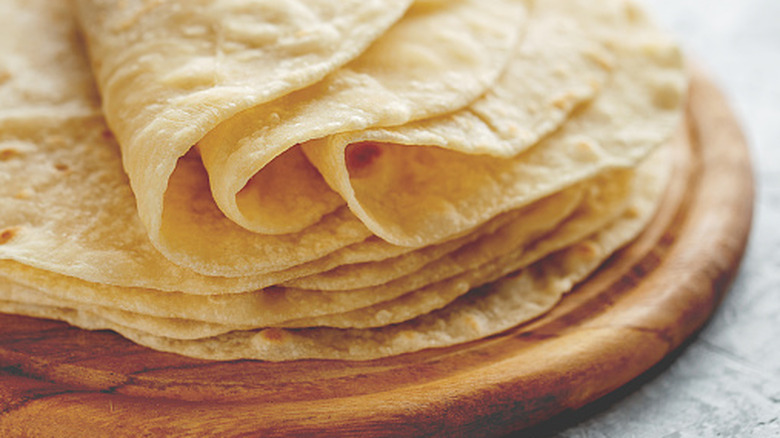
So your Chipotle bowl turned out to be the more cost-effective purchase for your fast food dollars, but it didn't come with the tortilla. You can always add a tortilla and just pay the difference, right? Well, yeah, if you want to get ripped off right after you showed such economic restraint by choosing the option that gave you more food than the wrap version.
In 2020, buying a tortilla on the side at Chipotle meant spending an extra 25 cents for something you'd just told the burrito artist behind the counter you didn't want; these days, it's 50 cents at Phoenix-area locations, and likely similar across the country. You end up buying two items instead of one and paying more for the combination.
If having the tortilla is an essential part of the experience for you, simply order the wrap instead, and just accept that there'll be a little less inside. Unfortunately, with tortillas no longer being free, you'll have to avoid making this Chipotle-ordering mistake.