

10 Classic Mexican Beers Ranked Worst To Best
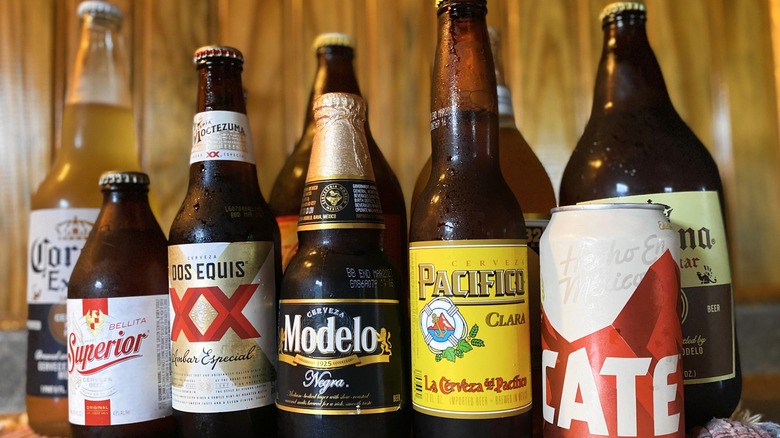
Cerveza, chela, Mexican beer: no matter the name, these crisp, refreshing beverages are a well-loved favorite amongst beer drinkers worldwide. Mexican beer is an umbrella term for lagers and ales (and there is a difference) brewed in the Mexican tradition, which is unique in its inclusion of corn or flaked maize and for its roots in Germany and Austria via immigrants who settled in Texas and Mexico in the 19th century.
The result is a brew that tastes familiar to pilsner and German beer drinkers while maintaining a distinct flavor of its own. Mexican beers can come in many forms, including light or pale lagers, which we most often associate with Pacífico Clara or Modelo Especial; Vienna-style or amber lagers, which many recognize as Dos Equis Ambar Especial or Cerveza Victoria; and popular dark beers, like negras and dunkels, like Modela Negra.
Although the overall spectrum of color and flavor of Mexican beer is vast, all of these varieties are technically lagers, which means they're as approachable as they are tasty. Still, it's helpful to know what, exactly, to approach. Thus, in the name of science and all things delicious and refreshing, I set out to test some classic Mexican beers and rank them worst to best. I'll explain my selection and tasting method at the end of the story, but generally speaking, these beers were ranked on overall flavor and drinkability. ¡Salud!
10. Cerveza Superior
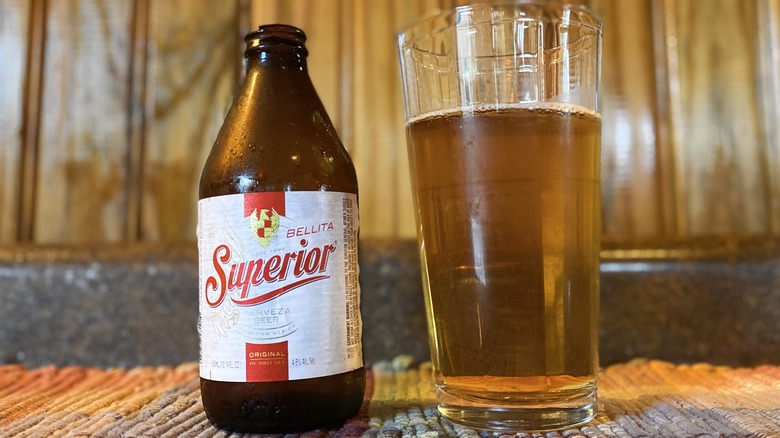
In an ironic twist, coming in dead last in my Mexican beer experiment is Cerveza Superior, an American-style lager that could not convince me it was as superior as its name suggested. The first two words that came to mind when smelling the beer in the bottle and in the glass were "wet" and "dog." Not exactly the kind of aroma that whets the whistle.
The flavor itself was a bit of a conundrum, and maybe that played into my not liking it. Mouthfeel-wise, the beer had a distinct lightness to it, thanks to a decent amount of carbonation. However, there wasn't much bitterness to cut through the bready sweetness of the brew, which made it feel like I was drinking something softer than a lager.
Ultimately, I couldn't get past the fruity undertones of this one. I saw someone describe the Cerveza Superior as having a "natural fruit roll up" flavor on a BeerAdvocate forum, and I have yet to find a better way to describe this oddly tangy beer.
9. Corona Extra
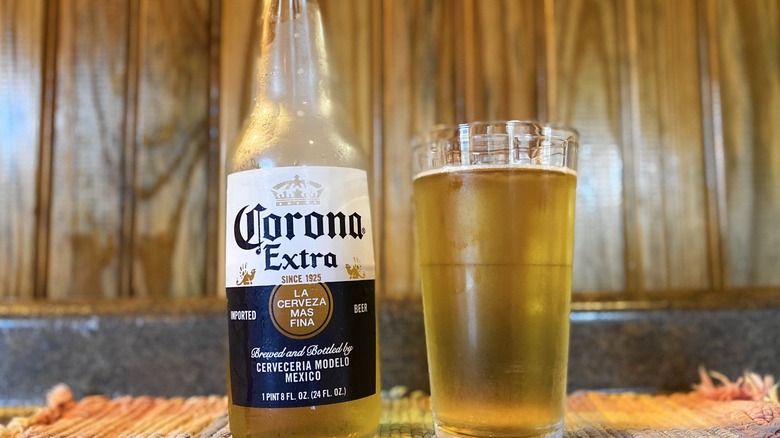
Corona is one of the most ubiquitous Mexican beer brands on the market, with Corona Extra being the best-known variety. However, its brand recognizability did little to sell me on its flavor. As soon as I opened my bottle of Corona Extra, I was taken aback by the skunky smell. Because this beer was in a clear bottle, I'll admit the flavor could have been affected in storage. Even so, a slight skunkiness seems to be characteristic of most Coronas I've tried, whether from this particular bottle or cans I've had in the past.
Pungent muskiness aside, I can't deny that Corona Extra has a crisp, refreshing mouthfeel. The light beer has a bitter edge that pairs nicely with the carbonation, making this especially nice for palate cleansing while eating, say, Baja-style fish tacos. Although I didn't add lime to my Corona Extra, that's a common way of drinking it, and I think even a small wedge goes a long way in adding acidity to round out the ultra-bright, grassy flavor profile.
I would drink this if I was thirsty and there were no other options available, but would I go out of my way to buy a bottle of Corona Extra? No.
8. Dos Equis Lager Especial
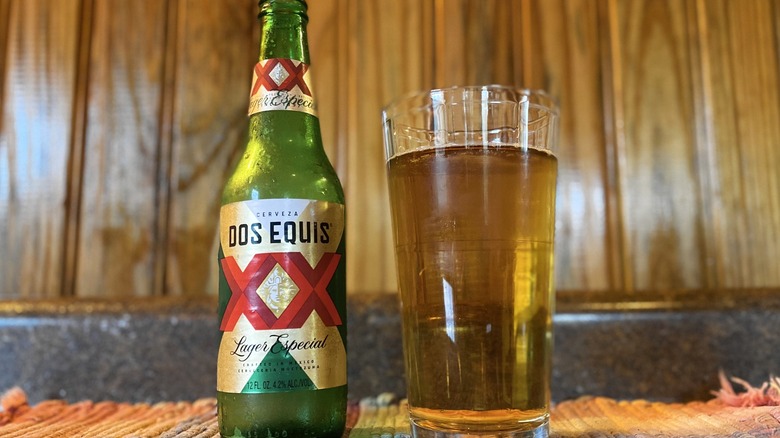
To take a page out of its own branding book, I'll say, I don't always drink Dos Equis — full stop. This isn't a Mexican beer I typically reach for unless no other options are available, but I'd probably grab it over Corona if nothing else was in the cooler. On the nose, this beer reminded me of Cerveza Superior, in terms of wet-dog-ness.
Fortunately, Dos Equis has more to offer flavor-wise. The Lager Especial, or green bottle, is a golden pilsner that achieves an equal balance between malty and crisp. Balance, in this case, isn't necessarily a benefit to the taste. If anything, the fact that Dos Equis Lager Especial tastes so noticeably down-the-middle makes it a little boring. But hey! Boring has its merits. The "boring" beer can also be the predictable and universally tolerated choice, too.
Overall, this neutral sameness would make this a decent option if, say, you're buying beers for folks whose cerveza preferences you're unsure of. It's the kind of beer that'll do, and sometimes, "that'll do" is the best we can hope for in a cold beer.
7. Modelo Negra
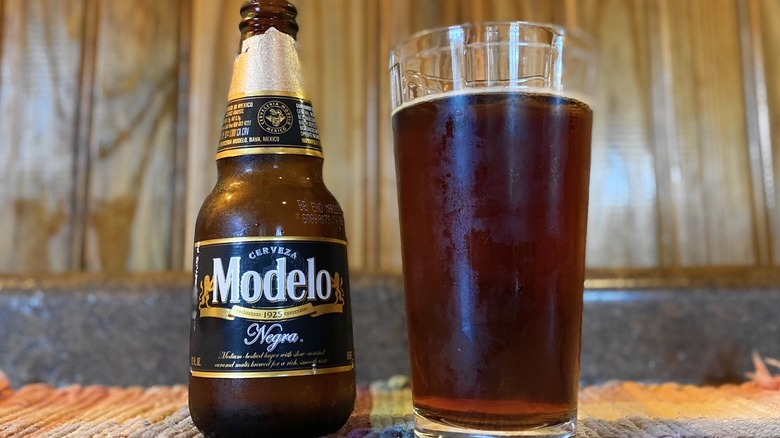
If anyone were to doubt the German and Austrian origins of Mexican beer-making, they need only try a sip or two of Modelo Negra to be sure. Although it's easy to associate Modelo with crispier beers, the Negra variety is a Munich Dunkel-style beer with a rich, deep brown color. Looking at it in the glass, you might think you're about to drink a more traditional stout. The flavor, of course, gives it away.
The flavor profile of a Modelo Negra has hints of caramel, is malty, and a little hoppy. Unlike heavier beers, like stouts and porters, the Modelo Negra drinks like a lager far lighter than its color would suggest. Without the thick mouthfeel of these more malt-forward beers, this particular Mexican beer maintains drinkability while still allowing the drinker to enjoy the finer nuances of dark malt and caramel.
Moreover, the Modelo Negra has a relatively low ABV at 5.3%, meaning that you can enjoy a couple of bottles without feeling bogged down and lightheaded as you might drinking the same amount of 8% to 10% dark beers.
6. Dos Equis Ambar Especial
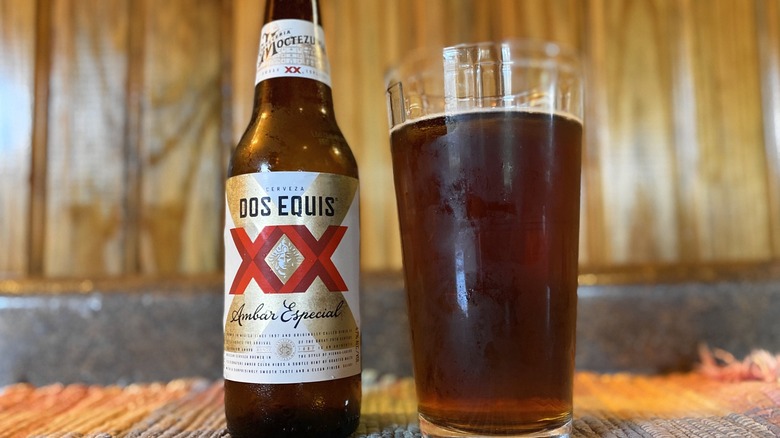
Dos Equis Ambar Especial is a Vienna-style lager that has everything you would want in this style of beer: a warm amber hue, malt and caramel flavors, and a finish that sits somewhere in the middle of crisp and creamy. I find Vienna-style lagers to be more appealing in the "refreshing" department than, say, a Munich Dunkel-style, like a Modelo Negra. I judge its refreshing factor based on how good (or gross) it might feel to drink one in 100-degree weather.
I found the aftertaste of Dos Equis Ambar Especial to linger in the back of my throat in a slightly bitter, mostly unpleasant way. This is something I've experienced while drinking other amber beers, so I wouldn't characterize this as a Dos Equis Ambar Especial singularity. Personally, I'm not a huge fan of this sensation unless I'm drinking the beer in cold weather, which, for some reason, makes it more tolerable.
5. Corona Familiar
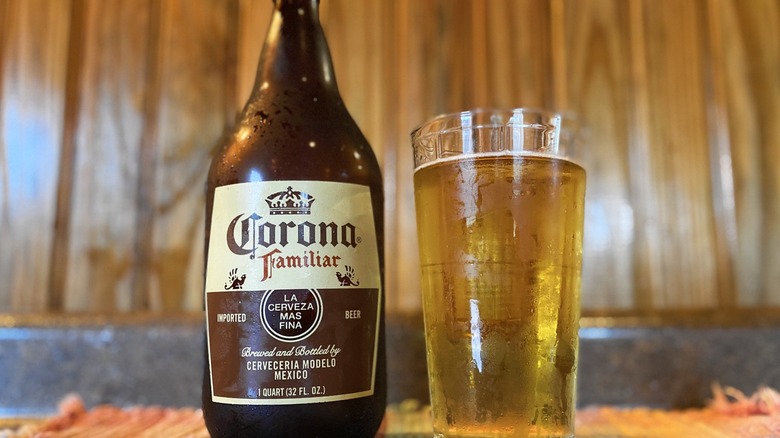
As someone who knew going into this beer-drinking experiment that Corona wasn't my favorite Mexican beer brand, I didn't have high hopes for Corona Familiar. This one proved me wrong, ranking higher on the list than I would have expected at No. 5. I thought this beer combined the best parts of a golden lager and a Vienna-style lager without leaning too far in either direction.
Corona Familiar had an ever-so-slightly earthy quality to the flavor profile, but it didn't go full-grassy like Corona Extra. With subtle fruitiness and just enough sweetness to keep it from being too intensely bitter, the Corona Familiar is approachable and refreshing with just enough malty edge to make you feel a little fancy.
I'm a vegetarian, which means my Mexican food go-tos are typically lighter fare than, say, carne asada tacos or chiles rellenos. Corona Familiar tastes like it would pair better with veggie-based dishes without going full pilsner, which gave it some bonus points in my book.
4. Tecate Original
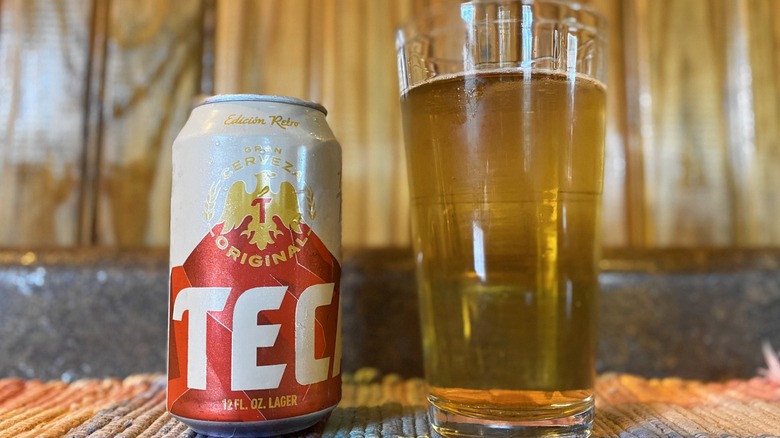
Tecate was specifically designed to be a refreshing brew for miners working in the Baja California area in the early 1940s. I figured if it was refreshing enough for miners working in the northern Mexico heat, then it would certainly be refreshing enough for me, someone who is decidedly not working in the mines of northern Mexico. I was right.
The flavor profile of Tecate Original toes the line between toasty and fruity, with enough carbonated bitterness to maintain drinkability. There's a breadiness that becomes more pervasive in the aftertaste, but it doesn't completely overwhelm the senses. Generally speaking, I wouldn't recommend drinking this Mexican beer at any temperature besides ice-cold. Then again, doesn't that go without saying?
While researching these beers, I saw a comment in a beer forum describing Tecate Original as a Mexican Pabst Blue Ribbon, and I would have to agree. As a PBR lover myself, this comparison only made me like Tecate more. You do with that information what you will.
3. Modelo Especial
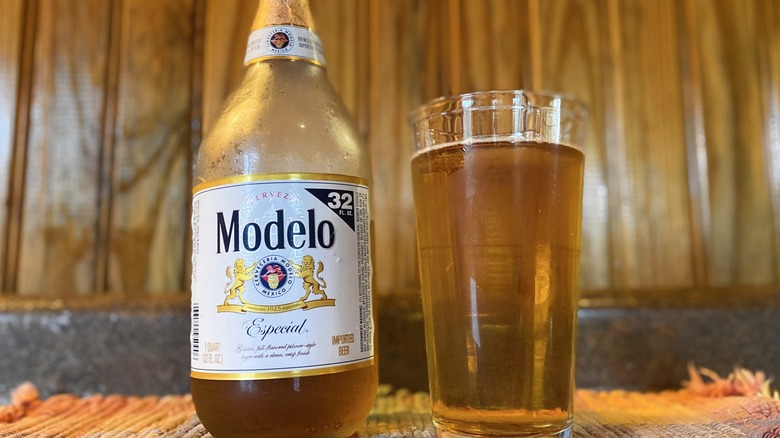
I've had many a Modelo Especial at outdoor music festivals and can say with full certainty that it is a perfectly adequate, refreshing Mexican beer (as long as you don't walk around with the can for too long and shake it into a froth). I was confident that Modelo would perform well in my beer-drinking experiment, and I was right. Upon first sniff, I picked up on a warm, citrusy aroma that felt cozy without going overboard.
The flavor leans more bitter than sweet, but crisp carbonation keeps the former flavor from coming on too strong. Those who prefer a bolder brew might find Modelo Especial to be a bit too milquetoast, as there is a slightly thin or watery quality to it. For someone looking for something light and refreshing on the palate, like me, it's perfect. With an ABV of 4.4% and an IBU of only 18, Modelo Especial is a great choice for afternoon drinks with pals.
2. Cerveza Victoria
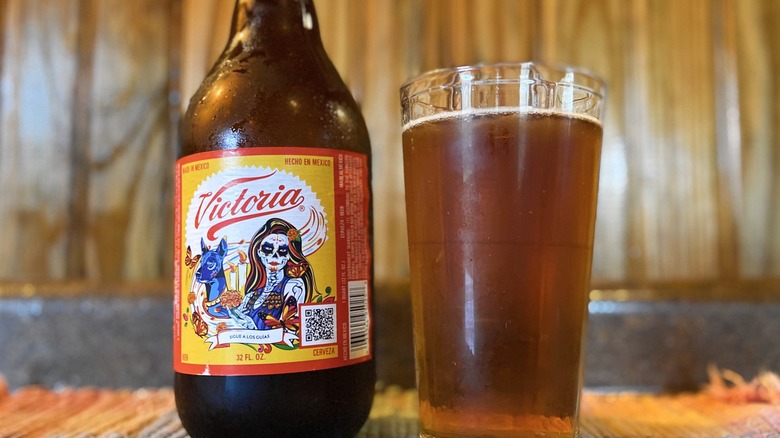
Cerveza Victoria was first brewed in Toluca, Mexico, in 1865, making it the oldest Mexican beer brand on the market. I had never had it prior to this tasting, so I was going in cold. What I discovered was a pleasant-drinking brew that balanced between light and amber flavor profiles with ease, no doubt a testament to its many years of practice.
The malty hoppiness of this classic Mexican beer is offset by fruity notes of apple and star fruit, with just a touch of spicy toastiness. This would be the beer I'd suggest to someone who has never tried a Vienna-style Mexican lager. The flavor profile on this particular brand feels the most balanced and fine-tuned, offering an excellent example of the versatility of this amber beer.
At only 4% ABV, Cerveza Victoria offers hefty flavors without all the heaviness and milkiness common among other low-ABV, darker beers. This may have been my first time buying Cerveza Victoria, but it won't be my last — which I think says plenty in regards to this beer's quality.
1. Pacifico Clara
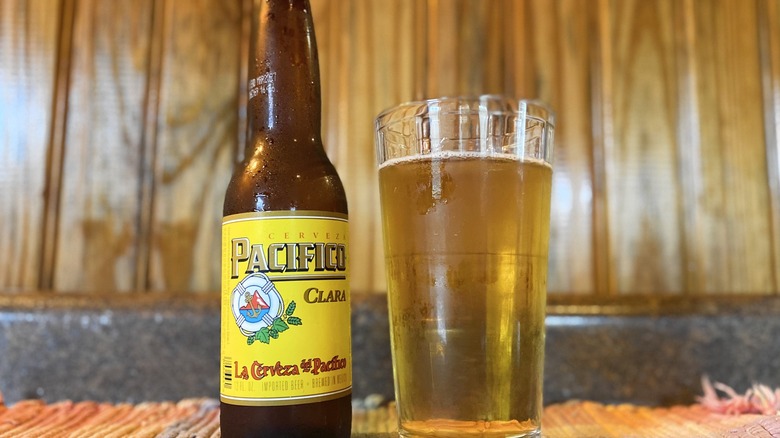
Taking the No. 1 spot in my Mexican beer taste-testing experiment is Pacifico Clara. Founded in 1900 by three German immigrants in the Baja California area, this beer comes close in age to Cerveza Victoria, Mexico's oldest beer brand. So it would make sense that both brews were near the top of my list — after all, these brewing companies had plenty of time to perfect their recipe. However, Pacifico Clara pulled ahead for first place due to its refreshing flavor and easy drinkability.
Indeed, when I think of a Mexican beer, the flavor of Pacifico Clara is what I imagine. There is a subtle brightness to the overall flavor, but it isn't so grassy that it gets skunky, as is the case with other light Mexican beers, like Corona Extra. Pacifico Clara's malt profile is almost cracker-like, and that featherlight breadiness blends beautifully with the substantial carbonation.
At only 4.4% ABV, Pacifico Clara can definitely be a session beer, but it's also not so watery and light that you feel like you have to drink more than one to get any sort of flavor or buzz.
Methodology
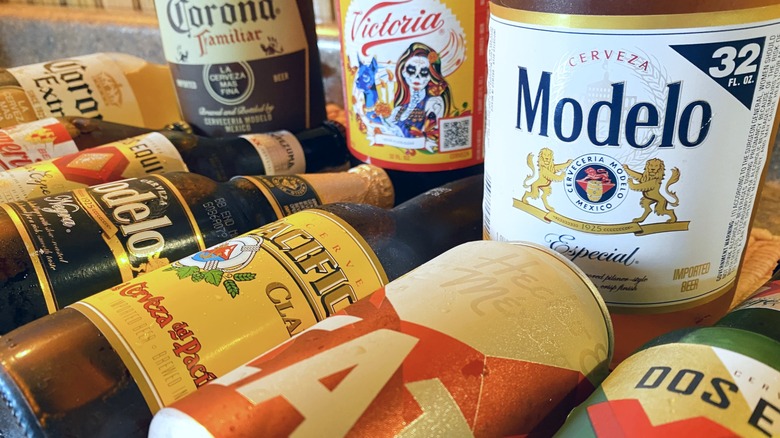
To begin my Mexican beer taste-testing experiment, I searched five different liquor stores in Murray, Kentucky, and selected every brand of Mexican beer I could find. I refrigerated all 10 beers overnight, and I poured them each into clean pint glasses. I tasted each beer cold, and I drank water in between beers to cleanse my palate. Additionally, I didn't use lime or lemon in any of the beers, and I didn't eat food while I tasted them, so as not to affect the flavor profile.
I checked for mouthfeel, whether a beer felt creamy and milky or crisp and bubbly; overall flavor, including the beer's smell; and drinkability, both in terms of mouthfeel and flavor combo and the beers' ABV. The better each beer performed in these categories, the higher they ranked in my list. My experience is rooted in both a general love of beer and five years working at a liquor store with an extensive import section.