

11 Popular Dark Beers Ranked Worst To Best
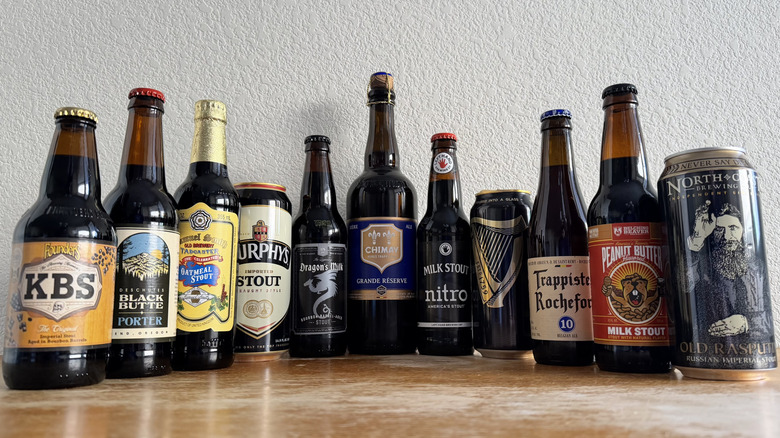
Organizing beers by color is akin to describing spirits as "smooth" — to connoisseurs, the designations are near-meaningless, but to much of the alcohol-drinking public, they're important descriptors. Ultimately, neither side is wrong. Beers that are dark in color can range from malty lagers to syrupy barley wines, but the category is largely dominated by stouts and porters. At place like BJ's Restaurant & Brewhouse, which ranks among the underrated restaurant chains worth trying, dark beers can be grouped under a shared header. So sometimes, even if color doesn't indicate flavor, it can serve as a convenient grouping all the same.
To determine some of the leading examples in the category, I picked up and tried 11 of the most popular dark beers from my local Total Wine south of the Las Vegas Strip. Included in my selection are macro brews, craft beers, and Belgian ales alike, all classics of their respective styles. The one major beer type missing is the dark German lager, simply because my Total Wine's selection was strangely lacking in that department. Otherwise, I determined what beers were popular based on the top results for searching "dark beer" online, what was widely available in-store, and my own decade-plus of experience as a beer connoisseur. After trying the 11 I selected, I came up with the following ranking of popular dark beers, organized from worst to best.
11. Samuel Smith Oatmeal Stout
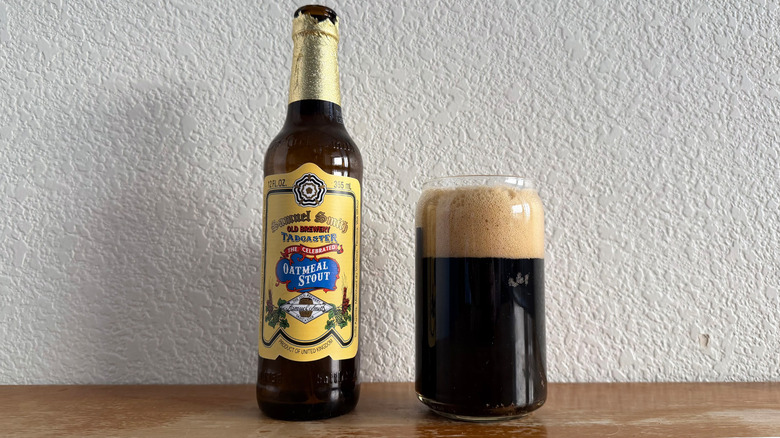
Before I was ever a beer drinker, an college friend of mine described the Samuel Smith Oatmeal Stout to me as the very best the beer world had to offer. Because of that association, I still have a bit of a soft spot for it. That same friend also told me he would only drink whisky that was older than he was, so his opinions on alcohol probably aren't worth taking seriously.
Trying the Samuel Smith Oatmeal Stout this time around, I found its flavor followed a sort of jack of all trades, master of none philosophy. All at once, I got sweet prune, roasted coffee, citrus rind, and dark chocolate. None of those elements ever really came to its forefront, save for chocolate taking over in its finish. That gave the impression of checking boxes on a list of flavors that should be in a stout, without any of them actually having room to shine.
For what it's worth, I also found that those notes took a moment to emerge, with my initial impression dominated by a bland wateriness. I even got a bit of a bitter astringency, which felt entirely unnecessary for a beer at just 5% ABV. The Samuel Smith brewery dates back to the 1700s, so I get the sense beer technology has come a long way since its Oatmeal Stout recipe was formulated, resulting in a brew that, in today's beer climate, feels behind the times.
10. Murphy's Irish Stout
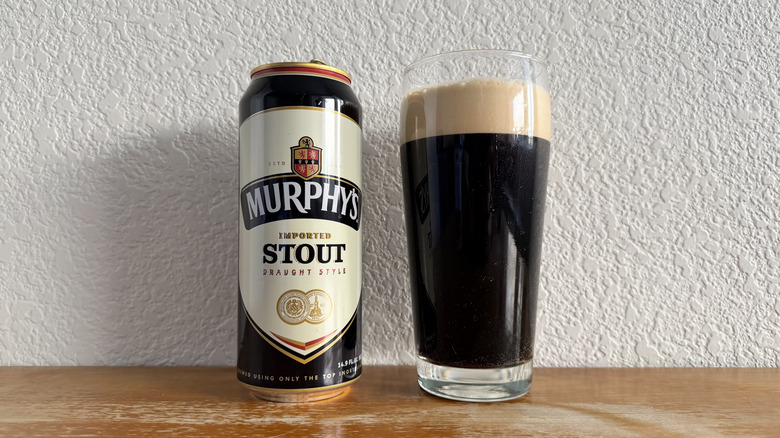
This was my first time tasting Murphy's Irish Stout. As someone who enjoys a pint of Guinness on occasion, I was hoping I would it deserved to land among the underrated Irish beers worth trying beyond Guinness. In the end, I decided that Murphy's Irish Stout won't be making its way into my rotation any time soon.
The one edge Murphy's has on the Samuel Smith Oatmeal Stout is its body. The nitro mechanism in its can did its job, and my beer was amply smooth and creamy. Where it was lacking was in the flavor department. My lasting impression of Murphy's was of a glass of water in which a piece of dark chocolate was soaked for a bit and then removed. I've tried light beers that were more flavorful.
Because the nitro element made it go down easy, I'd take a watery Murphy's over the directionless flavor of the Samuel Smith Oatmeal Stout. With that one caveat aside, Murphy's Irish Stout earned its spot near the very bottom of my dark beer ranking due to its big, bold lack of flavor.
9. Left Hand Milk Stout
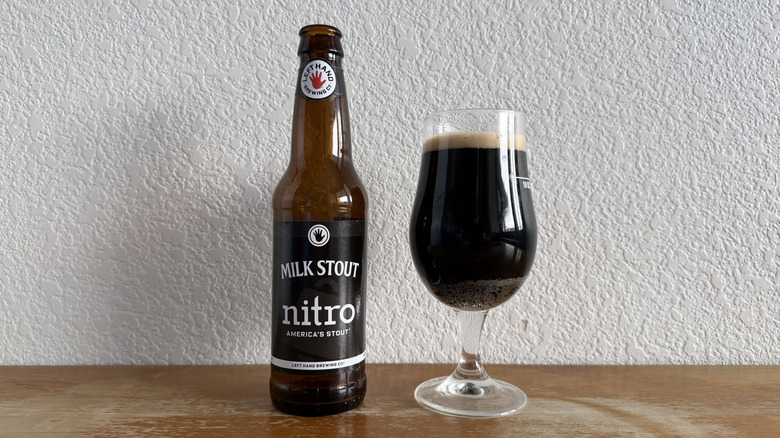
Like Murphy's Irish Stout and Guinness Draught cans, Left Hand Brewing's Milk Stout is packaged with a nitro mechanism, resulting in a smoother, creamier consistency than a standard beer. While Left Hand does make a nitro can akin to that of Murphy's and Guinness, I've found that bottles of the Left Hand Milk Stout are more common, and that's what I bought.
Unsurprisingly, I found that my Left Hand Milk Stout had the nitro character it was supposed to, but to a lesser extent than my the Irish beers I tried from specialized cans. That was a minor factor, however, compared to a flavor that I just didn't think meshed all that well with a creamy body. Altogether, I got a big dose of chocolate that included both a milk chocolate sweetness and a dark chocolate bitterness. A chocolate-adjacent roasty flavor then emerged in its finish.
Complicating those characteristics was a bit of an alcohol astringency that felt particularly out of place given a relatively mild 6% ABV. Furthermore, the boldness of the chocolate blended strangely with the slight wateriness that tends to color a nitro beer. In other words, I felt like the Left Hand Milk Stout was pulling me in two different directions, between its smoothness on one end and its intense chocolate flavor on the other, resulting in a pronounced incongruity.
8. Trappistes Rochefort 10
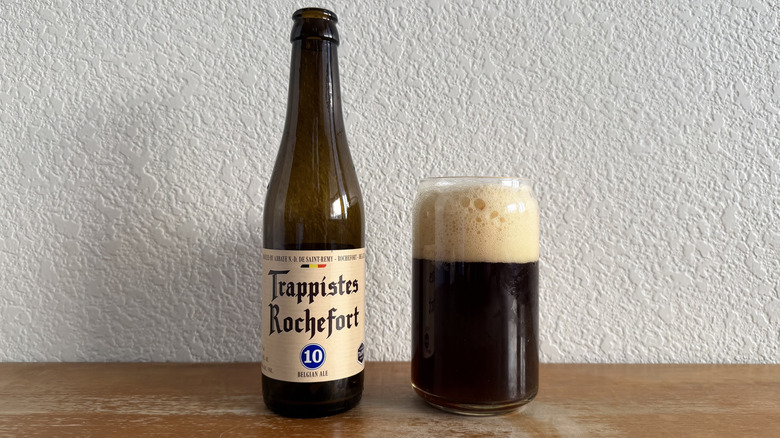
Dark beers are often thought to be stronger than lighter beers. Of course, a double IPA, which has more alcohol than a regular IPA, will almost always have a higher ABV than, say, a standard porter, so that conventional wisdom is often inaccurate. One beer style that will almost always deliver on the strength sometimes expected from a dark beer is the Belgian quad. Frequently associated with the quad is the Trappistes Rochefort 10, which clocks in at approximately 11% ABV.
Befitting such a hefty beer, I picked up a pretty noticeable astringency in my Rochefort 10. Simultaneously at its forefront was a sweetness that I found reminiscent of caramelized sugar. The combination of strong alcohol and cloying sweetness ultimately wasn't to my liking, becoming harder to drink the more those two elements built up over time.
At first I thought maybe my personal taste was getting in the way of enjoying what is admittedly an acclaimed beer — that said, both high-ABV brews and a Belgian ale ended up ranking higher than Rochefort. So in the end, I think the Rochefort 10 simply didn't hold up against its competition, thanks its sugary alcohol flavor quickly becoming unpalatable.
7. New Holland Dragon's Milk
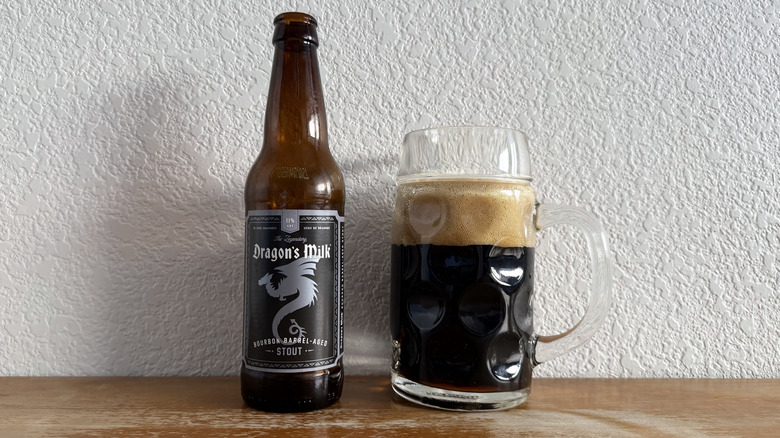
Just like the Trappistes Rochefort 10, New Holland Brewing's signature Dragon's Milk bourbon barrel-aged stout clocks in at approximately 11% ABV. Of the two 11% beers, I preferred the New Holland Dragon's Milk, but only by a slim margin.
What most set Dragon's Milk apart from its Belgian counterpart was a surprising lack of alcohol astringency. I could certainly taste the alcohol, but less so than in even some weaker beers on this list. Before my first sip, I picked up a strong nutty aroma, and that accurately reflected its flavor. Paired with that nuttiness was a caramel sweetness that added up to a sort of sweet peanut butter note. Complicating matters was plenty of roasted coffee bitterness.
Paired with a smooth, silky body, I enjoyed my glass of Dragon's Milk quite a bit — at first. Over time, however, the coffee bitterness started to build up and dominate the experience. Eventually an excess of bitterness made it a little difficult to continue sipping. Altogether, I'd describe Dragon's Milk as a shockingly drinkable, high-ABV stout, with the caveat that it should be sipped slowly, lest it become too bitter.
6. Guinness Draught Stout
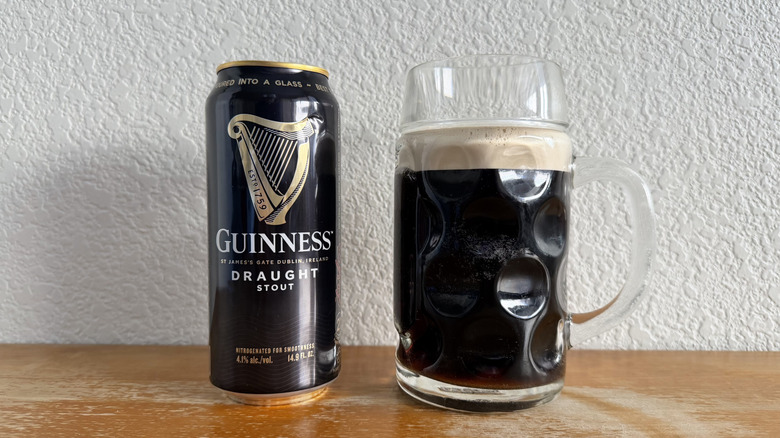
Guinness' classic stout was the first beer I thought of when putting together my initial selection for this list. That's not because I felt it was the single best dark beer going in, but because to me and surely many others, it's the most iconic dark beer. Given its ubiquity, I was particularly curious to find out how it would hold up against the competition.
The reason Guinness is dark is that the malted barley used in its production is roasted until it's dark in color. Malted barley is often responsible for the sweeter flavors in beer, and Guinness' signature Draught Stout is decently sweet. Specifically, I would describe that component as a light, refreshing fruitiness, akin to a mix of dark berries. Serving as a sort of counterbalance is a bitter dark chocolate element, typical for a stout, albeit at a mild level of strength.
Since I opted for the version of Guinness' Draught Stout in a nitro can, its body was particularly smooth and refreshing. At the same time, its fruit and chocolate notes ended up a little muted by that nitro consistency. All in all, I found that my glass of Guinness struck a pleasant balance between drinkability and flavor. It didn't land any higher on this list, however, because it's pretty straightforward, and ultimately less interesting than some of its bolder competitors.
5. North Coast Old Rasputin Russian Imperial Stout
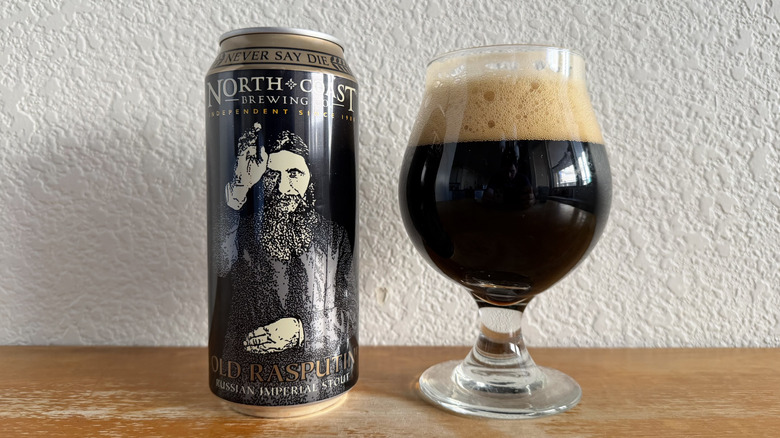
North Coast Brewing Company's Old Rasputin Russian Imperial Stout was a craft beer before craft beer was cool. Its considerable list of accolades dates back to 1996, at least a decade before the general public had much of an idea there were alternatives to the world of macrobrews. On one hand, such a lengthy history suggests deserved longevity. On the other hand, beer technology has surely advanced quite a bit since the '90s.
Altogether, I found Old Rasputin to be something of a mixed bag, but with enough good that I enjoyed it in the end. First of all, I got plenty of alcohol astringency, which is maybe just par for the course when it comes to an imperial stout. Beneath that initial burst of alcohol, I ended up identifying some flavors that are typical for a stout, like bitter chocolate and roasted coffee. Then, emerging from that milieu was a deep bitterness that matched the beer's pitch-black color. Trying to describe that flavor, what came to mind was tree bark — while I might not stand completely behind that descriptor, it was a gnarly bitterness, and I enjoyed it. What's perhaps dated about Old Rasputin is its considerable alcohol bite, but as long as that's not a total deal-breaker, its rich, complex flavor is worth getting over that sole hurdle.
4. Belching Beaver Peanut Butter Milk Stout
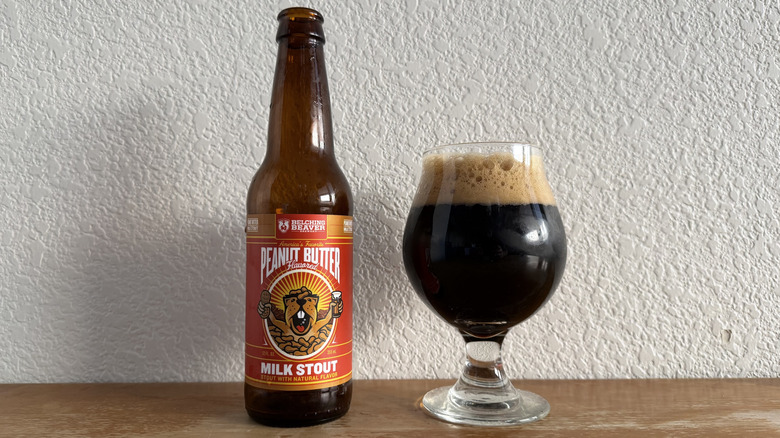
Of all the beers on this list, Belching Beaver's Peanut Butter Milk Stout is the only one with a flavor defined by adjunct ingredients. Beers with added sweetness are plenty popular, of course — everyone was talking about a Trader Joe's Cookie Butter Beer, for example, when the grocery store chain debuted it in 2020. Just like the Cookie Butter Beer, Belching Beaver's Peanut Butter Milk Stout clarifies that it includes "natural flavors" on the front of its packaging.
For what it's worth, peanut butter can be a tasting note in stouts that lack adjunct ingredients, as was the case with my New Holland Dragon's Milk. However, I enjoyed my Peanut Butter Milk Stout quite a bit more than Dragon's Milk, suggesting Belching Beaver made the right call by adding so-called natural flavors to its recipe. Paired with its strong peanut butter flavor was some roastiness and a chocolate sweetness.
For a stout, it wasn't very bitter. The prominence of sweeter elements combined with peanut butter added up to something akin to a liquid Reese's Peanut Butter Cup more than, say, the flavor of a plain jar of peanut butter. That was ultimately a good thing, because I found my Peanut Butter Milk Stout pretty darn tasty. Even if it wasn't the most elegant beer I've ever had, it left me wanting more.
3. Deschutes Black Butte Porter
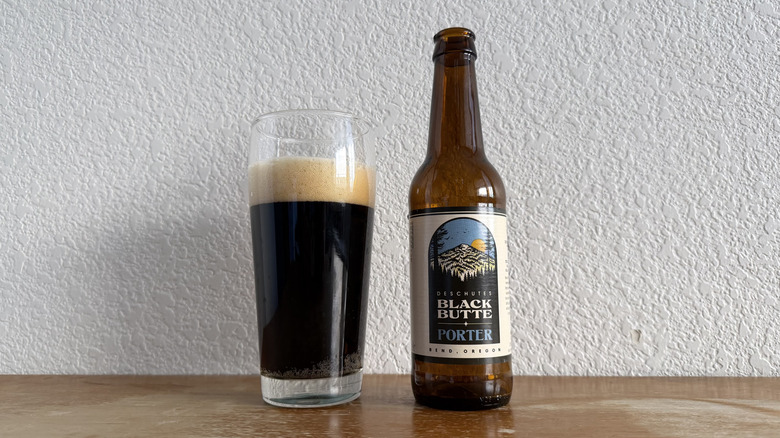
The difference between a stout and a porter is subtle, to the extent that there's some overlap between the two beer styles. Nevertheless, there are plenty of breweries that produce porters that are distinct from their stouts, as is the case at Oregon's Deschutes Brewery. Based on my experience, porters are typically lighter and easier to drink, hitting many of the same tasting notes as stouts, just to lesser extremes. Accordingly, I found my Deschutes Black Butte Porter light, drinkable, and all the better for it.
Compared to most of the stouts and even Belgian ales I tried, my Deschutes porter was pretty effervescent. Its body almost veered closer to a dark lager than a standard ale. In the flavor department, I got dark chocolate bitterness, a subtle nuttiness, and a prominent coffee flavor. What made the latter note unique was that it lacked the sort of roastiness common in coffee-flavored stouts, tasting more like a light-roast black coffee than, say, Starbucks roast-forward drinks. Between that rich coffee flavor and an altogether subtle level of bitterness, I found Deschutes' porter deftly balanced depth and drinkability, earning it a spot among my three favorite beers on this list.
2. Chimay Grande Reserve Blue
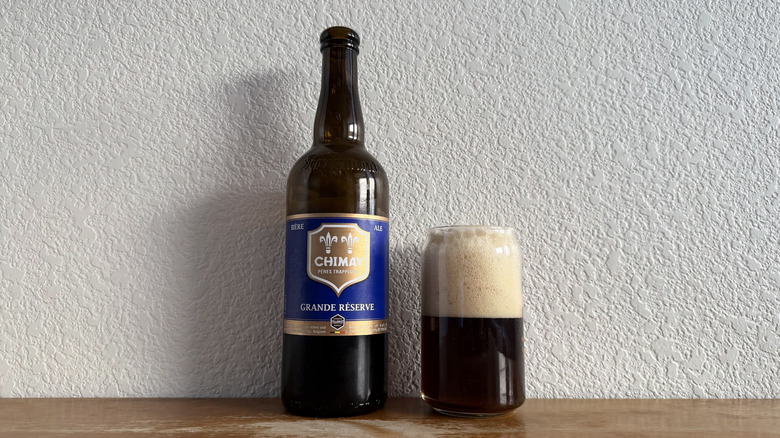
I remember first hearing about the Trappist Chimay Brewery's flagship Grande Reserve Blue ale as I was first getting into beer. More than a decade ago, it was one of the foremost recommendations for anyone interested in expanding their horizons beyond the world of macrobrews. Trying it this time around, I was convinced it would taste somehow outdated, lapped by the flavor technology utilized at newer, hipper breweries. That did not, in fact, turn out to be the case.
At 9% alcohol, Chimay Blue is hefty, but not quite on the level of the Old Rapsutins of the beer world. I even found its body kind of thin and fizzy as opposed to the thick and syrupy consistency common in high-ABV brews. Accordingly, its flavor lacked alcohol astringency, instead foregrounding a cornucopia of fruit flavors.
My palate picked up something like cranberry and date at its forefront, in addition to some citrus peel bitterness. Complicating things was a hint of caramel sugar, complementing rather than overpowering those fruity notes. Overall, I found that Chimay Blue managed to offer practically the best of all worlds, between its somewhat formidable strength, surprising drinkability, and complexity of flavor.
1. Founders KBS Bourbon Barrel-Aged Imperial Stout
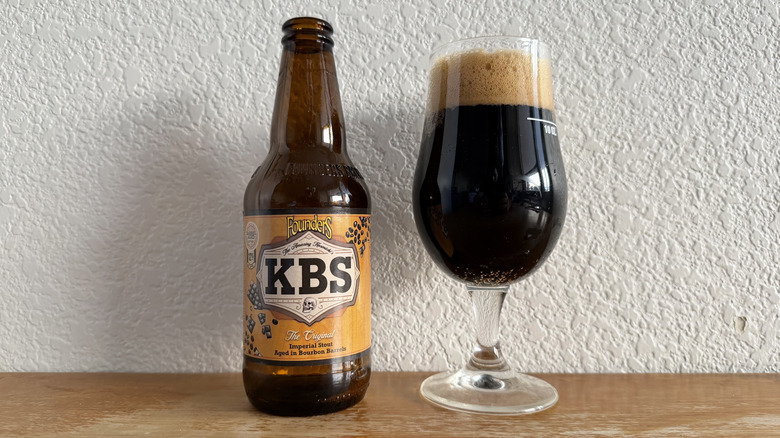
When I first tried KBS, it was a seasonal release. Then, in 2020, Founders Brewing Company began producing KBS year-round, and it's now a staple of bottle shops nationwide. Just like when a restaurant chain over-expands and drops in quality, significantly increasing production of a fan-favorite beer can risk muddying what made it so special. In fact, there are those who think KBS' increased availability was a mistake. After trying KBS for this ranking, I can safely say that I do not count myself among them.
At 12% alcohol, KBS is the strongest beer on this list. Excessive alcohol astringency was to the detriment of the Trappistes Rochefort 10, and even colored my impression of North Coast's Old Rasputin, which I otherwise enjoyed. My KBS, however, was so jam-packed with flavor, a slight alcohol astringency I admittedly did pick up became a non-factor.
Up front was a burst of maple syrup sweetness. Then I got a raspberry or even strawberry fruitiness, akin to the red syrup at IHOP. Beneath that was a combination of dark chocolate bitterness and milk chocolate sweetness. Dark chocolate lingered in its finish, and that actually made the sweetness at its forefront a welcome contrast with each new sip. KBS doesn't really reinvent what a stout can do, but it's an exceptional stout all the same, serving as the single best example of a high-quality dark beer among 11 of the most popular options on the market.
Methodology
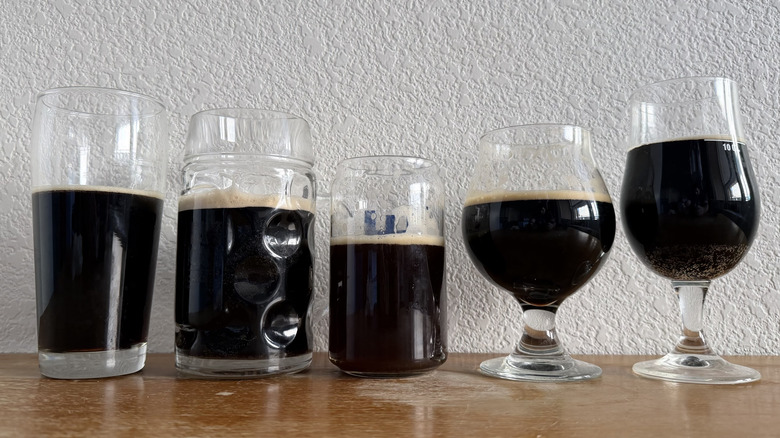
First, to generate an initial list of the most popular dark beers, I searched "dark beer," "stout," "porter," and "Belgian ale" on Google as well as some websites for large chain liquor stores. That gave me a field of popular beers that generally fall under the dark beer umbrella. After narrowing those down with the help of my own longtime beer knowledge, I picked up the 11 beers I decided to feature from my local Total Wine, located south of the Las Vegas Strip. Ultimately, I wanted to cover as many different countries of origin and sizes of brewery as possible while still meeting the "popular dark beer" criteria. The only major category I feel is missing is dark German lager, simply because my Total Wine's inventory was unexpectedly deficient in that regard.
I tasted all 11 beers in one sitting. As I sipped each beer, I recorded my thoughts on it, and only moved on once I felt like I had a good understanding of what made it tick. I factored my personal preferences into my final decisions, but only after analyzing each beer to the best of my ability. So, rather than ranking them based on whims or early impressions, each beer's spot reflects a deep-dive into its quality. My assessments are based entirely on this experience and not any past thoughts I may have had on the featured beers.