

Allulose Vs Erythritol: Which Sweetener Is Better For Baking?
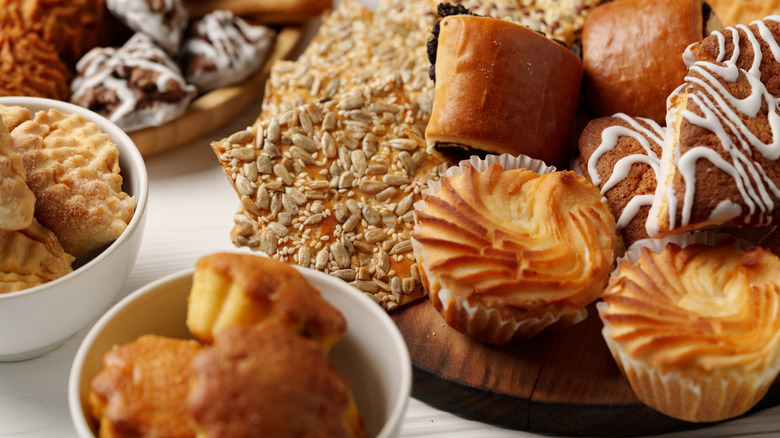
Baking without sugar — and using sugar replacements instead — is picking up steam. Not only are people trying to cut back on sugar for health reasons, like weight loss or to manage blood sugar, but they're also recognizing that limiting sugar could also promote longevity. But, this also doesn't mean they want to give up sweets and treats. Consequently, most people are looking for creative ways to make their favorite desserts — like chocolate chip cookies, carrot cake, and cheesecake — with less sugar or with no sugar at all. That's where sweeteners or sugar alternatives, like allulose and erythritol, come into the picture. These two vastly different substances can be used in baked goods to mimic sugar — though you may have to add a few other ingredients to match the sweetness level of sugar.
So, if you're just taking up reduced-sugar or sugar-free baking, you may be wondering whether you should use allulose or erythritol as a substitute for sugar in your cookies, cakes, muffins, and other sweets. Unfortunately, the answer may not be a simple one. Below Thom King, Food Scientist and Chief Innovations Officer for Icon Foods, explains the differences between the two sweeteners as well as offers tips on how to know which one is best for your recipe based on what you're making and what you want the finished product to look and taste like. Here's everything you need to know about baking with allulose and erythritol.
Allulose and erythritol affect browning differently
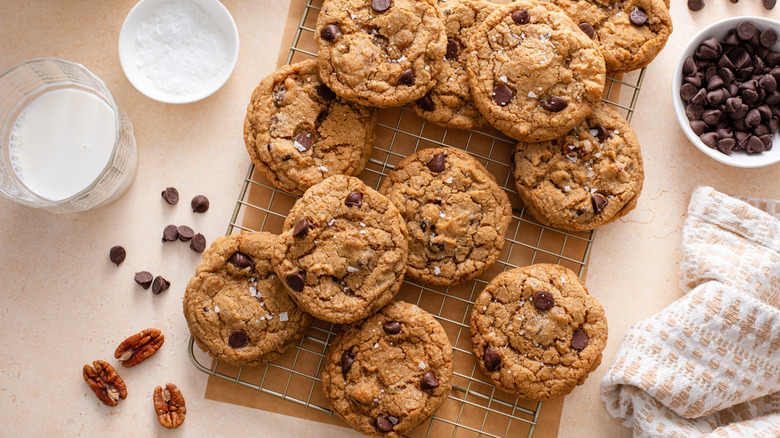
When it comes to browning baked goods, allulose and erythritol both behave differently than sugar. Allulose tends to brown much more quickly than table sugar and erythritol doesn't brown at all. This is largely due to the fact that allulose is a reducing sugar that actively participates in the maillard reaction, says Thom King.
"That means cookies, cakes, muffins, and other baked goods made with allulose can brown faster and darker than their sucrose counterparts," he says. "That can be terrific when you want a deep golden crust, but it can also fool you into thinking a product is fully baked before the interior has finished setting."
Many times, the best way to deal with this quick browning is to reduce your oven temperature or shorten the bake time. But, you'll also have to ensure your baked good is still getting done and not raw or underdone when you take it out.
Erythritol, on the other hand, is a sugar alcohol that doesn't brown or caramelize — unless you add other reducing sugars, proteins, or browning ingredients. This means anything that you use erythritol in will tend to be paler in color and more dense, says King. Being aware of the differences between allulose and erythritol and how each can affect your finished product, is something you should prepare for when adapting your sugarless recipes.
Allulose produces softer baked goods while erythritol tends to crystallize
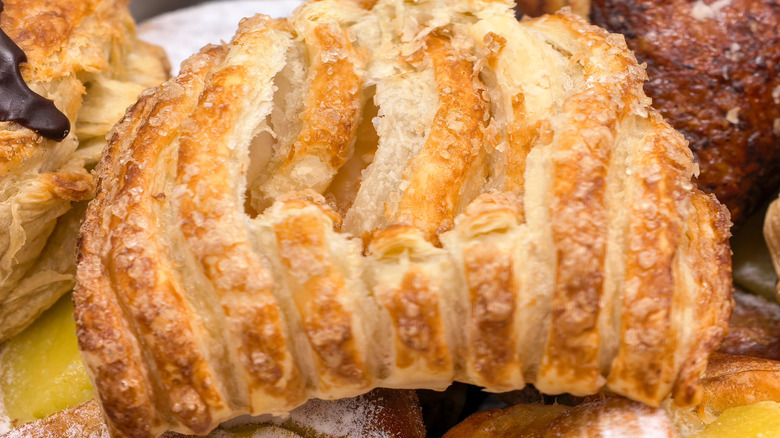
The texture of your cookies, breads, and cupcakes is often a defining quality that helps people decide if it's something they want to keep eating. Not only can the right texture help your flavors unfold, but it also influences mouthfeel — a key component in determining whether something is creamy, chewy, or crispy. If your cookies are rough, crumbly, or coarse, then this texture can take away from the sweetness and overall flavor profile and ruin the experience.
When it comes to texture, this is where allulose and erythritol are really different — and where you have to consider what you want your baked goods to feel like in your mouth and in your hand. According to Thom King, baked goods made with allulose tend to be softer and more tender while erythritol has tendency to recrystallize as your pastries or cookies cool. This can result in a firmer, drier, more delicate, or brittle texture.
The key is getting the amount right in your baked goods. Using an appropriate amount of allulose means you can create chewy cookies, soft cakes, mouthwateringly moist brownies, bars, and tender baked products, says King. But, on the flip side, if you use too much it can also cause your dessert to be too soft, sticky, or poorly structured. Meanwhile, using too much erythritol can cause your food to taste gritty, so you really have to use a deft hand when developing your recipes.
Baked goods using allulose tend to be softer and moister than erythritol baked goods
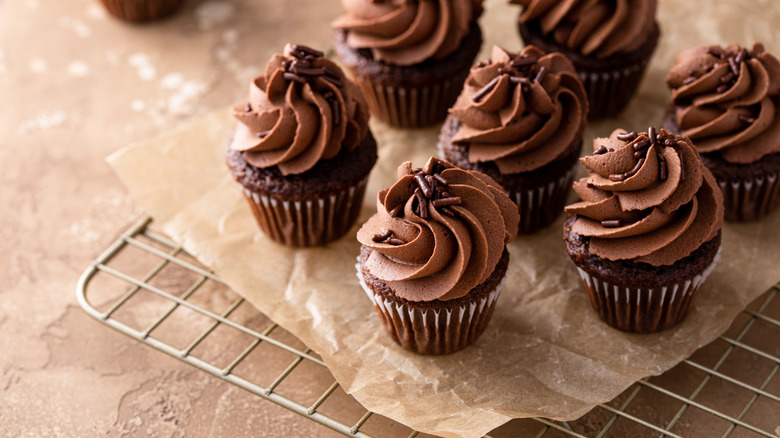
Most home cooks set out to create moist cakes, cupcakes, and cookies. In fact, it's not often that your goal would be to bake something that's dry, unless you're making biscotti or lace cookies. So, you have to keep in mind how moist you want your end product to be when choosing between allulose and erythritol. In some cases, if you have an extremely wet or moist batter, but your goal is something drier and firmer, it could be that erythritol is the right choice. Or, you may need to use allulose to ensure your baked item retains its moisture as it bakes.
Knowing how the two behave once baked is a good place to start. Overall, allulose is effective at binding water and depressing water activity and works well in soft-baked foods, says Thom King. "But again, formulation is a game of Goldilocks. Too much moisture retention can create excessive softness or stickiness and can interfere with crispness."
With erythritol, it has a much stronger tendency to undergo recrystallization as it bakes. This, in turn, can change how water is distributed throughout your food, says King. Your end result is likely to be drier and firmer. But, this isn't necessarily a bad thing if that's your goal all along. In fact, some cakes are meant to be somewhat dry, like angel food cake or a genoise sponge cake.
Neither allulose or erythritol is as sweet as table sugar
When you're baking with a sugar substitute, reducing refined sugar, or trying to eat sugar free, often the first question you may ask is how sweet will this dessert be with a substitute. But, Thom King says it's not as simple as you might think to compare the three. "Perceived sweetness changes with concentration, temperature, food matrix, acids, flavors, and other sweeteners. The difference isn't really because one molecule simply possesses 'more sweetness.'"
Instead, he says sweetness from allulose and erythritol comes from how the molecules interact with your tastebuds and from their concentrations in your baked goods. And, when it comes to finding a sweetness equivalent to table sugar, it's not a one-to-one comparison. Allulose is about 70% as sweet as sugar and erythritol is roughly 60% — though he says these percentages aren't absolutes.
For instance, if you replace 100 grams of sugar in your recipe with 100 grams of allulose, you've replaced the bulk that sugar adds, but only about 70% of the sweetness, he says. With erythritol, you'll have even less "sweetness." That's why King says when he's creating recipes without refined sugar, he likes to think in terms of a "sweetener system" and not a single sweetener. Instead, you may need to add in other high-intensity sweeteners, like monk fruit sweetener and stevia, to get the result you want.
Allulose creates a sugar-like taste while erythritol imparts a minty undertone

Erythritol is a sugar alcohol derived from sugar by fermenting or hydrogenating it (a process that changes sugar's chemical structure). Other examples of sugar alcohols include xylitol, sorbitol, and mannitol. Allulose, on the other hand, is produced by heating the sugar molecule fructose and changing its chemical structure. Manufacturers often produce allulose in two different forms — granulated allulose and liquid allulose. But, one of the key advantages to this sweetener is that it's remarkably sugar-like and rarely has an aftertaste, says Thom King.
"Its sweetness onset and overall character are much closer to conventional sugar than many high-intensity sweeteners," he says. "Erythritol also has a relatively clean taste, but it has a distinctive sensory characteristic — cooling."
According to King, when erythritol dissolves in your saliva it absorbs heat and your mouth experiences a temperature-related cooling sensation. That's why he says foods with a high level of erythritol can leave a minty, cold sensation in your mouth even when there isn't any mint present. If you're baking with chocolate or vanilla, or you're making a delicate bakery item, he says this minty undertone can become very noticeable. So you need to keep that in mind when choosing your sugar replacements. You may have to offset erythritol with other sweeteners to make that cooling sensation less noticeable.
The uses for allulose and erythritol are different
Baking with a sugar substitute isn't as simple as replacing your sugar one-to-one with an alternative. In fact, sugar does so much more than just add sweetness to your dish. It also plays a role in the taste, structure, and texture of your baked goods. So, you have to consider which types of cookies, cakes, muffins, and cupcakes work best with each type of sweetener, especially because allulose and erythritol behave differently when you're baking.
To start, Thom King says he rarely asks himself: Which single ingredient can impersonate sugar in this dish? Instead, he thinks about the functions it's performing and how he can rebuild those functions. With this in mind, he suggests reaching for allulose when browning, softness, moisture retention, and a sugar-like eating experience are your priorities. Some examples might include chocolate chip cookies, brownies, a simple blondie recipe, cakes, muffins, cheesecakes, cinnamon rolls, and other soft bakery products. Allulose also works well when creating fillings, frostings, and sauces, he says.
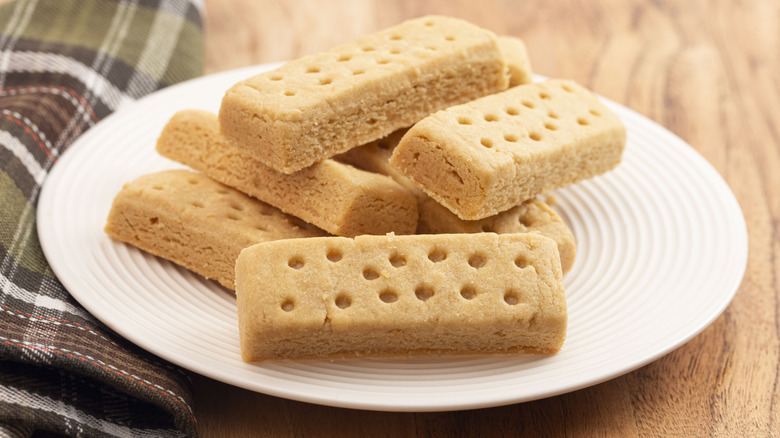
As for erythritol, King says it works best when crispness, dryness, structure, or reduced browning are desirable. Some examples might include crisp cookies, wafers, classic shortbread cookies, and some pie crusts. You might also turn to erythritol when allulose's aggressive browning or tendency to hold water wouldn't work in your dish.
"Brownies are practically an allulose home game," he says. "Crisp biscotti? Much less so. This is where erythritol plays well."
Allulose can sometimes cause excessive browning and too much moisture retention
Baking with a sugar substitute, like allulose or erythritol, does come with a few downsides that you should be aware of. For instance, allulose can certainly make your baked goods moister and help them stay softer longer, but in humid climates this can be troublesome, causing your sweets to get sticky on the surface, if left uncovered. Allulose can also cause excessive browning, make bakery items too soft, or retain more moisture than you might like, says Thom King. So, if you're looking for a dry, crisp texture, allulose isn't the right choice.
There's also some evidence that people who eat a lot of allulose could experience gastrointestinal issues, like bloating, gas, and diarrhea. In a research study published in Nutrients, it is suggested that the most allulose you should ingest in a single sitting is 0.4 grams per kilogram of body weight to prevent stomach upset. In other words, if a batch of chocolate chip cookies contains 160 grams of allulose split between 24 cookies, each cookie has roughly 6.7 grams of allulose. That means if you were a roughly 150 pound human, you could consume up to 4 cookies at a time without any gastrointestinal consequences.
Replacing sugar with allulose or erythritol takes more finesse than one-to-one replacements
When it comes to replacing the sugar in your recipe with allulose or erythritol, some people assume you can replace sugar one-to-one with allulose. But, Thom King says not so fast. "I would resist giving people the seductive but misleading answer of just substituting it cup-for-cup. Replacing sugar with allulose 1:1 ... can be a reasonable starting formulation ... because allulose provides bulk as well as sweetness. But 100 grams of sucrose replaced with 100 grams of allulose will usually produce less sweetness, substantially more browning, and a softer, moister finished product."
If sweetness is your goal, King recommends doing the one-to-one replacement and then adding a small amount of a high-intensity sweetener to restore sweetness, like stevia, monk fruit, or another appropriate option. King also recommends adjusting temperature, bake time, water, solids, and structure. Some baking experts suggest trying 1.3 cups of allulose per cup of sugar when sweetness is the goal, especially in recipes for syrups, whipped cream, or glazes.
Meanwhile, replacing sugar with erythritol is trickier as a straight replacement, says King. "Again, 100 grams can be used as an experimental starting point for bulk, but you're only getting roughly 60 to 70% of sucrose sweetness, and the resulting product may be cooler, firmer, less brown, and more crystalline." Rather than simply increasing erythritol until the sweetness matches sugar, he suggests restoring the missing sweetness with a small amount of a high-intensity sweetener.
Final Verdict
When it comes to choosing between allulose and erythritol in your baking, it pays to remember that the sugar you're replacing does more than add sweetness to your dessert. It's also a structural ingredient, says Thom King, that helps control browning, moisture, spread, texture, tenderness, and crystallization. So, you want a sugar alternative that does roughly the same thing that sugar does in the recipe.
Second, it's important to remember that when it comes to baking and sugar replacement, allulose and erythritol don't behave the same. Allulose will give you better browning, softness, and moisture while erythritol produces paler baked goods with a firmer, crisper texture.
"I don't formulate by asking what replaces sugar gram-for-gram," he says. "I identify what sugar was doing in that particular recipe and then rebuild those functions."
So when you're deciding which one is better, the answer truly is — that depends. It depends on how sweet you want your product to taste and whether you are going for a moist texture or a firmer, crisper texture. It also depends on whether or not your dessert can stand up to the browning allulose provides or whether you prefer something paler with a more crystallized undertone. Only when you fully understand your final goal can you decide whether allulose or erythritol is better for baking.