

4 Types Of Cookware You Can't Use On An Induction Stovetop
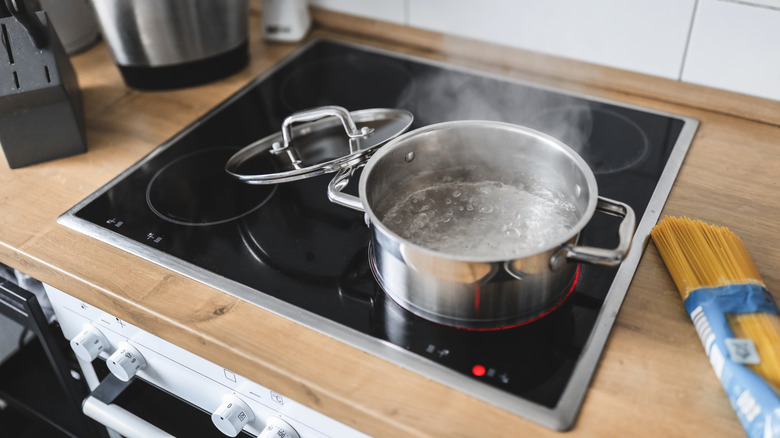
While safe, efficient, and environmentally friendly, induction cooktops still have disadvantages. These appliances come with a higher upfront cost than gas, and certain cooking vessels are incompatible with induction. That means cookware you might already have at home — glass and ceramic, pure copper and aluminum, and anything lacking a flat surface — won't jibe with these stoves. Incompatibility problems result from how these appliances work. The oven portion of an induction stove is just a normal electric oven, but the function of the cooktop is vastly different.
An induction stovetop's surface is made from glass or ceramic. Under that sits a coil that creates a magnetic field that generates electrical currents that can flow through compatible cookware. These currents heat the pan and cook the contents. For the magnetic field to have the desired effect, the cookware must be made from ferromagnetic materials like cast iron and stainless steel. Otherwise, the pan will never heat up. In an effort to win over induction cooktop owners, some manufacturers alter the design of pots and pans containing non-compatible materials. For instance, cookware with a magnetic base is typically induction friendly, regardless of what the rest of it's made from. But without it, these cooking vessels typically won't work — though sometimes, there may be an exception.
Pure copper
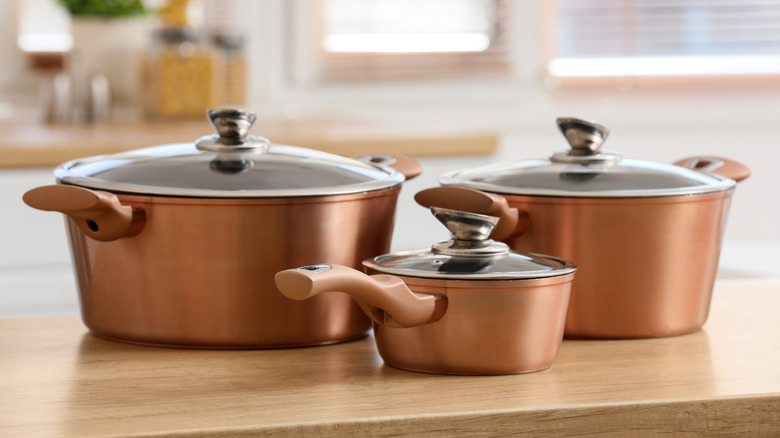
Along with being aesthetically pleasing, copper cookware is quite responsive to heat. This allows for greater precision where temperature is concerned. Consider something like a homemade caramel sauce, which requires raising and lowering the temperature at different points in the cooking process. A responsive pot is crucial in this case, or you risk burning your creation. Unfortunately, what copper cookware absolutely can't do is be used with an induction stove, as pots and pans made exclusively with the material don't respond to the cooktop.
It's impossible to talk about induction ranges without getting a bit science-y. Because copper isn't a ferromagnetic metal, it doesn't react strongly to the magnetic field generated by the induction cooktop. The metal's weak response means the pot will never actually heat up, and the ingredients will remain raw. There are exceptions, of course, as copper pans built with a magnetic base work on induction stovetops. Unfortunately, induction-compatible copper can be expensive, potentially putting it outside the price range of many consumers.
Glass and ceramic
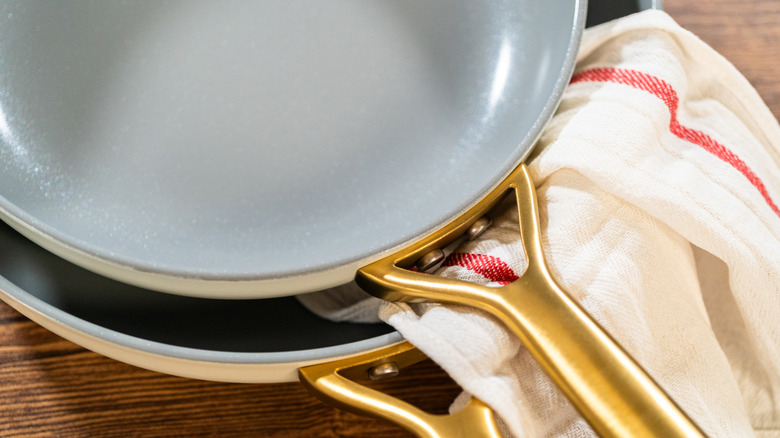
While not as ubiquitous as metal cookware, pots and pans made from materials like ceramic and glass do exist. Pure ceramic cooking vessels like Xtrema are touted as a healthier alternative to other non-stick materials. They also offer practical benefits like even heating and being lighter than cast iron. Unfortunately, products made entirely from ceramic aren't induction-compatible and won't work on these ranges.
As for solid glass cooking pots, they typically aren't suitable for any stove top due to concerns about thermal shock. However, some types of borosilicate glass pots are designed to withstand high temperatures and can be used with gas and electric burners (but not induction) as a result.
If you have glass or ceramic items, you can replace your existing cookware selection with induction-compatible versions that contain a magnetic material. You should also keep in mind that certain glass- or ceramic-coated cooking utensils may not need to be replaced. Enameled cast iron is induction-compatible because iron is a ferromagnetic material.
Pure aluminum
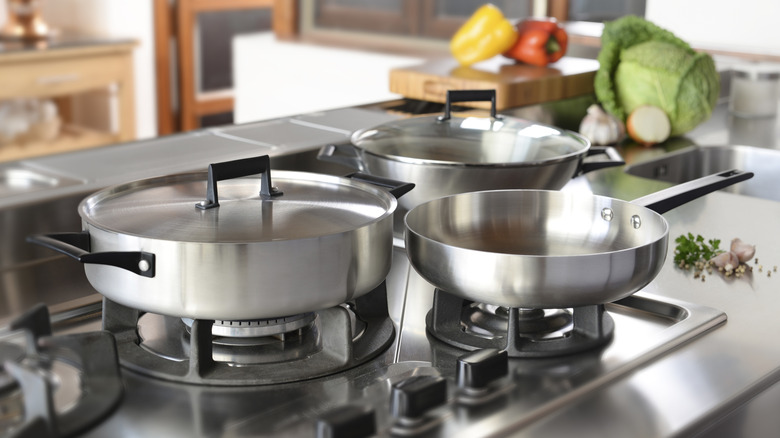
Aluminum is a great choice for cooking thanks to its thermal conductivity, which means heat gets distributed quickly and evenly. And because it's a more budget-friendly material, it's also common. But by itself, it lacks the magnetism of cast iron and certain types of stainless steel, so the material isn't suited to induction stovetops. Here's where it gets complicated. Some cooking sets contain different metals, which can influence their usability on induction burners.
For instance, a pan may have an aluminum core encased in multiple layers of stainless steel. For anyone playing along at home, stainless steel can be magnetic, unless it includes a high concentration of non-magnetic metal like nickel. If the latter happens to be the case for your cookware, or the bottom is made from an unsuitable material, it won't work. (If you're wondering how you can determine all these details, don't worry: We'll go over how to test your cookware for compatibility later.)
Any cookware without a flat bottom
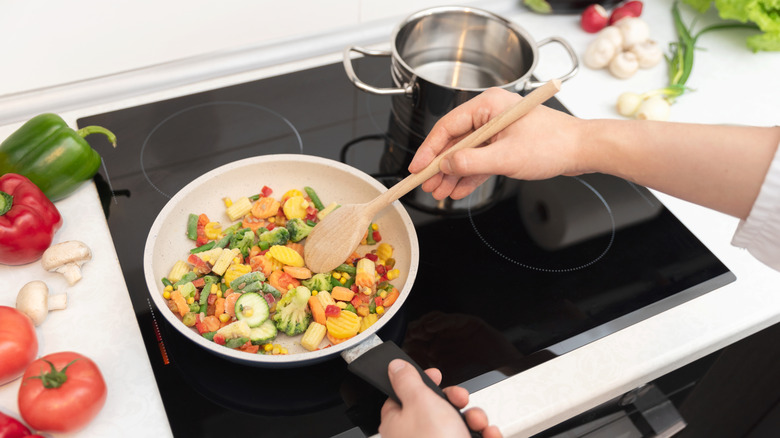
In addition to the materials, the construction of your pots and pans can make a difference with induction. Flat bottom pans are a must for these stove tops, as you want the cooking vessel to be flush with the surface of the burner. Cookware that's warped on the bottom surface won't sit against the burner fully and may contribute to a bothersome buzzing noise while the range is in use. This noise is attributed to the vibrating magnetic waves created by the burner and aren't as evident when cooking in a sturdy, thick bottomed pan that's completely flat on the surface.
A warped bottom can also affect the tastiness of your meals. Damaged surfaces will get in the way of even heat distribution, which can leave recipes simultaneously under and overdone. No matter your cooktop, damaged cooking utensils should be replaced as soon as you can. Anything with chips, scratches, and other forms of visible damage is ready to be upgraded. And when it comes to your new cookware set, be sure to steer clear of these common frying pan ruining mistakes.
How to tell if your cookware is induction compatible
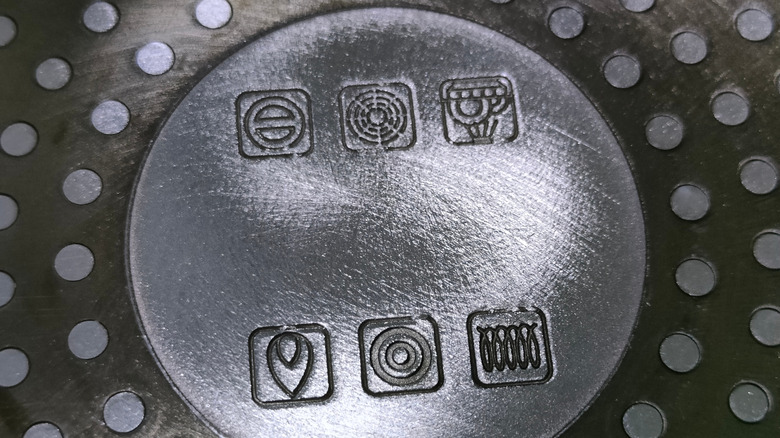
How can you tell whether a pan is compatible with your induction stovetop? When buying new cookware, check out the packaging for information on compatibility. With pans you already own, flip 'em over and look for an induction symbol. It should resemble a coil with several loops and may be surrounded by a square or be free floating. Cooking vessels bearing this mark contain ferromagnetic material and will respond to the energy put out by the stove top. Keep in mind that older cookware might lack an induction symbol even though it's compatible. In this case, try holding a magnet to the bottom of the cookware. If it fully sticks to the surface, you're good to go. If the magnet doesn't stick, or it exhibits a very weak attraction to the metal, you have an incompatible item on your hands.
You can also invest in an induction burner adapter, i.e., small metal plates made from magnetic materials. Adapters interact with the magnetic field generated by the stove top to heat up the cooking vessel. While somewhat effective, they chip away at induction cooking benefits like temperature responsiveness and may also damage the cooktop by creating excessive heat. Cookware incompatibility is actually one of the issues that induction stove owners flag most often. Just something to think about if you're in the market for a new range.