

5 Advantages Of Cooking On Blackstone Grills
We may receive a commission on purchases made from links.
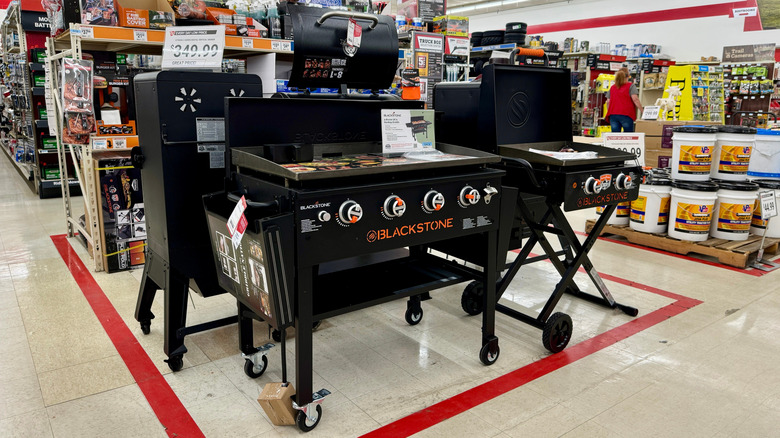
Whether it's pastel-colored refrigerators, forgotten bread makers, or electric carving knives relegated to the bottom of a basement box, recent culinary history is dotted with appliances and wares that came onto the market with great promise but quickly faded to obscurity. Others, like rice cookers or air fryers, have stuck around as bonafide cooking helpers in many homes. With TikTok's help, the Blackstone griddle — an inexpensive line of outdoor flat-top grills — has joined the ranks of well-known kitchen gadgets.
Blackstone lovers say that these grills deliver exceptional cooking abilities that will give them staying power well after the social media craze ends. The cooking surface is naturally nonstick when seasoned properly, and the built-in grease trap is easily customizable. The large surface area both allows you to cook a large quantity of food at once and offers strong temperature control. Plus, the flat-top surface allows for even, full-contact searing.
Blackstone products also tend to be cheaper than the competition. Consumer Reports' favorite flat-top in 2026 was from LoCo, which retails for around $800 at The Home Depot. A comparable Blackstone griddle, though, is only about $500 direct from the manufacturer. This lower price is logical for an entry-level home cook flat-top, and these grills are widely considered to perform well for the price range, even if they do come with some disadvantages, like difficult assembly.
The griddle is naturally nonstick when seasoned
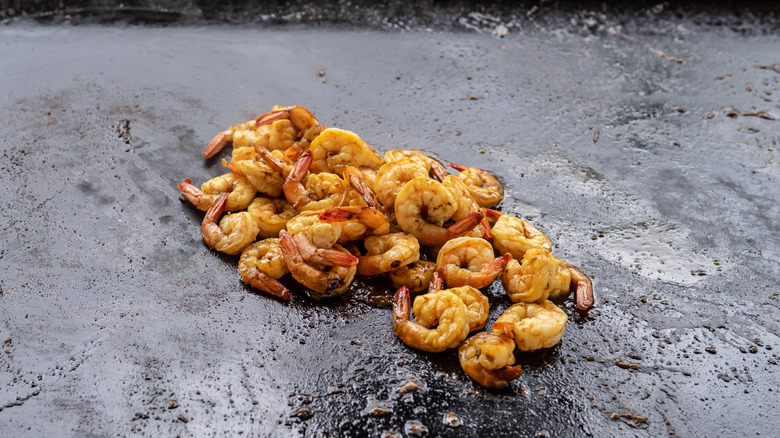
Before you can cook on a Blackstone griddle, you'll have to season it. This introduces a key benefit of the grill by ensuring that it's naturally nonstick. The surface of a Blackstone is more similar to a cast iron pan than a nonstick one (though some Blackstone camping grills are, in fact, nonstick-coated). After cleaning your new grill with soap and water, preheat it before dabbing the surface with oil in multiple coats. That'll create a protective seal that not only acts as a nonstick barrier for food but also prevents rust buildup.
Because the oil polymerizes, meaning it forms a durable coating that's essentially a natural plastic, it's bonded to the grill surface and won't come off with regular cooking (though you may have to occasionally re-season the surface to keep it in good shape). That extra layer of protection also prevents food from sticking to the griddle surface.
The natural nonstick quality of a Blackstone griddle means you can avoid some of the potential hazards of other cookware. For example, it doesn't contain the potentially harmful PFAS (or forever chemicals) typically used for standard nonstick cookware. Fortunately, Blackstone grills do share the natural nonstick abilities of standard open-grate grills (though some are nonstick-coated or enameled to prevent sticking anyway).
There's a built-in grease management system
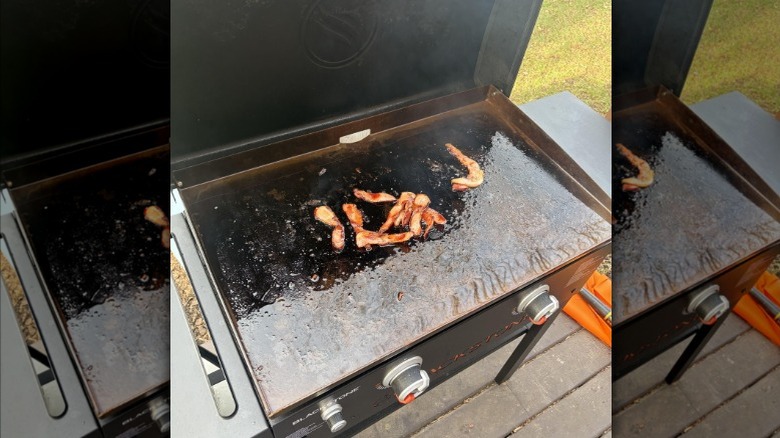
Grease: It's a dirty word — in the sense that you want to keep grease as far away from you as possible. By design, all Blackstone griddles have what the company calls a grease management system. For most models made today, that means a small slit at the back of the flat-top surface where you can scrape excess oil, fats, and crumbs to get them out of your way during cooking and to clean the surface once you're done. That leads to a small collection bucket that you can upgrade with accessory packs, such as a larger grease collector, a door that covers the slit when you're not using it, and disposable cups that collect detritus.
Grease that comes from animal fats like bacon can be hard to dispose of since you can't put it down the drain. The integral grease collector of a Blackstone skips those worries entirely. Some users have gone even further, devising their own system upgrades. One Reddit user, for example, showed off a contraption that drained grease directly from the collector into a larger garbage bucket below. Since the mechanism for disposing of excess fat is already built in, it's easy to make it work for your cooking style.
The griddles have a large surface area
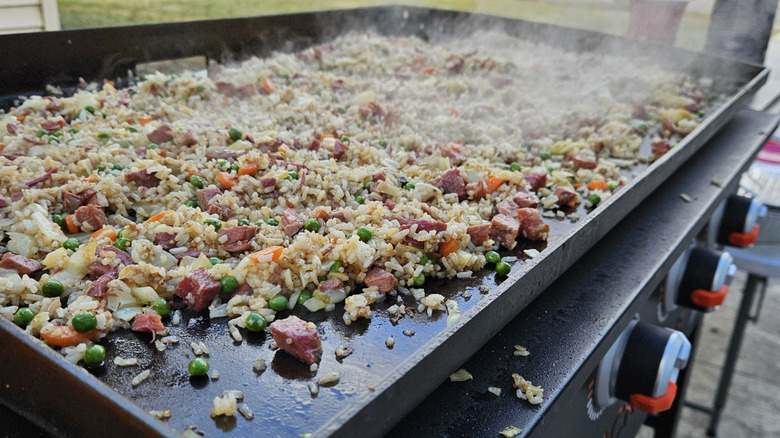
If you love to entertain, want to do meal prep in advance, or just have a big appetite, a Blackstone griddle can offer a clear edge over standard pots and pans. Blackstone itself highlights just how much fits on the cooking surface: The 36-inch flat-top can fit 47 fried eggs, 30 burgers, 21 pancakes, or 126 hot dogs all at once. Even its smallest model, a 17-inch tabletop griddle, accommodates 17 fried eggs, 11 burgers, seven pancakes, or 45 hot dogs at the same time, according to the manufacturer. That's a lot of cooking capacity — you just have to remember to get enough hot dog buns.
Compare that to an 11-inch square griddle pan (about 14½ inches diagonally) — the type that fits on a standard stove burner in a kitchen. That's likely to fit about nine fried eggs, six burgers, four pancakes, and 16 hot dogs. While that's still quite good capacity and might be a good place to start for an average weeknight dinner, it's far smaller than the Blackstone griddles' abilities. Of course, you can also use larger pans such as a double-burner griddle, but these typically don't heat as evenly as a product that's specifically designed to use the entire cooking surface.
Temperature zones allow flexible, simultaneous cooking
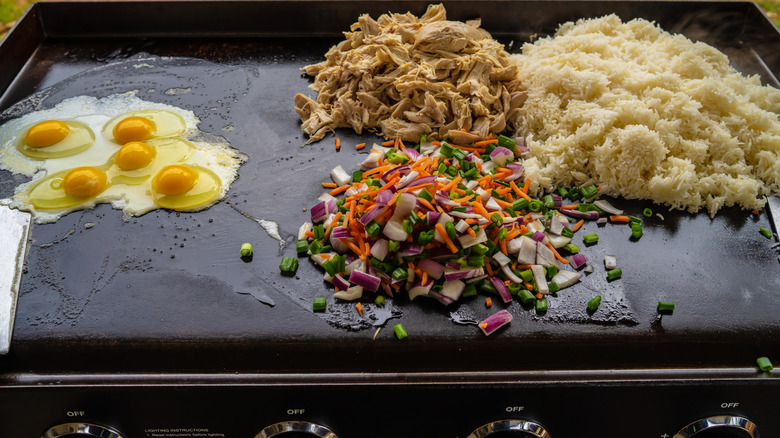
The Blackstone's large cooking surface also offers another benefit: multiple temperature zones. Griddles larger than the 17-inch travel model offer at least two different heat controls, allowing you to set temperatures at different levels for different parts of the appliance. The largest 36-inch griddles have four heating zones, each controlled separately. In other words, part of the griddle might be set to 200 degrees Fahrenheit, allowing you to keep cooked food warm, while the other side is set to 400 degrees for searing or sautéing.
In practical terms, this means you can cook your food in batches or cook multiple items at once. For example, you could cook a steak on the hotter side, then move it to the lower-temperature side to keep it warm while you cook vegetables in the rendered beef fat left behind. You could toast burger buns on a low-heat area while the patties are searing on a higher-heat zone. Or you could simultaneously make pancakes, eggs, and bacon for a big breakfast that's ready all at once, despite its components needing different cooking temperatures.
Perfecting the use of the different temperature zones might take some practice, though. Blackstone users on Reddit mention that the zone closest to the propane tank will generally run the hottest because it's closest to the fuel. Others caution that always turning all zones to high temperatures will use up fuel more quickly.
Food makes full-surface contact for better searing
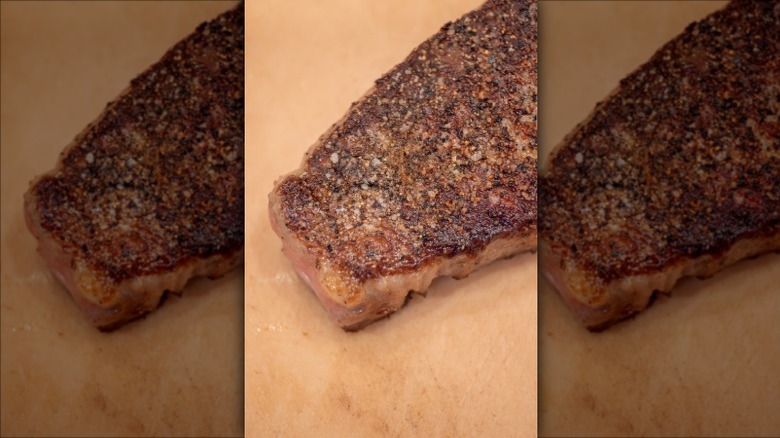
Blackstone griddles won't mark up the food with picture-perfect grill lines, but there's an advantage here nonetheless. Unlike traditional open-grate grills, where metal bars are interspersed with open air, flat-top griddles make full contact between the cooking surface and the food itself. That's especially helpful for foods like steak or burgers that benefit from a browned crust.
On a standard open-grate grill, only the parts of the food that come in contact with the grate truly get a sear; the rest is left to cook via radiant heating (that is, hot air from the flames warming the food, as opposed to direct contact with the cooktop). That makes it nearly impossible to get a true crust on the outside of the meat before the interior overcooks — a problem that's nonexistent when the entire piece touches the metal griddle.
For steak, press down lightly with a spatula for about a minute after putting it on a preheated grill. That'll allow the full surface to touch the griddle and start to form an even crust. When you flip your steak, do it again. This isn't true for burgers, though, as pushing down on these during cooking will simply drain out the juices (which is actually what you want if you're making crispy smashburgers). The simple shape of the flat griddle surface will be enough to nicely sear an already-flat burger patty.