

5 Tips For Buying The Best Grocery Store Bakery Apple Pie
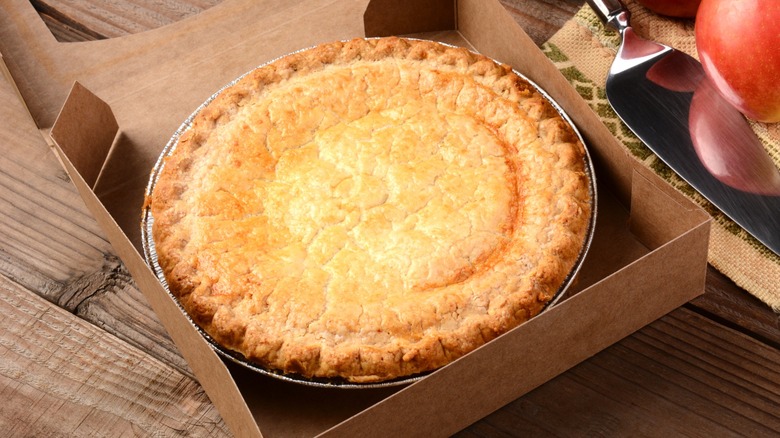
A classic apple pie is composed simply of flaky crust and spiced apple filling. However, the ingredients and baking techniques for these components can widely vary, even among grocery stores' bakery departments. Looks can be deceiving, given that much of the pie is hidden behind its packaging. You might get a glimpse of the top crust through a box's small plastic window or the clear lid of a clamshell, but limited visibility can make it difficult to gauge the quality or predict how it tastes.
Whether you're hoping to wow guests at a gathering or simply enjoy a slice as a treat, you don't have to leave your choice entirely up to chance. One way to reduce your risk of buying a subpar pie is to check the appearance of the crust for signs of proper prep. Comparing pies by weight can yield useful clues about the filling, and the label on the packing will provide important details about ingredients and freshness. Additionally, don't be afraid to seek input and assistance from bakery employees, and be sure to consider the price in relation to the perceived quality.
Inspect the crust
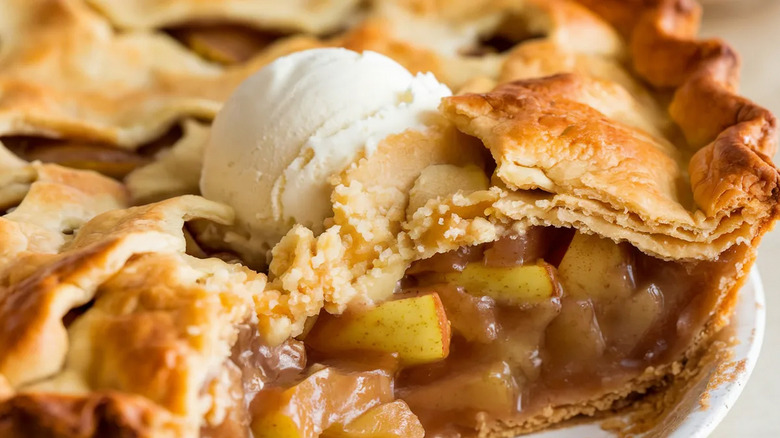
You can't tell everything about an apple pie based on its crust, but it's the easiest place to start. After all, it's the most visible part. Inspect as much of the pie's exterior as you can see, checking for an evenly deep, dark golden-brown color throughout. It should not be burnt, but pale areas can indicate that the pie is underbaked.
Pay attention to the texture, too. A crust that looks dense rather than flaky may lack the delicate, layered texture you want in a good apple pie. A well-made pastry crust should look crisp and defined rather than having a heavy appearance. If it looks soggy or damp, this could be a sign of condensation from the pie being packaged before it had time to cool completely. However, the bottom crust is harder to assess in a package, so you may not be able to tell whether it's fully baked until you cut into it.
Feel how heavy it compared to similarly sized pies
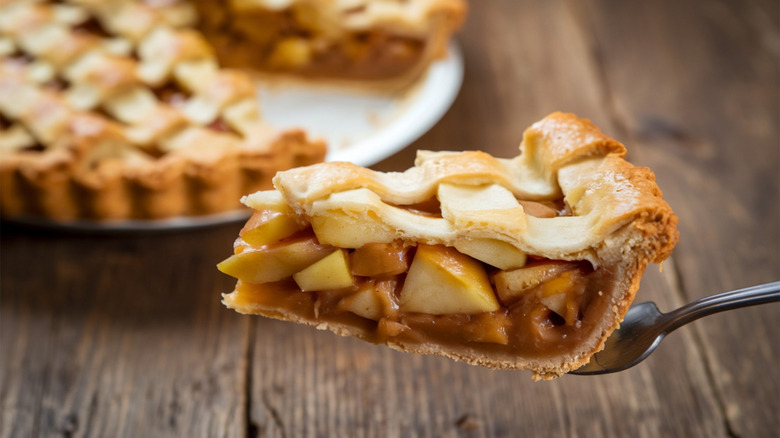
Some apple pies can look like they're abundant with apple filling, only to reveal a relatively small amount once you cut yourself a slice. Comparing the weight of similar sized pies can help you get a better sense of which one might offer more for your money. A heavier product may contain more apple filling than a lighter one of the same size. While this can be a useful clue when you're trying to find a pie that offers good value, weight alone can't tell you exactly how much filling is inside or guarantee quality.
When comparing similarly sized apple pies, check the net weight listed on the packaging, if available. Some products may have a standard weight printed on the package, while others are weighed individually and labeled accordingly. Looking at these details alongside prices can help you determine which pie offers the best value, especially when choosing between similar options at the grocery store.
Read the packaging and ingredients
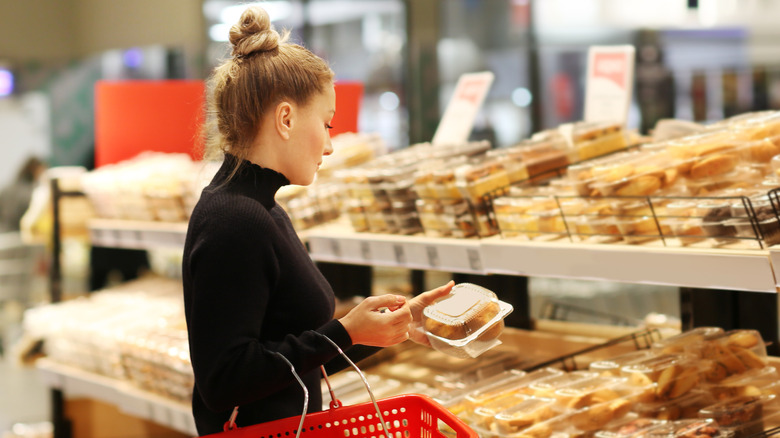
By taking a closer look at the packaging, you may discover special attributes about a product, such as whether it's baked fresh daily. You may also notice a "sell by" or "use by" date, which could help you assess its freshness and determine how soon you should enjoy it.
You can learn more about how an apple pie may taste by glancing at the ingredient list. Most grocery store bakery pies have a list of ingredients that identifies what the dessert contains in descending order by weight. This will give you a better idea of what goes into the filling and crust. Start by checking which apple varieties are used, if specified. Granny smith, Golden Delicious, and Braeburn are among some of the best apples to use for pie, as they contribute different levels of tartness, sweetness, and softness to the filling.
You can also look at the spices, such as cinnamon and nutmeg, which add warmth and aroma. Furthermore, the fats used in the crust can influence its flavor and texture. Butter, for instance, will likely create a lighter texture and richer flavor, compared to the more neutral-tasting shortening.
Talk to the bakery

If you have any questions about an apple pie you have your eye on, an insider source — the store's bakery department — is just a few feet away. The bakers should able be to answer questions like how fresh the pie is, whether it's baked on-site from scratch or if it arrives to the store frozen to be baked on-site, whether it's a popular item, and what they think of the dessert themselves if they've tried it.
If the bakery receives its apple pies frozen, you might consider asking whether you can purchase one before it's baked. If they permit it and you're not in a pinch, you can keep the pie frozen until you're ready to bake it, potentially allowing you to enjoy a fresher version than one that's been sitting in the bakery for a day or two.
Talking to the bakery is especially helpful if you need multiple apple pies for a gathering or special occasion. Rather than grabbing whatever is left on the shelf, you can ask whether the bakery has enough in stock or can prepare additional ones ahead.
Don't overlook the price tag
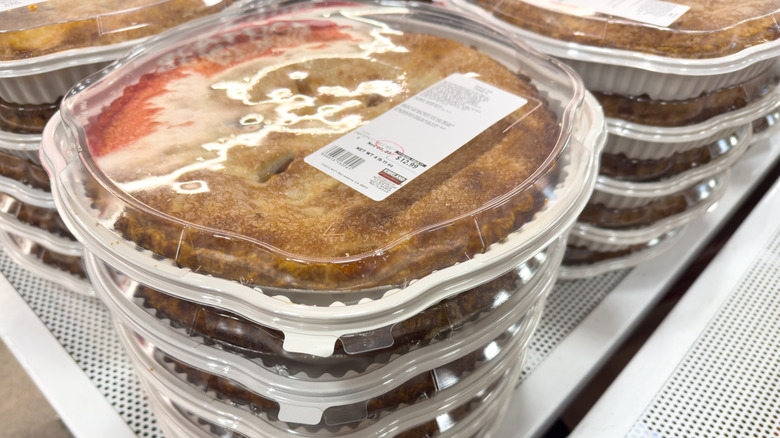
The best apple pie isn't necessarily the most expensive or the cheapest; it's the one that offers the best quality for its price. That means if your budget allows, looking at the price tag and beyond to consider what you're actually getting for your money.
A larger or deeper apple pie with a higher price tag shouldn't automatically be ruled out — the price may be attributed to its size, a well-made crust, a generous filling, or higher-quality ingredients. All of these factors may justify the expense, provided the quality lives up to the price.
If you're looking to score a good deal on an apple pie without compromising on quality, especially if you're buying several pies for a gathering, look for promotions such as bakery specials, multi-buy deals, or purchasing from membership warehouse clubs, like the massive apple pie from Sam's Club or Costco's double-crust apple pie, where you can score quality at a great price.