

5 Meats That Aren't Ideal For A Flat-Top Grill
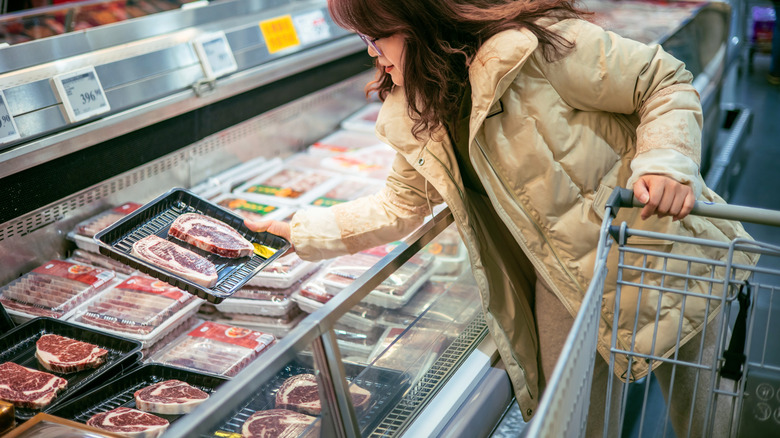
Meat and fire go together — in fact, humans may have started cooking meat over fire as long ago as two million years. Today, our species' closest connection to those early days is grilling, satisfying our primal instincts to heat a hunk of raw meat over fire until it's ready to eat. Today's at-home flat-top grills, like Traeger or Blackstone, might not be recognizable to our distant ancestors, and not all meats will work well on a flat-top griddle.
Large cuts of beef like roasts tend to be tougher and won't cook well on a flat-top, nor will collagen-rich cuts like brisket. Similarly, pork cuts like shoulder, loin, and ribs are also high in collagen and can get tough when grilled on a griddle. Lamb shanks face the same problems and encounter the further struggle of not getting cooked all the way through, just like whole chickens.
With the exception of whole birds, most of these cuts will do better cooked low and slow surrounded by heat and sometimes moisture, rather than the high-temperature searing of a flat-top grill, to break down collagen and tough muscle fibers. Logistically, whole chickens are difficult to cook on a flat-top simply because not enough of the exterior will come into contact with the griddle, but there are exceptions to that rule. Here's what you need to know before firing up the griddle.
Beef roasts
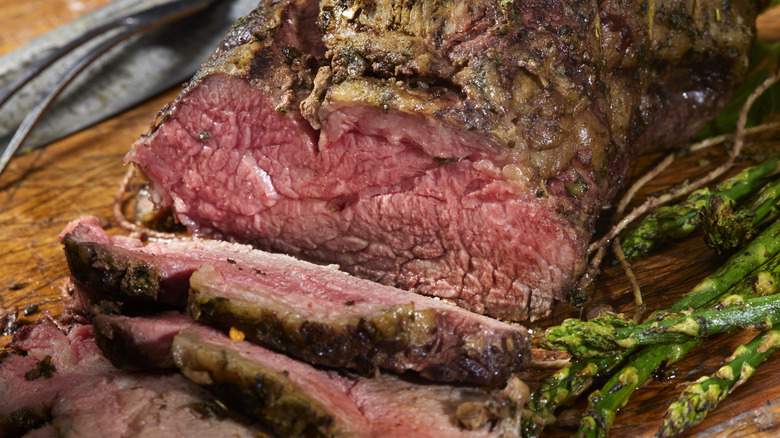
If a cut of beef is labeled as a roast, take heed: That's your butcher's way of suggesting how it should be prepared. Chuck, eye of round, rib, top, rump, and sirloin tip roasts should be kept away from the flat-top griddle and should be — you guessed it — roasted (or similar slow-cooking methods that involve surrounding the beef with heat, like stewing or braising). You will be better off pulling out the slow cooker to make a dish like pot roast rather than attempting to grill it.
Large, imposing cuts simply won't cook well on a grill. Some are cut from heavily used muscles on the cow, where muscle fibers are denser and there's more connective tissue. Others are just too big, such as the tender top round roast or London broil, which is often sold in multi-pound pieces that won't cook all the way through when put on top of a griddle. Still, there's an exception here. Some roasts, such as sirloin tip, can be sliced into steaks that will grill well. But as it's a pretty lean cut, you'll want to marinate it before grilling and make sure to keep it moist during the cooking process so it doesn't get dry and chewy.
Collagen-rich cuts like brisket
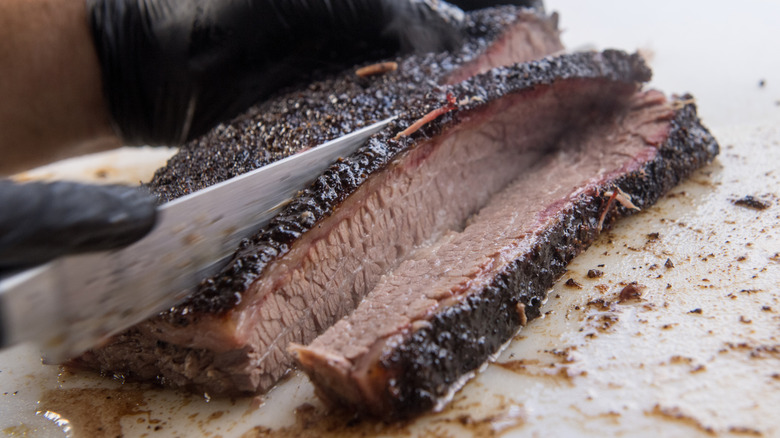
Brisket is a poor fit for flat-top grilling for the same reasons as some of the roasts. As it comes from the cow's breast, it's another well-used muscle that develops a lot of collagen — the protein found in connective tissue that tends to be tough and chewy when it's not broken down over a long time. It's simply not possible to create the ideal environment for cooking brisket on the top of a griddle.
Brisket cooked quickly, such as on a flat-top grill, will retain too much collagen and be nearly impossible to chew. Low-and-slow cooking methods, such as smoking or braising, fundamentally change the cut of beef. The collagen slowly melts, starting when the meat reaches around 160 degrees Fahrenheit, and dissolves into gelatin, which makes it a melt-in-your-mouth-worthy bite. But that process requires both low heat and a lengthy cook, something the flat-top doesn't afford you.
Smoking a brisket at around 225 degrees Fahrenheit should be done for 30 to 60 minutes per pound of meat, meaning a 10-pound brisket should cook for six to nine hours. It's impossible to replicate the same cooking time even at a low heat on a flat-top griddle, and the meat will never tenderize in the same way because the collagen won't be able to break down.
Pork shoulders, loin, and ribs
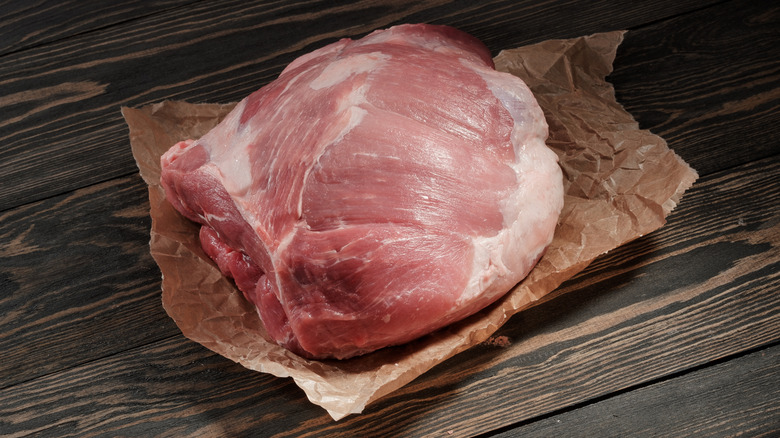
Some fresh cuts of pork don't cook well on a flat-top griddle. Like with beef cuts, more heavily used muscles like pork shoulder need time to break down collagen into gelatin and render the fat slowly, resulting in a tender, delicate texture after hours of cooking. None of that will happen with a quick, hot sear on a flat-top griddle, leaving your pork shoulder chewy and dry.
Even cuts that aren't well-used muscles, such as loin and ribs, still won't do well on a flat-top griddle. Loins are extremely lean, meaning they can dry out easily, and are often sold up to 10 pounds. It's a large cut of meat, so it's unlikely to cook all the way through using the direct heat of a flat-top grill. There's still a way to cook pork loin on the flat-top, though: Simply slice it into 1 ½ inch chops, then grill those individually after marinating them. That prevents the pork from drying out while also ensuring each piece is cooked through.
Ribs, on the other hand, should be kept away from direct heat entirely. Collagen plays an important role here, too: The meat on ribs is connected to the bones by way of collagen in connective tissue, and to get the ideal fall-off-the-bone tenderness characteristic of barbecue ribs, you have to slowly break down that collagen. Unfortunately, there are really no shortcuts to making that happen, and the flat-top's high direct heat will simply make the texture worse.
Lamb shanks
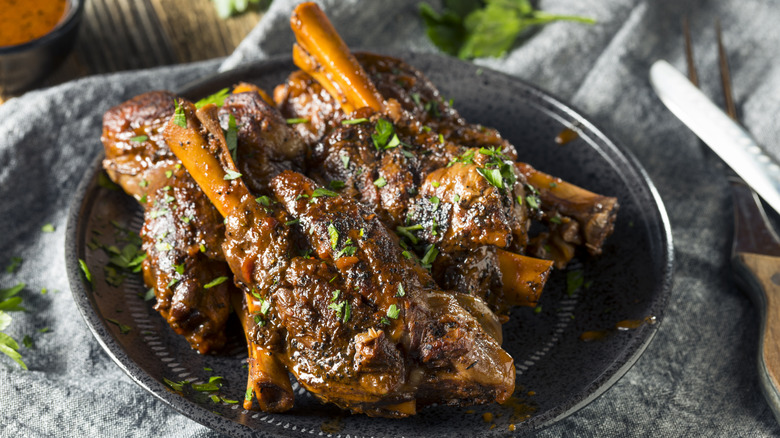
Another large cut from a well-used muscle, lamb shank can really only be cooked one way: low and slow. The high concentration of connective tissue makes them tough and chewy unless they're cooked for hours. An ideally braised lamb shank will have tender meat, crisp skin, and velvety texture imparted by the collagen breaking down into gelatin. And since shanks are generally bone-in, the same problem comes up as with pork ribs: Not only is there a significant amount of collagen in the meat, there's also more connecting the meat to the bone. By stewing or braising them, you can get the meat to literally fall off the bone. There's no way to recreate that on a flat-top grill, though.
Lamb shanks, too, are large. They can be one to three pounds or even larger, and since they're essentially the lower half of a lamb's leg, they can be sizeable enough that a sear on a flat-top griddle wouldn't be sufficient to cook them all the way through. The exterior might burn while the inside stays raw. For an ideal texture, lamb shanks should be cooked to around 200 degrees Fahrenheit inside, and that won't be possible when using a flat-top without severely overcooking the exterior.
Whole chickens — with a catch
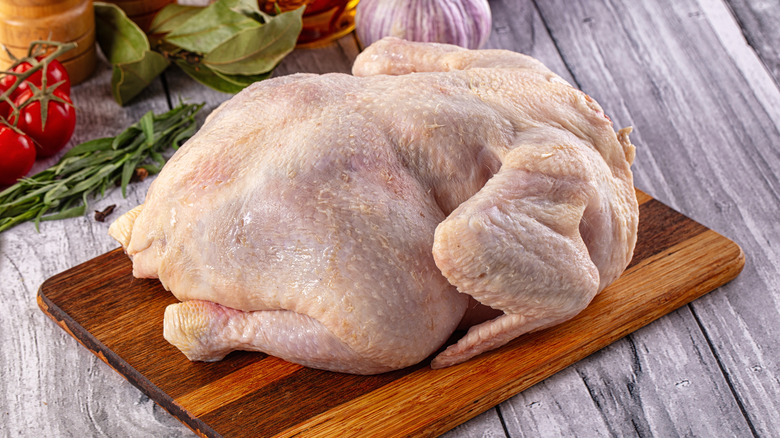
There are nearly endless ways to cook various types of chicken on a flat-top griddle, and as a famously versatile meat, chicken responds well to a variety of cooking techniques. One way that won't produce great results, though, is attempting to cook a whole chicken on the surface of a flat-top. Unlike many other types of meat that won't do well because they need low-and-slow heat to break down collagen and tenderize the cut, chicken is generally tender enough even cooked at a higher temperature for a short amount of time. Here, the size and shape are the logistical challenges: Direct heat from a flat-top griddle will only truly cook the food it comes in contact with, and a whole chicken simply has too much meat on the inside that risks being undercooked.
Whole chickens do have one significant caveat: If the bird is properly prepared, it can indeed be cooked well on a flat-top grill. By spatchcocking (or butterflying) chicken — cutting the whole bird in half so it lies flat — you can increase the surface area that comes in contact with the griddle itself. One Blackstone user on Reddit reported a spatchcocked chicken cooks well on a flat-top if done over low heat for 40 minutes, flipping every 10, while weighing down the chicken with foil-wrapped bricks to get an even cook.