

5 Disadvantages Of Baking With Aluminum Foil
Chances are, you reach for aluminum foil without even thinking about it. The inconspicuous roll makes multiple appearances in American kitchens every day. It's reflexively torn off when packing sandwiches, folded over leftovers inevitably shoved in the no man's land at the back of the fridge, and smoothed over baking trays in the vain hope you save yourself some washing up. But, from scratched oven surfaces to soggy pieces of meat and ruined cookies, there are plenty of disadvantages to this kitchen staple.
If you're in any doubt about how much of a crutch these silvery rolls of foil have become, Market Growth Reports stated that the aluminum foil market reached $1,046.75 million in 2026. Far from a kitchen item shoppers reach for casually from time-to-time, foil has become the catch-all for a myriad of kitchen solutions, including ones it really shouldn't be applied to. Baking with the stuff is where most of the pitfalls happen.
It's the enemy of crispy crusts
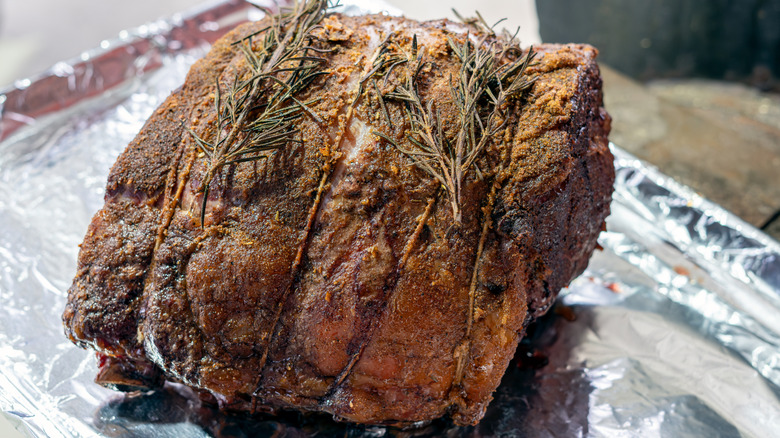
We've all done it: wrapped an expensive blush-pink piece of prime rib in a silver foil blanket because of some half-remembered tip we saw on MasterChef one time. What was it Gordon Ramsay said? Something about locking heat in? Sort of true. Wrapping foods in aluminum foil and baking them in the oven does trap heat, but it steams the food rather than roasts it. That's why it's such a killer in prime rib cases, where you want a Maillard reaction to take place — naturally occurring sugars heating up and caramelizing to create that toasty brown crust.
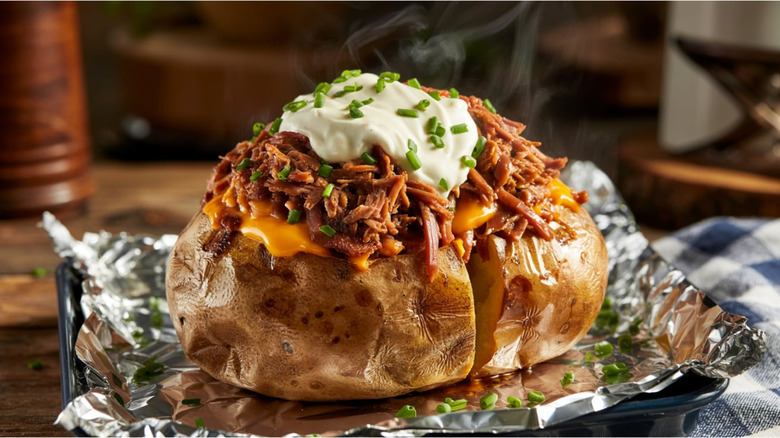
It's not just in meat-based baking that aluminum foil creates this problem, either. Baked potatoes often suffer the same silver foil-swaddled fate. Consider the best part of a baked potato: the skin you rub with oil and perhaps sprinkle with some fragrant herbs, blistered and shard-like, paired perfectly with the soft potato inside. Aluminum foil hitched like a tent over your spud is a surefire way to ensure soggy, flappy skin due to too much moisture.
It can burn the bottom of your cookies
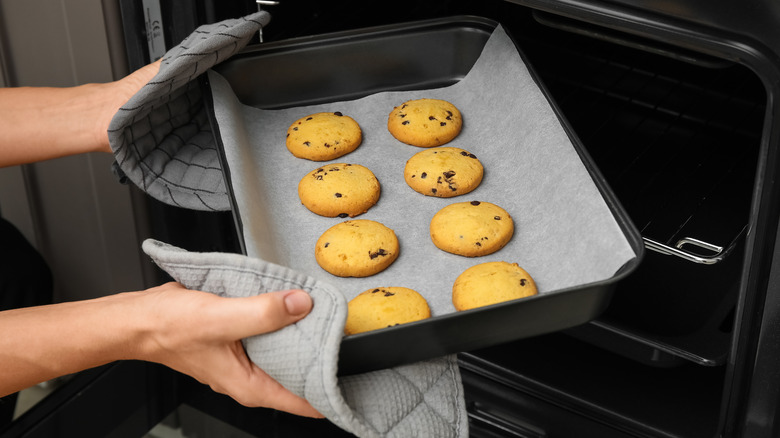
If there's one thing cookies need, it's chocolate chips. If there's a second thing they need, it's your oven cranking out evenly distributed heat. The flow of heat matters because cookies need to be cooked evenly from top to bottom to avoid texture issues and underbaked, doughy centres. Aluminum foil disrupts this process by being such a good conductor of heat.
Because of its natural properties, aluminum foil is an excellent thermal conductor, and also reflects 95% of radiant heat. Nerdy science aside, in practice, this means the base of a cookie placed on aluminum foil comes into contact with direct heat much more than the rest of the cookie. This can result in a cookie that's raw in parts and unpleasantly bitter in others, or, at worst, burnt on the bottom. Parchment paper, which lets heat circulate freely and has nonstick properties, is a much better tool for the job.
It might impart a metallic taste
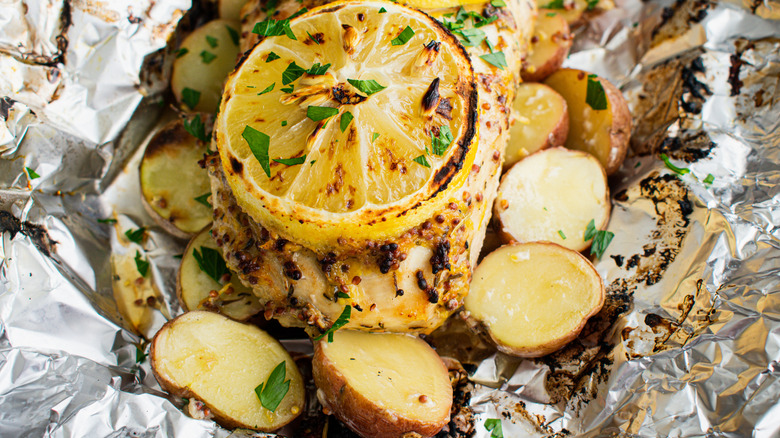
Marinating is a crucial step called for in a lot of baking recipes. Before your food even hits the oven, covering proteins, such as salmon, in a combination of soy sauce, lime, and ginger starts to build levels of flavor. Alternatively, creating a lemon and oil concoction to quickly marinate chicken helps tenderize it. To save time, some cooks might be tempted to marinate their dish in a parcel that can be unfurled during cooking. This would be a mistake.
Highly acidic foods — think vinegars and citrus fruits, such as oranges and limes — actually break down aluminum. At best, there's an unpleasant tinny, metallic taste that seeps into your dish. At worst, the aluminum itself can actually make its may into your food. Aside from being a bit gross to think about, aluminum is a neurotoxin. While perfectly safe to use correctly, high levels may have a link to brain disease and gastric issues.
Your oven risks being scratched
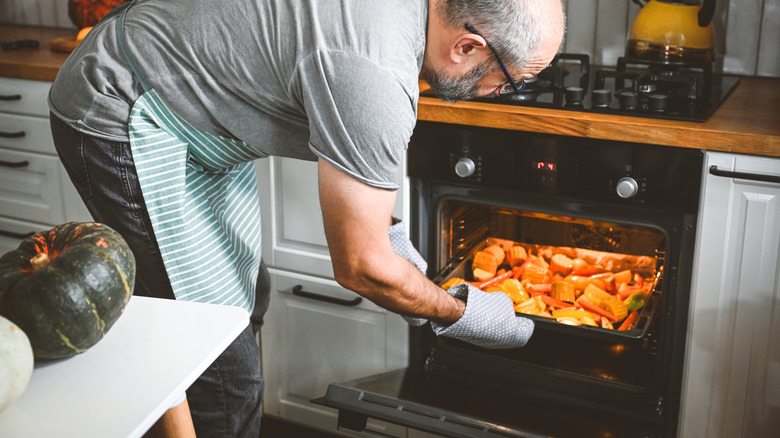
As anyone that's Googled "what even is a heating element?" at 8 p.m. after discovering their oven has packed in midway through cooking a chicken can tell you — oven repairs are never fun. They can be fiddly, time-consuming, and costly. Avoiding the easy-to-swerve ones are essential — including lining your oven with aluminum foil. Aside from blocking vents and preventing that essential airflow, you run the risk of scratching.
Enamel and porcelain surfaces don't play well with such a hot, abrasive material like aluminum. Throw the potential for melting into the mix, and you could be looking at worse than just cosmetic damage. For those that have previously lined their oven with aluminum to save on cleaning, simply swap this out for silicone oven liners, or a baking dish, beneath the gooey grilled cheese or flaky pie cooking above it.
There's a danger of sticking
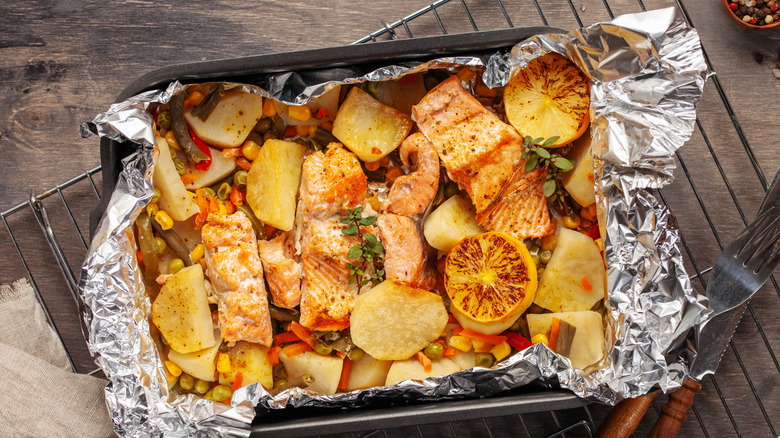
Unlike parchment paper, aluminum doesn't count nonstick as one of its strengths. In fact, it's quite the opposite. If you've ever wondered why you had to wrestle the delicate skin of a piece of fish out of the grabby clutches of a piece of silver foil, it's because lean proteins become almost welded to foil when there's heat involved. Without the cushiony layer of some fat, sticking and tearing occurs.
The easiest way to get around this is to add a layer of protective fat, such as oil or butter, to the foil. A nonstick spray can be particularly good in this instance, too. Spritzing on a sparing amount stops the foil gluing itself to high-moisture foods, but without making your food greasy or imparting the taste of whichever fat you choose. In instances when you're unsure, it's always wiser to forgo the foil and stick to silicone trays and baking paper.