

5 Disadvantages Of Cooking Steak On A Blackstone
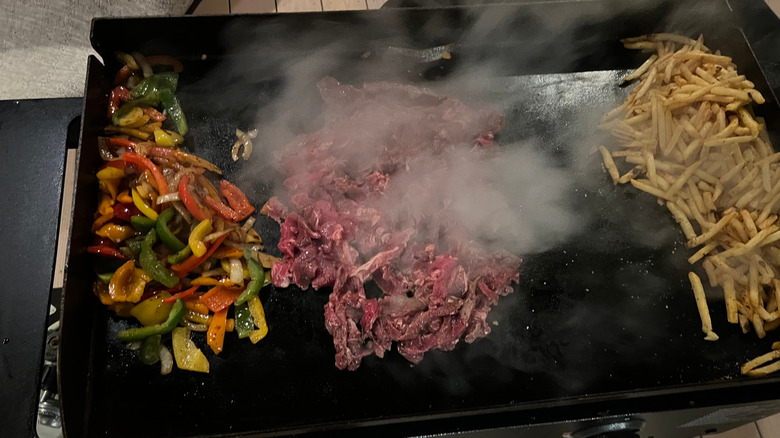
When it comes to backyard cookers, Blackstone griddles are some of the most reliable buys on the market. The outdoor, flat-top gas griddle offers a versatile cooking approach that is highly accessible to its millions of consumers. It's one of those sturdy guarantees that you buy — more often than not along with a whole set of handy kitchen equipment — with the hope they'll last you a lifetime and serve you up many delicious meals in the process.
The company, founded in 1985, has been making its signature 36-inch griddle since 2008, and it has emerged as one of the more popular cooking choices for outdoor steak cookouts. Just as the mammoth cooker presents its own set of challenges and requires significant aftercare, especially to avoid the dreaded rust, it isn't always the most straightforward tool for making steak: from sacrificing a grill's smokiness to uneven surface temperatures and basting problems, there aren't a few potential issues you could run into.
As anyone who has tried their hand at making steak knows well, cooking the meat to perfection is a fiddly process that involves a lot of handiwork as well as mental preparation. There's choosing the beef cut — from leaner filets to heavily marbled rib-eyes — and ensuring you get the right thickness, as well as ensuring it's neither too raw nor tough and overly done. While a Blackstone griddle can certainly be a huge asset, especially if you want to prep an entire meal in one go, it requires close attention if you want to avoid a giant mess. Here are some of the steak-prepping issues you might run into when using it.
You miss out on some of the grill's smoky flavor
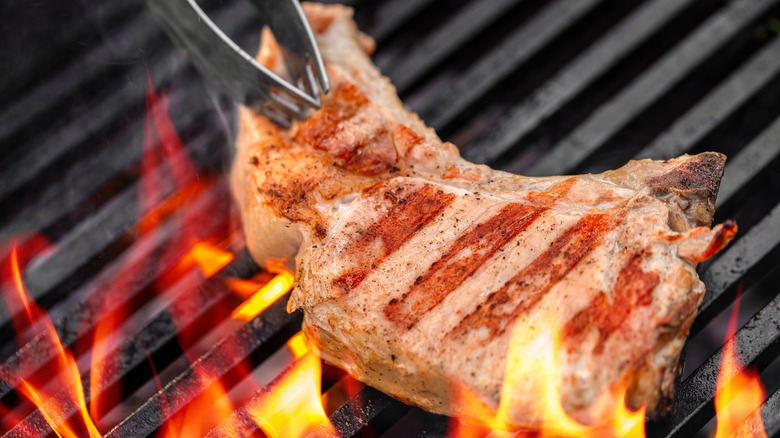
The most obvious difference between a Blackstone and a grill is that, well, it isn't one. While that can be an advantage on some fronts — the gas burner, propane-fueled steel plate, which makes for excellent browning of the whole meat surface and a supreme crust, is something which Blackstone itself purports as one of the griddle's strong points. However, it also loses out on some of the distinct components that make grilling an enduringly popular way to cook steak.
There's no denying that grilling a steak infuses it with an unmistakably smoky, intense flavor that both brings out the meatiness of your cut while enhancing its own savoriness even further. This, in part, is due to its exposure to the open flame, but also a result of the meat's own fatty juices leaking through the bars, where they interact with the heat, vaporize, and infuse the steak with a rich aroma. If you're dealing with wood or charcoal, then the actual scent that the combustion of both gives the steak simply can't be recreated.
This doesn't render it inferior: indeed, the griddle's sear produces a Maillard reaction, a form of browning whereby the food is infused with a complex, almost roasted aroma. But since we eat with our eyes as well, the difference is aesthetic, too — if you want crosshatched marks that add a visual trademark and an instant association with the joys of a backyard grill, you might find the Blackstone result disappointing.
It doesn't work as well for thicker steak cuts
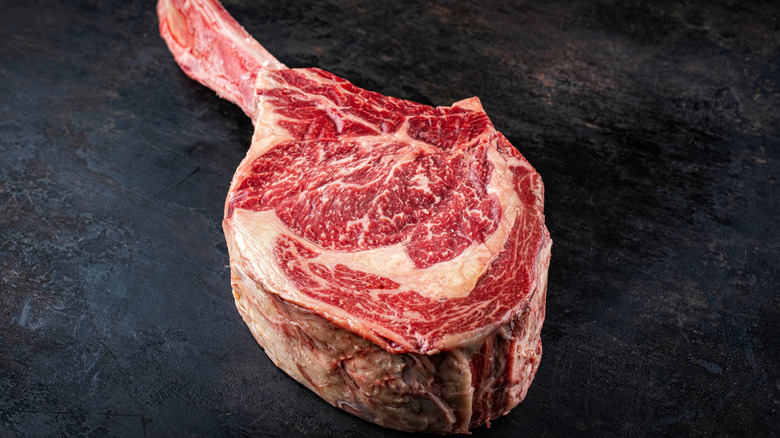
Thick steaks are usually prized — especially fatty cuts such as the almighty T-bone or ribeye — but they can be tricky to master. Medium is often the Goldilocks zone when it comes to making the perfect steak: too thin and it risks undercooking, too thick and you can end with a scorched exterior and a raw, bleeding inside. The problem, however, becomes even more pronounced on a Blackstone griddle.
The equipment itself is most useful for rapid browning, as the steel conducts the heat directly, which can cause problems when dealing with something like a porterhouse, strip, or ribeye, as you want to avoid a burned crust and a cut that hasn't cooked through.
In its "7 Tips for the Perfect Steak," Blackstone itself says that thicker cuts need longer at a lower temperature than thin ones, which cook at around 425 to 450 degrees Fahrenheit. For the perfect thick-cut sear, however, you have to learn to manipulate a Blackstone's different heat zones, cooking it hot first and then passing it onto a lower temperature zone — all of which can be challenging for less dexterous cooks. With particularly fatty cuts, which Blackstone recommends flipping repeatedly, this can become even trickier, as the griddle's heat means perfect timing is of the essence here.
The surface temperature is not entirely uniform
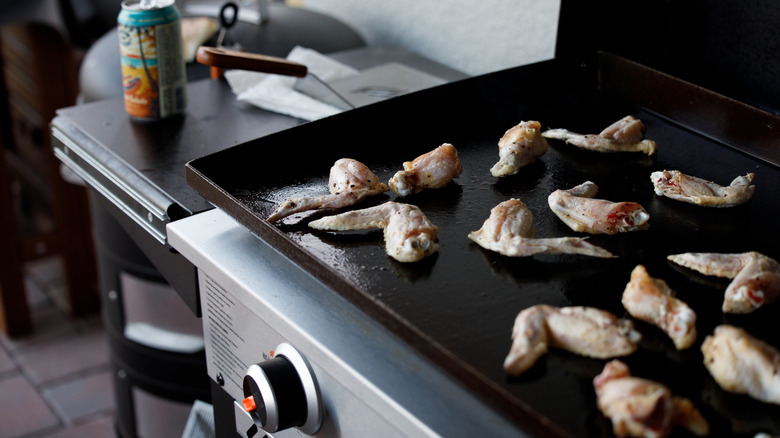
There's also the issue of the Blackstone's own surface temperature — which, not being completely uniform, means you need to ensure you can manage the heat effectively when prepping your slab of beef. Just because you have a central knob to regulate the temperature and what appears like a pretty even steel plate doesn't translate to uniform heat — as the product's instructions note, the middle is where the heat cranks up the most, while the edges remain somewhat cooler.
A recipe for the "Perfect Steak" published by Blackstone itself remarks on this and states that cooks should "move the steaks around the griddle to avoid hot spots and ensure even searing," while suggesting using a thermometer to ensure a perfect finish. This isn't even getting into how atmospheric temperature or the quantity of food on your griddle can further affect temperature.
A quick way around this is checking the different surface spots with a thermometer and identifying which are best for searing (425 to 450 degrees Fahrenheit, ideally), and then moving your steak to cooler areas. However, the fiddliness of the process, plus the need for extra equipment, might not be the most effortless approach for all.
It's harder to baste the steak in butter or add marinades
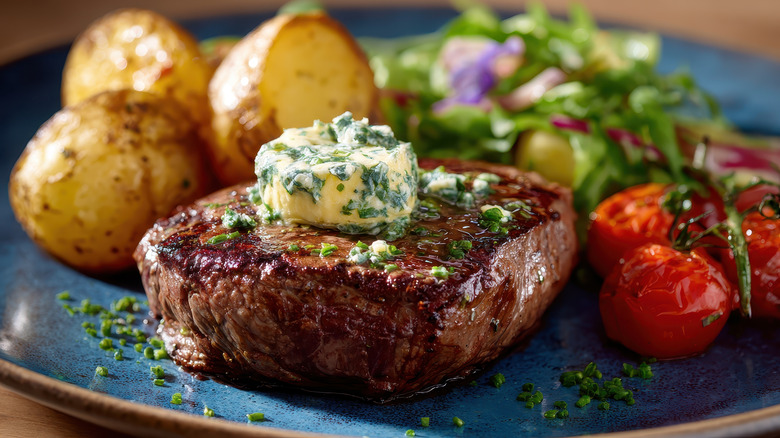
One of the most glorious ways to finish off a steak is by basting it in butter, or what French cooks have long been calling "arroser". It's a favorite of top chefs and gourmets from Andrew Zimmern to Alain Ducasse, and it enhances the tenderness of your meat cut while ensuring the perfect brown crust.
While butter adds a Midas touch to anything it touches, anyone familiar with using it in any form of cooking knows all too well how horrid things can turn when it burns, suddenly turning from liquid gold into a charred, bitter mess — which is why the high heat of a Blackstone griddle requires careful attention, and even more importantly, why you should add the butter at the end. This also applies to seasoning and sugar-heavy marinades, which can reduce too rapidly on the griddle and violently cook the sweet out of the sweet-and-sour.
Moreover, when it comes to butter basting, the process is more easily accomplished using a high-edged skillet, which allows you to collect the butter in a pool that you repeatedly pour onto the steak, making the vast, flat surface of a Blackstone less useful. A potential workaround to this is using a small pan and cooking it on top of your griddle.
Grease sticks to the surface
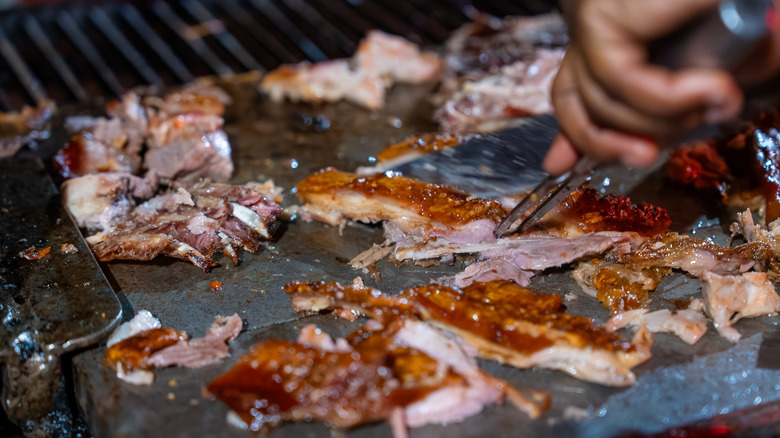
One of the advantages of a grill is that the fat oozing from steak drips through the grates, both avoiding a pile-up on your surface and, as previously mentioned, further contributing to the steak-cooking process. On a Blackstone, however, you have to deal with a flat slab, which might work for some types of meat — take a smash burger, for instance, where the fat further enhances the flavor and juiciness — but might not be so great when it comes to steak cuts like ribeye, where you might struggle to get the dry sear you're aiming for.
This can become even more problematic when dealing with watery veggies such as onions, peppers, tomatoes, or mushrooms, where the moisture can be released onto the pan and affect the steak-cooking process. As always, you can find a way to work around this — take advantage of its huge size by having different cooking zones, or occasionally remove excess grease.