

4 Of The Biggest Changes McDonald's Has Ever Made To Its Burgers
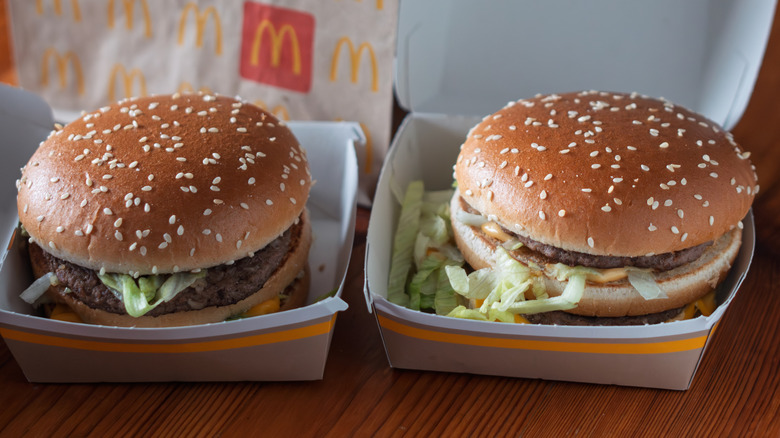
Ah, the Golden Arches — a sign instantly recognizable around the world, with a Pavlovian association with the eternal joys of a nice meal of burgers and fries. Now, McDonald's might not be to everyone's liking, but if there's one thing that's certain, it's the popularity of its basic menu items: Who doesn't know classics like the Big Mac — a burger so famous it even inspired a purchasing power index — and the customer-favorite shoestring french fries, or the classic McNuggets and Filet-O-Fish? But while the basic composition of its burgers may have remained largely the same, the exact recipes have not been set in stone.
Ever since the company was founded by brothers Dick and Mac McDonald back in the 1940s, it has not only grown to become one of the biggest fast food chains on Earth, but has also garnered a reputation for consistency and repeatability — which is also, incidentally, one of the gripes some naysayers have with its food, which they accuse of being frozen, overly processed, and lacking fresh flavor. And yet, for a company so devoted to repeating its winning formulas, it has experimented with different recipes over the decades, concocting elaborate and alternative burgers that have had their day in the sun, only to be just as quickly put to rest. From changing its iconic Big Mac sauce (and not just once) to quietly upgrading its ingredients and even the beef patties themselves, here are four examples of major changes McDonald's has made to its burgers over the years.
The Big Mac survived several sauce tweaks
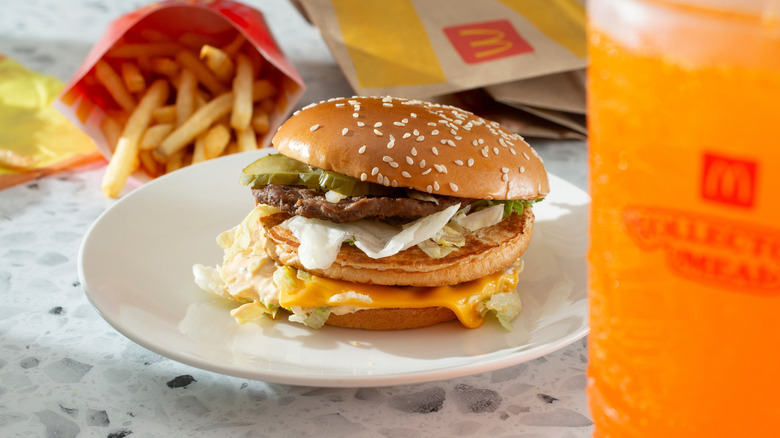
The Big Mac is arguably the main showstopper of the McDonald's menu and the item most intimately associated with the burger chain. All this notwithstanding, the burger, which debuted in Pennsylvania in 1967 and launched nationwide the following year, actually deviated from the chain's classic formula. Previously, McDonald's burgers were relatively simple and on the smaller side: a single patty, two bun halves, and some garnishes, with a slice of cheese on cheeseburgers. But when franchisee Jim Delligatti introduced the Big Mac, it revolutionized the chain's menu by making things decidedly larger — the Big Mac had two beef patties and a three-part bun with a slice of bread between the two slabs of meat, lettuce, cheese, onions, and pickles, along with its well-known signature sauce.
Interestingly, while the the Big Mac is instantly recognizable to anyone who has bitten into the sandwich, that distinctive sauce wasn't entirely set in stone. The orange-pink sauce — generally thought to be made with a combination of mayonnaise, mustard, sweet pickle relish, white wine vinegar, and seasonings like paprika — underwent multiple changes over the years. First introduced to the public in a 1968 commercial as "secret sauce" (via YouTube), the formula was altered in 1991, only to be reverted to the original recipe in 2004, when McDonald's executive Fred Turner hoped to bring back the earlier sauce. Change isn't always for the better, and McDonald's own history is the perfect example of this.
McDonald's switched to fresh beef quarter pounders
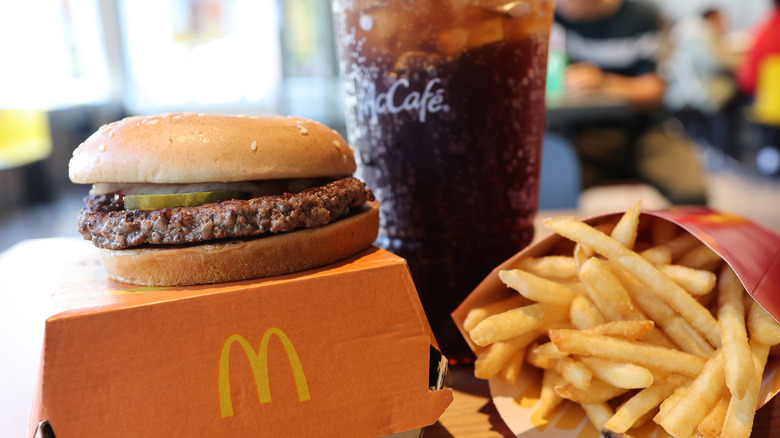
Unlike chains such as Culver's, Five Guys, and Whataburger, which rely on fresh, never-frozen beef, McDonald's has never made any attempt to hide the fact that it relies on patties that are flash-frozen by suppliers for many of its signature menu items. It's one criticism commonly leveled at the chain, as some deem its food less fresh and tasty than what you can find at other burger chains.
But in 2018, McDonald's went against its former stance and made one of its most significant modern operational changes — it decided to make its Quarter Pounders with fresh beef at locations across the contiguous United States, in what then-McDonald's USA President Chris Kempczinski described as "the most significant change to our system and restaurant operations since [the introduction of] All Day Breakfast" (via McDonald's). And it seems the change paid off for McDonald's — the chain reported selling 40 million more Quarter Pounder burgers in the first quarter of 2019 compared to the first quarter of 2018.
The chain cut artificial ingredients from its classic burger lineup
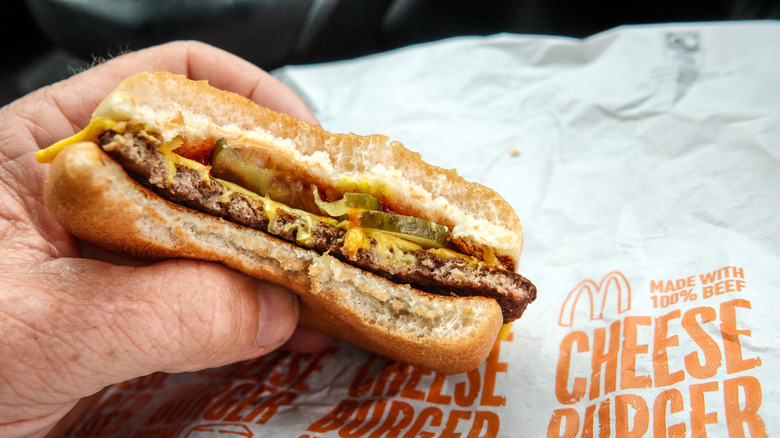
While McDonald's might be synonymous with fast food and culturally emblematic (to some, anyway) of all things fried and processed, that does not mean the chain has not committed to some pretty serious quality standards when it comes to its menu items. In 2018, just as the Quarter Pounder was getting fresh beef, the chain also decided to remove artificial preservatives, flavors, and added colors from seven of its classic U.S. burgers: the Big Mac, Hamburger, Cheeseburger, Double Cheeseburger, McDouble, Quarter Pounder with Cheese, and Double Quarter Pounder with Cheese.
This change didn't just affect the burgers themselves, but specifically their buns, American cheese, and Big Mac sauce (with the pickles being an exception, as they still contained artificial preservatives). To its credit, McDonald's already described its beef patties as containing 100% USDA-inspected beef without fillers or preservatives.
Subtle topping and bun tweaks improved McDonald's classic burgers
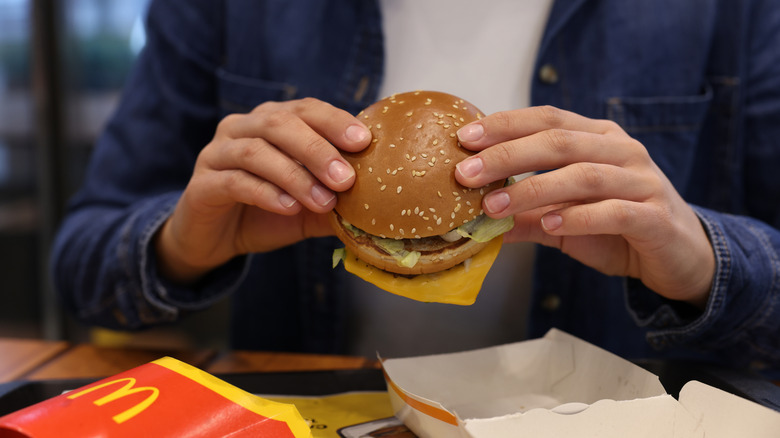
The devil is in the details, and McDonald's has sometimes made changes to the underrated supporting characters of its burgers. Yes, we're talking about the toppings and buns.
Throughout 2023 and 2024, McDonald's USA rolled out changes to some of its classic burgers, including the Hamburger, Cheeseburger, Double Cheeseburger, McDouble, and Big Mac. Many of these small enhancements may have been barely perceptible to consumers, but they were meant to improve the experience: The buns would be softer and toasted until golden brown; the Big Mac would be filled with more of its distinctive sauce; the cheese would be more melted; and the white onions used in the sandwiches would be added while the patties were cooking rather than afterward, allowing them to be warmed by the grill and absorb some of the meat's flavor, making them sweeter and more caramelized.