

6 Beverage Brands Owned By Kraft Heinz
A global food company based in the United States, Kraft Heinz formed in 2015 when Kraft Foods Group and the H.J. Heinz Company merged. Worth $28 billion at the time, this joining of juggernauts remains one of the most significant deals in the history of the industry. More than a decade later, Kraft Heinz owns dozens of food and beverage brands across the world.
It would be a heavy undertaking to get into all the pies Kraft Heinz has a finger in, so we will just be looking at the six beverage brands owned by Kraft Heinz in the U.S. market. Perhaps surprisingly, they are not all complementary. Capri Sun, Country Time, Crystal Light, Kool-Aid, Maxwell House, and MiO all share the same parent company despite the fact that some of them make products that compete directly with each other in the market.
Capri Sun
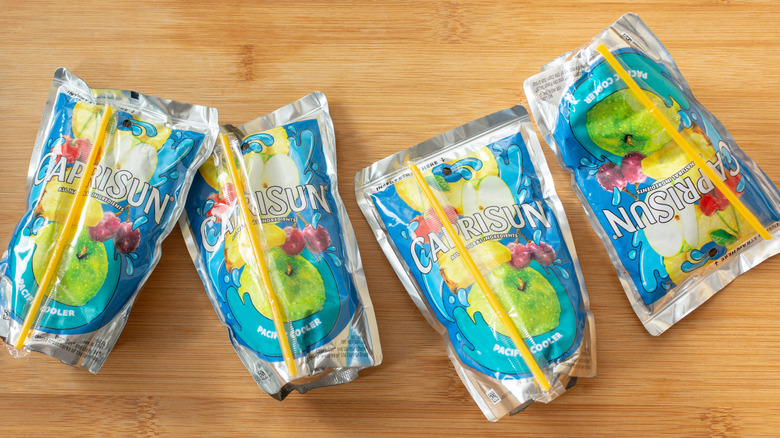
Capri Sun started life in 1969 as Capri-Sonne, a new fruity beverage developed in Heidelberg, Germany. ("Sonne" is "sun" in German.) The name was meant to evoke the kind of tropical imagery you might associate with the Italian island, Capri. So it's fitting that the first two flavors were orange and lemon. The now-iconic stand-up pouch was the first of its kind to hit German grocery shelves.
Capri Sun didn't arrive in the United States until the early 1980s. That's when Shasta Beverages Inc. slowly introduced it to the U.S. market after securing a licensing deal with a West German company. Early competitors included Hi-C and Hawaiian Punch, neither of which came in a shiny stand-up pouch that could be frozen to make a slush. In 1990, Capri Sun was acquired by Kraft General Foods, which already owned Kool-Aid, Crystal Light, and Country Time.
Despite its name, the brand has seen its share of metaphorical storm clouds. Capri Sun has had a shady history of mold growing in its pouches. However, that wasn't enough to eclipse the company's success, and it continues to be a key player in the U.S. fruit beverage market.
Country Time
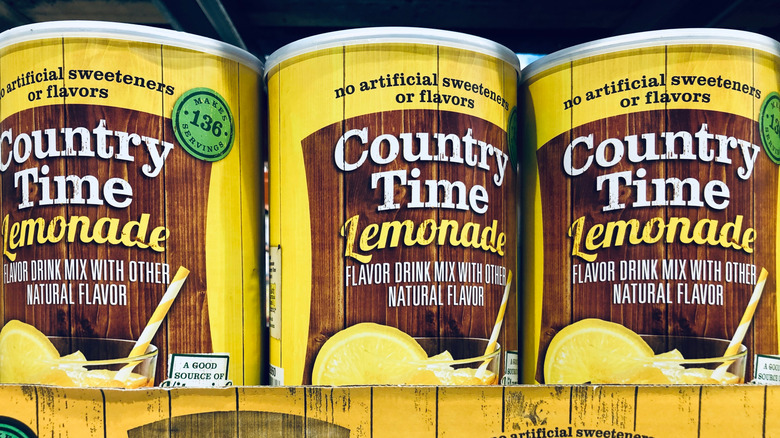
General Foods' Country Time lemonade powder hit the U.S. market in 1975. Nearly 15 years later, General Foods merged with Kraft, creating Kraft General Foods. That entity later merged with Heinz to form Kraft Heinz. Country Time came along for the ride and expanded its lineup over the years to include pre-made drinks as well as the original powder mix. Country Time is currently one of the top lemonade brands in the U.S., but it has not been without controversy.
Country Time faced a class action lawsuit in 2022 in Alabama which claimed that a canister of its powder makes up to 2 quarts less of lemonade than what's indicated on the package. In late 2025 another class action lawsuit was filed alleging false advertising. Plaintiffs claim that "No Artificial Flavors" and "Naturally Flavored" advertising is inaccurate when the lemonades do in fact contain artificial ingredients like citric acid, sodium citrate, potassium citrate, and maltodextrin. Both cases remain pending.
Crystal Light
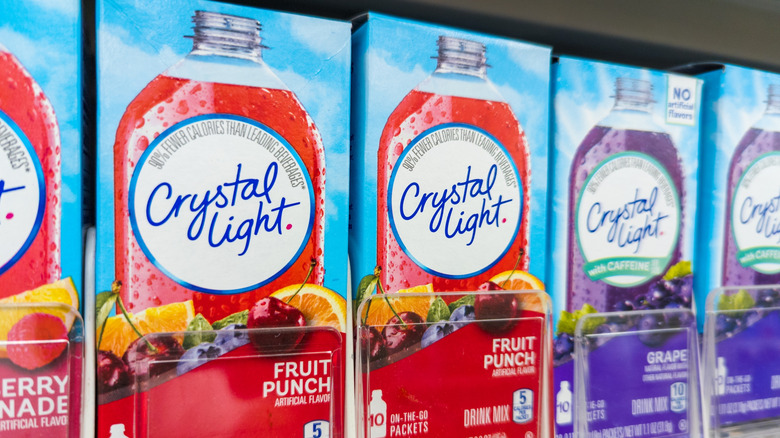
In the early 1980s, beverage manufacturers began to test the market with sugar-free drinks and drink mixes. Around the same time it released sugar-free Kool-Aid, General Foods introduced the world to Crystal Light. Both drinks contained Nutrasweet but targeted different markets (children and adults, respectively). The original varieties were iced tea, fruit punch, orange, lemon-lime, and lemonade, some of which still rank among the best Crystal Light flavors more than 40 years later.
The product aims to help people drink more water by making water more enjoyable to drink by mixing in flavor. There are also Crystal Light mixes that claim to support the immune system with added vitamins and minerals and energy boosts that include caffeine. Due in part to its health-focused bent, the product has a history of being predominantly marketed to women. This is despite the company estimating in 2009 that 40% of Crystal Light consumers were men (via the New York Times).
Kool-Aid
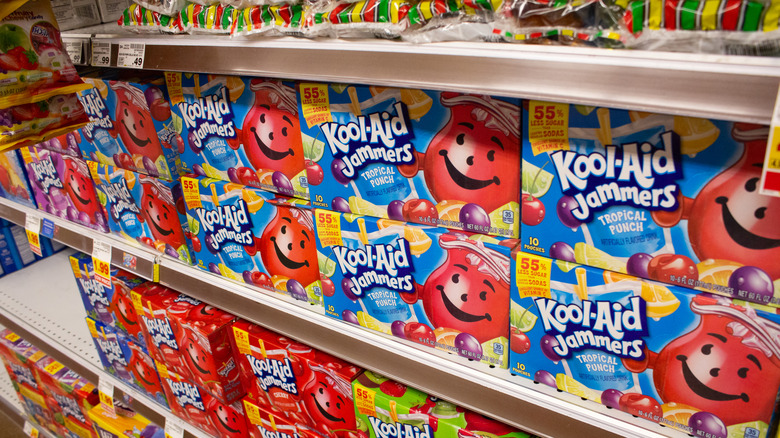
It's a little known fact about Kool-Aid that, in 1927, inventor Edwin Perkins was inspired by Jell-O dessert powder to create an alternative to glass-bottled flavored syrups, which often broke in shipment. Packets of Kool-Ade, as it was then called, were considerably easier to ship through the mail. After running into a disagreement with the U.S. Food and Drug Administration over the use of "-ade" in its name, the spelling was changed to Kool-Aid in 1934 to avoid any confusion over whether the product was made from real fruit like lemonade is. General Foods (now Kraft Heinz) purchased Kool-Aid from Perkins in 1953.
In the decades since the acquisition, the Kool-Aid line-up evolved in multiple ways. For instance, it gained new flavors as well as sour versions of the mix. In spring of 2026, Kraft Heinz announced a new line of Kool-Aid called Hydration that would be aimed at a more active consumer base. Advertising zero sugar and no artificial dyes, the mix also boasts four electrolytes: sodium, potassium, calcium, and magnesium. This arguably puts the product in more direct competition with certain offerings from Kool-Aid's sibling brand, MiO, whose lineup includes water enhancers with electrolytes.
Maxwell House
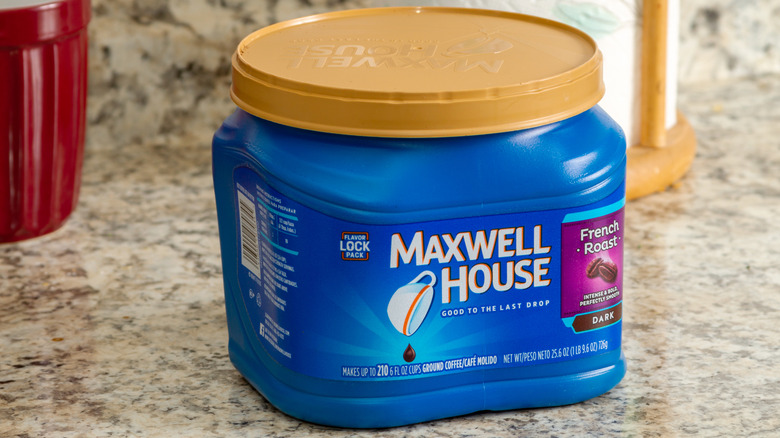
One of the most recognizable coffee brands on the market, Maxwell House is older than you probably realized. Java drinkers have been enjoying this "good to the last drop" brew since 1892, when it was served to guests at the Maxwell House Hotel in Nashville, Tennessee. Acquired by General Foods in 1928, Maxwell House prospered during the 20th century and established itself as one of the top-selling coffee brands in the U.S.
General Foods merged with Kraft (now Kraft Heinz) in the 1990s after their then-parent company, Philip Morris, combined the brands. This led to a big shake-up at Maxwell House. In order to reduce costs, manufacturing facilities across the U.S. closed. The only process plant left in the country as of 2025 was in Jacksonville, Florida. The Arabica and Robusta beans used to make Maxwell House coffee are grown in tropical regions abroad sent to Jacksonville to be roasted, processed, packaged, and shipped.
MiO
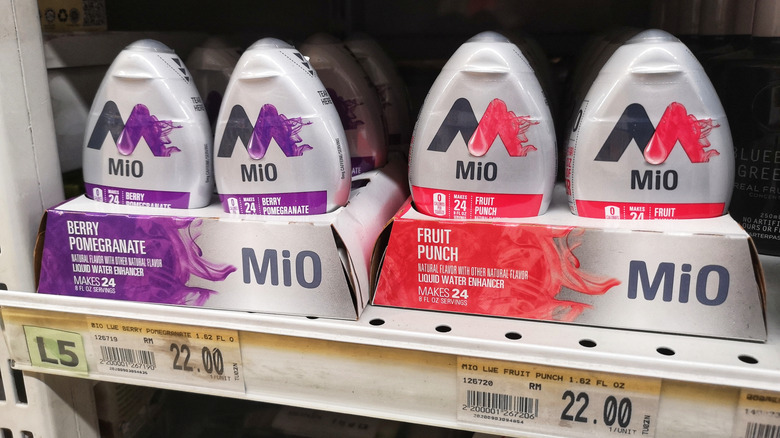
Unlike many of the other Kraft Heinz brands on this list, MiO (Italian for "mine") is not a powder but a liquid water enhancer. Depending on if you "squirt a little" or a lot, one standard pocket-sized bottle of MiO can generate 24 servings. It comes in a variety of flavors and types that include regular MiO, Hydrate (with added electrolytes), Energy (with added caffeine), and Vitamins. While liquid water enhancers might seem familiar now, U.S. consumers hadn't encountered a product quite like this before.
When Kraft launched the brand in 2011, Roxanne Bernstein, MiO's director at the time, proclaimed, "This is the next big thing. It's an entirely new category" (per Industry Leaders). We can't say that Bernstein was wrong. Copycat products have seemingly popped up left and right, and many sit beside MiO on grocery shelves. The concept proved so popular with the public that nowadays, Kraft Heinz beverage brands Country Time, Crystal Light, and Kool-Aid all have their own squirtable liquid versions.