

What's The Difference Between Cabernet Sauvignon And Pinot Noir?

When you know it's a red wine night, or you're cooking a recipe that requires red wine, how do you know which one to pick? Of all the dark-skinned grapes used to make different types of red wine, cabernet sauvignon and pinot noir are some of the best-known. Both are incredibly popular and tend to be commonly available, but what is the difference between them?
Cabernet sauvignon is a tannin-forward red wine with a deep flavor. It has a somewhat more intense profile than pinot noir, which is known for its balance of fruit and floral notes. Pinot noir also has a lighter body, higher acidity, and is slightly more expensive across the board, due to being one of the higher-maintenance grapes in the vineyard. It's certainly worth exploring both cabernet sauvignon and pinot noir for sipping or to make a luscious meal.
With a little bit of care, you can avoid common mistakes when drinking red wine. For example, don't always choose the same type of wine from the same region, assume older reds are always better, or dismiss screw-cap reds as not worth buying. When cooking, either cabernet sauvignon or pinot noir could work well, depending on the recipe. The wine's dryness and weightiness are more important than choosing a specific kind.
Cabernet sauvignon: the quintessential dry red wine
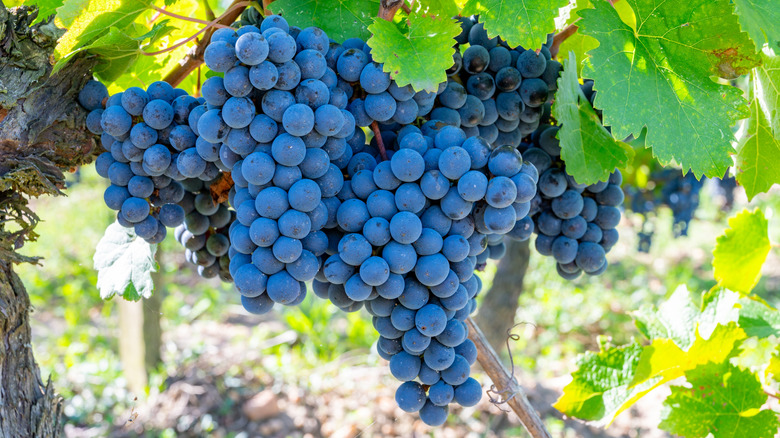
Cabernet sauvignon is the most globally popular red wine grape. It's native to Bordeaux, France, and often grown in temperate to warm regions such as California's Napa Valley, Washington, Australia, Tuscany, Chile, and South Africa. It is a famously dry red, with a lower sugar content than other wine varieties. For those just starting out in wine tasting, Total Wine recommends Robert Mondavi Private Selection cabernet sauvignon for its brightness and berry-forward flavor.
Compared to pinot noir, cabernet sauvignon (cab sav) has less acidity and a medium body. The overall flavor is stronger and can be described as "bold" and "confident". Dark fruit, vanilla, herbs, pepper, and tobacco are among its signature tasting notes. Its earthy quality and hints of spice become more pronounced the longer it is oak-aged. If cabernet sauvignon is your favorite, that may mean you have a strong personality. Cab sav's powerful, "grippy" tannins help it stand up to strong flavors and heavier meats like beef and lamb. Steak au poivre is a top cabernet sauvignon pairing.
Pinot noir: a lighter, nuanced red

Lighter than cabernet sauvignon, pinot noir is a favorite of many sommeliers and oenophiles. Pinot noir often commands a higher price because the delicate, thin-skinned grape is vulnerable to the elements, but the elegant finished product is money well spent. It has to grow in cooler areas such as Burgundy, France, New Zealand, Oregon's Willamette Valley, and parts of coastal California, including Santa Barbara, Santa Lucia Highlands, Russian River Valley, and Mendocino.
Pinot noir is a light-colored, light-bodied red with a great deal of complexity. Red fruits, flowers, and tea are among pinot's distinctive qualities. Depending on the wine's terroir and age, its fragrant berry notes may be backed by a subtle herbaceousness or a touch of smoke. If your favorite wine is pinot noir, it might indicate that you are thoughtful, worldly, and classy. Maybe you're the impeccably dressed wallflower at the cocktail party?
Earthiness is an essential characteristic of the pinot noir food pairing. The grape's relatively higher acidity and lower tannins make it worthy of any respectable wine rotation, and it's the traditional wine choice for making coq au vin. Other pairings to try are salmon, turkey (perhaps at Thanksgiving), salty cheese and tangy fruits, a medley of sautéed mushrooms, or even an easy pepperoni pizza.