

This Flavor-Packed Cut Of Meat Deserves More Attention
We may receive a commission on purchases made from links.
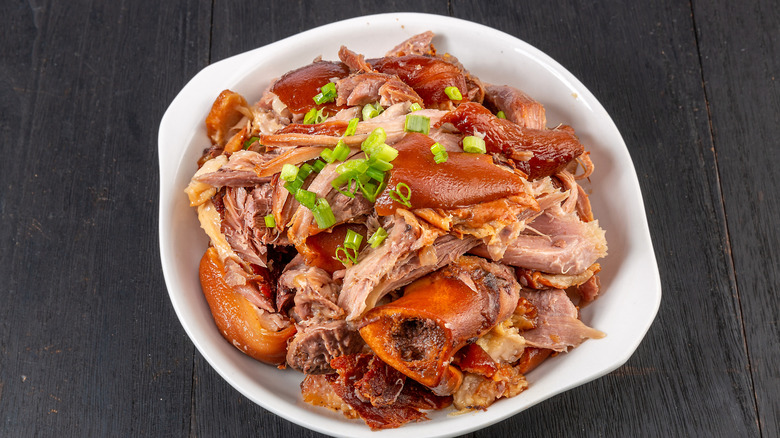
Whether you are a self-professed kitchen guru, or known to avoid the kitchen at all costs, it's likely that you have heard of the shank cut of meat. You may have seen lamb shank mentioned on the menu at a fine dining restaurant, or even heard of beef shank, the cow version of the cut. But what you may not be overly familiar with is the lamb shank's less popular cousin: The pork shank.
This heavily underrated cut of meat comes from the front leg. Naturally, as it comes from the leg, a part of the pig that aids in walking and running, the meat contains muscles that support these movements. Now, often when there is muscle tissue within meat, it can lead to a chewier experience when the proper care is not taken with cooking it. To learn all about the secrets hidden within this cut of pork, we have turned to the experts.
To help set readers straight, we were lucky enough to connect with three experts in the butchery field. Jamie Waldron, both the head butcher and owner of J. Waldron Butchers, has over 20 years of experience in the industry. His knowledge is combined with that of Brent Miedema, the owner of Miedema's Meat Market, a family-run business since 1982, and Reed Curry, the butcher and owner of The Brackenrig Butcher. With their expertise taken into account, one of the most underrated cuts of meat that chefs love can finally get its time to shine.
A bad reputation
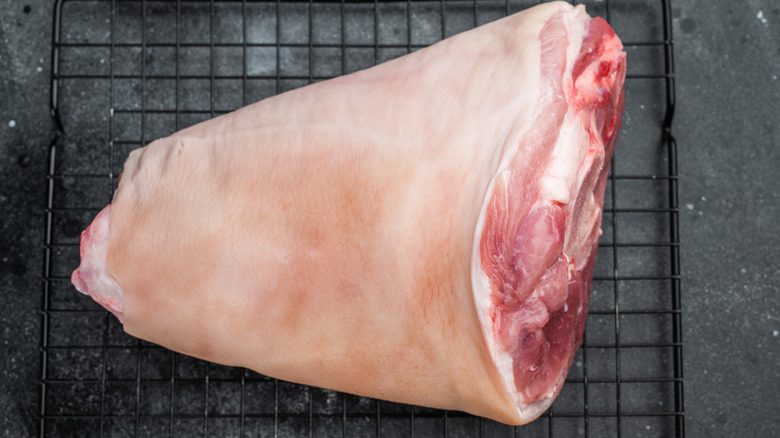
Some people might take one look at where this cut comes from and quickly move on to the next option without another thought. It's no surprise that cuts heavy in muscle and connective tissue are known for being tougher to bite into. However, our experts confirm that even if these unfavorable aspects are certainly present, they by no means should ward customers off.
Reed Curry explains that in spite of this, the connective tissue is actually "both its curse and its secret weapon." He goes on to share that tough cuts like pork shank are transformed into succulent, fall-off-the-bone meals when employing one simple cooking method. "Low and slow is the ticket with a shank of any kind. It's takes time to breakdown all the connective tissue to make it tender."
As for why this is the case, it has to do with how these features of the cut react to the cooking method. The collagen packed into these muscle fibers eventually becomes cooked into gelatin, which then combines with the meat to make a tender and juicy final product. It's for this same reason that the absolute best cuts of meat for your slow cooker are often tougher cuts of meat. Jamie Waldron points out that this method should also be applied to shanks cut from other animals. "Think beef or lamb shank, same function, same need to break down the connective tissue."
Braising will make this cut shine
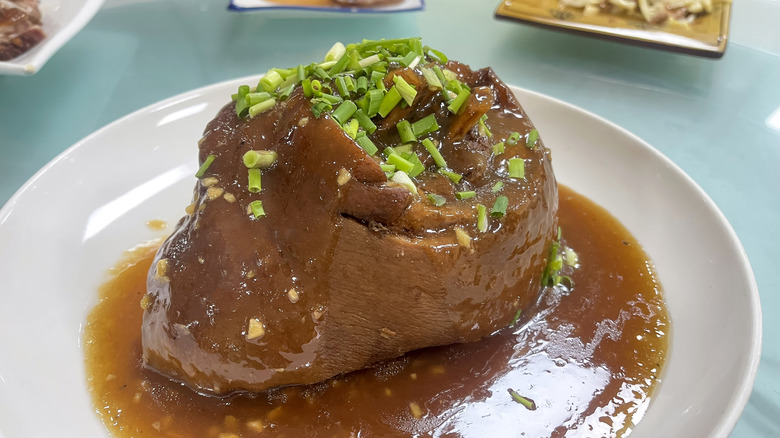
When you hear the words, low and slow in reference to cooking, you might automatically prepare to head to the cupboard where your trusty Crock Pot is found. And, rest assured, there is nothing wrong with doing that. There are certainly some delicious slow-cooker recipes out there that will make your life easier. But, you should be advised, this isn't the only option for this cut of meat. Jamie Waldron chimes in with just a few examples: "Braising or slow roasting would be my suggestions." He goes on to clarify that personally, he feels braising is the best option. "It's a cut that responds well to braising as it's a very used muscle on the animal."
For those who are frantically heading over to Google to clarify what exactly braising is, this method of cooking involves searing the meat at a hot temperature, then lowering the temperature and further cooking the food inside of liquid. The first step is meant to crisp the skin of the meat, thus adding to the flavor. "Ideally, the shank is braised with white wine infused with garlic, five spice, and other aromatics," Waldron shares. Of course, alternatively, if you feel braising isn't for you, Brent Miedema shares that he prefers smoking the pork shanks for an additional pop of smokey flavor.
Preparation matters
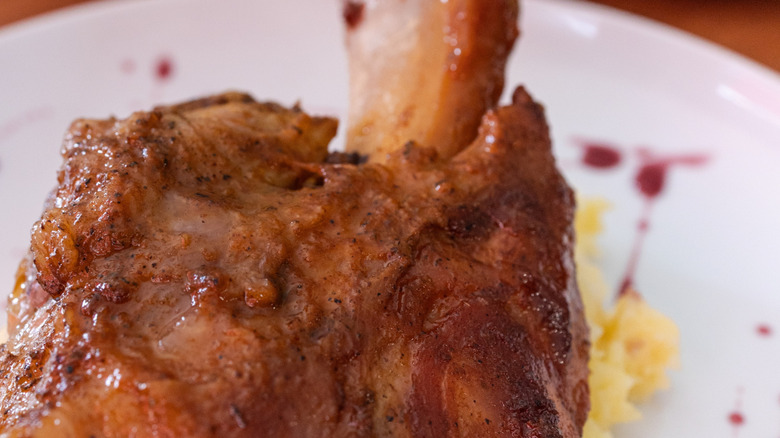
At this point, you've learned that where pork shank is concerned, the slow and steady cooker wins the race. But what you also need to know is that there is a step prior to tossing the cut into the Dutch oven that, if used, can really make the flavor shine. According to most of our experts, you should consider brining your shank, or even dry rubbing to add additional flavor.
If this now has you wondering what brining is and why it's important, never fear, we have you covered. The process of brining involves submerging meat into salted liquid (historically water) for a length of time in order to add flavor and create tenderness. With the pork shank being a tough cut of meat, this process only makes sense to add to the to-do list.
Brent Miedema confirms that, "Pork shanks are great to brine and then smoke." Jamie Waldron concurs with the brining tactic for this cut, adding, "I would suggest a wet brine for 24 hours." He goes on to add that this approach "not only helps with the seasoning but also can draw out any unwanted blood." Our third expert, Reed Curry, does agree that preparation is useful, but takes a bit of a different approach to this, bringing it back to the almighty low and slow cooking process. "You could* brine or dry rub it ... But it's not gonna change your life. The real magic happens with a long, low, and slow cook."
People often avoid this cut
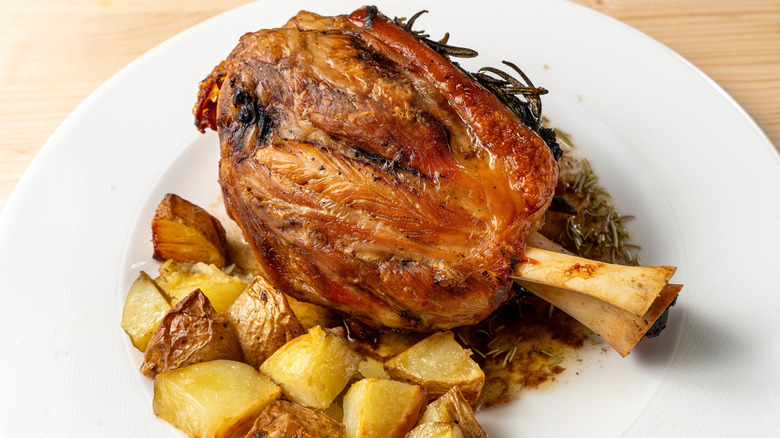
Even if pork shank isn't necessarily ranked among the worst cuts of pork that you could head home from the butcher shop with, it still isn't one people seem to get overly excited about. Due to that pesky muscular tissue and resulting collagen, the cut seems to be often overlooked for those with a leaner reputation, like pork loin. That said, the cut is incredibly versatile. As Jamie Waldron shares, "I've worked places that would always bone [pork shank] out for sausages. It's got more to it than that though."
As to the reasons why our experts feel that this cut is sadly often overlooked in the pork selection, it comes down to two things. Knowledge of the cut and the cost seem to be the factors they feel are at play. "Most people discount this cut because it's not common and cheap. But with a little know-how it can be transformed into a fantastic meal," Reed Curry mentions. Brent Miedema adds that he feels it really comes down to the effort the meal takes that turns customers off. "Quite often people don't want to put the time and effort into this cut because they are just too busy," he adds. Whatever the reason, now that you know the secrets of this cut, it just means there's more available for you to snatch up on your next grocery trip.
The price is right
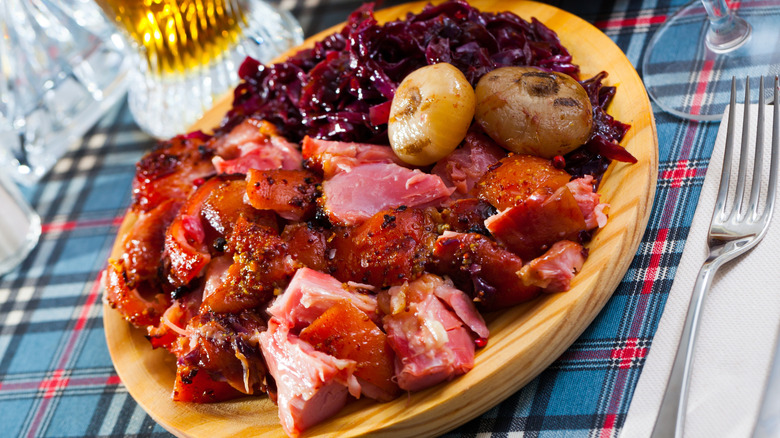
These days, with the rising costs of, well, everything around us, customers are searching for low-priced groceries constantly. Consumers are downloading every grocer's phone application, adding every coupon they can find, and sourcing the best deals to find the least expensive grocery chains in the U.S. in order to save some hard-earned cash. With that in mind, this is one of the areas that the wonder of the pork shank really shines. Because, you see, this wonderfully flavorful meal comes at a lower cost than many of the other cut options.
In fact, to clarify your price expectations, Jamie Waldron says that the pork shank is "probably the cheapest cut with meat, outside the head." A truly bold claim, but one that our other experts do seem to agree on as well. Reed Curry describes the cost as the "cheapest of the cheap". "It's less common, but as the price of living increases every day ... cuts like this become increasingly more popular," he adds. Brent Miedema concurs with these sentiments, but goes into a bit of why the cost is lower. "It is a cheaper cut because of the sizable bone that is in it." With these opinions in mind, the next time you see this hanging around behind the glass at the order counter, don't associate that low cost with anything negative. You already hold the secrets to making pork shank truly shine at the dinner table.
The payoff is the flavor
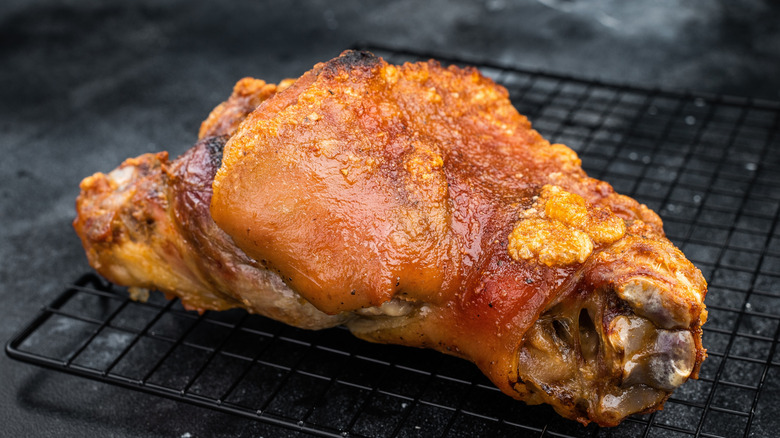
Sure, the cut is cheap, and yes, you now have several ways to cook it along with the knowledge behind the techniques, but let's get to the thing that truly matters here. The taste is what is going to really keep you coming back for more, regardless of the other perks of pork shank. Luckily, as far as flavor goes, it seems that as long as you use that all-important low-and-slow cooking mentality, you'll be craving more. Brent Miedema shares, "It is a nice dark meat, and when cooked low and slow, it just falls apart," going on to mention he finds the result of a perfectly cooked pork shank mouth-watering.
As to what flavor you can expect after putting all your hard work and time into the cooking process, Miedema describes it as "rich and robust." Reed Curry agrees with Miedema on rich, but also adds, "meaty and supple when prepared correctly." Jamie Waldron, on the other hand, makes a very important point about flavor expectations. "Because it takes on the flavors you're cooking with, that would be up to the cook. It can go both ways; mild as a nice addition to the plate or bold and the centerpiece," he says. He goes on to say that, "I like it for the fact that it takes on this super rich texture and flavor. The fat that gets incorporated into the dish creates a mouthfeel like no other."
This cut is versatile
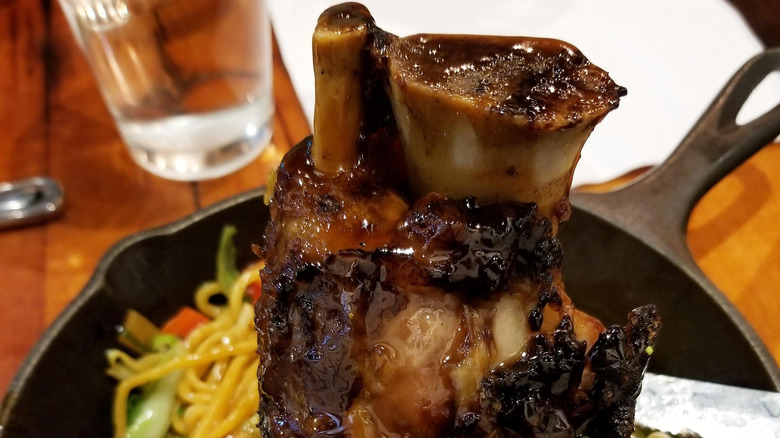
One thing at this point that you might be wondering about is the versatility of the pork shank. After all, even if the cut is cheap and tastes great, one can only eat the same meal so many times before getting a bit bored. The good news here is that you don't need to just serve the shank whole after braising it each time. In fact, the sky is the limit with the creative uses you can dream up for this piece of meat.
Brent Miedema explains that his favorite method of using pork shanks is to smoke them and then add them to split pea soup. "They get so tender and smoky, and infuse that flavor right into the whole soup. It's delicious!" Jamie Waldron adds that the cut "can also be used in pulled pork or other shreddable dishes." Some examples of this would be a filling for tacos or a topping on pizza.
Some other ideas are caldo de res (a soup from Mexico), stew, ragù, or even adding it to rice bowls. "It's a cut that is celebrated in many countries around the world and can be used to make all sorts of different styles of cuisine," Reed Curry points out. Osso buco is a good example of this, being a popular dish from Italy. There is a version of the meal that specifically calls for pork shank (even if the traditional recipe calls for veal shank).
Bone Marrow
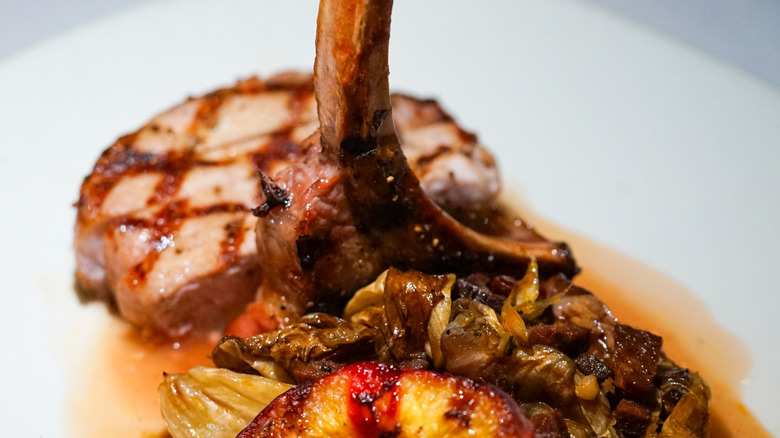
Even if you've never tried bone marrow for yourself, you likely have heard friends or family raving about both the taste and the benefits of the food. In the past, bone marrow was used to flavor wet foods, like soups or broths, but its popularity has pushed it into the spotlight of many dishes. This food originates from bone, and, when heated, it melts into liquid, spreading throughout the meal. Being that the pork shank is served bone-in, this hidden bone marrow, which seeps from the bone during the cooking process, is actually one of the benefits of purchasing this cut of meat.
Eating bone marrow has many benefits, both for your body and for your taste buds. Firstly, the flavor of the marrow is deeply rich, to the level of being similar to butter. This boost of taste actually works well when you go to turn those delicious juices in the bottom of the pan into gravy, making for a spread with some serious personality. On the other side of things, eating bone marrow actually is said to have nutrients that may be beneficial for people, such as vitamins E, A, and B12. All in all, it's hard to argue against a meal with both a pop of flavor and vitamins, so you may as well give it a shot.
Use the juices to make a gravy
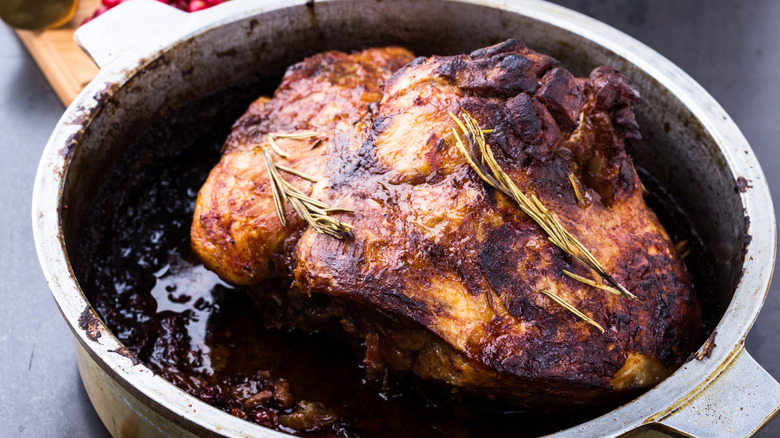
With pork shanks, you'll remember that this cut has a delightful shadow that always comes along with it: The shank bone. Being that the cut is obtained from the leg, it makes sense that it typically has a part of the leg bone entombed within its muscle fibers and connective tissue. Now, while you might think meat bones are considered a lovely aesthetic for pictures, be advised that they can also serve a more practical purpose.
When the bone within the meat is slowly cooked, the collagen hidden within becomes gelatin, which seeps out into the broth (assuming you are following expert instruction and cooking low and slow with liquids). This gelatin acts as a natural sauce thickener, increasing in density as the liquid cools. It is for this reason that you might notice some recipes for pork shank include a special tidbit about the sauce making the perfect gravy. All you will need to do is strain the sauce and serve; no fighting with flour lumps required.
Trimming your pork shank
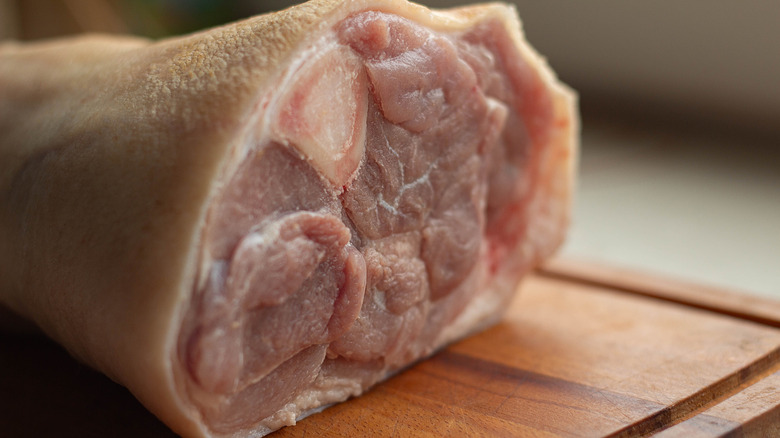
Before you even open the cupboard to reach for the seasonings, you should know that there is a step you can take to make your pork shank dinner all the more delectable. It is a process called trimming the meat. This might sound intimidating, but we promise it isn't as complicated as it sounds. It simply involves using a knife to slice off the silver colored skin on the outside of the cut. Doing so is said to have many benefits during the cooking process, such as allowing the seasonings to cling to the meat better, thus enhancing flavor. It also allows the smoky flavor to directly access the meat if you choose a smoker as your cooking method of choice.
Now before you go and grab whatever well-used knife is lurking in your kitchen drawer, take a pause. Not using the right knife for the job may be one of the biggest mistakes that everyone makes with their kitchen knives, but that doesn't mean you have to with your pork shank. The best knife for this is generally considered a boning knife, like this one from HexClad. This type of knife is normally between five and six inches long, and has a flexible blade that can easily pry this unwanted skin from your cut.
Serve them with a complementary side dish
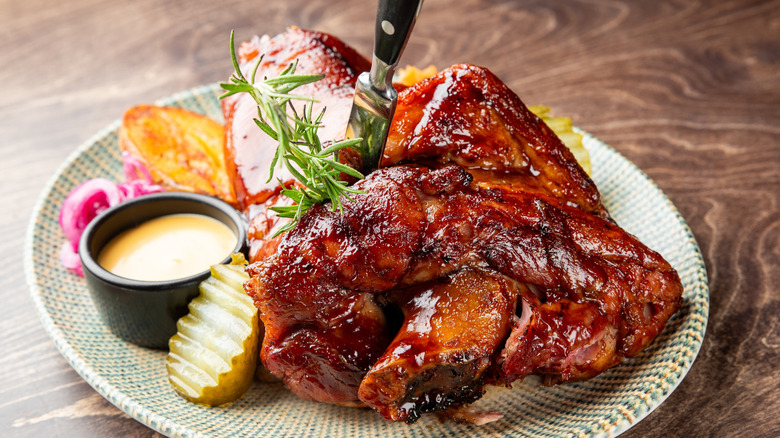
The wonder of the side dish amounts to more than just adding additional options to the menu of your dinner, or a pop of color that makes your meal appear more aesthetic. The flavor of your side dish of choice can actually complement the main dish, creating a well-rounded meal experience. When you're working with a flavorful piece of meat, such as pork shank, this becomes all the more important.
Additionally, you will want to find an option that aligns with your tastes. You certainly wouldn't want to place a bowl of Watergate salad on the table, for example, if the thought of sweet paired with salad makes you cringe. When it comes to what complements the flavor of pork shank nicely, Jamie Waldron has one suggestion. "I've enjoyed served with a sharp kimchi to help cut the richness of the cut," he explains. Some other ideas that are popular are German potato salad, mashed potatoes, cabbage, roasted Brussels sprouts, or even cucumber salad. These dishes provide a variety of flavors and textures to your meal, with the added bonus of complementing the richness of the meat.