

Fast Food Burger Chains Customers Suspect Are Shrinking Portion Sizes And Patties In 2026
Mainstream fast food chains don't publicize changing the recipes and serving sizes of their burgers and other menu items. After all, no fast food brand will want to advertise that it's been forced to cut back on premium ingredients or reduce serving sizes because of increasing food costs. But, according to customers many serve smaller portions of their menus. This way, prices can stay affordable and keep losses at a minimum.
Many might want to eat healthy and enjoy home-cooked meals more these days, but the sad reality is that many simply don't have the time, skills, or resources to cook food at home. On those busy days, fast food burger chains come in clutch. To ensure that you get the most value for your money whenever you buy fast food, here are five burger chains that customers suspect are shrinking portion sizes and patties in 2026.
Burger King
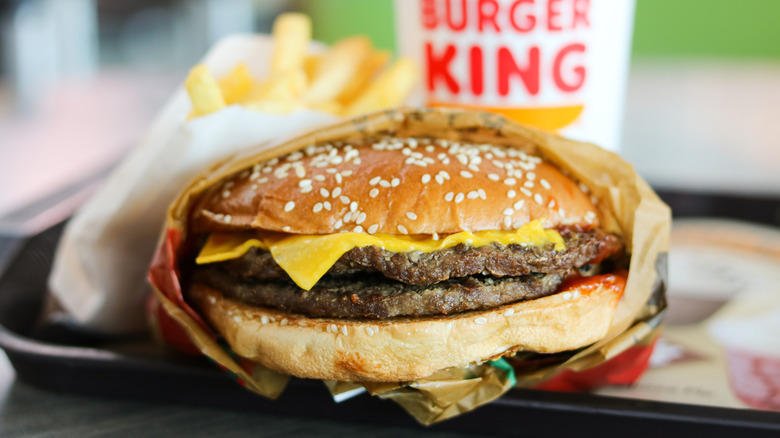
Four years ago, Burger King sought to improve quality and efficiency metrics by streamlining its menu, but it's not just the number of items on the menu that shrunk. According to consumers, some of the chain's signature burgers have gotten so small that they can pass for sliders. For instance, someone on TikTok showed how his Cheeseburger fits his palm. On Facebook, a couple of Bacon Double Cheeseburgers turned out smaller than the containers of fries; and on Reddit, one customer was so disappointed that his regular BK burger was only about twice as large as his sauce packet.
While it can be argued that some complainers were misinformed (they ordered a Whopper Jr. but expected a quarter-pounder Whopper), the nutritional information on Burger King's website shows that some menu items have truly gotten smaller. The Whopper Jr. and regular hamburger both shrunk by 30 calories from 2008 to 2026 (from 370 to 340 calories, and 290 to 260 calories, respectively), while the Cheeseburger went down by 40 (from 340 to 300 calories). However, if we consider the grams in protein as a basis for patty shrinkage, the differences are minimal. This could mean that the beef patties have stayed relatively the same weight and size, but the buns and condiments were downsized.
This nutritional information is published on Burger King's website, so we can't say the shrinking portions are a secret. But the chain wasn't forthcoming about these changes either, and that's why it's on this list.
McDonald's
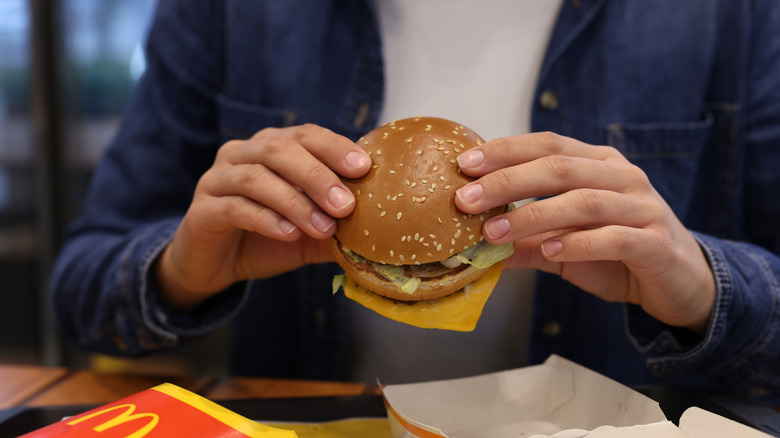
Despite having reached icon status in the global fast food industry, McDonald's shares the same problem as its smaller competitors: many customers complain about it shrinking its burgers and portion sizes. On Reddit, a customer talked about the patty on his Big Mac being thinner than the pickles. Someone on TikTok had the same experience, saying their Big Mac was "anything but big!"
But despite numerous photos and videos on the internet, the size of the Big Mac might have actually stayed constant — at least that's what it looks like if we look at the nutritional information. From 2019 to 2026, the Big Mac consistently had 25 grams of protein. It also shows that the total calories increased from 540 to 580 in the same period, implying that the burgers have actually gotten bigger. There were other menu items that did show decreases in the last four to six years, but they were minimal (only up to 20 calories and 3 grams of protein). These are the Spicy Deluxe McCrispy, fries, hotcakes, and sausages. The largest shrinkage happened with the Filet-O-Fish. It was 410 calories, back in 2019. Today, it's down to 380 calories.
The discrepancies between declared nutritional information and the numerous examples of shrinkage that customers have posted online lands McDonald's a spot on this list. Whether the official information is more reliable than what you see and feel when you get your order ... that is for every customer to decide.
Habit Burger & Grill
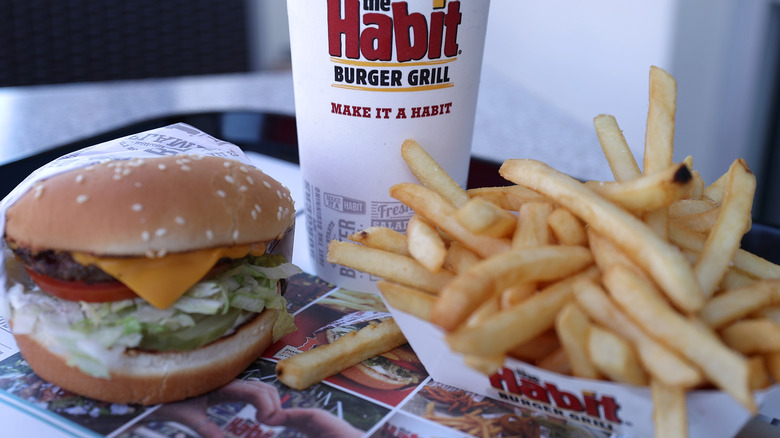
Habit Burger & Grill is more of a fast-casual restaurant chain, which means people expect its burgers and portion sizes to be better than the usual fast food fare. This is probably why regulars quickly noticed that the patties are now thinner and the burgers smaller than before. "I finished my entire meal and was still hungry. Normally, a Charburger meal leaves me more than full," one customer shared on Reddit.
Some people say that increasing appetites make fast food serving sizes seem smaller, but this argument can't dismiss shrinkflation complaints because the chain's nutritional information supports their claims. According to its nutritional information page, the single Beef Patty went from 230 calories in 2025 to 150 calories in 2026. The Veggie Patty also became smaller, from 170 calories last year down to 140 calories today.
Other major shrinkages based on nutritional information were the Grilled Chicken Caesar (from 610 to 580 calories), Lettuce Wrap Charburger (from 350 to 290 calories, and from 17 to 15 grams of protein), and the optional Wheat Bun (from 240 to 150 calories). Considering that one slice of white bread is roughly 75 calories, these decreases are hardly minimal. Fortunately for the Habit Burger & Grill, customers really do love its burgers. In August 2026, the Double Char was voted America's top fast food burger for the third consecutive year by USA Today's 10 Best Readers' Choice Awards. We'll see if it can keep the crown next year, smaller burgers notwithstanding!
Carl's Jr.
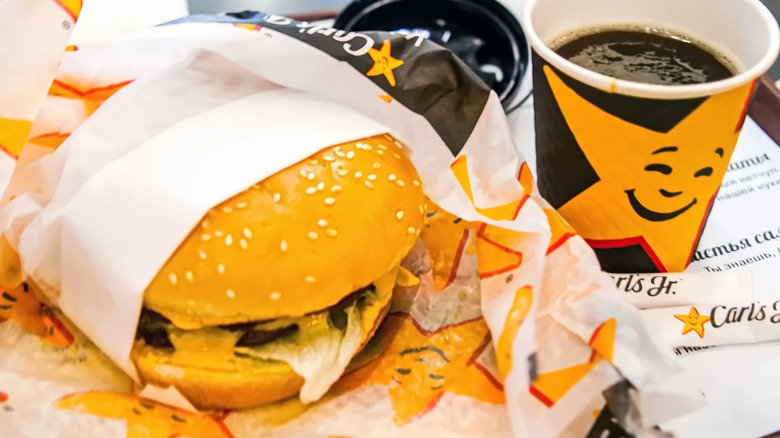
The burgers at Carl's Jr., the other half of Hardee's, are famously on a higher tier than the average fast food burger. The patties are thicker and tastier, and the burgers are simply much bigger and more satisfying. But these pros do come at higher prices, which in turn raise expectations for quality and consistency. Regrettably, some customers have suspected Carl's Jr. of shrinking its burgers.
"Carl's Jr.'s spicy chicken sandwich was hit hard with shrinkflation," said a Redditor, who showed a sad photo of a half-eaten Carl's Jr. Spicy Chicken Sandwich with an unappealingly thin chicken patty that was allegedly half as big as it used to be. There was also one customer whose Western Bacon Cheeseburger had only one tiny onion ring instead of two, while another diner says they consistently received small Double Westerns so they wondered if their hands were simply getting bigger.
A look at the nutritional information on the website shows that Carl's Jr. did downscale at least three of its burgers. From 2020 to 2026, the serving sizes of the Western Bacon Cheeseburger, California Classic Double Cheeseburger, and Breakfast Burger went down by 10 to 25 grams. The Western Bacon Cheeseburger shrank the most, losing 100 calories and 12 grams of protein in six years on top of becoming a lighter burger. Carl's Jr. kept these changes low-key, but kudos to it for transparency, because its website shows the serving sizes of all its menu items.
Wendy's
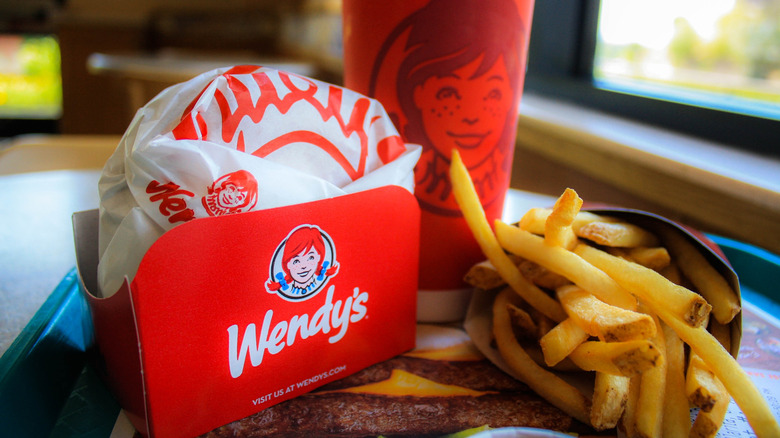
Rounding out our list of fast food burger chains that customers suspect of shrinking burger patties and portions is Wendy's. It is comparable to Burger King in taste, customer satisfaction, and perceived food quality. And just like Burger King, many customers also think Wendy's burgers and portion sizes have gotten smaller in 2026.
"Is it just me or has the Wendy's patties gotten smaller/thinner?" one disappointed customer asked on Reddit, along with a photo of a small Baconator with thin patties. "Ordered 10 piece shrinkflation nuggets from Wendy's. Can't believe how small these are!" wrote another Reddit reviewer who posted a picture of a nugget so tiny, it looked like it could fit inside a sauce cup. More customers shared their dismay about the chain's thinner patties, slider-sized burgers, and much smaller portions of fries and nuggets on a recent Reddit thread.
Ironically, the nutrition page on Wendy's website shows that the four-piece chicken nuggets actually increased from 114 calories in 2025 to 170 calories in 2026. Dave's Single Burger also apparently increased from 524 calories to 560 calories since last year, which makes it weird that the Dave's Double and Dave's Triple became smaller by 69 to 95 calories and about 5 grams of protein. Complaints about the size and thickness of the Baconator appear justified, though, because it shrunk by over 100 calories and 4 grams of protein in 2026. These decreases crept up on customers, which explains the online chatter about shrinkflation at Wendy's.
Methodology
To put this list together, we searched online for customer reviews on the country's most popular fast food burger chains. We determined which chains had the most number of complaints about apparent shrinkflation, especially with burgers. Next, we reviewed the nutritional information posted on these chains' websites and compared the 2026 data with the earlier years using web archives.
The goal was to find significant decreases in the serving sizes of the burgers, patties, and other menu items. When serving sizes were not available, we looked at the calories and weights in protein. These two are logical metrics for determining shrinkage because protein content represents the amount of meat there is in a burger, while calories represent the total amount of food you get in one serving.
By comparing the calories and protein content between 2026 and the earlier years, we were able to determine whether certain menu items got bigger or smaller over the years. Burger chains with portion sizes that didn't change or were negligible based on the nutrition information were omitted from this list.