

12 Candies Americans Ate In The '40s
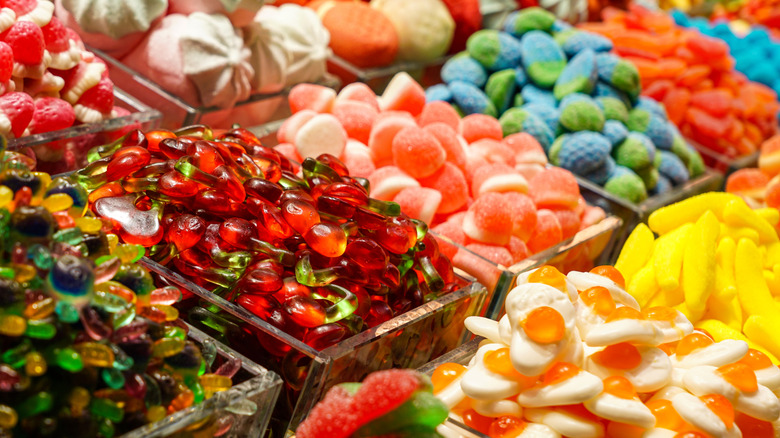
If you're the kind of person who always craves a little something sweet after dinner, you're a lot like most people in history. The colorful and unique best new candies of 2026 didn't come out of thin air — Americans have been thinking up sweets for cravings of different flavors, textures, and sizes a lot longer than you might think. Candy store staples like the Tootsie Roll were first sold in 1896, and the famous Hershey chocolate bar has been around since 1900.
The 1940s are an interesting time for candy in particular, when you consider that it's one of the only decades in U.S. history in which sugar was legally rationed. Due to shortages related to World War II, citizens couldn't buy sugar willy-nilly, and neither could corporations, according to the National Park Service. But still, candy wasn't off the table for Americans by any means.
In fact, candy was an important part of soldier rations during the war, and some candies were crafted specifically for the front lines. Chocolate's caffeine and high calorie content made it a reliable source of energy, and sweets of all kinds, especially durable ones like Tootsie Rolls and M&M's, brought a semblance of comfort during harsh wartime. That later helped candy turn into a mass consumer food in the post-war world. The '40s are partly why we've got a million and one flavors of M&M's, famous chewing gum brands, and more staples we still enjoy today.
M&M's
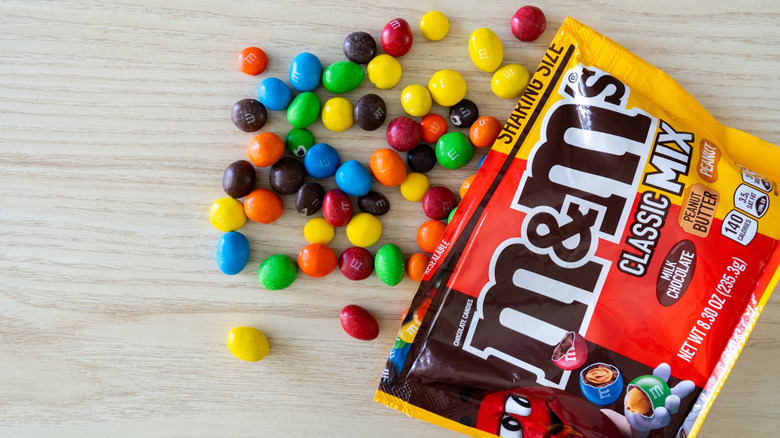
Few candies are as closely tied to World War II as M&M's are. Though the real reason M&M's were invented isn't a hard fact known, it is true that these hard-shelled candies were a major boon for soldiers during the war. First sold in 1941, M&M's were a candy born of two people integral to the story of chocolate as we know it: Forrest Mars (of the famous Mars candy company) and Bruce Murrie, who was related to the Hershey company and had connections that helped secure a supply of chocolate and sugar amidst wartime shortages. Hence, the name M&M.
Once the U.S. entered the war, M&M's were sold exclusively to the military, thanks to their melt-resistant shell that made them a practical addition to soldiers' rations. A few years later, when the war ended, civilians got their hands on the treats, and the rest is history. The classic "m" stamp was added on in the next decade, when it became clear that these candies were becoming a classic in America.
Bazooka Bubble Gum
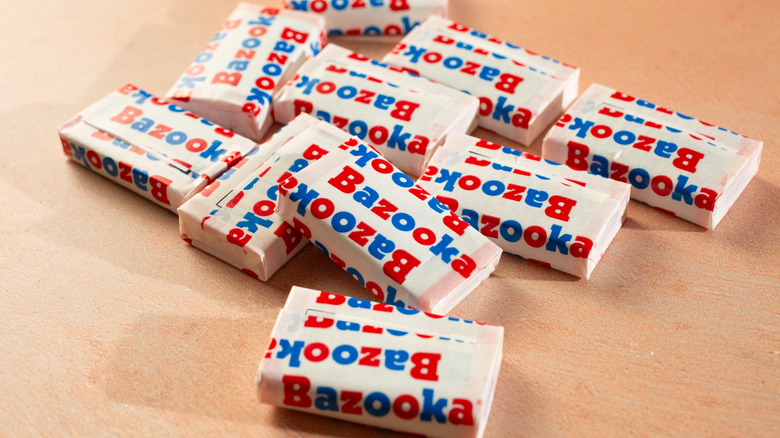
Why the heck is a bubble gum named after a bazooka? You guessed it: World War II. Bazooka Bubble Gum was launched in Brooklyn in 1947, just after the war ended, with an attention-grabbing name that was more than likely a nod to the Army's famed rocket launcher.
The gum wasn't a soldier's treat (it showed up too late for that), and it wasn't the first chewing gum or even the first commercial bubble gum (that's Double Bubble, which is also the reason bubble gum is historically pink). But for just a penny a piece, Bazooka Bubble Gum certainly made a space for itself in the bubble gum game, and it's still sold today. Part of the novelty of the gum was the tiny little Bazooka Joe comic folded into each wrapper, which was only introduced in 1953.
It was a clever bit of marketing that gave kids something to read and collect in addition to something to chew, but those comics are sadly no longer produced.
York Peppermint Pattie
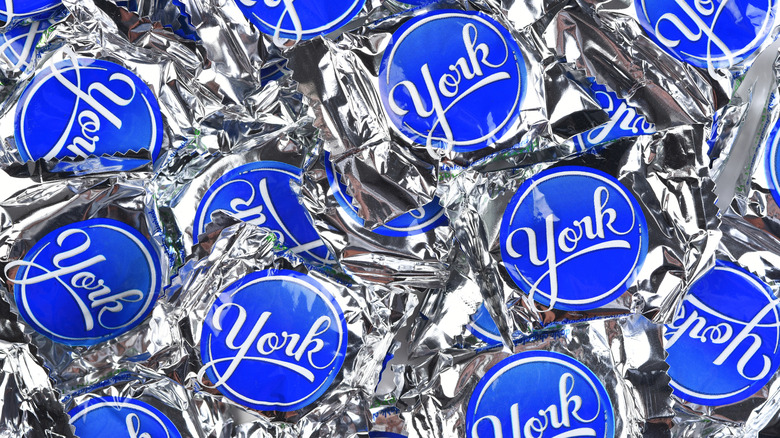
The famously minty York Peppermint Pattie is another treat from the 1940s that we still enjoy today. The inventor of it was not a chocolatier, as you might imagine. Instead, Henry Kessler was the owner of the York Cone Company, a Pennsylvania ice cream cone maker. In 1940, he figured out how to take peppermint and craft it into a firmer, snappier texture than the soft, gooey versions already on the market. Coating it in dark chocolate sealed the deal. Every pattie had to pass a snap test, breaking cleanly in half down the middle. Anything that didn't pass was tossed, and locals would show up to scoop up the rejects.
Hershey took over selling York Peppermint Patties in 1988, and today roughly 1.5 billion of them are made every year. Now you can get thin versions of the patties, mini bite-sized versions, and even a snowflake-shaped pattie for the winter.
Mike and Ike
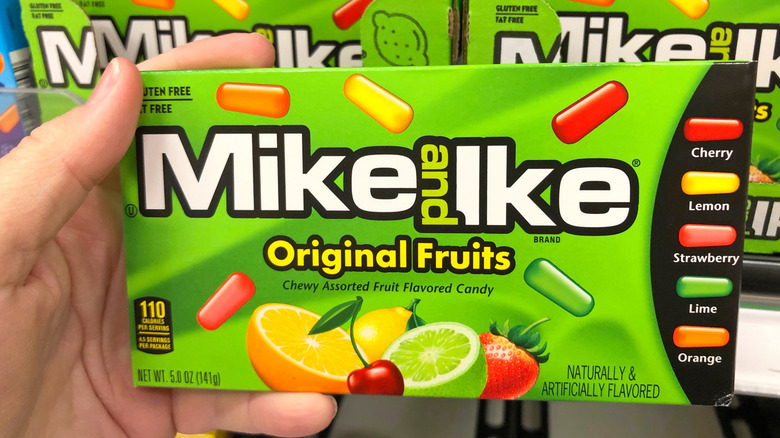
It's not all chocolate! For the chewy and fruity candy lovers, Mike and Ike satisfied cravings in the '40s. The candy was released in 1940 by Just Born, the Pennsylvania-based company that's also behind Peeps and Hot Tamales — Mike and Ike's spicy cinnamon sister that launched in 1950.
The Original Fruits flavor included lemon, cherry, lime, orange, and strawberry. Mike and Ike is one of the rare candies originating in the '40s that hasn't changed much, but they've added plenty of fun variations. From Berry Blast to grape-flavored Jolly Joes and even a Patriotic variety pack, we ranked all the Mike and Ike flavors from worst to best, though the Original Fruit flavor from the '40s is still our number one.
And, if you're wondering who Mike and Ike are, join the club. No one knows for certain who the candy is actually named after — even Just Born itself notes the name remains a mystery.
Dots
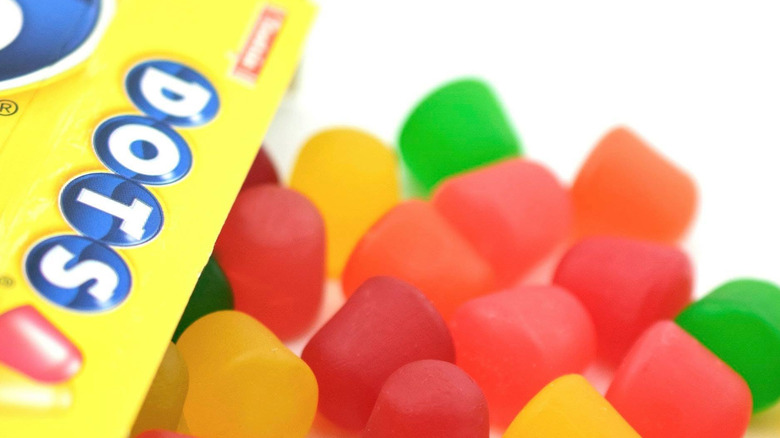
There's always at least one of those small yellow boxes of Dots when you dump out your Halloween pillowcase. You might also see them in the movie theater (they fall pretty close to the top of our ranking of movie theater candy.)
These chewy little gumdrop-style candies first showed up in 1945, and the original flavor lineup of cherry, strawberry, lemon, lime, and orange is the same one you'll find in the box today. Before those debuted, similarly shaped, anise-flavored Crows gumdrops were created in the late 19th century. The fruity variety proved more popular, but the Crows are still sold, and apparently have a dedicated fanbase.
Today, the brand is actually owned by Tootsie Roll Industries (they took over in 1972), and they've got a few variations of flavors. A tropical variety pack has been on the market, in addition to a sour version, and even yogurt Dots with flavor options like banana and lemon-lime.
Almond Joy
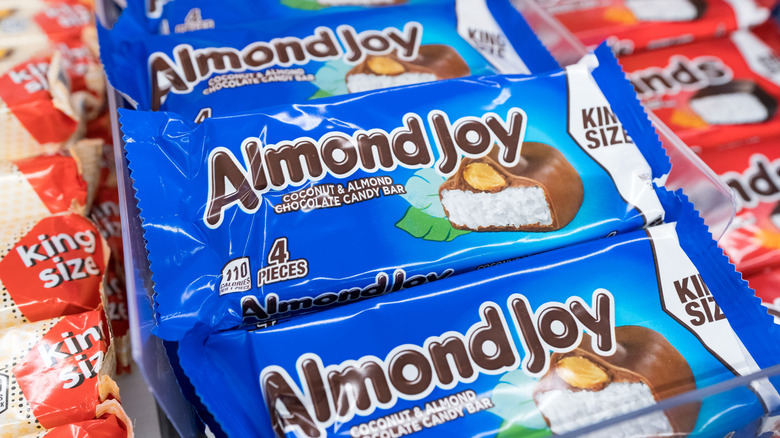
Sometimes you feel like a nut, and apparently, Americans have felt that way since 1946. That's when Almond Joy first hit the candy scene, bringing together three ingredients that have since become a super successful combination: sweet, chewy coconut, almonds, and milk chocolate. The combo is so popular, it was once a coffee flavor at Dunkin' Donuts, and copycat recipes are all over the internet, for things like healthier desserts or Almond Joy-inspired breakfast bars.
The Peter Paul company had already introduced Mounds in the 1920s, a similar coconut-filled chocolate bar without the almonds and with a dark chocolate coating. Almond Joy essentially offered a sweeter, crunchier alternative for people who wanted a little something extra nutty with their coconut. The catchy "Sometimes you feel like a nut" slogan that Almond Joy was known for actually gave Mounds its own nod, too: "Sometimes you don't."
In 1988, Hershey eventually acquired the brand, and today, the familiar candy remains a staple in the chocolate section.
Whoppers
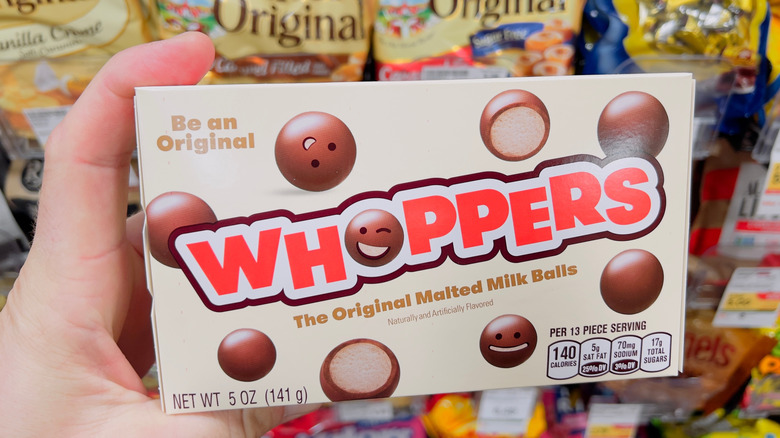
Whoppers are one of those candies that divide a room — you either love 'em or can't stand them. Their uniqueness is certainly a selling point. This is not just another chocolate bar or peanut butter-filled chocolate. These chocolatey balls have a distinctive crunch thanks to a slightly airy center covered in a chocolatey coating. But the addition of malted milk is what really makes them unique. Malted milk powder combines dried milk and grains like malted barley and wheat flour. The combination results in a flavor that is subtly sweet but also toasty and nutty.
Whoppers first hit the candy scene in 1939, when the Overland Candy Company introduced a similar treat called Giants. A decade later, in 1949, the candy was reintroduced under the name Whoppers. So, while the name might be a little newer, the treat itself was already making its way into American candy shops during the decade.
That unforgettable milk carton packaging came later, a fun nod to the malted milk inside each little ball. Hershey eventually acquired the brand in 1996, and Whoppers have remained a jaw-working movie theater staple ever since.
Life Savers
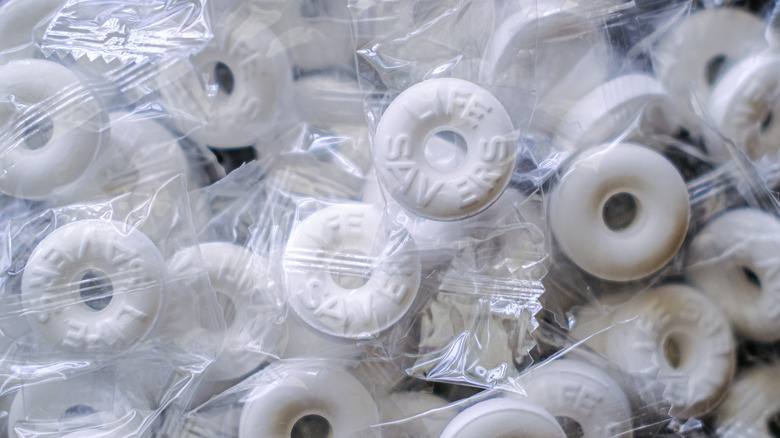
Turns out, many of the candies we know and love today were originally invented for their ability to not melt in the heat. Pre-air conditioning and pre-refrigeration life meant sweets like chocolates simply didn't sell well during the summertime, because they'd just leave you with a frustrating mess.
This notion was what got Cleveland-based candy maker Clarence Crane to start making peppermint-flavored Life Savers in 1912, when chocolate sales dipped during summer. The original Pep-O-Mint flavor unfurled a world of seemingly never-ending Life Saver flavors, starting with lemon, lime, and orange, leading up to the variety we have today, which includes sour flavors, a butter rum flavor, and even Life Saver gummies.
During World War II, Life Savers became hugely popular with the armed forces. In fact, military orders were so substantial that by 1943, production for the armed forces was explicitly prioritized over orders for at-home civilians.
Candy Cigarettes
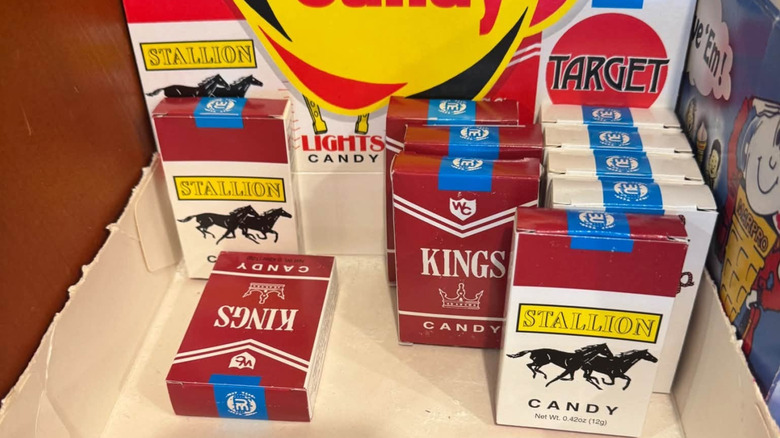
While today there are plenty of laws surrounding cigarettes — age restrictions, rules on where you can smoke, and warning labels on packages — smoking was a pretty everyday part of American life in the 1940s. In fact, it was so normalized that children could get their own little version of the habit in the candy aisle. Remember candy cigarettes?
These sugary treats were designed to look remarkably similar to actual cigarettes, often featuring white candy sticks with red tips and packaging that mimicked popular tobacco brands. They even came in cartons that were strikingly familiar, and made you do a double-take when you saw a kid with one. Candy cigarettes had been around since at least the 1930s, but by the 1940s, manufacturers were closely copying the names and packaging of real cigarette brands.
Of course, no harmful tobacco-related substances are inside these candies – just a whole lot of sugar. As concerns about smoking's health effects grew in later decades, candy cigarettes became increasingly controversial. Mimicking smoking, however harmless, wasn't something critics thought should be pushed on children — especially when there was clearly no shortage of other sweet treats to choose from, sans controversy. Candy Cigarettes are still available, but they're usually called candy sticks, and might be easier found in a gag gift store rather than a candy aisle.
Tootsie Rolls
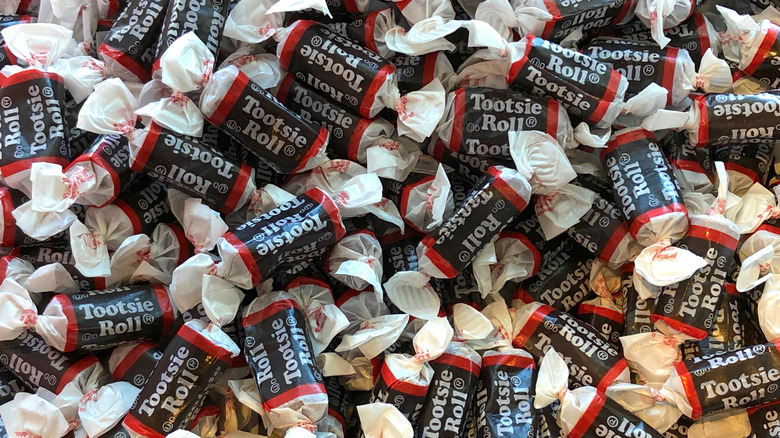
Tootsie Rolls are possibly one of the oldest packaged candies you may have eaten on Halloween this year. First introduced in 1896, there's nothing quite like this chewy, chocolatey, nougat-like little roll. And while they've been around for well over a century, they proved particularly popular in the 1940s, not just with everyday Americans, but with soldiers overseas, too. At first, the Tootsie Roll was popular thanks to the fact that it wouldn't melt during hot summers — and it only cost a penny. Turns out, that heat resistance made them perfect wartime treats.
Being able to withstand temperature changes without melting into a sticky mess and having a surprisingly long shelf life made Tootsie Rolls the perfect candy for soldier rations. They provided a zap of sugar and calories in just a few bites — Smithsonian Magazine called them "wartime energy bars." A few years after the 1940s, there was a rumor that Tootsie Rolls were used to plug bullet holes during the Korean War, thanks to their pliant texture — something you probably can't say about any other candy.
Boston Baked Beans
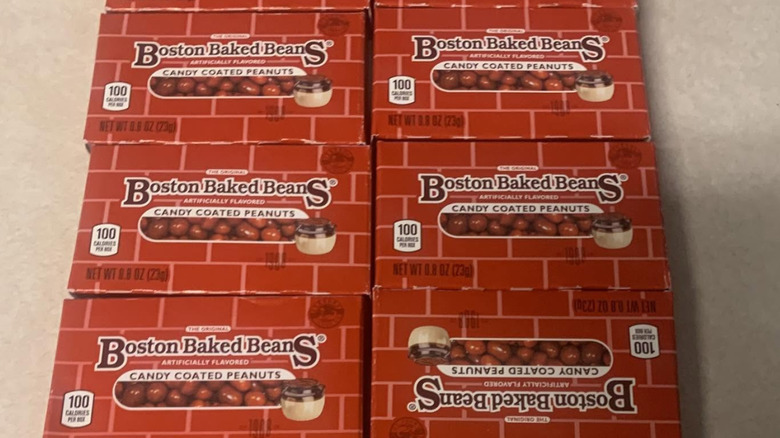
Chicago isn't traditionally referred to as Beantown, although it is home to that giant bean-shaped sculpture, Cloud Gate, located in the city's Millennium Park — but there's another bean tied to the city, and it's a little sweeter. Chicago is often credited as the birthplace of Boston Baked Beans. Yes, there's a lot to unpack there. First of all, we're talking about the candy, not the actual baked bean.
Boston Baked Beans are crunchy, sugar-coated peanuts made to resemble the reddish-brown beans found in the famous New England dish. They're not necessarily the most glamorous candy on the shelf, but they've been popular enough to stick around for close to a century. The peanuts are coated with a unique candy-making process called cold panning, which involves layering the nuts repeatedly in sugar and coloring, resulting in that signature hard, crunchy shell.
The candy is associated with Ferrara Pan Candy Company, the Chicago-based maker that also produces the possibly more well-known cinnamon candy, Red Hots. While the exact origins of Boston Baked Beans are a little murky, the treat became one of the company's most recognizable offerings. The reason for the beans being attributed to Boston is unknown, though it gives the brand a memorable bit of alliteration, and opens up some interesting history.
Hershey Bar
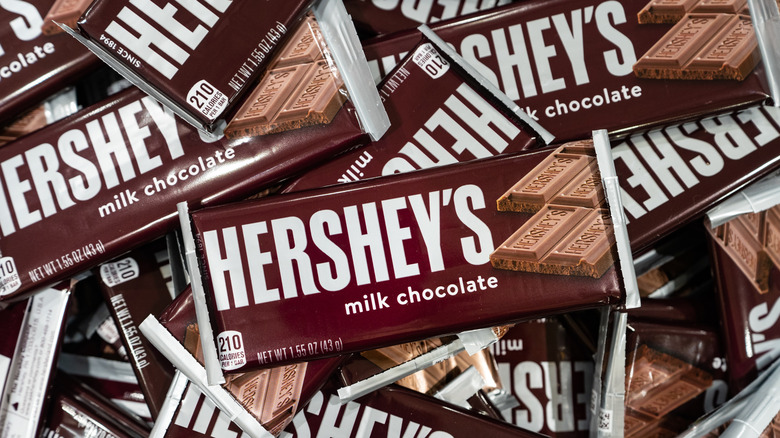
Can you think of a packaged candy more iconic than the Hershey's Milk Chocolate Bar? Though the original Hershey Bar predates the 1940s by several decades, having first hit the market in 1900, the '40s gave the beloved chocolate company an entirely new role in American history. During World War II, Hershey's was doling out sweets at home, but they were also whipping up an entirely new recipe to feed American soldiers overseas.
Hershey's Ration D chocolate bar became a staple of military emergency rations during the war. But it didn't quite taste like the melt-in-your-mouth chocolate bar you know today. The Ration D bar was less about indulgence, and more about a compact, caloric, durable snack. In fact, the Ration D bar, which was smaller than your typical Hershey's bar at four ounces, packed in 600 calories.
These special Hershey's bars had less sugar than a regular chocolate bar and were honestly only really meant to taste just okay — military officials specifically requested that the bar taste only slightly better than a boiled potato. It's not exactly the chocolate treat you'd reach for after dinner, but it withstood extreme temperatures and gave soldiers in deplorable conditions an energy boost and a small semblance of home. Of course, the regular Hershey's chocolate bar tastes better than that, but we actually considered it one of the worst popular chocolate bars on the market.