

Will Copper Cookware Work On An Induction Stove?
We may receive a commission on purchases made from links.
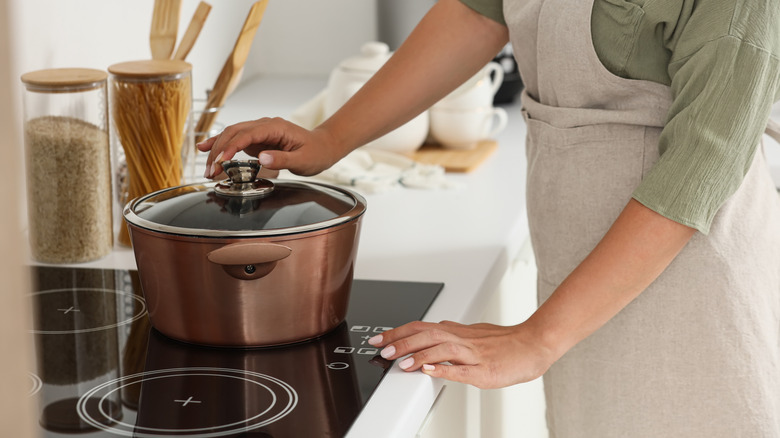
Many cooks gravitate toward copper cookware for its professional aesthetic and exceptional heat conductivity. Copper's ability to quickly spread uniform heat to every inch of the pan makes it a perfect selection for delicate cooking with sugars or sauces. It's also part of why copper saucepans represent 38% of the global kitchenware market (via 2026 Market Research Report). Pair one with the wicked-fast heat transfer of an induction stovetop, and you'd think they would be a match made in home cook heaven — but it's not quite so simple.
Alas, induction stoves require magnetic cookware, and copper is not naturally magnetic. Don't count out this cookware too soon, though. Some of these stylish pots and pans are manufactured with a magnetic stainless steel base, which works on induction stovetops. Copper cookware becomes induction-compatible through a process called metal cladding, where a ferromagnetic layer (typically stainless steel) is added to the outside of the cooking vessel. Basic cladding typically adds a 3-ply or 4-ply composite layer to the inside or outside of the pan, but it won't be suitable for an induction range unless the bottom is magnetic.
To find out whether your copper pans have a ferromagnetic lining, test each one with the magnet trick. Place a magnet on the bottom of the pan. If it doesn't stick, the cookware won't work on an induction stovetop.
Tips for cooking with copper and induction
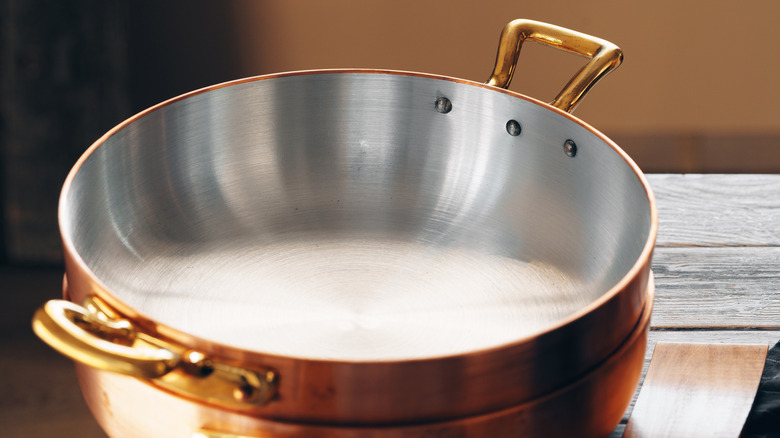
Although not all copper cookware is created equal, you have a couple of options for using these pieces on an induction range. When buying, look for "induction compatible" in the product description. Choosing pans that aren't designed for use on these stovetops is one of the most common induction stove mistakes. From there, finding the right copper cookware for your kitchen depends on your cooking style, budget, and maintenance. Copper is ideal for someone who cooks "saucy" foods (cheesy pastas, reductions, hollandaise) or homemade desserts (caramels or chocolate sauce). Since the metal is such a superior conductor that heats and cools quickly, it's the material of choice for foods that easily overcook, stick, or evaporate.
Keep in mind that copper is often more expensive than your typical cookware. This is due to its unmatched thermal handling, high labor cost, and consumer demand. In the case that you're emotionally attached to your current (and incompatible) copper set, consider getting an induction adapter plate. This magnetic stainless steel plate transfers heat from an induction burner to most cookware. Or if you're opting for a lower-cost overhaul, something like the $299 Cuisinart tri-ply copper 10-piece set. One customer notes, "They cook perfectly on my induction."
The consensus is that copper can work on your induction stovetop. You just need the right manufactured cookware or an adapter plate. As long as you're comfortable with a higher cost upfront and the required maintenance to keep copper's distinguished shine, most induction-compatible copper is a good fit for everyday cooking.