

16 Classic Mexican Candies, Ranked Worst To Best
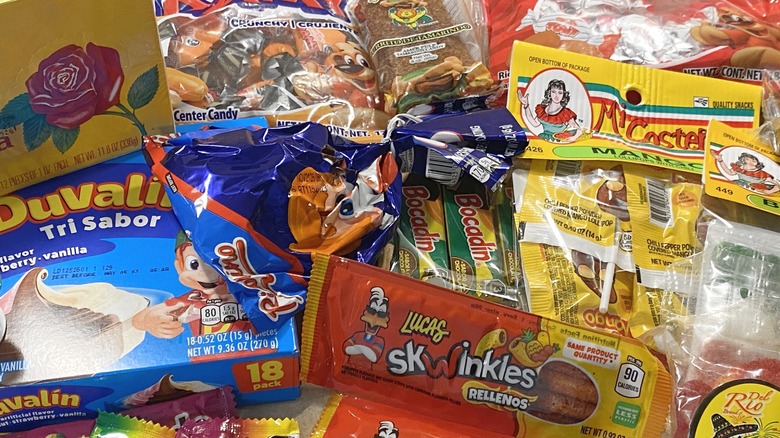
Mexican restaurants are incredibly common throughout the United States, with 85% of counties in each state offering at least one restaurant specializing in Mexican cuisine, according to the Pew Research Center. As a result, most American consumers are familiar with basic Mexican savory dishes, drinks, and a small selection of sweet treats that typically appear on restaurant menus, like classic flan. But Mexican candy shops and fully stocked grocery stores, on the other hand, are less common, which means fewer American snackers will recognize classic Mexican candy brands, let alone the sweet treats they offer.
For the sake of sweet tooths everywhere, including my own, I sought to change that. I come from a Midwestern town that absolutely fits the stereotype of having one Mexican restaurant everyone goes to after church and before the big varsity games. I've eaten my weight in chicken, cheese, and rice, and, generally speaking, I love candy. Yet, I had never heard of any of the Mexican candy brand names I found when I started my search.
So, I dove into a Mexican candy eating spree, taste-testing and ranking, from worst to best, these Mexican candies. You'll find more specific methodologies at the end. First, let's start with the most important part of this experiment: flavor.
16. Rollo de guayaba martajado
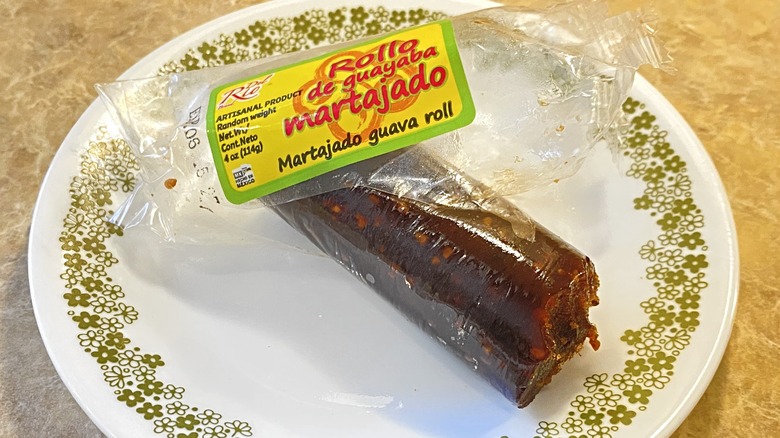
I had a feeling when I was unwrapping this rollo de guayaba martajado (or coarsely ground guava roll) that it would rank low on my list of Mexican sweets. All it took was one bite to know that it would come in last place. I've never had a guava roll before, nor did I know the English translation of "martajado" (which is "pounded") before taking a bite of this lumpy, slimy, seedy fruit roll.
I didn't anticipate there being such large guava seeds throughout the firm yet sticky fruit cylinder. Normally, I'm not particularly sensitive to food textures, but this one got me. I couldn't handle the gooeyness of the guava offset with the crunchy bumps of seeds, which was a shame, because the guava flavor was actually pretty good.
15. Pelón Pelo Rico
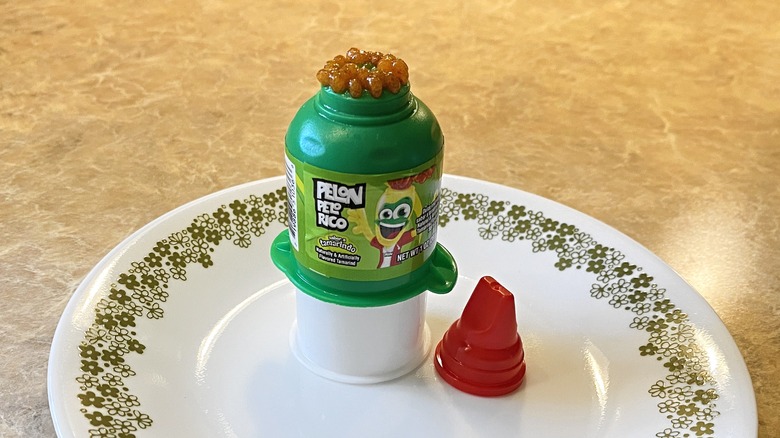
Trying to figure out how to eat Pelón Pelo Rico made me appreciate how absurd most candy designs are. If I didn't grow up watching commercials for Baby Bottle Pops, for example, I would have no idea how to consume whatever sugar chemicals awaited inside the toy-like packaging. For Pelón Pelo Rico, I eventually realized you had to eat this candy by shoving the white part of the container up into the green part, causing soft tamarind candy to come out of small holes at the top of the green bit, creating the appearance of wild, wacky hair.
This design makes a lot more sense when you learn that "pélon" is a colloquial term for "someone who is bald," "pelo" is Spanish for "hair," and "rico" is delicious, thus, the candy is designed so that the tamarind looks like it "grows" like hair. That's all well and good, and the soft tamarind candy was pleasantly tangy, spicy, and sweet. However, having to eat the candy off the container like that made this one a hard pass for me.
14. El Super León burrito de tamarindo
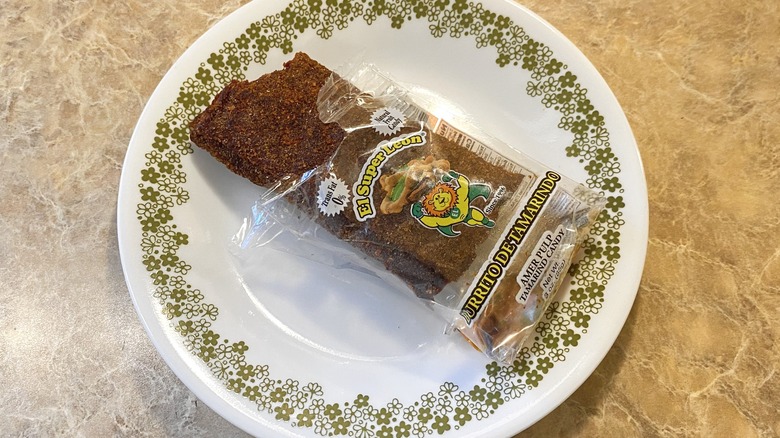
Just by looking at an El Super León burrito de tamarindo, you might assume that you're looking at an all-natural (or close to it) candy that prioritizes health over flavor. And indeed, I felt the same exact way eating it. The tamarind "burrito" is a traditional candy made of chili-covered tamarind pulp rolled into a shape that resembles the savory staple of Mexican cuisine. Imagine a Fruit Roll Up, but made of something that still resembles fruit.
Unsurprisingly, the burrito de tamarindo was chock-full of tangy, warm, and slightly sweet tamarind flavor, which I would normally love. I've only recently discovered the sweet-and-sour flavor that McCormick's dubbed its Flavor of the Year in 2024, but I've been seeking out new ways to try tamarind flavors ever since. The El Super León burrito is as tamarind-y as you'd expect with a dry, chewy texture. The texture, unfortunately, is where this candy lost me. I couldn't imagine eating an entire burrito de tamarindo at once, it'd be like an Iron Man triathlon for my mandible.
13. Lucas Gusano Tamarind with chili pepper strawberry lollipop
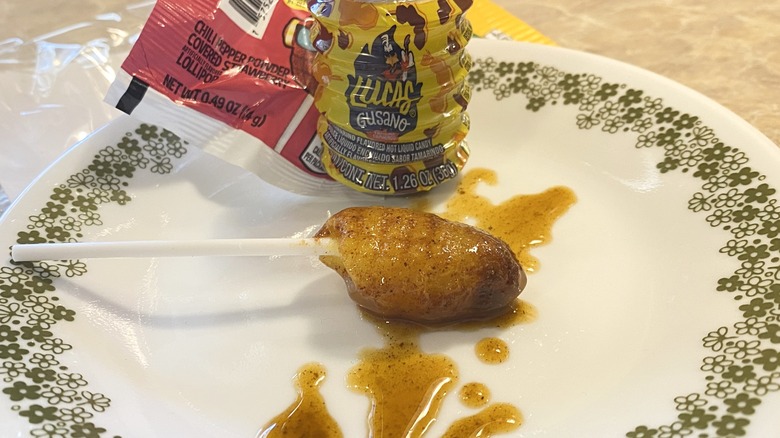
A mundane but relevant fact about me: I was never allowed to try the liquid candies popular in the States when I was growing up, and as an adult, I've never gone out of my way to try them. So, my taste test of Lucas Gusano Tamarind was my first time trying any kind of liquid candy. The tamarind-flavored liquid was slightly thicker than water but runnier than syrup and was sour, sweet, and just spicy enough to make the inside of your mouth feel a little warm.
I would argue that the Lucas Gusano Tamarind was the accompanying chili pepper strawberry lollipop's saving grace. To the candy's credit, it tasted more like the lollipop had gone stale, so maybe I just got a bad one. The lollipop was oddly syrupy, which added little else but slime to the old candy flavor. Whenever I doused the lollipop in Lucas Gusano, it tasted much better. As a standalone treat, I'd give the lollipop a solid two. As a vehicle for more liquid candy, it might be closer to a six or seven.
12. Mi Costeñita banderitas
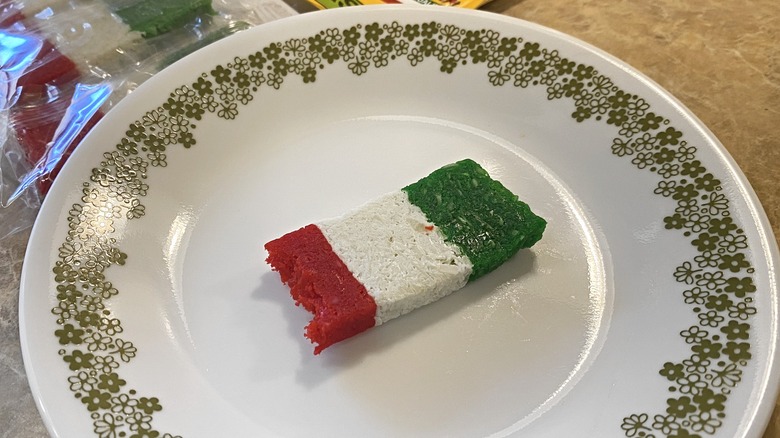
I love a good Mounds bar or Almond Joy, so I had high hopes for the Mi Consteñita brand of "banderitas,", or "little flags." These candies are also called Bandera de Coco, literally translated to "flags of coconut." The green, white, and red layers of pressed coconut replicate the colors of the Mexican flag, making them a particularly patriotic snack.
Banderitas have a soft, chewy texture with the grainy bite you would expect while eating coconut. The coconut tasted more natural and flaky when compared to a Mounds bar, which has coconut that feels stickier and more congealed. Unfortunately, there was something slightly off about the flavor of these banderitas, or else I assume I would've enjoyed them. Maybe I'm used to artificial coconut flavoring, but there was something unpleasantly fragrant about the aftertaste of these tiny sweets. In any case, I wouldn't go back and buy this particular brand of banderitas again. I might try them from a different maker, though.
11. Ricolino Duvalín tri sabor
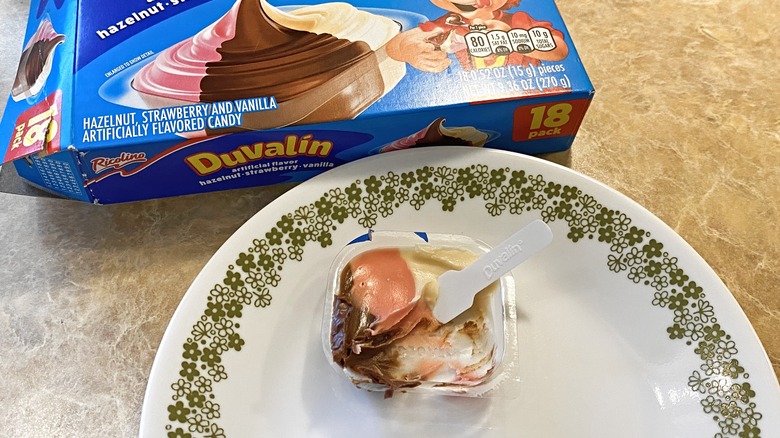
While researching Ricolino Duvalín, I got the distinct impression that this is a very nostalgic food for Mexican candy lovers. The spreadable candy appeared on a popular children's television show called "En Familia Con Chabelo" in the 1990s, which helped spread the brand name across the country. Today, Ricolino Duvalín is available in multiple flavor varieties, typically some duo or trio of hazelnut, chocolate, vanilla, and strawberry.
The Duvalín available at my local Mexican grocery was the "tri sabor" or "three flavor" variety: chocolate, vanilla, and strawberry. The candy comes in a small plastic container, smaller than I was expecting, along with a tiny plastic stick to use as a spoon. Duvalín is, in a word, frosting. It's sugary, thick, and coats the tongue much like a spoonful of leftover cupcake icing might. That's not necessarily a bad thing, although I'd argue there was an artificial aftertaste that made me second-guess whether I actually enjoyed this one.
10. Lucas Skwinkles rellenos pineapple
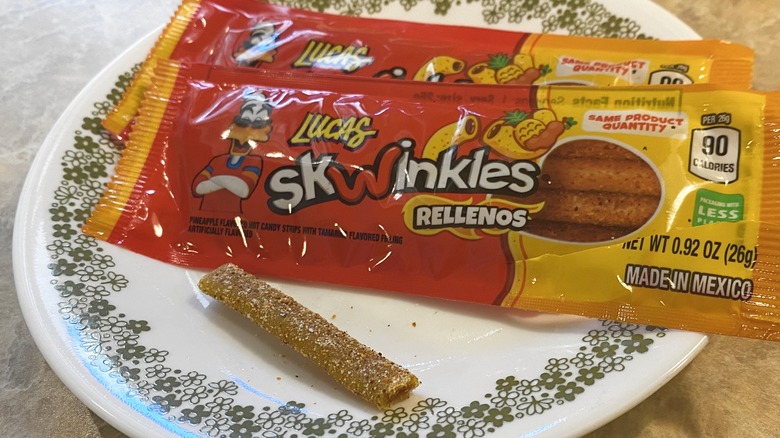
When I first opened my package of Lucas Skwinkles pineapple rellenos, I was surprised by the size and texture of these tiny candy ropes. They reminded me a little bit of Sour Punch Straws, but these were thicker, less bendy, and looked more like naturally flavored candy when compared to the neon greens and blues of the punch straws.
The pineapple flavor was subtle and naturally sweet, though I'll admit that my taste buds might be skewed toward the decidedly unnatural sweetness of American candy. Nevertheless, the sweet and mildly warm chili powder on the pineapple candy added a nice punch, and the tamarind center was the clear star of the show.
"Rellenos" is Spanish for "stuffing," so it makes sense that the tangy, sour, sweet, and spicy filling of the Skwinkles is what makes them so popular. I would gladly eat these again if they were placed in front of me, but I wouldn't make a special trip just to go get them.
9. Del Rio manguitos charros con chile
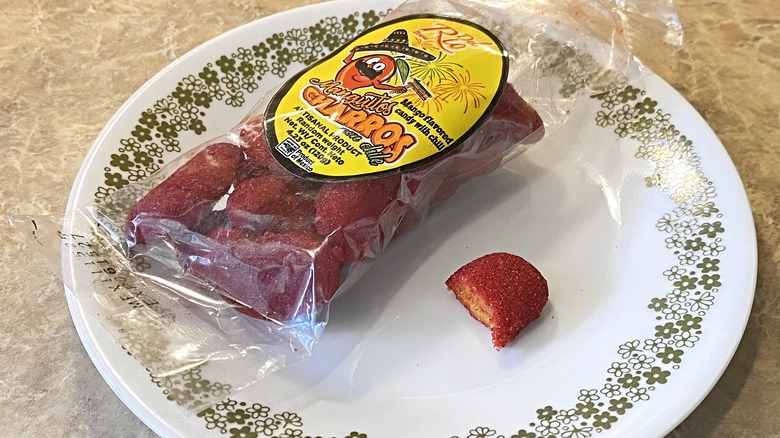
Manguitos are small, gumdrop-like candies that, in the case of this Del Rio brand, are rolled in a chili powder coating. I love the thick, chewy texture of a gumdrop, and I felt the same way about these small candies. The chili outer layer was also a great feature, with just the right amount of heat you would expect from, say, a cinnamon candy. Ironically, the only downside of this particular Mexican candy was its main flavor, the mango.
I felt like there was something especially artificial about the mango flavor, both while eating and in the lingering aftertaste. It was almost like chewing into a mango perfume — as opposed to actual mango fruit — which wasn't great. Fake flavorings aside, it's still entirely plausible that I would mindlessly eat far too many of these gummy candies in one sitting, while doing a mindless activity such as the old scroll-on-the-phone-and-snack.
8. Vero mango paleta con chile
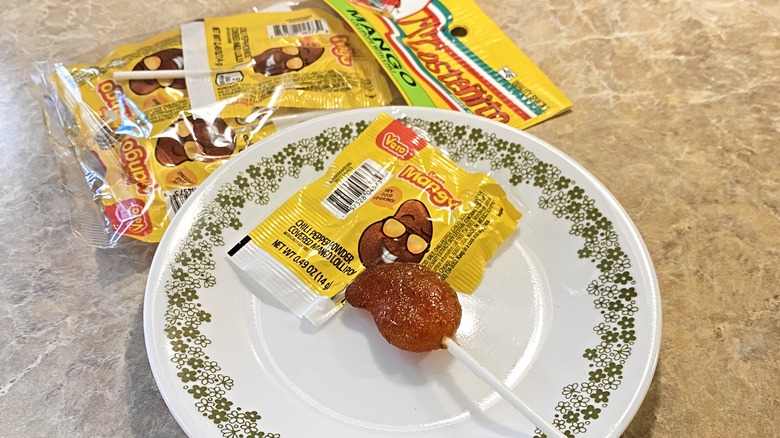
If there's one thing I learned in my Mexican candy taste-testing experiment, it's that Mexican candy is great for anyone who likes sour, sweet, and spicy foods. Vero mango lollipops with chili are an addictive combination of all three flavors. Similar to other lollipops I tried during this experiment, the Vero lollipops were unexpectedly syrupy and hard to open. The flavor made the initial hurdles worth it.
The mango flavor of the lollipop was pleasantly tangy and sweet, and it makes for a refreshing palate cleanser after getting through the sour-spicy blend of chili powder that coats the candy. I'd imagine this lollipop might be too spicy for anyone whose heat tolerance tops out at black pepper. If you like a good amount of heat, like myself, it's just right. I would almost certainly go back for a second (and third and probably fourth) Vero mango paleta from the bag, but I might not go out of my way to buy them again.
7. Montes Tomy
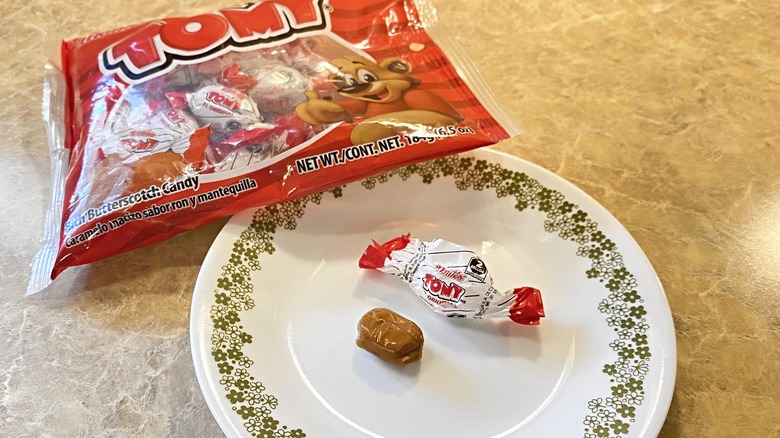
Montes Tomy earned a right-down-the-middle kind of ranking because it's a right-down-the-middle kind of candy. These small sweet treats are straightforward butterscotch hard candies, similar to a Werther's or Brach's. Oval-shaped but not entirely smooth, the butterscotch candies melt slowly in the mouth, providing ample time to enjoy the buttery, caramelly flavors. I also noticed acidic, almost fruity undertones, not totally unlike the notes of dark rum.
Generally speaking, Montes Tomy candies are ones I would expect to see in an office candy dish. It's just the right kind of morsel for giving yourself a sugar boost during an afternoon work slump, and although I didn't try it during my taste-testing experiment, I suspect a Tomy would be fantastic while sipping on a cup of black coffee.
6. Ricolino Bocadin
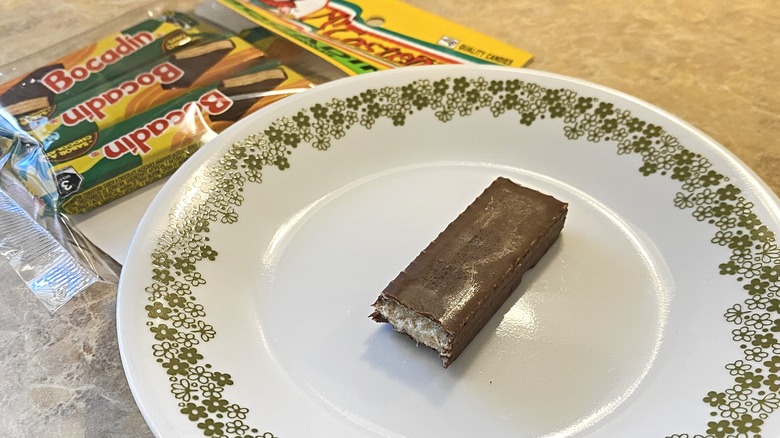
The Ricolino Bocadin may be a recognizable Mexican candy to fans of Necco Chocolate Wafers, though I would argue that the Ricolino brand is even better. An incredibly thin layer of chocolate surrounds these crispy, crunchy wafer sticks, allowing the flavor of the wafer to shine as opposed to being lost in the sugary chocolate coating. There's also a light layer of cream in between the wafer pieces, which also helps keep things light on the palate.
The wafers themselves aren't too sweet, providing more satisfying crunch than sugar satiation. In that regard, I'm assuming it's all too easy to eat way too many of these light, slightly chocolatey, very crispy sweets in one sitting. Wafers aren't normally my go-to sweet treat, so I'm not sure that I would go out of my way to buy Ricolino Bocadin again. However, if I happen to cross paths with one in the wild, I certainly wouldn't turn it away.
5. Dulces de la Rosa Mazapán
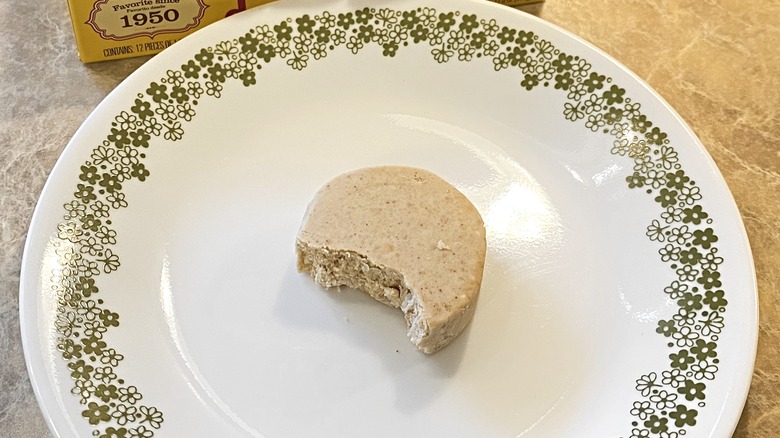
Despite its almondy color and texture, Dulces de la Rosa Mazapán is not to be confused with almond paste, a fairly easy to make dessert filling, or marzipan treats, like these beautiful Sicilian almond paste desserts molded to look like fruit. De La Rosa Mazapán follows a similar concept, but the base ingredient of this aesthetically pleasing Mexican candy is peanut, not almond. Like marzipan, though, mazapán is a sweet, silky blend of nuts and sugar.
Unwrapping a Mazapán de la Rosa almost feels like unwrapping a squat round of raw cookie dough (which I would not be opposed to). The actual texture is more crumbly, and the chew is more silky and melt-in-your-mouth, not chewy and rubbery. Eating one of these mazapán rounds is like biting into a featherlight, nutty cloud. The peanut flavor is front and center without being too sweet or overwhelmingly savory. De La Rosa also makes a chocolate-flavored version of its mazapán.
4. Mango Pulparindo
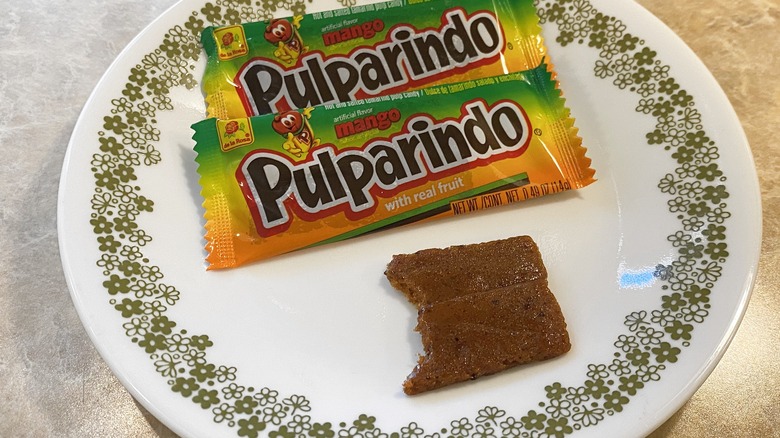
Prior to this taste-testing experiment, I had never heard of Pulparindo. This was the first kind of Mexican candy I tried in this saccharine journey, and to say that the flavor came out swinging is an understatement. Pulparindo is a tamarind pulp candy that almost looks like an all-natural Airhead. There's a slightly grainy texture to this candy, though, thanks to the natural fruit pulp and blend of sugar and chili that serves as the candy strip coating. It's also delightfully chewy.
While you're busy enjoying the texture of this rubbery (in a good way) treat, your taste buds are embarking on a wild rollercoaster ride. There's a definite sweetness to the mango-flavored pulparindo. But there's also a bright acidity and dominating sour flavor that makes the inside of your mouth tingle in an incredibly satisfying way. This was an immediate "would buy again" for me, and I was honestly bummed I didn't buy more — you know, for the experiment's sake.
3. Ricolino Paleta Payaso
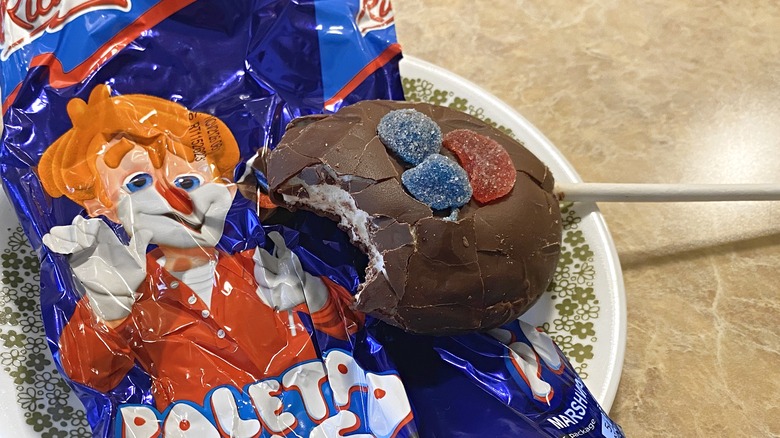
The first word out of my mouth when I opened my Ricolino Paleta Payaso was, "Oh?" I'm woefully ill-informed with Spanish vocabulary, so I didn't realize before trying this Mexican candy that "paleta payaso" literally translates to "clown lollipop." That might have made the disjointed face crafted out of sugary gummies less surprising. It had a similar look to the character-based ice cream pops you open just to find they never look quite like Spongebob or Mickey or whomever.
Just as I hoped, the clown lollipop was delicious. Crunchy, thin chocolate covers sticky-sweet, light-as-air marshmallow. The gummies used for the eyes and mouth weren't my favorite, and if I got another one, I might offer those up to someone who would enjoy them more. All in all, though, this one was definitely a win. Not only would I buy them again, I will probably be craving them until the next time I get to try one.
2. Chamoy Pulparindo
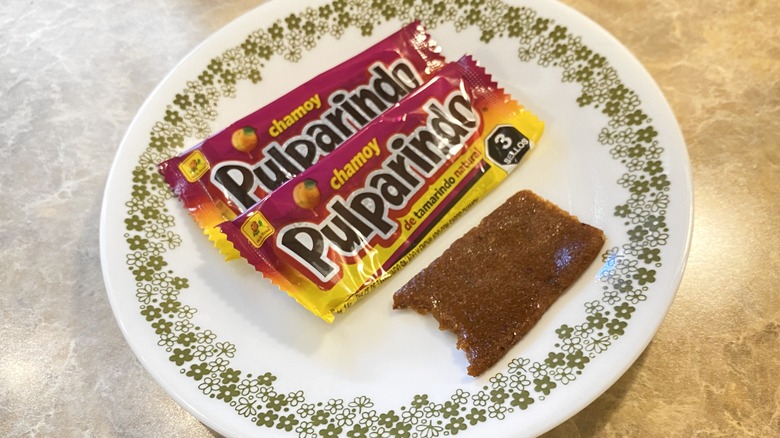
Coming in as the second-best Mexican candy I tried is the chamoy-flavored Pulparindo. Chamoy is a pickled fruit sauce that is sweet, sour, and a little salty. The tamarind pulp that makes up a Pulparindo candy also features these three characteristics, which means the overall flavor of this chewy, ever-so-spicy treat is a knockout. The first time I tried this particular Pulparindo, it was like biting into the most flavorful piece of chili-covered taffy I'd ever had in my life.
The heat of these Pulparindo candies isn't too intense, but it might be if you're not already a fan of mouth-tingling candy flavors, like cinnamon. If you're the type of person who would be willing to put chili powder in their hot chocolate, then you probably have a palate suited for a Pulparindo. These candies are one of two treats I would go out of my way to buy again.
1. Montes Damy
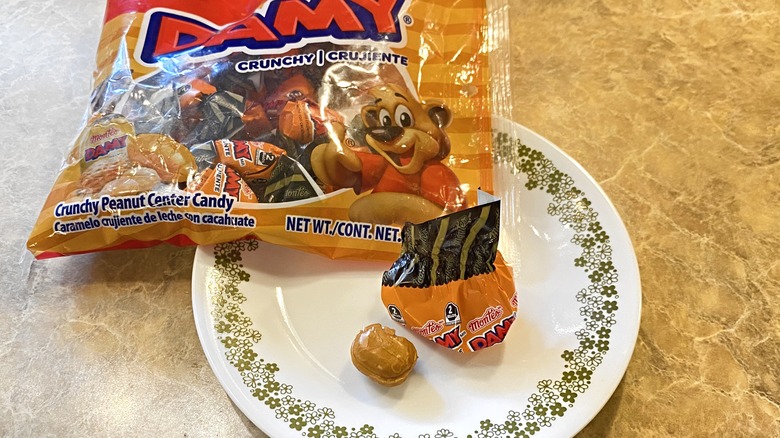
The Mexican candy I would rank the absolute best, the candy I would gladly drive 45 minutes one way to my nearest Mexican grocery store for, and the candy that is currently sitting in the candy dish on my kitchen table is Montes Damy. These small hard candy morsels look a lot like butterscotch candies; however, Damys are made of a softer caramel material that melts and becomes chewable more quickly.
Once you're able to crack the Damy open with your teeth, you're met with a delightful inner filling of roasted peanuts. You can actually feel the individual peanut bits come out of the candy, like a hidden treat inside the snack. The more I chewed, the more the candy reminded me of a Butterfinger the way the caramelly, toffee-like outer layer gets stuck in your molars with each bite. That might be a dealbreaker for some candy lovers, but I'm personally a fan.
Methodology
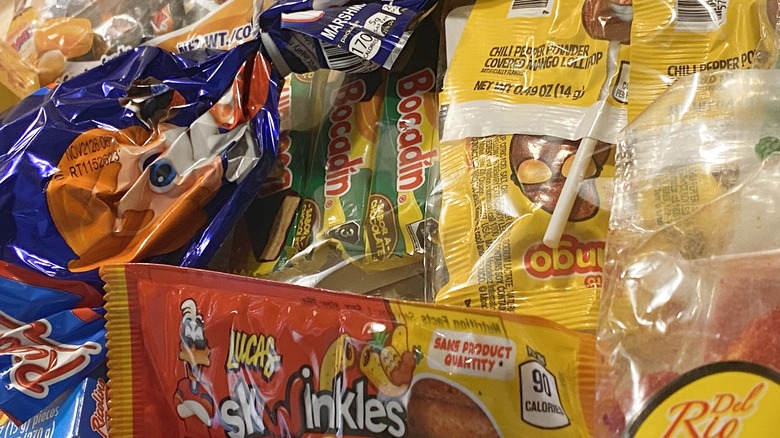
Because I had never tried Mexican candy and initially didn't know which brands to look out for, I began this ranking process with a quick online search. After familiarizing myself with some of the more popular candy brands, I visited three different Mexican grocery stores within a 45-minute drive of my house in Western Kentucky. I ended up sourcing all of my candy from La Fiesta Mexican Market in Paducah. I tried to get a wide variety of candy options, from chocolate treats to hard candies to fruit and nut chews.
I ranked the Mexican candies on flavor, mouthfeel, how easy it was to eat, and whether I would buy the product again. Candies that received the highest marks in the aforementioned categories ranked at the top of this list.