

5 Advantages Of Using Gas Stovetops
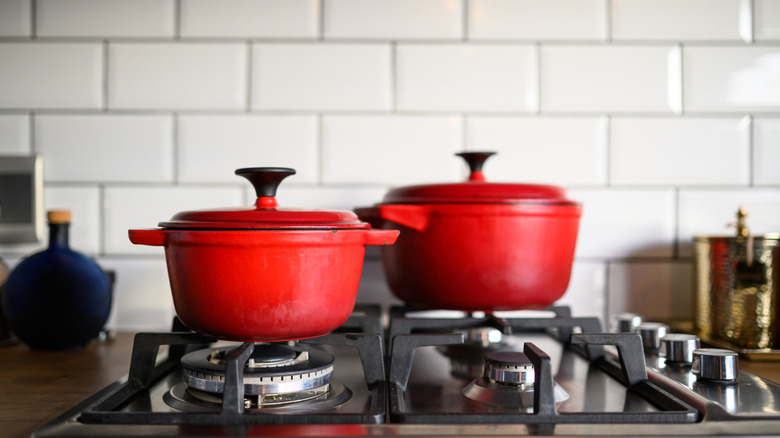
According to the most recent archeological discoveries at the University of Tel Aviv, humans have been cooking with fire for at least 780,000 years (via Wild beim Wild). Open fires led to hearths and shelters, which eventually led to wood stoves, until the first gas stove was patented in England in 1826. Throughout the rest of the 1800s and into the early 1900s, the gas stove was slowly introduced commercially before finally being adopted for home use when gas lines became more popular.
During the late 1800s and early 1900s, the electric stove using coiled heating elements was also introduced, while the invention of the glass-top electric stove occurred in the mid-1900s. And in the 2000s, the induction stovetop started becoming more and more popular. Even with this new technology and the ongoing gas vs. electric stove debate, a 2021 study by National Association of Home Builders found a slight majority of homebuyers and 96% of chefs prefer cooking with gas (via American Gas Association).
So what makes cooking with gas so preferable? While all of the above technologies have their strengths and weaknesses, there are clear advantages to using gas stovetops and that direct flame we've been cooking with for hundreds of thousands of years, across every culture and cuisine.
Gas gives you control over temperature
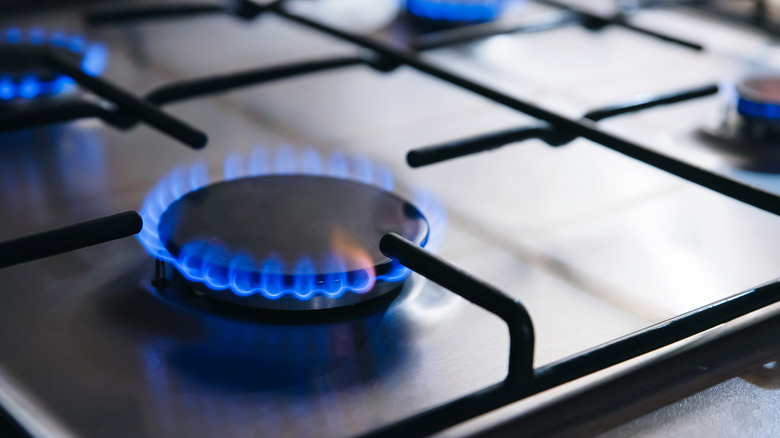
Using a gas stove gives you immediate control over temperature and flame size. When you turn the knob, the changes take effect instantly. Electric heating retains heat (with both coils and flat tops) and takes time to adjust to a new setting. And many electric and induction stovetops have fixed heating intervals you have to click through, while most gas stoves allow for smooth scaling of the flame.
The flames also give you a visual element to the settings as well. Turning the knob and watching the flame helps you see exactly what setting you are at without needing to pay attention to small numbers or notches on the knob. Watching the flame gives you the opportunity to see how much flame is hitting your pan, and if it's going up the side of your pot or pan, letting you know how much heat to expect while cooking.
When you turn off the heat on a gas stove, the flame goes away immediately. You know no more heat is hitting your pan as soon as it's off. This is a huge benefit for certain recipes like French-style scrambled eggs or emulsified sauces like Hollandaise and Béarnaise. Cutting the heat at the right time means the emulsions won't break and curdle with too much heat, and the eggs won't become rubbery or dry.
Flames give you more heat distribution
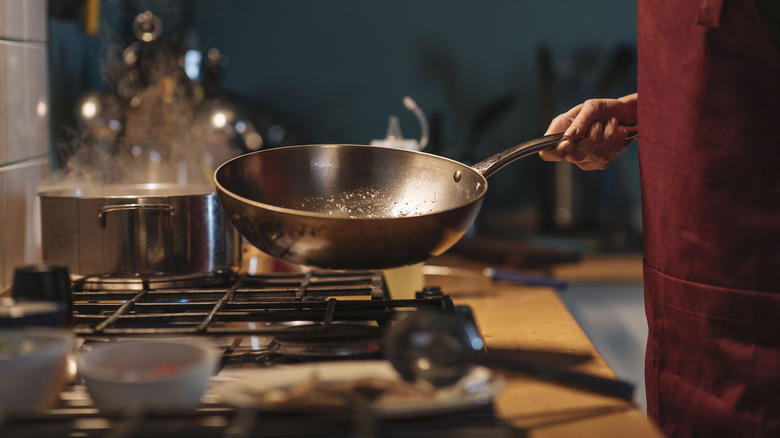
Flames from a gas stove can wrap around the sides of your pots and pans and move across the bottom as well. The fluidity of the flame means the heat distribution reaches across your pots and pans. Using gas flames, you are less likely to have uneven areas while cooking, which could potentially ruin your dish.
Additionally, many pots and pans have uneven surfaces, whether because they've been used for years or are lower quality products. These uneven surfaces cannot lie flat on glass tops and induction stoves, leading to uneven heating. A gas flame, while not completely fixing this issue, will spread out across the uneven surface better, leading to a more balanced heating.
The direct flames also give you the opportunity to use cooking vessels that won't work on a flat top. One example is a round-bottom wok that is specifically made to have the flame licking up the side of the wok. This high, concentrated heat is purposefully used with wok cooking, so you know ingredients at the bottom are getting direct heat while whatever is up the side of the wok is away from the direct flame.
You can use practically any type of cookware with gas
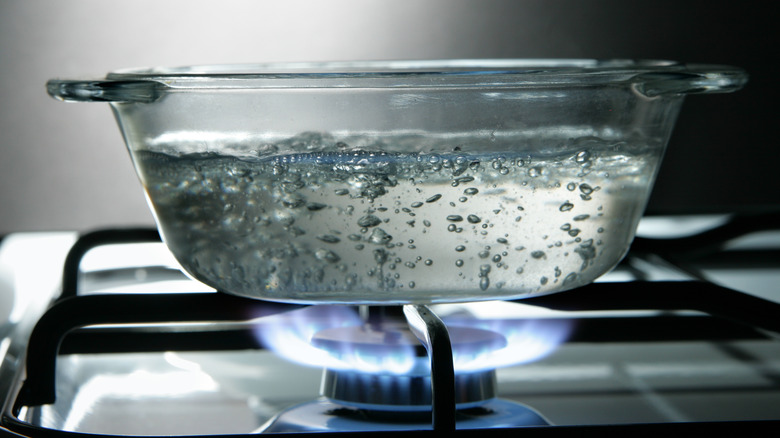
Almost any cookware meant for heat can be used on a gas stove. Many, like cast iron, enameled cast iron, or carbon steel, can be used on any stovetop, but you have to be careful with glass tops to not scratch them with heavy pots and pans. If your carbon steel does not have a flat bottom, it can't be used effectively on electric or induction.
Stainless steel is another material that can be used on almost any stovetop. For induction, the outer layer has to be made out of a magnetic-grade stainless steel to work. When using pure aluminum or copper pots and pans, induction is out, while the other materials are usable (but again, for electric, it needs to be a flat bottom).
Heatproof glass ceramics can handle gas and electric but cannot work on induction since it's non-magnetic. Clay, earthenware pots, and tagines can also be used with gas and electric (but not induction), though they usually need a heat diffuser to handle the stovetop. And as with the wok, any round-bottom device and any pot or pan with uneven bottoms typically only works with gas stoves.
Some gas stoves will work with power outages
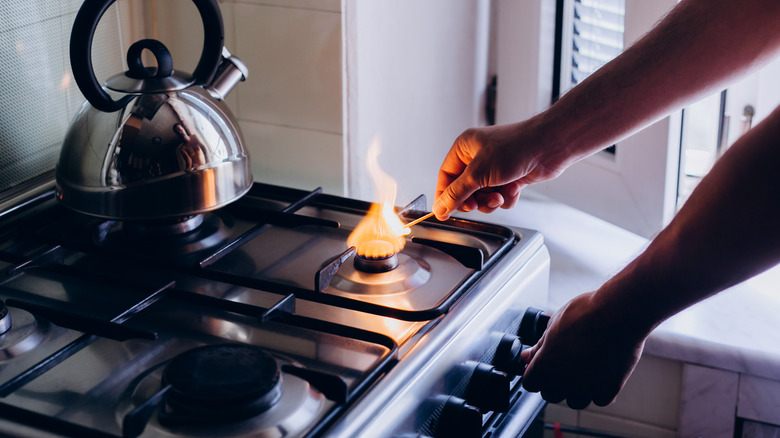
One benefit of gas stoves that completely sets it apart from other options is you can usually use it during a power outage. This can help in emergencies: boiling or sterilizing water and cooking hot meals when electricity is down. Depending on where you live and the emergencies you might face, this could be a huge benefit. But it does come with some caveats.
Most modern gas stoves use an electric spark to ignite the flame, rather than the older pilot light. So no electricity means no igniter. But you can hold a long, lit match or utility lighter next to the burner. Do this before turning the knob on so there isn't excess gas escaping into your kitchen. Some newer gas ranges do include an electric shutoff valve where there is no gas flow when the electricity is down.
There are two other issues to be aware of. First, the gas oven will not work during power outages. They rely on electricity to power control boards, temperature sensors, and other components and usually have a gas valve that stays locked during power outages. Either way, don't attempt to light a gas oven. Second, the ventilation hood won't work, so the dangerous gases from burning off natural gas won't get vented outside.
Open-flame techniques work with gas stoves
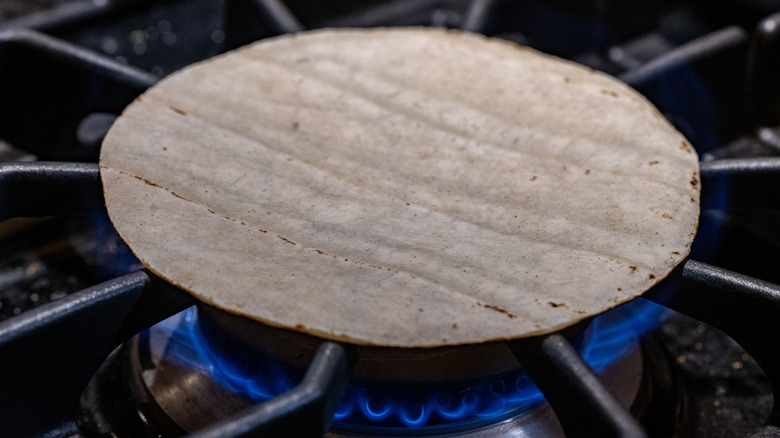
An open gas flame gives you the opportunity to warm up, char, blister, and caramelize ingredients directly over the fire without the use of a pan, much like a grill or campfire. One of the quickest and easiest techniques is to char and warm up tortillas or other flat breads (like naan or pita) on the stovetop. Just place it directly on the metal grate for a few seconds, flip with metal tongs to do the other side, and then you have a toasted, smoky aroma for your flat breads.
A common trick when making Vietnamese pho broth is to use tongs to hold unpeeled garlic cloves, onions, or a knob of fresh ginger over the flame, just until the skin chars and the inside softens a bit. Adding this to the broth gives it a smoky depth that won't come from just adding fresh ingredients directly into the broth.
For some vegetables, roasting over the open flame accomplishes two goals: It gives them a delicious roasted flavor and makes it easier to remove the skin. Bell peppers, tomatoes, chiles, jalapeños, and eggplants all benefit from this technique. So the next time you're making salsa that calls for broiled tomatoes and chiles, roast them over your gas stovetop instead.