

The Cooking Habit You Need To Break When Switching To An Induction Stove
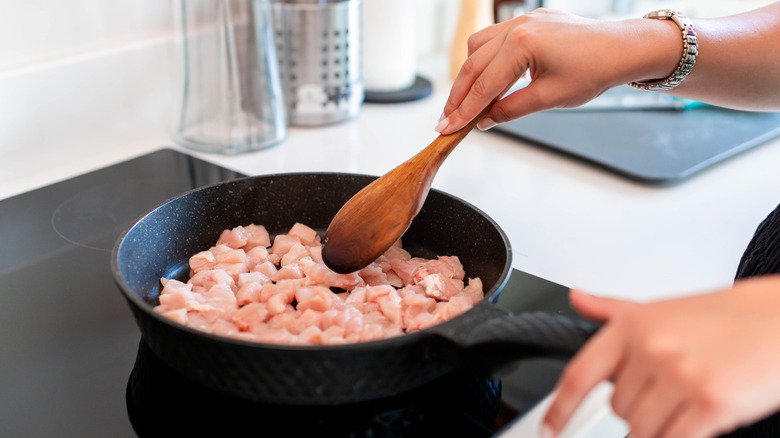
Induction stovetops might look like electric cooktops, but they don't necessarily behave in the same way. That's actually one of the common mistakes everyone makes when cooking on an induction stovetop. But there's one habit you really need to break if you're going to make the switch to an induction stove, according to trained chef Dennis Littley, aka Chef Dennis. Unlike electric cookers, which can take a lot of time to heat up and cool down, induction stoves are much quicker to react, so you need to keep this in mind when cooking.
"The biggest mistake is treating induction like traditional electric. Induction reacts almost immediately, much more like gas," says Littley. If you've been using an electric stovetop, you'll be used to adjusting the temperature earlier than necessary to factor in how long it takes for things to heat up and cool down. One of the benefits of an induction cooktop is that the response time is much quicker, so you have greater control over how quickly or slowly something cooks.
Getting used to an induction cooktop
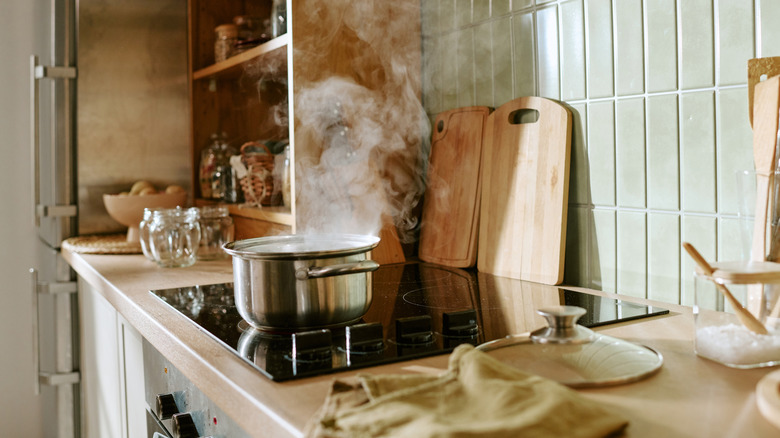
It can be tricky getting used to an induction cooktop, but it helps to understand what's happening. They work by creating an electromagnetic current that flows through a copper coil under the surface of the cooker, which induces a magnetic current. But your cookware needs to be compatible, or no heat is generated. That's okay because there's only a handful of types of cookware you can't use on an induction stovetop. But it's also what changes how you cook.
Your cookware will heat up quickly, so keep a close eye when preheating water or oil. With traditional electric stovetops, you might have had time to chop vegetables or measure ingredients during this step, whereas now, it's a good idea to prep in advance. And definitely don't be tempted to use a high setting to preheat quickly — starting lower is recommended, in fact, at least until you get used to the controls. So pay close attention, because these quick power changes are one of the advantages of switching to an induction stovetop.
While cooking, make smaller changes to the heat setting rather than anticipating a lag and overcompensating like you would with regular electric. You will notice that induction stovetops remain cooler than traditional electric cooktops on the areas not being used, so spillages can be wiped up straight away. When you're finished cooking, the induction stops working once a pan is removed, so your cooktop should cool off faster.