

The Rise And Fall Of On The Border Mexican Grill And Cantina, Explained
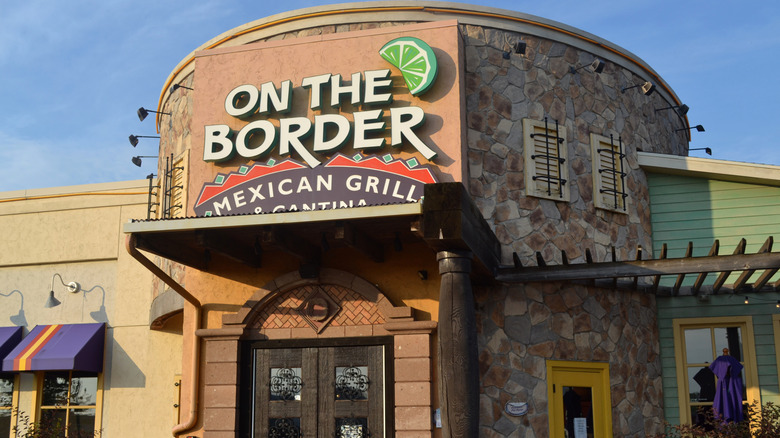
Throughout the late 1990s and early 2000s, eating at On The Border Mexican Grill and Cantina was a staple for many Americans. At its peak, the chain boasted over 100 locations in the United States alongside a few global locations. But as of 2026, the former Tex-Mex restaurant juggernaut has completely shut down.
Like many nationwide chains, On The Border once seemed too big to fail. With table-side guacamole, a bar atmosphere, and sizzling fajitas, it turned dining out into an experience. People fell in love with the free chips and salsa, signature Tex-Mex comfort food, and of course, delicious speciality margaritas with generous serving sizes. So how did such a popular restaurant destination go from a suburban staple to a ghost of the past?
There's no simple answer for what happened to On The Border. As with so many interesting stories, the rise and fall of the Mexican Grill and Cantina is complicated. From increased competition to changing dining trends, the downfall of the once mighty Tex-Mex chain is a multifaceted cautionary tale for the restaurant industry.
On The Border began by another name in Dallas, Texas
Despite its name, On The Border was actually founded in the suburb of Knox Park in Dallas, Texas, a good 300-plus miles away from the U.S. border with Mexico. Rather than a nod to its exact location of origin, the chain's moniker evokes the type of food that would grace its menu for nearly 45 years. The original location opened in 1982 under the name Border South Texas Cafe, with a goal of sharing the "border-style food," more popularly known as Tex-Mex, with the world.
Right from the beginning, On The Border emphasized the menu items and vibe that would become its staples: sizzling fajitas and massive margaritas, served in a fun, friendly environment. By 1982, Tex-Mex food itself had already begun making its way around the U.S. But On The Border brought a more upscale, modern dining experience to Mexican cuisine compared to other established chains at the time. That seemingly simple shift would turn out to be the foundation for its quick success and rapid expansion.
Quick growth In Dallas and beyond led to nationwide success
Though it began with a single location, On The Border grew quite quickly. Just five years after the first Knox Park location opened, Dallas was home to three unique On The Border locations. And that was just the beginning. In 1987, On the Border expanded beyond Dallas, opening its fourth location in nearby Houston, Texas.
Clearly, the concept of an immersive and engaging Tex-Mex dining experience resonated with the food culture of the '90s in a big way. From its emphasis on margaritas to the "dinner and a show" vibe of its tableside, freshly made guacamole, On The Border quickly became a go-to choice for a fun night out.
During this early growth phase, On The Border remained an independently owned company as it continued to expand at a rapid pace. By 1994, a mere 12 years after opening its first location, the chain had already established 21 locations throughout its home state of Texas. This impressive growth naturally attracted the attention of bigger restaurant conglomerates, which would spark the next phase in On The Border's expansion to a national, and eventually global, phenomenon.
On The Border's early expansion followed the Chili's model
In 1994, On The Border's run as an independently owned restaurant chain came to an end thanks to its merger with Brinker International. The restaurant conglomerate also has its roots in Texas, and at the time of the takeover, already had a major national success under its belt: Chili's. It's fair to assume the company hoped to capture the same widespread national success with another Tex-Mex chain close to home.
In its shift from a local chain to a national presence, On The Border saw quite a few changes. Brinker added new menu items, largely focused on the Mexican-inspired staples that set the restaurant apart from competitors. Most notably, the company doubled-down on its fajitas with the addition of the OTB Fresh Grill, which let customers order fully customized versions of the sizzling classic that helped usher in the chain's early success. During Brinker's ownership, On The Border also added a "To-Go" menu and dedicated pickup locations to improve takeout service.
Thanks in part to these changes, On The Border grew from an impressive local Texas chain to a nationwide staple during its time with Brinker. With just over 20 locations in 1994 at the time of the takeover, On The Border boasted an impressive 160 locations.
Innovation, fajitas, and margaritas took On The Border to the top
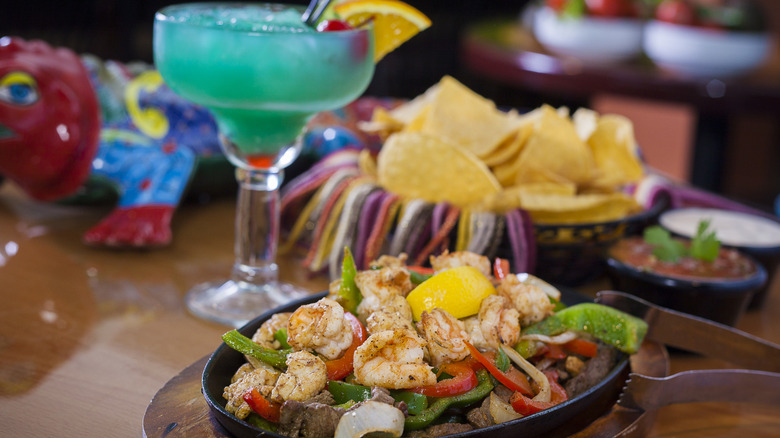
At the height of its popularity, On The Border was among the top chain restaurant destinations for a night out with family and friends. In 2017, the chain celebrated its 35th anniversary, which ushered in glowing praise from press and restaurant-goers alike. Three decades in, the restaurant largely stayed true to its roots, offering authentic Tex-Mex cuisine, margaritas, and a fun, engaging atmosphere.
Reflecting on 35 years of success, then chief marketing officer Ashley Zickefoose told Restaurant News that On The Border owed its success to "warm, genuine hospitality and wide variety of freshly prepared classic Mexican dishes." This proved especially important for the chain in the wake of its former sister restaurant, Chili's, removing many of its own Mexican-inspired items from the menu. This gave On the Border even more space to capitalize on the Tex-Mex dining experience vibe, including its lineup of specialty margaritas and beloved recurring seasonal items.
Though it would add and remove menu items over the years, On The Border continued to lean into the fun, fiesta-style service and Tex-Mex dishes that helped it gain traction early on. Massive margaritas, table-side entertainment in the form of guacamole prepared right in front of you, gave it a lively atmosphere. And the free chips and salsa weren't just a quick way to get the food rolling early, either. The salsa was so popular that one member of the Salsa Snobs subreddit dubbed it "the best restaurant salsa."
At its peak, the Tex-Mex chain had over 160 global locations
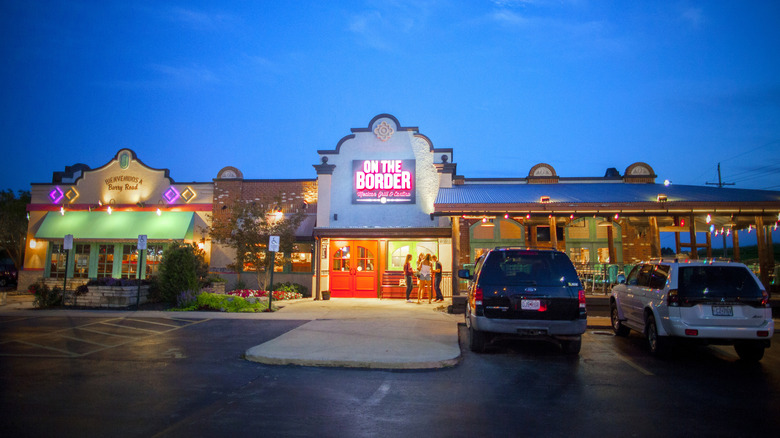
Despite its continued popularity, On The Border never grew much beyond the locations that opened during its time with Brinker. While the party atmosphere and delicious, indulgent food helped grow the chain's popularity, trends had already begun to shift.
But at its peak, On The Border was a national, even global, sensation. The restaurant had spread to 36 different U.S. states, with locations everywhere from New York to California, Arkansas, and Michigan. The restaurant had even opened a handful of locations outside of America, with a small international presence in South Korea and Saudi Arabia. Along with traditional restaurants, On The Border even boasted a place at the Orlando International Airport, letting travelers get a taste of its relaxed Tex-Mex vibe on the go.
Alas, this 160 location height would prove to be the restaurant's pinnacle. Even with its popularity, or at least its nationwide presence, Brinker sold On The Border to a private equity group in 2010.
Changing hands at the height of its popularity
In 2010, Brinker announced it would sell On The Border to San Francisco-based Golden Gate Capital. The two companies already had a history, as Golden Gate had purchased Romano's Macaroni Grill from the company just two years prior. Apparently, it liked the investment enough to feel secure taking on another one in the form of 160 On The Border locations.
At the time, Golden Gate was optimistic about continuing to grow the chain, citing "significant growth opportunities" within the brand. However, the cracks were already showing by the time Golden Gate acquired On The Border. By 2010, Brinker arguably had good reason to sell, with same-store sales reportedly already in decline year-over-year.
Still, all 160 locations were still operational at the time of the deal, and Golden Gate planned to make good on its investment by growing the brand even more. But during its four years at the helm, the new owners didn't wind up opening a single new On The Border location. In fact, the company seemed to have closed a small handful of restaurants before selling the chain in 2014, since that deal cited just 157 locations compared to the 160 sold to Golden Gate years before.
Four years later, new ownership stepped in again
By the 2010s, On The Border had become a bit of an investment firm hot potato. Golden Gate would hang onto its new restaurant chain for just four years before selling it to new owners yet again. Though the company called it "a successful investment" when it announced plans to sell, it's likely that continued financial pressures impacted the decision to cut On The Border from its portfolio.
In 2014, the remaining 157 On The Border restaurants came under the purview of Argonne. This new buyer arguably had more restaurant experience under its belt, with familiar names like Applebee's and IHOP already among its list of success stories. Both of those chains, notably, are still alive and well today, though the same sadly can't be said for On The Border.
But despite what came after, Argonne was optimistic about continuing to grow the chain when it purchased On The Border in 2014. At the time, it was the biggest full-service Mexican restaurant brand in the U.S. In its official statement about the acquisition, Argonne praised OTB's unique menu and vibrant atmosphere, which it felt would help them "expand this chain nationwide." Much like Golden Gate, however, Argonne would fail to grow On The Border's national presence.
On The Border's new owners struggled to rewrite the health narrative
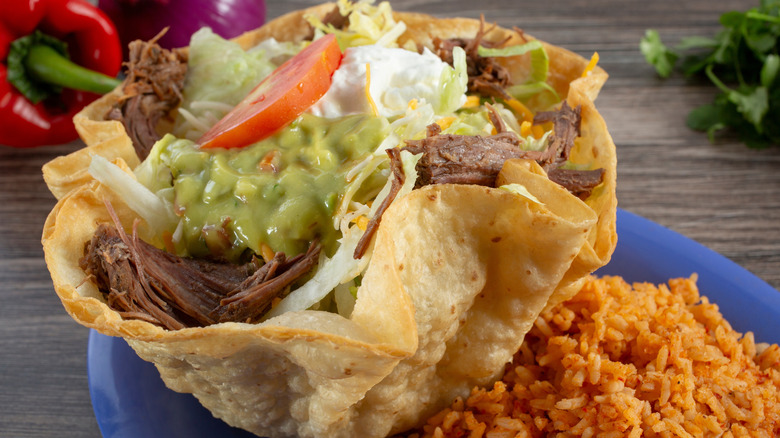
On The Border may still have had a strong foothold in the world of full-service Mexican dining in 2014, but that was actually part of the problem. By this time, changing attitudes about healthy eating turned many of the chain's former strengths against it. The generous portions, free chips and salsa, and massive margaritas that once made it a staple increasingly drew scrutiny for high calorie counts.
Right around the time that On The Border's sales began to decline, its reputation began to sour thanks in part to high calorie counts across its menu. Magazines like Men's Health cited it as one of the least healthy restaurants in the country. The popular book "Eat This, Not That!" also dubbed On The Border's taco salad the most unhealthy salad in the country.
In response, On The Border attempted to course correct by introducing new, Border Smart menu items. These redesigned "Border Smart" dishes offered lower calorie versions of On The Border staples, including its fajita claim-to-fame. All of the items clocked in at under 600 calories, and the lineup also included a new Skinny Margarita to combat concerns about the calorie content of its famously generous margaritas. Despite this attempt to pivot and cater to trends, however, the once-beloved restaurant chain continued to struggle to meet changing consumer demands.
Keeping pace with an evolving restaurant landscape proved difficult
Attitudes toward full-service dining were shifting in the mid-2000s, as people started to prefer a quicker, fast-casual dining experience. Chains like Chipotle often boasted more affordable prices and more convenient grab-and-go options, while also letting customers more easily customize their meals to meet their dietary preferences.
Here again, On The Border attempted to pivot to meet demand. In 2016, it introduced a series of budget-friendly takeout Burrito Boxes and Border Bowls. Priced at just around $6 each, these grab-and-go options were a clear attempt to prove On The Border could do more than the full-service dining that made it famous. The lineup let customers choose their proteins, including vegetarian options, likely in an effort to compete with the likes of Chipotle and Qdoba. The chain also tried to gain a foothold in the delivery space, partnering with DoorDash and Uber Eats to bring its food directly to customers.
Diners demonstrated they simply weren't as interested in the kind of experience-forward, full-service dining that made On The Border popular in the '90s and early 2000s. These attempts to innovate and pivot may well have resulted in a few more years of the Tex-Mex staple, but it's clear things couldn't fully turn around for the chain.
Rising prices and declining sales slowly eroded On The Border's viability
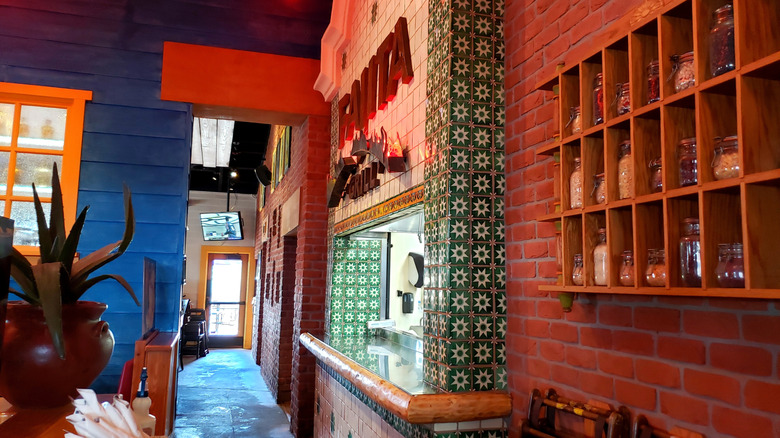
Amidst challenges with changing customer preferences, On The Border had another big issue on its hands. The company was struggling to stay financially viable. Sales continued to decline, but the expense of running a full-service restaurant did not. Growing costs for ingredients, keeping physical locations open, and paying employees, began to outpace how much people were willing to pay to eat out. With already narrow restaurant industry margins shrinking, On The Border struggled to stay afloat.
During the mid-2000s, On The Border's nationwide presence started to shrink for the first time in 35 years. Individual locations began to close. By the time the company declared bankruptcy in 2025, its 160-location portfolio had been cut in half, with just 80 locations remaining worldwide. Efforts to remain viable in a changing market, alongside narrowing margins for restaurants in general, put a lot of pressure on On The Border.
As if those pressures weren't bad enough, On The Border would soon face a new industry-wide challenge it couldn't have seen coming. In 2020, the COVID-19 pandemic dealt a heavy blow to the entire restaurant industry, one that On The Border would prove unable to recover from.
The COVID-19 pandemic turned up the pressure
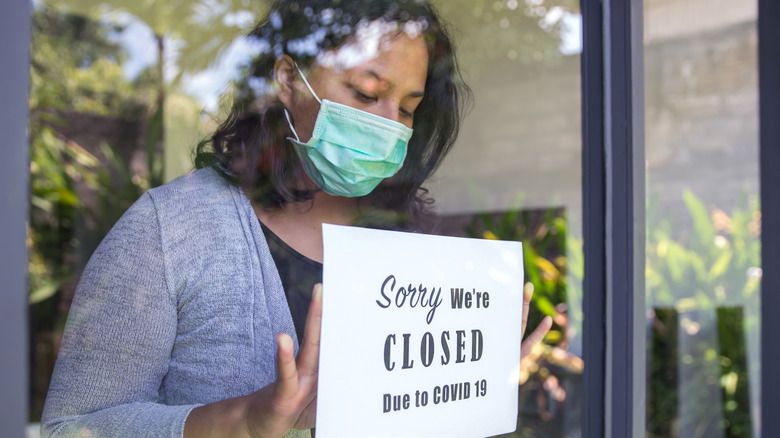
During the height of the COVID-19 pandemic, many restaurants had to temporarily shut down thanks to stay-at-home orders. It had a devastating impact on the restaurant industry. With people unable to eat out at all, a staggering number of restaurants declared bankruptcy in late 2020 and early 2021.
This loss of income may have been temporary, but thanks to the razor-thin margins, many local restaurants and other businesses that relied heavily on in-person traffic shut down entirely during this time. Larger chains, including Pizza Hut, Wendy's, and IHOP, would eventually recover from the blow the pandemic dealt. But On the Border was declining before COVID-19 hit, and it would continue to struggle even after restaurants were able to return to relatively normal operations.
On The Border's CEO cited COVID-19 as having a "devastating impact" on its business in March 2020, just a few weeks into stay-at-home orders. The chain once again attempted to pivot, this time striking a deal with Utz to bring its tortilla chips and salsa to grocery stores. But the long-term ramifications of lost income and an even bigger cultural shift away from in-person dining continued to reverberate well after 2020.
On The Border files for bankruptcy and shutters more locations
On The Border continued to struggle following the COVID-19 pandemic. Despite attempts to revive business by adjusting its menu and leaning into delivery options, the company declared bankruptcy in 2025. By this time, it had already closed half of its locations, but even that cost-cutting measure couldn't help the company climb out of debt.
In March 2025, On The Border filed Chapter 11 bankruptcy. By this time, it owed a substantial amount of money to creditors including food suppliers and leaseholders. Alongside the growing cost of running the business, the company claimed it struggled to retain enough employees to keep its remaining locations running smoothly. All of these pressures led On The Border to close 40 stores at the start of the year, with its bankruptcy declaration soon to follow.
Under Chapter 11 bankruptcy, a business typically plans to undergo massive restructuring, typical with the goal of becoming financially viable again. So at this point, there was still hope for the Mexican cantina to survive. Other major chains, including Red Lobster, have recovered after similar filings. As part of its filing, On The Border entered a deal with Pappas Restaurants, which would undergo one final push to save the struggling restaurant juggernaut from demise.
After brief hope for rescue, On The Border shut down for good
Initially, it looked like Pappas Restaurants might actually turn things around. The company purchased On The Border as part of its Chapter 11 auction. Shortly afterward, it reopened several of the recently-shuttered locations across the country. But the comeback story apparently wasn't meant to be.
Not long after reopening the locations, Pappas began to quietly shutter On The Border restaurants once again. Just over a year after it acquired the struggling chain, On The Border officially announced it would close every one of its remaining company-owned locations. By June 12, 2026, On The Border effectively ceased to exist after so many years as a Mexican dining staple. The On The Border website, once a hub for the latest menu offerings, now hosts a simple goodbye message from the company.
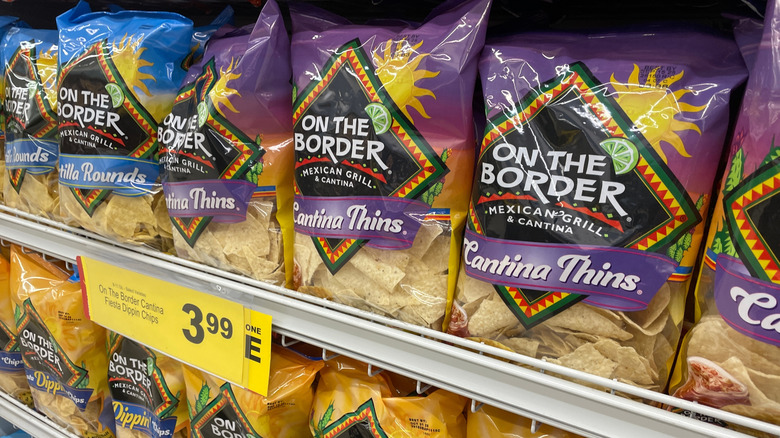
Though all of the company-owned locations have closed, On The Border fans do have a few remaining ways to get their fix. A handful of independently-owned franchise locations, including the Orlando International Airport, remain open for now. And that 2020 deal with Utz that brought On The Border chips and premade jarred salsa to shelves remains in effect. So, while you can no longer head to your local On The Border for free chips and salsa, you can recreate the experience at home, or while traveling to a handful of locations. But even if a few vestiges remain, it's clear that the heyday of On The Border has officially come to its end.