

10 Great British Bake Off Scandals That Completely Rocked The Franchise
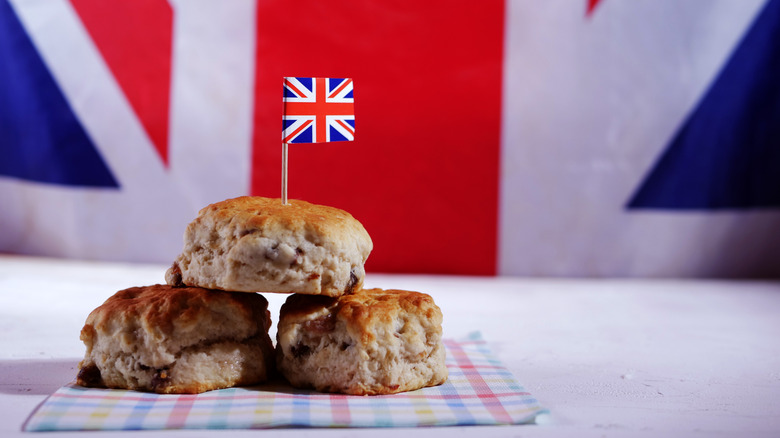
"The Great British Bake Off," fondly abbreviated to GBBO on social media, is a long-running baking competition show "where passionate amateur baking fans compete to be crowned the U.K.'s Best Amateur Baker." It first premiered on BBC2 in 2010 with national treasure Mary Berry judging alongside celebrity baker Paul Hollywood, and was hosted by presenters Sue Perkins and Mel Giedroyc.
A family-friendly reality program that is quintessentially British, the show soon became a big hit. Even with a ton of baking innuendos, some dramatic GBBO moments, several memorable culinary disasters, and a controversial network move that everyone thought would be the end of the show, it is still one of the most-watched programs on Channel 4, and a representative program of the U.K. to international audiences.
As one can expect from a long-running show with 16 seasons and a 15-year run (so far), GBBO has been through many controversies. Some took place inside the iconic white tent, others behind the scenes. Here are 10 scandals that rocked "The Great British Bake Off," both on and off screen.
Custardgate
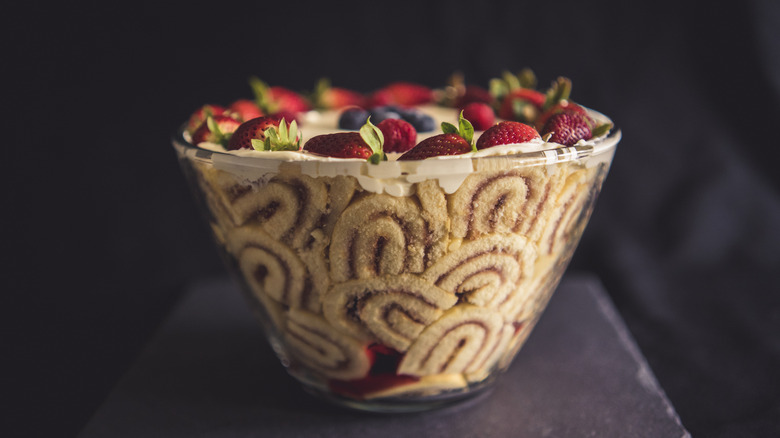
The famous Custardgate of "The Great British Bake Off" happened in Desserts Week of season 4. It has become so iconic, the show and audiences still talk about it today, years after the episode aired.
Contestant Howard Middleton had prepared the custard for his caramel and apple trifle early in the episode and left it chilling in the fridge. Unfortunately, fellow contestant Deborah Manger had mistakenly taken his custard and used it for her homemade tropical trifle. Manger was visibly contrite, apologizing and admitting to host Sue Perkins that she "used Howard's custard by error," to which Perkins replied, "It's either a terrible error or the most incredible case of baking espionage I've ever seen" (via Facebook).
Middleton was surely dismayed that another contestant had taken the custard he had so carefully prepared, but he showed his sportsmanship by keeping his cool. He displayed a similar disposition in the previous episode, when Perkins accidentally put her elbow on his English muffins.
Getting on with the challenge, Middleton accepted Manger's offer to use her custard instead. He told Perkins, "I'm sure that one custard's as good as another." But this statement proved false during judging when it turned out that Manger's custard was rather gloopy. Fortunately for Middleton, the judges considered the exchanged custards. Manger was let go at the end of the episode, along with Mark Onley.
Bingate
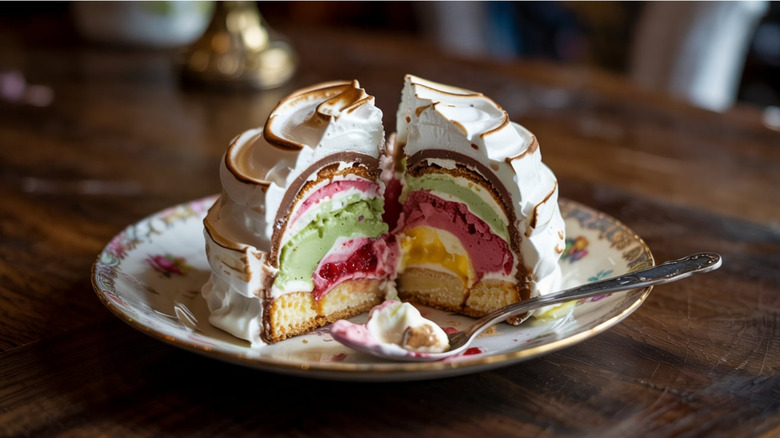
Another GBBO scandal that persisted over the years was season 5's Bingate. The contestants were asked to make a baked Alaska, a once-popular sumptuous dessert of cake and ice cream with meringue. It has to be frozen first before baked in a very hot oven for a short, precise length of time such that the meringue would caramelize while the ice cream stays intact. In some restaurants, chefs would set the dessert on fire tableside for added pizzazz.
Unfortunately for contestant Iain Watters, he never got to the baking or torching part because fellow baker Diana Beard removed his cake from the freezer. By the time Watters found his baked Alaska, the ice cream had completely melted. Sue Perkins was still optimistic that they might find a way to present his dessert, but Watters let his frustration get the better of him. He immediately marched to the bin and dumped his dessert.
Audiences had mixed reactions to Bingate. Many were sympathetic to Watters, especially as Beard didn't appear apologetic and only said, "Well, you've got your own freezer, haven't you?" (via YouTube). But some also called out Watters' rash reaction, and the judges seemed to think so, too. In a now-deleted tweet (via the Guardian), judge Paul Hollywood said, "At the end of the day Mary and I need something to judge, it's not about melted ice cream but about what's presented to us... #bingate."
Accusations of racism
"The Great British Bake Off" once had country-themed episodes or challenges. Unfortunately, these episodes became sources of scandal due to the ignorance and cultural insensitivity of the contestants, hosts, and judges.
During Japanese Week, one baker cooked Chinese stir-fry as filling for Japanese buns, while another made paprika dough with dal filling (dal is distinctly Indian). Someone made their buns look like pandas, which are native to China. It didn't help that the hosts and judges allowed these missteps. The Independent's Kate Ng criticized the episode, saying, "it perpetuates the racist stereotype that everything Asian must be the same."
There were other similar incidents as well. Judge Paul Hollywood described challah, a traditional Jewish bread, as plaited bread. In one episode, contestants were asked to make s'mores using digestive biscuits and chocolate ganache, which sent American audiences into an uproar.
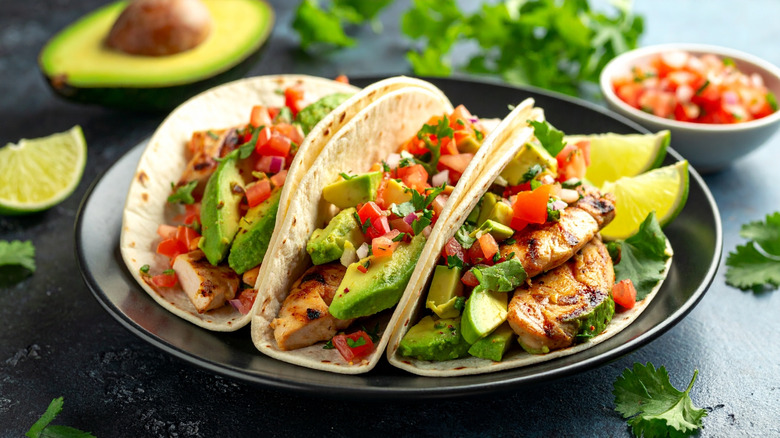
But the worst was season 13's Mexican Week. Hosts Matt Lucas and Noel Fielding opened the show saying they won't tell Mexican jokes ("not even Juan" joke, per TikTok) because it might offend people, all the while wearing costume-y sombreros and sarapes. Hollywood and others kept mispronouncing pico de gallo. One contestant peeled avocado as if it were an apple. There were more callous, insensitive remarks throughout the episode, which Tejal Rao called "casually racist" in the New York Times. The backlash became so intense that the show decided to end the country-themed weeks the following year.
GBBO employees were accused of insider betting
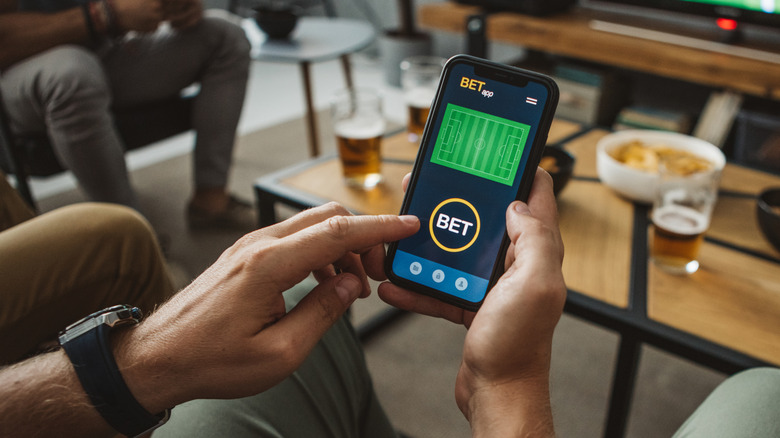
Reality competition shows are typically pre-recorded and filmed months before they air on television or streaming platforms. As such, it is standard practice for contestants to sign non-disclosure agreements forbidding them to divulge details about the shows like "The Great British Bake Off" – especially who the winners of GBBO are. But it's not just them who are sworn to secrecy. People in the production crew are under a similar contract as well.
Because of this, a huge scandal broke out in 2015 when Ladbrokes, an established betting company in the U.K., suspended betting for the season 6 finale for fear that the winner's name was already leaked before the episode aired. Bookmakers noticed an unusual surge of bets (90% of wagers) in favor of one contestant, whose odds went from 12/1 to 3/1. Ladbrokes also discovered that 42 new betting accounts were linked to employees at BBC and Love Productions, the show's production company. The cooked bets would have cost bookmakers £10,000.
"Whoever is doing this thinks they are being very clever," a Ladbrokes representative told The Sun, as reported by Huffington Post. "But they are not that smart as they have been using their own names to open accounts." Ladbrokes looked up those names on Google and found they were affiliated with the production company and the network. BBC and Love Productions denied knowing about the gambling activities of their alleged employees, and promised to investigate the incident.
Obvious and excessive product placements
The BBC gets the majority of its operational funding from license fees. In the U.K., people are required to pay a license fee if they "watch or record live TV on any channel or service" (per gov.uk) and if they watch shows using the BBC iPlayer on television, laptop, or mobile devices. By virtue of this funding model, and since the corporation is a public service broadcaster, shows produced by or for the BBC must not have product placements or brand promotions. This ensures the network can keep producing content without being swayed by commercial influence.
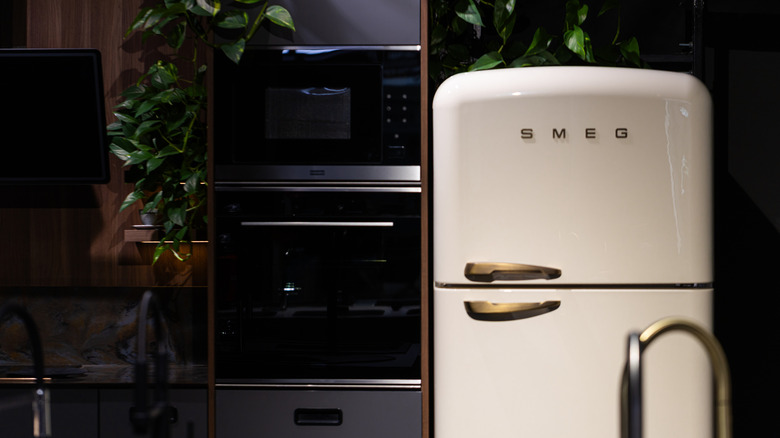
These restrictions are well-known considering license fees have long been a point of contention between officials and the British public. So when refrigerators of popular Italian appliance manufacturer, Smeg, were prominently shown on two seasons of GBBO, people noticed.
A viewer from Manchester raised the issue to the Radio Times in 2012. He said the product placement for Smeg was so blatant, the brand's name and logo appeared at least 37 times in one episode. The issue became such a hot topic, Smeg stated that it loaned Love Productions the new FAB30 refrigerators for free, as it had for previous seasons. BBC declared that this was a breach of the corporation's charter. The network instructed Love Productions to pay for the appliances used in the show and avoid similar arrangements in the future.
Host Paul Hollywood's cheating scandal
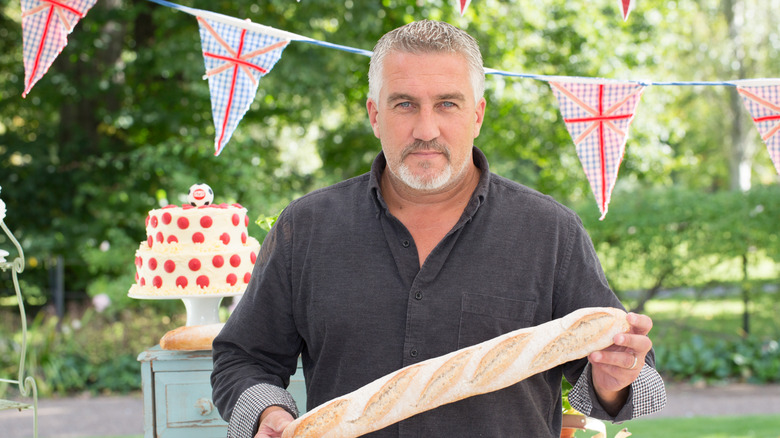
Undoubtedly one of the biggest scandals to hit the show was Paul Hollywood's affair with Marcela Valladolid in 2013. At that time, the show's popularity had grown so much overseas that a U.S. adaptation of "The Great British Bake Off" was created.
Hollywood was invited to judge in the first and only season of "The American Baking Competition" alongside Valladolid. Filming took place in America for five weeks. But even before the show aired, rumors emerged about the co-hosts having an affair. By the time Hollywood returned to the U.K., the scandal had already hit the news, and his then-wife of 15 years, Alexandra, was preparing to divorce him.
"'I had no idea that when he came back from America everything would be different and our marriage would be over," she said in an exclusive interview with The Daily Mail. She had been instrumental in Hollywood's television career and helped him land the GBBO hosting gig. "Now I need to do something for me," she said.
The couple briefly got back together later that year, but ultimately separated for good in 2017. "It was the biggest mistake of my life," Hollywood said about the affair in an interview with BBC Radio 5 Live. The incident also led audiences to speculate whether Hollywood also had a fling with season 4 contestant, Ruby Tandoh. After the season finale aired, Tandoh denied the rumors and clarified that she's gay in a now-deleted tweet (per Huffington Post).
Bake Off's transfer to Channel 4
In a shocking turn of events, Love Productions announced in 2016 that "The Great British Bake Off" would be moving from BBC to Channel 4. Unlike the license fee-funded BBC, Channel 4 gets its income from commercial ventures and advertising fees. This meant that GBBO would enjoy more opportunities with product placements and advertising partnerships.
Love Productions denied that money was the main motivation for the move. However, The Guardian reported that an internal email announcing GBBO's departure said the BBC failed to give "a fair valuation" for the beloved baking show. BBC News revealed more details about the failed negotiations, reporting that the network's offer of £15m for the upcoming season was "£10m too little."
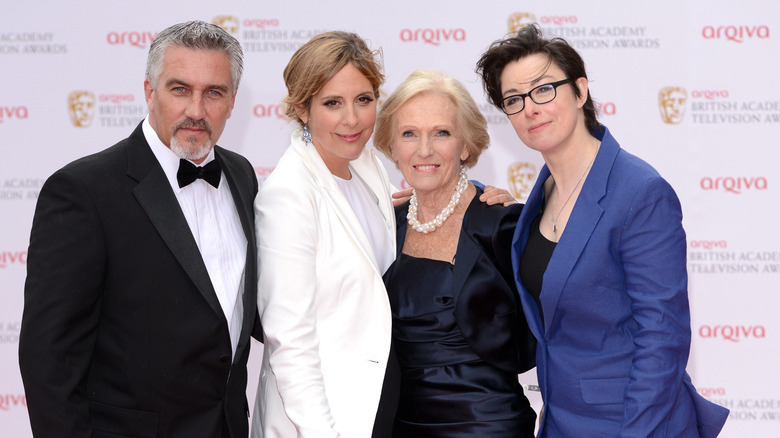
The hosts and judges were reportedly unaware about the friction in the negotiations and Love Productions' subsequent decision. This raised concerns about cast and format changes because judges Paul Hollywood and Mary Berry, and hosts Sue Perkins and Mel Giedroyc, were all signed with the BBC. In the end, only Hollywood stayed when "The Great British Bake Off" premiered on Channel 4 in 2017. His new co-judge was Prue Leith, and Noel Fielding and Sandi Toksvig hosted the show.
Fans were understandably saddened as Hollywood and Berry had a lovely rapport, and Perkins and Giedroyc's comedic banter added to the show's appeal. Berry gave a statement about her loyalty to the BBC, and bid her co-judge goodbye with a cheeky, "Farewell to soggy bottoms" (via the BBC).
Contestants using store-bought fondant
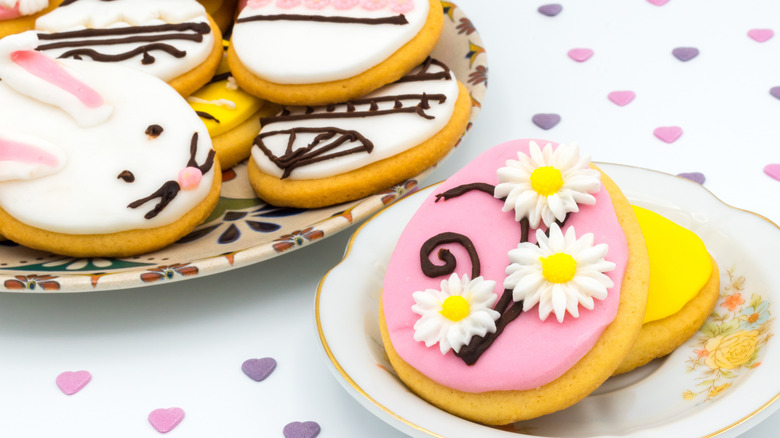
In a baking competition, particularly a show that aims to find the best bakers in Britain, it goes without saying that contestants are expected to create food from scratch and showcase their talents and knowledge in crafting delicate pastries and cakes. But to everyone's surprise and Mary Berry's ire, contestant Enwezor Nzegwu from season 5 thought it would be acceptable to use store-bought fondant for his biscuit tower.
Nzegwu assembled layers of biscuit and yellow fondant to create the rocket-shaped biscuit sculpture he called Space Adventure Moon Scene. It was looking quite impressive, but when Hollywood asked if he made the fondant, Nzegwu said no. The instant look of displeasure on Berry's face became an instant topic in the news, and the presenter's "death stare" remains one of the most memorable from the show (via YouTube).
Nzegwu was eliminated by the end of that episode, giving the message that the use of store-bought anything in the competition is unacceptable. But the show's tone changed when GBBO started airing on Channel 4. When the bakers were asked to create a biscuit board game, many of them used store-bought fondant to design their biscuits. Longtime fans were shocked to see host Prue Leith allow it, saying Berry would have not let anything of the sort fly. "Half expecting to see Mary Berry come charging across the lawn wielding a blunt instrument. #GBBO," one viewer said on X (per Stylist).
Host Prue Leith accidentally spoiled season 8's winner
Season finale episodes of reality competition shows as famous as "The Great British Bake Off" are always highly anticipated. Part of the excitement is discovering who would come up with the best final entry that would impress the judges. As such, many fans frown on spoilers, and do not welcome leaks of any kind.
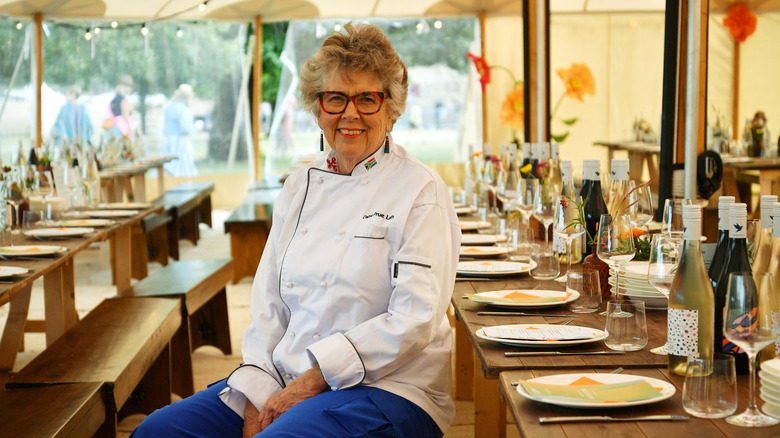
Unfortunately for GBBO fans, it was the judge herself who made the biggest finale blunder in the show's history. Prue Leith mistakenly tweeted a congratulatory message to "Great British Bake Off" season 8 winner, Sophie Faldo, on X a full six hours before the episode went on air. It was an honest but unfortunate mistake that instantly blew up online as fans shared and captured the spoiler before Leith's assistant could delete the post 89 seconds later.
"I am so sorry to the fans of the show for my mistake this morning," a contrite Leith tweeted immediately after. "I am in a different time zone and mortified by my error."
Leith elaborated on this incident a year later on "The Jonathan Ross Show" when she, Paul Hollywood, and Noel Fielding promoted season 9. "I was in Bhutan," she explained. "I had a message saying, 'Don't forget to congratulate the winner after 10:30.' So I looked at my watch [and] it's after 10:30. So I immediately [tweeted] it." The problem was time zones: Bhutan is six hours ahead of the U.K. It became a scandal to remember in U.K. reality television history.
Host Paul Hollywood dunked a Jaffa cake in tea
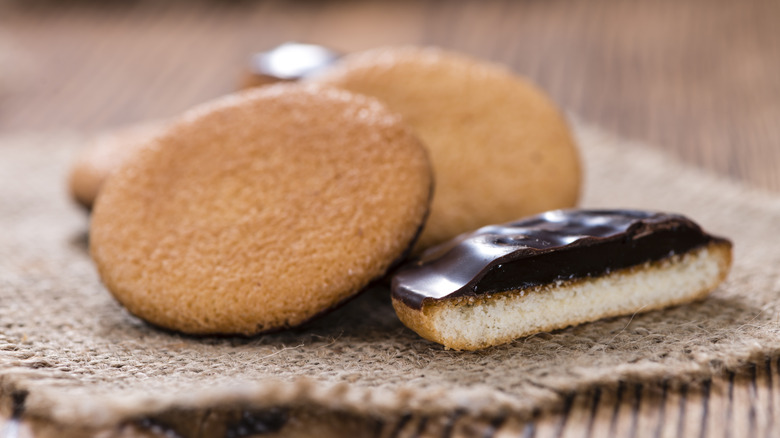
Jaffa cakes were the first technical challenge for contestants in season 4. "They're a great British classic," Mary Berry said to Paul Hollywood in the episode (per YouTube). It's a delicate dessert with a thin layer of jelly and a hard chocolate on top that must be made "very precisely."
After some lovely close-ups of the pastry and its cross-section, Hollywood bit into a cake ... and then dunked the remainder in his tea before popping it in his mouth. Berry looked on in silence for a few seconds, then said quite dryly, "We don't do that in the south [of England], you know" (per The Daily Mail).
Berry's funny reaction aside, the dunking sparked a widespread debate about whether or not Jaffa cakes could be dipped in tea. Jaffa cakes are soft and fall apart when dipped in liquid, and understandably, many fans thought it unacceptable to dunk Jaffa cakes like a Digestive. However, when GBBO playfully posted an X poll about dunking vs not dunking, the result was a near 50/50.
It's part of the charm of this particular program that it doesn't thrive on conflict and tense confrontations, unlike many other competition shows. While it did have its share of proper scandals — and there's plenty that cameras don't show you on "The Great British Bake Off" – the fact that a debate on how a cake should be eaten is considered a hot topic says a lot about the program. It is wholesome and endearing, despite its many controversies, and it would be a treat to see more of it in the future.