

Vintage Vs Antique Cookware — Yes, There Is A Difference
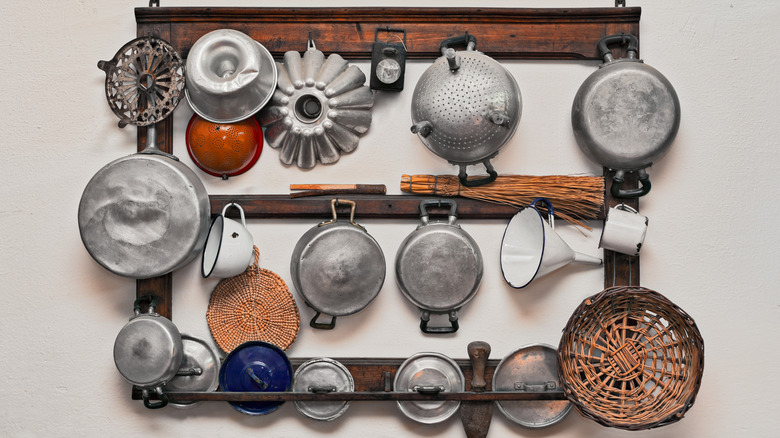
Fans of the HBO comedy "Hacks" will recall the scene from the first season where Deborah Vance sends her newly acquired employee, Ava Daniels, on a quest to find a pepper shaker from the 1950s. The coveted kitchen item is often casually referred to as an antique in discussions of the show, but you may be surprised to learn this term is not technically correct. Deborah's beloved pepper shaker is actually vintage, not antique, and there is an important distinction that a collector like Deborah likely understands quite well.
Whether an item is vintage or antique comes down to its age. Any cookware over 100 years old is considered antique. To qualify as vintage, cookware must be at least 20 years old but less than 100 years old. So, for the time being at least, Deborah Vance's '50s pepper shaker is officially vintage. Age is the most basic difference between vintage and antique cookware. Nuanced attributes like practical use, level of craftsmanship, and how easily an item can typically be found further solidify the distinction between these two terms.
Vintage cookware is easier to find and often still usable
While vintage items are younger than antiques, their appeal still often lies in their historical significance. Collectors may look for items that were ubiquitous during a specific timeframe or that made a memorable appearance in pop culture. For instance, a popular vintage item is the 1936 Ferris Wheel Cocktail Shaker seen in "The Godfather Part II," a rotating cocktail shaker with twelve cocktail glasses, two shakers, and four garnish trays. Such niche items may still be used, but modern versions are often made from cheaper materials due to mass production.
Another distinction between vintage items and antique items is practical use. Although vintage cookware may include kitchen appliances kids today have never seen, you can often still use vintage items. Some people may prefer vintage varieties of specific cookware, like cast iron pans. Cast iron briefly fell out of favor in the '60s, usurped by Teflon non-stick pans, but cast iron pans are one old-school kitchen item that made a comeback due to concerns about chemical exposure from Teflon coating. Older cast iron pans are often lighter and smoother, making them a kitchen item worth buying at a thrift store.
That said, be careful when using vintage dishware. Older ceramic products sometimes contain high levels of lead and other heavy metals. Products that predate '70s-era restrictions on lead should be used with extreme caution. It's best to avoid eating or drinking from vintage ceramics altogether, especially those painted in very bright colors, as these are more likely to contain lead or cadmium.
Antiques are much rarer and less practical
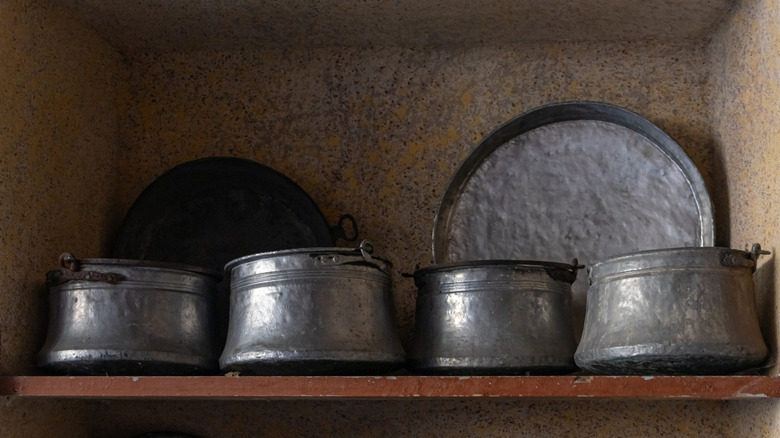
Antique cookware tends to be harder to find than vintage cookware due to its age. Such valuables may be housed in museums and galleries rather than owned by individuals. It's certainly possible to find antique cookware for sale, but it's often prone to the impacts of long-term wear and tear, displaying issues like scratches and discoloration. Snagging a high-quality antique is generally a tougher task than finding a vintage item of passable quality.
Centuries-old antiques are valued for their artisanal nature. For instance, antique cookware may conjure images of intricately painted and designed fine China. Such dishes are typically used rarely, for special occasions like weddings, if at all.
Many antique cookware items have fewer practical uses than vintage items. A lot of old-school baking tools you don't see anymore fall into the antique category. For instance, rotary egg beaters from the early 1900s were made from cast iron and had complex mechanical gears. This is a far cry from the simple wire whisks or electric mixers we use to beat eggs today. There's also a market for antique plunge and barrel butter churns, which are seldom found in modern kitchens.