

15 Discontinued Candy Bars You'll Likely Never Eat Again
Before the days of seamless internet connection, multi-million-dollar ad campaigns, and endless options on grocery store shelves, it was much easier to choose a snack. However, several of the candy bars we enjoyed in our youth have long since said farewell. That's why we're taking a trip down memory lane through the discontinued candy bars we'll likely never eat again, and the nostalgic memories they left behind.
If you grew up in the '70s, that might've looked like long summer days and a Milkshake bar from the local pool concession. Maybe you're a child of the '80s and you remember watching a Yankees game with a Reggie! Bar in hand. And for those of you who grew up in the '90s, perhaps your most nostalgic memories involve biting into the chaos of a Cadbury Fuse at the local arcade. No matter when you grew up, though, candy bars had a way of being so much more than just a simple sweet treat. These were the flavors and memories that defined our childhood — even if they're relics of the past.
Nestlé Alpine White
Nestlé's Alpine White candy bar was such a hit for some white chocolate lovers that a petition was started in 2020 to bring it back. Alpine White was first released by Nestlé in the U.S. in the 1980s, decades after it created another white chocolate product with a similar name. The bar itself was white chocolate with real almonds, and many people claim it was their favorite candy bar as a kid. Nestlé released Alpine White just as white chocolate was becoming mainstream in the market, presumably assuming this new treat would meet the rising demand.
Despite its timely release and cult following, Nestlé's Alpine White never caught on as strongly as its other bars. This candy bar was discontinued around 1993, and, unfortunately for those on the petition, it doesn't seem like Nestlé plans to bring it back anytime soon. However, one enthusiastic fan claims that melting Nestlé white chocolate chips with pulverized almonds in a pan, and then cooling the mixture into a mold, is the easiest way to curb a craving.
Marathon Bar
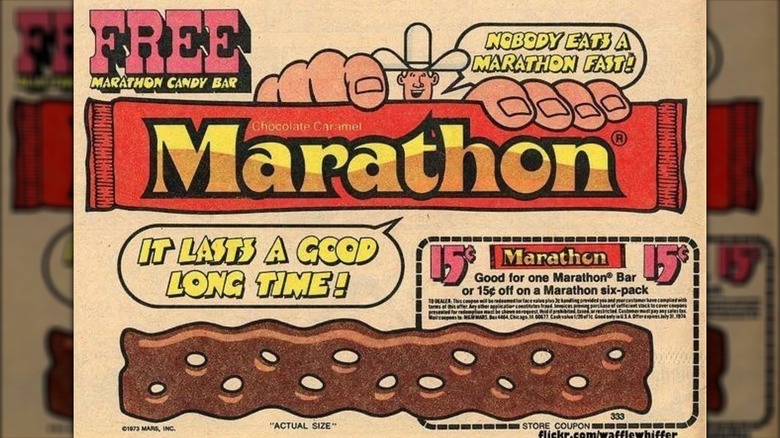
Mars introduced the Marathon Bar in 1973, and marketed it as the candy bar you can't eat quickly. The bar was intentionally long and chewy, with packaging that displayed an 8-inch ruler on the back. Eating the bar was meant to feel like a challenge — or rather, a marathon. While the act of eating it was slow and sticky, the ingredients were quite simple: a chewy caramel center wrapped in milk chocolate. The shape of this candy bar was long and braided, which made it stand out even more.
Unfortunately, the bar was discontinued in 1981 for a variety of reasons. First, the bar didn't sell as well as the other candy bars Mars made. Additionally, the length and shape of the bar made it difficult to fit on standard shelves, even though those qualities were its main selling points. Lastly, the novelty of this extra-long candy bar likely wore off over time, with Mars deciding to focus on candy bars that sold better (and fit better) in stores.
Reggie! Bar
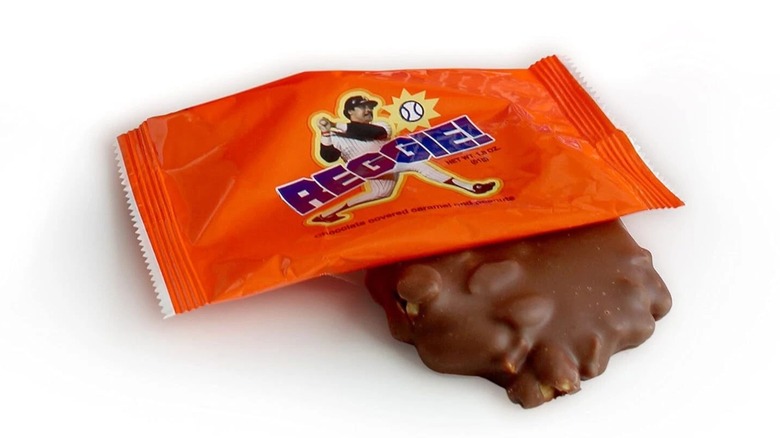
As the name suggests, the Reggie! Bar was introduced to the public in 1978, not long after baseball legend Reggie Jackson joined the New York Yankees. Produced by Curtiss Candy Company, the candy bar stood out from the typical rectangular bars that dominated store shelves. Instead, it was a round, patty-shaped candy with an inside containing chewy caramel and roasted peanuts and an exterior coating of chocolate. If you're interested in knowing what they tasted like, some fans claim they were comparable to a chocolate turtle.
The Reggie! Bar was one of those foods that truly defined the boomer generation. Despite this, the candy bar was unfortunately discontinued in the early 1980s after Curtiss Candy Company's parent brand merged with Nabisco. Due to licensing changes after these corporate mergers, the baseball-inspired candy bar was phased out of the lineup, claiming a permanent spot on the nostalgia bench.
Butterfinger Crisp
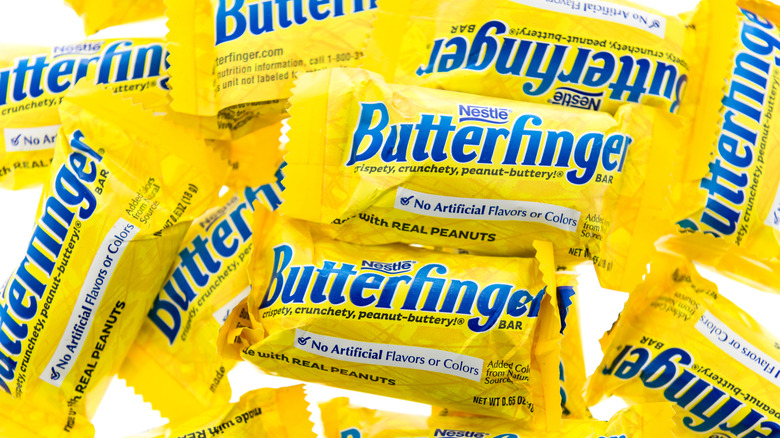
In 2004, Nestlé released a line of wafer-based candy bars that changed up the usual offerings on the store shelves. This release included the Butterfinger Crisp and the Baby Ruth Crisp. The Butterfinger Crisp was a remix of the classic Butterfinger, with crunchy wafers replacing the original flaky core of the traditional Butterfinger. The bar was also layered with a peanut butter crème. This combination made it lighter than a regular Butterfinger, but it still had that familiar peanut butter punch.
Similar to the disappearance of Butterfinger BB's, the Butterfinger Crisp eventually vanished from store shelves. Nestlé never offered an explanation as to why. Some say the bar was simply phased out in the 2010s when the entire Crisp line was evolving and undergoing new ownership. Still, this candy bar is a popular topic on candy bar forums, making it a clear favorite among a sea of discontinued snack foods.
Secret
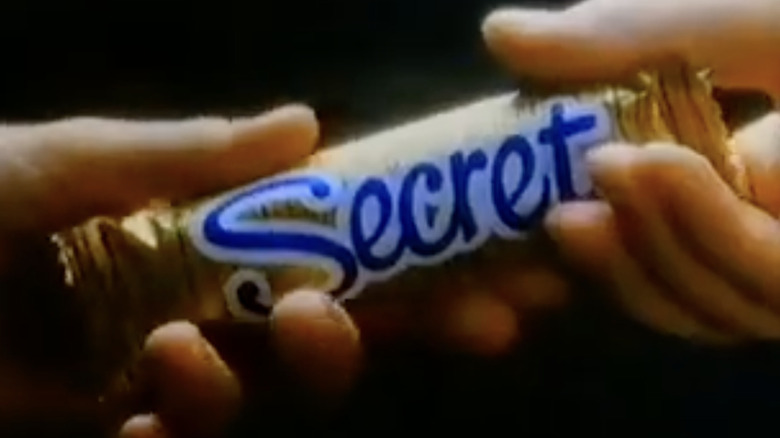
Secret was a chocolate bar that defied the laws of candy bar physics. The outside was wrapped with dozens of milk-chocolate strands, creating a bird's nest of delicate richness with every bite. Once you bit through that outer layer, you met an airy mousse in the center that immediately began to melt in your mouth. Secret was originally made by Rowntree Mackintosh, a major British candy company, but was known better as a Nestlé product once the latter acquired Rowntree Mackintosh in 1988.
Secret was introduced in the 1980s and was discontinued just a few years later. One reason it was discontinued might be due to the intricacy of its design. In order to achieve the intended texture of the chocolate strands, specialized manufacturing steps were needed that didn't apply to Nestlé's other candy bars. Secret bars are still talked about by candy bar lovers, though, and petitions have been made to bring them back.
Wonka Bar
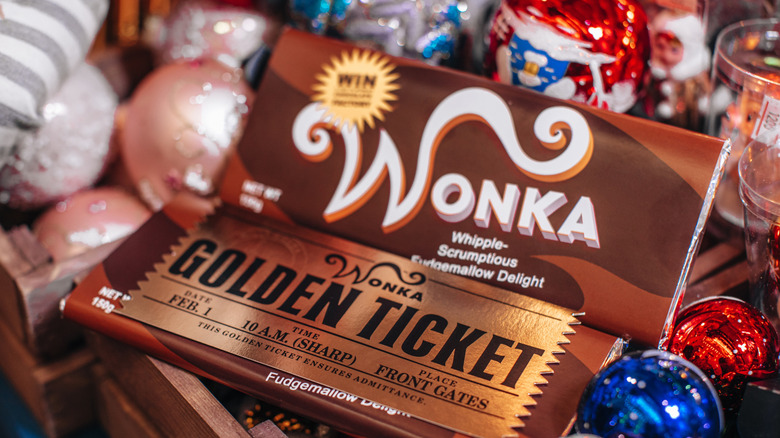
Believe it or not, there was a time Wonka Bars existed outside of Roald Dahl's "Charlie and the Chocolate Factory" franchise. In fact, the bar was introduced as a promotional campaign by Quaker Oats Company for the 1971 film. However, the earliest bars were quickly removed from shelves due to production issues that meant the candy kept melting at room temperature. Nestlé bought the Wonka Bar line in 1988, and shortly after, the real-life version of the functional candy found its footing.
The evolution of the Wonka Bar was constant, and multiple versions were released over the years. The most memorable version, however, was a milk chocolate bar with small pieces of graham cracker mixed in (but, unfortunately, no golden ticket). Sadly, the hype of the Wonka Bar faded as the novelty wore off and sales slowed, adding to the long list of other discontinued Wonka candy. By the early 2010s, what we know as the Wonka Bar only lived on in the imagined world of Roald Dahl.
Cadbury Fuse
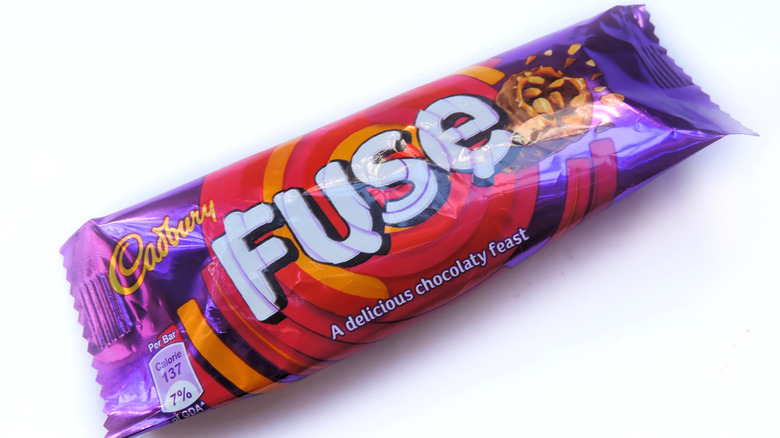
Cadbury hit the ground running in 1996 with the release of a candy bar that sold 40 million bars in its first week. The Cadbury Fuse was one of the British brand's fastest-selling products due to a campaign that made it impossible to ignore. Introduced in the mid-1990s, this candy bar was often described as chaotic due to the extensive combination of ingredients. True to its name, the Cadbury Fuse was a fusion of milk chocolate, peanuts, raisins, cereal pieces, and fudge nuggets, creating the perfect mix of chewy, nutty, sweet, and salty.
Despite its successful launch, the Cadbury Fuse was discontinued in 2006 after the chaotic candy bar ultimately lost shelf traction. Some say this was due to market positioning and the fact that the candy bar no longer stood out as store shelves got more crowded. Even though Cadbury never provided an official explanation, one could assume that a bar this packed with ingredients might've been hard to justify keeping on the roster once momentum faded.
In 2016, Mondelez India relaunched the Cadbury Fuse. But don't start planning your trip just yet — the bad news is that the bar isn't totally identical to its predecessor.
Squirrel Nut Zippers
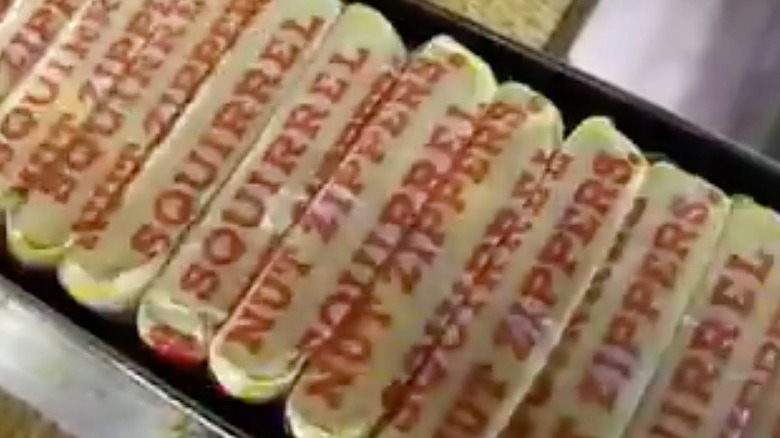
Despite its unusual name, Squirrel Nut Zippers was a popular candy bar loved by consumers for almost a century. It was made up of chewy vanilla caramel and chopped peanuts. While some claim that you could never eat just one, others claim that they wreaked havoc on your teeth. Originally introduced by the Squirrel Brand Company in the 1920s, these small, sticky, bite-sized candy bars stood out from all the large, chocolatey candy bars that were rising in popularity. Squirrel Nut Zippers became an instant classic for anyone who wanted a sweet treat that was also quick and pocket-sized.
Unfortunately for nostalgic candy lovers, Squirrel Brand Company's parent company shut down in the late 2010s, resulting in the disappearance of Squirrel Nut Zippers shortly after. This came as a shock to the candy world, as Squirrel Nut Zippers had outlasted numerous candy, food, and drink trends over the previous century.
Twix Java
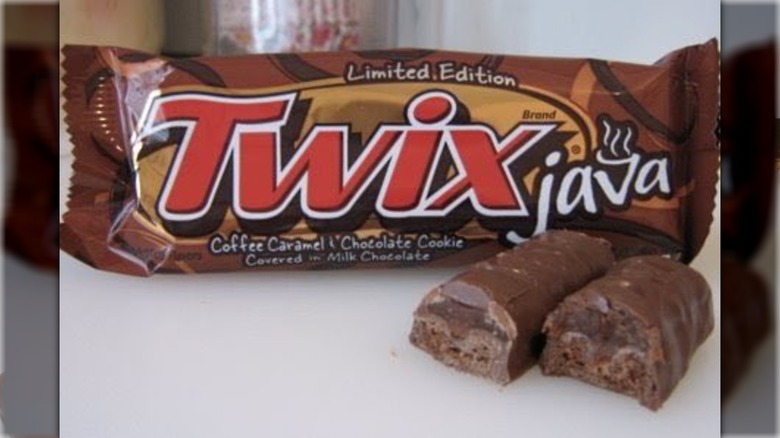
Coffee-flavored sweet treats are nothing new. From caramel cold brew M&M's to java-flavored candy bars, brands have tried to capitalize on this flavor for decades. So, when Mars released a coffee variant of its popular Twix in 2007, it came as no surprise.
Twix Java was part of a market-wide evolution to add more coffee-flavored products onto store shelves — and it was successful for a little while. Twix Java was almost identical to the original Twix, with one exception: its chewy caramel center was now coffee-flavored.
Just a few years after its release, however, Twix Java was discontinued. The bar was marketed as a limited-release product, so it could just be that the candy bar didn't fit into Mars' production lineup anymore. However, poor sales could have also played a part in why Twix Java didn't stay on shelves for longer than it did.
PB Max
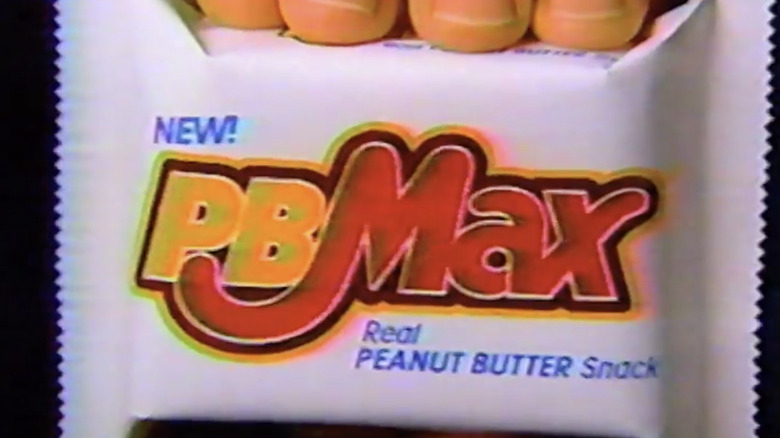
The PB Max had a five-year run between the years of 1989 and 1994. Created by Mars, the bar was intended to stand out as a peanut butter and chocolate bar with a crunchy texture. The PB Max had a crunchy cookie base with a thicker layer of peanut butter and a milk chocolate coating. It was said to contain more peanut butter flavor and better texture than any other comparable bar on the market.
Even though the PB Max sold well and generated $50 million in revenue, Mars decided to pull it from the shelves anyway. There's no credible source as to why the PB Max bar was discontinued, but a former executive of the company, Alfred Poe, previously claimed that the family who owned Mars at the time didn't like peanut butter and decided to cut the product for that simple reason. If that was the case, this would make the PB Max one of the few candy bars that disappeared from store shelves, not because of sales alone, but because of personal preference from the higher-ups.
Thingamajig
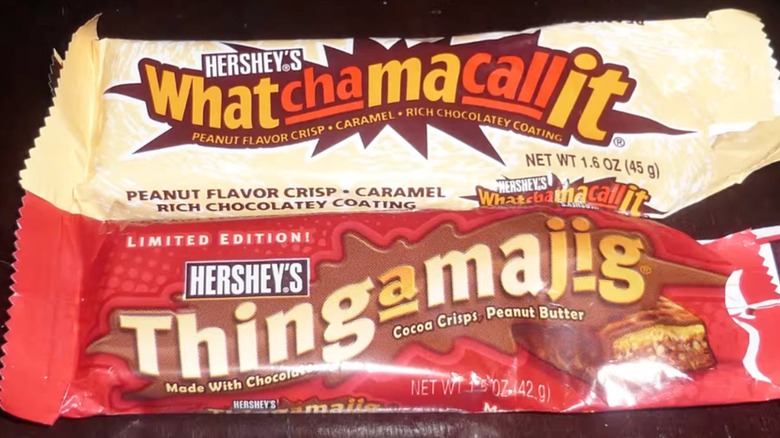
In 2009, Hershey's released a candy bar sidekick to its existing Whatchamacallit product line, adding to the company's long tradition of using playful, hard-to-remember words as a marketing strategy. While the Whatchamacallit was caramel-heavy, the Thingamajig was peanut butter-heavy — a chocolate-coated candy bar with peanut butter crème and cocoa-flavored crisp pieces at the center. Thingamajigs were also described as being sweeter than the original Whatchamacallit.
The Thingamajig went out of production by 2012 for a few suspected reasons. Some say that the bar didn't generate enough demand to justify its production. Others suggest that people were only buying it to compare it to the Whatchamacallit, and once the novelty of that wore off, sales tanked. It's interesting to note that in 2021, Hershey's released another sidekick to the Whatchamacallit called the Whozeewhatzit. This features a recipe that is nearly identical to the Thingamajig. So, if you're interested in knowing what a Thingamajig tasted like, try a Whozeewhatzit instead.
Hershey's Raspberries' n' Creme Bar
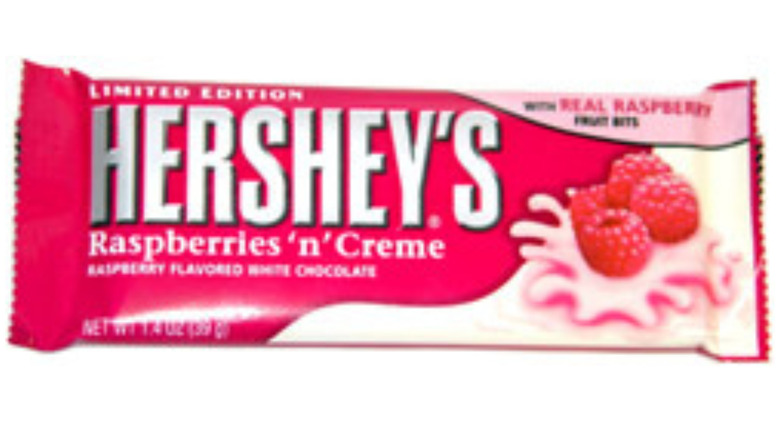
Another discontinued Hershey's bar that gets a lot of attention is the Raspberries' n' Creme Bar. But that attention wasn't always good. This white chocolate candy bar was released and discontinued in the same year, 2006, suggesting that consumers didn't exactly fall in love with the product. Hershey's Raspberries' n' Creme Bar is now considered one of Hershey's shortest-lived candy bars.
The bar itself had a white chocolate base with raspberry-flavored bits melted into it. Unfortunately, reviewers described it as intensely aromatic and overly sweet. Not only did the smell of raspberry overwhelm the senses, but the smell was also described as artificial. This fake-fruit stench made the bar more off-putting than appetizing. This explains why it didn't sell as well as Hershey's other fruit-forward candy bar variants. It came as no surprise when Hershey discontinued the Raspberries' n' Creme Bar mere months after its release.
Milkshake Bar
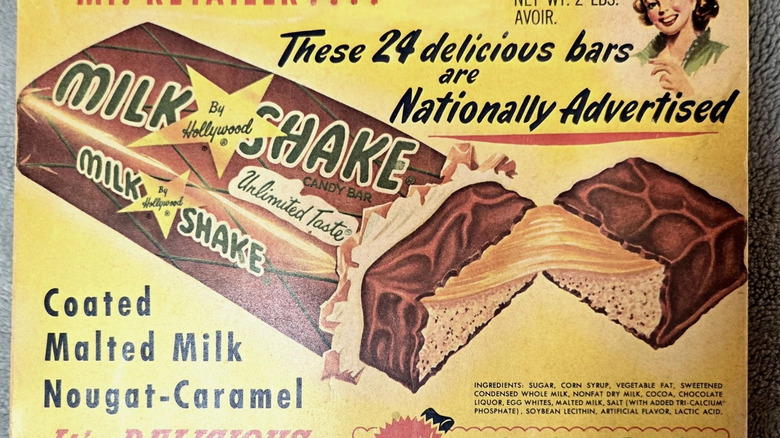
The Milkshake Bar was a chocolate candy bar introduced in 1927 and was originally made by the Hollywood Candy Company. The bar got its name because its malt-flavored nougat was meant to taste like a chocolate milkshake — especially when frozen. Some fans remember buying frozen Milkshake Bars from pool concession stands and corner bodegas in the summertime, claiming the candy bar felt more like a popsicle. Keeping them in the freezer became part of the appeal.
Unfortunately, the Milkshake Bar was discontinued in 1980 when a devastating factory fire destroyed the specialized plant in Illinois where the candy bars had been made for over 40 years. The fire not only wiped out the specialized machinery and the fine-tuned production methods needed to make the signature malted nougat, but also erased decades of enterprise knowledge that couldn't be recovered. The cost of rebuilding was deemed too high, so the Milkshake Bar faded into obscurity soon after.
Hershey's Bar None
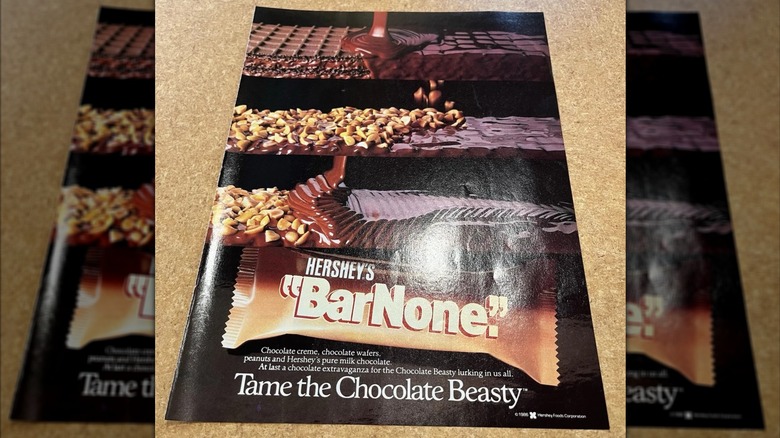
Hershey's Bar None was another candy bar that came out of America's chocolate capital. Introduced in 1987, it was Hershey's attempt at introducing something to the market that had more personality than a simple chocolate bar. Unlike some of the company's other popular products, this bar was loved for its layers of crispy wafers, rich chocolate, and crunchy peanuts. It was regularly compared to the texture of a Kit Kat.
In 1992, Hershey changed the Bar None recipe, adding caramel to it and splitting it into two smaller wafer sticks, making it even more similar to a Kit Kat. Unfortunately, that change wasn't received well by the candy bar's loyal fans, and sales came to an abrupt halt. However, the memory of the Bar None lives on, and it has a cult following of fans who've created petitions for its return. The candy bar has since been recreated by a company called Iconic Candy, but its modern version still doesn't quite compare to the original that fans grew up with.
Chicken Dinner Bar
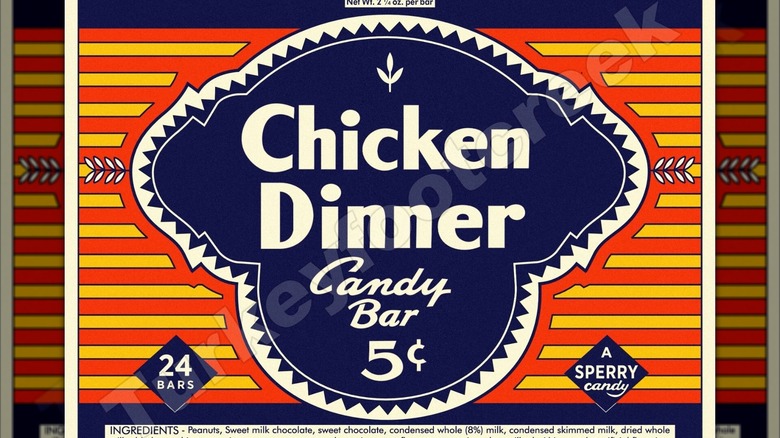
Despite the name, Sperry Candy Company's Chicken Dinner wasn't a meal your mother spent all day cooking. Instead, it was a chocolate candy bar filled with peanuts, caramel, and fudge. First introduced in 1923 during a boom in American candy bars, Chicken Dinner was meant to evoke a nostalgic satisfaction. The company wanted it to stand out in the quickly growing candy market.
Chicken Dinner had a hardy 40-year run on the market, but was ultimately discontinued in the early 1960s when Sperry Candy Company was acquired by Pearson's Candy Company. Despite the popularity of this oddly named candy bar, the decision to discontinue it was made, and it was purely a business decision. Pearson's decided to prioritize its own product lines rather than keeping the established ones from Sperry. Over 60 years later, this candy bar — as well as the nostalgic memory it can evoke — is still well-remembered by vintage candy collectors worldwide.