

Why Cheesecake Is Always Better At Restaurants
We may receive a commission on purchases made from links.
Do you have a favorite cheesecake from a restaurant or cafe? One that you've tried and failed to recreate? Well, you might be wondering why cheesecake is always better at restaurants and what you could do to improve yours. The fact is, it's rarely just one big thing that makes professionally made desserts better than amateur attempts. Rather, it's a collection of small differences that all add up to restaurant quality.
To learn the secrets chefs use to make perfect cheesecake, we spoke to four experts. First up, we interviewed Melanie Underwood, cooking instructor, food and mindfulness coach at Nourish and Gather, and author of cookbooks including "Making Artisan Cheesecake." We also talked with pastry chef and Squish Marshmallows founder Katherine Sprung, Lofty Coffee head chef and culinary director Nikki Schaeffer, and professional baker and cookbook author Beth Baumgartner of The First Year blog.
Thanks to their knowledge and expert tips, we were able to get to the bottom of the difference between professional cheesecakes and the ones you whip up at home. Of course, chefs and professional bakers have put in countless hours to their craft, so you can't necessarily expect the same results on your first try. But, once you know why restaurant cheesecakes are often top homemade, you'll know what you need to change. Just simple switches to technique, pacing, or ingredients could give you the professional results that you're looking for. Whether you're following a classic New York cheesecake recipe or something more left-of-field, we've got tips to help you perfect it.
Chefs aren't in such a hurry when making cheesecake
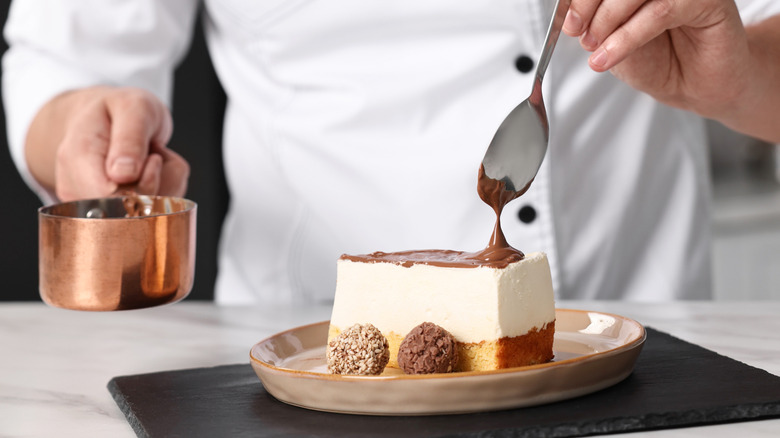
When you're making cheesecake at home, you might be in a hurry. But, chefs have the luxury of having all day to cook. Of course, they're busy, but pastry chefs or anyone in charge of desserts will have organized their time so that every step of the process can happen when it needs to. And that's one of the big reasons why restaurant cheesecake is better.
"Cheesecake tastes better in a restaurant than at home because professional bakers have the time to allow the cheesecake to cook, cool, and set up overnight," says chef and cookbook author Melanie Underwood. "At home people are often impatient, take shortcuts, and want it done without allowing it to bake correctly," she says. It's important to check the recipe before you get started. Some might call for the recipe being chilled overnight to set it or have other time-consuming steps. If you leave it until 30 minutes before you want your dessert to be ready, you're not going to have time to do everything right.
Pastry chef Katherine Sprung remarks that you should "prepare for it to take a lot more inactive time than you might think." It's not necessarily a dessert you can make and eat on the same day. "Properly cooling it can take a couple of hours, before it even goes into the refrigerator to fully chill," which takes at least four to six hours or overnight. "The good news is, you can make it a couple days in advance and it'll be perfect to eat after," Sprung tells us.
Professionals know to grind crumbs finely for a cookie crust
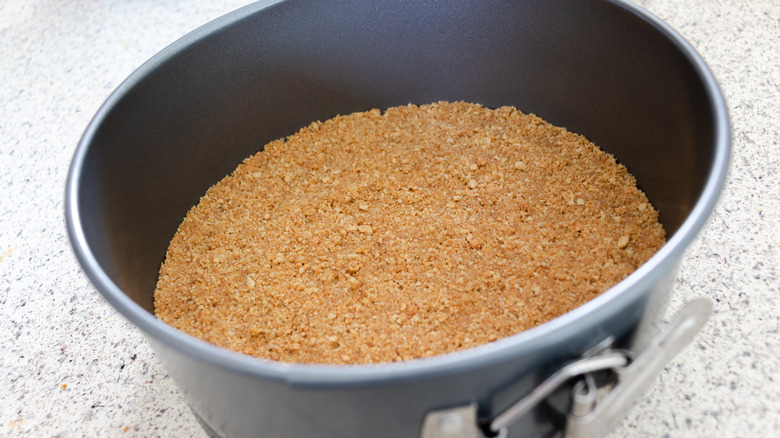
If you've been struggling with the texture of your cookie crumb crust, it might be down to how you're prepping it. Professional pastry chefs and bakers know how important it is to get the texture right. It's important that the crumbs are fine rather than chunky, but this is a step that home bakers often get wrong.
"Keep in mind that the crust is structural, as much as it's for taste," remarks Lofty Coffee head chef Nikki Schaeffer. When the crumbs are too large, they're not going to bind together to form a cohesive base. So, when you cut a slice of cheesecake, the crust might just fall apart. This is why cheesecake crust needs to be very fine. It would still be tasty if it crumbled, but it's not the kind of thing that you could get away with at a restaurant.
We understand why you might end up stopping before your cookies turn into a fine crumb. It can be a tedious job when doing it by hand. There's only so long you can bash a bag of cookies with a rolling pin for. If you have a food processor or a mini chopper, it's worth the effort getting it out to make your cookie crumb. "Start by grinding the crumbs fine, add just enough butter to hold, add a good pinch of salt, and then pack it down tight," Schaeffer advises. This will give you the structurally sound base you need for a great cheesecake.
Restaurant cheesecake is made with a careful choice of cheeses
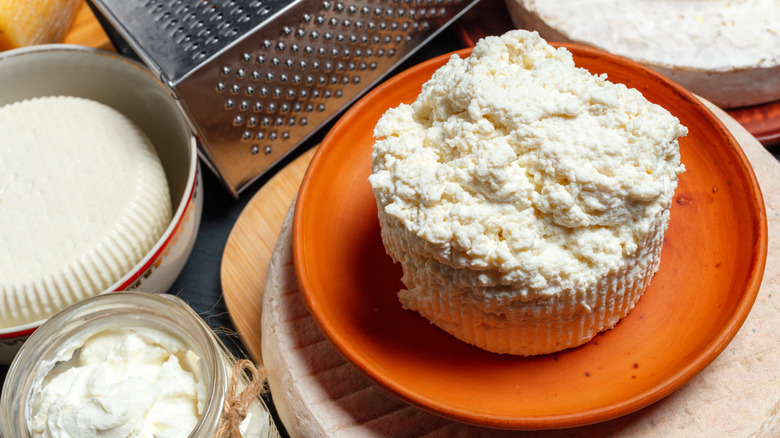
When people make cheesecake at home, they usually use whatever cream cheese they have on hand or the first thing they come across at the store. Or they might follow a recipe without thinking it through, using whatever they're directed to use rather than really thinking about what it will bring to the table. A good chef, however, will have carefully chosen the cheeses that make up the main bulk of the dessert. They'll have thought about texture and flavor and how to get the perfect balance. That's why restaurant cheesecake is so often a step above an average homemade version.
For cooking instructor and cookbook author Melanie Underwood, cream cheese is her go-to, but she's often experimented with other varieties, especially over the 120 recipes in her book "Making Artisan Cheesecake." She says, "I use all different types of cheese depending on the texture I'm looking for — ricotta, farmer's cheese, sour cream, Neufchâtel," noting that every type brings something different.
Underwood recommends being open to experimentation. "I personally don't love the grainy texture of ricotta cheesecake, but when I puree the ricotta first, it becomes one of my favorites," she tells us. Making adjustments like this can alter things, even if you think a particular cheese choice isn't your favorite at first. But, even when you're using regular cream cheese, the type you choose matters. "I always use full-fat block cream cheese, which creates a richer and more stable filling compared to lower-fat or spreadable options," explains Beth Baumgartner.
Chefs don't skimp on ingredients
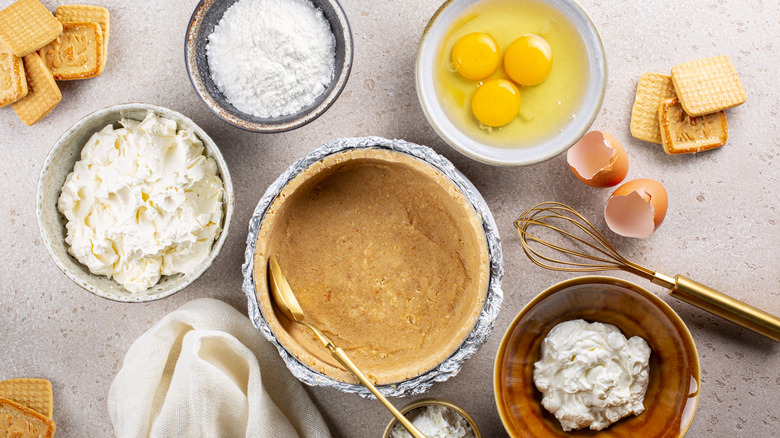
The difference between a good chef and the average home baker is that chefs can be obsessive about the ingredients they use. Of course, this isn't the case across the board; some restaurants are only thinking about their bottom line. But, if you've had an exceptional cheesecake, the likelihood is that the person who made it didn't skimp on the ingredients. It's natural to want to choose affordable ingredients, but splurging a little can lead to a better dessert.
"Ingredient wise, you just want to go for good quality, but that also doesn't mean you have to buy the most expensive things (which doesn't always equal better)," says Katherine Sprung. So, don't pick the cheapest ingredients on the shelf, but nor do you need to splash out on high-end, artisan versions of everything.
"Pay attention to the quality of your cream cheese," Melanie Underwood advises. "Look for one without a lot of added gums and stabilizers, which can affect the texture and flavor of your final cheesecake." You should also think about the cookies that you use in the base. If you don't like eating them straight-up, they probably won't taste good to you as a cheesecake base. The butter you use makes a difference, as well. This is when you should be using expensive butter — a quality European type is so much more flavorful than the regular stuff.
Restaurant-quality cheesecake may get creative with the crust
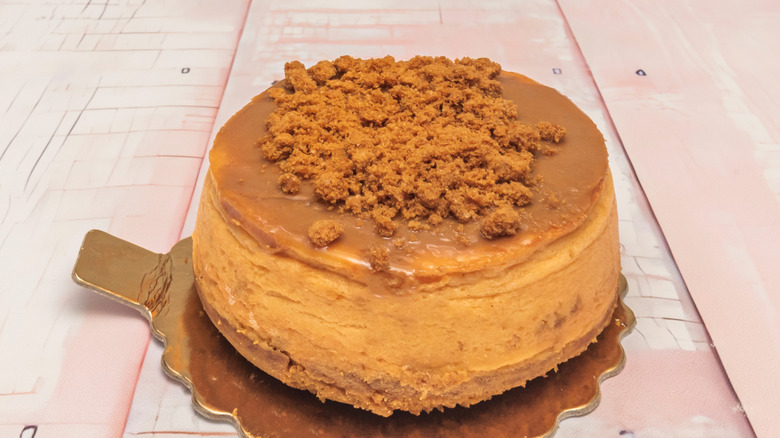
An average cheesecake has a basic cookie crust, usually made with crushed Graham crackers. But when you buy cheesecake from a restaurant, the chefs may get creative with the crust. There are all kinds of cheesecake crust alternatives you probably haven't thought of and this can make or break a dessert. Of course, there's nothing wrong with the classic version, but using an alternative can elevate things.
"Probably the most common is a graham cracker crust because it's the easiest, but also very tasty," remarks pastry chef Katherine Sprung. But, she also notes that you can use other types of cookies for a different flavor. She names speculoos or vanilla wafer cookies as possible alternatives — if you can turn it into crumbs, you can use it as a cheesecake base. Oreos, ginger snaps, Nutter Butters — most products from the cookie aisle are an option.
But, cookies aside, there are other types of crusts. "Another common option is a thin sponge cake layer," says Sprung. Plus, she explains that some cheesecakes don't have a crust at all. If you've ever tried a Basque cheesecake, for instance, you'll have noticed the absence of a base. When you're making a no-bake or raw cheesecake, an additional option is to use a blend of nuts and dried fruit, pulsed in a food processor, as the base. It isn't traditional, but it's tasty and holds together nicely.
Professionals know how to get the best out of the cheese mixture
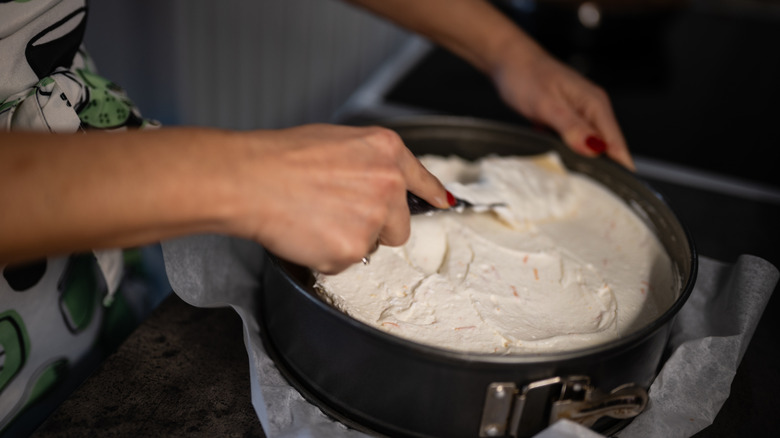
The cheese mixture is an integral part of a cheesecake. Get this wrong and you've stuffed up the main part of the dessert. But, the professionals know how to get the most out of the mixture with a number of small tips. Our experts were extremely helpful in shedding light on this.
According to Melanie Underwood, you should have all the ingredients in your cheese mixture at room temperature before you get started. This helps make sure "the ingredients blend together and you don't have lumps of cheese," she tells us. Katherine Sprung agrees, explaining that when you have room temperature ingredients "this helps ensure everything is properly incorporated and emulsified, which creates a smoother and even batter."
Plus, how you mix them matters. "My favorite trick is to use a food processor and not a stand mixer to make the base to get the smoothest silkiest cheesecake," notes Underwood. Sprung, however, is happy to use her mixer with a paddle attachment, but recommends "occasionally stopping to scrape the bowl, between ingredient inclusions" as this "makes sure that everything is being incorporated." She also tries not to mix too much air in because she aims for a dense cheesecake. Nikki Schaeffer agrees this is something to avoid since "overmixing can lead to cracks and poor texture."
Chefs know about different styles of cheesecake and how to make them
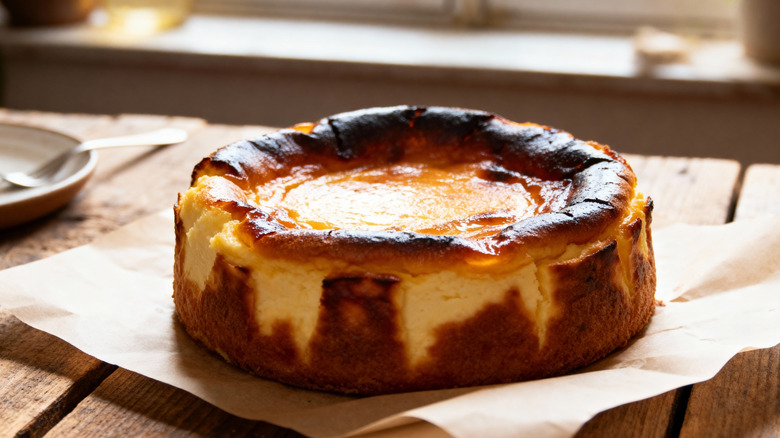
The thing about cheesecake is that there isn't just one type. Chefs know about different styles of cheesecake and how to make them and this can make a difference. Maybe you've had an excellent cheesecake that you've been trying to recreate, but you didn't realize it was a lesser-known variety and haven't been trying out the right recipes. If you're used to a basic New York cheesecake, a different style can seem novel, though there's always room for the classics.
Understanding the nuances of different cheesecake styles is important if you want to make them successfully. "Most common would be a New York-style (using cream cheese), but Italian is very popular too (using ricotta)," says Katherine Sprung. So, it's possible to use the wrong type of cheese for the job. "There's also Japanese-style cheesecake, which is much lighter and fluffier than the other two," she adds. But, there are also differences in how different people make the same style of recipe. "If we focus on a New York-style cheesecake, some people use sour cream, some use heavy cream," Sprung tells us. In the end, it can come down to preference.
If you want to learn more, check out our ultimate guide to cheesecakes from around the world. You might come across a style that you've been craving or a new one that you want to try.
Professionals know the signs that indicate when a cheesecake is properly baked
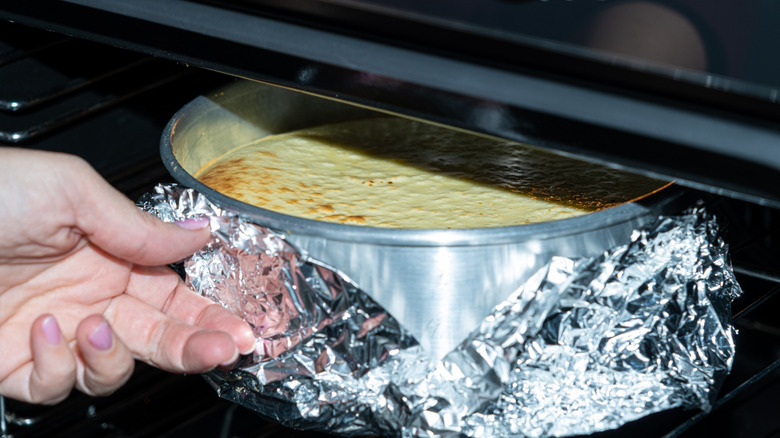
When you get a great cheesecake from a restaurant, one of the things you'll notice is that it's perfectly baked — assuming that it's a baked style rather than a no-bake cheesecake. Bakers and pastry chefs have the training and have put in the hours so they can tell when it's baked to perfection. Home bakers who aren't used to making cheesecake can easily under-bake or over-bake it, meaning the texture isn't right.
According to Katherine Sprung, you should make sure there's a little jiggle left when you take it out of the oven, rather than baking it until everything appears fully set and firm. A slightly over-baked cheesecake will still be edible, but if you want a nice, creamy texture, there should be some wobble when you remove it from the oven, as it will set more as it cools.
"This can sometimes be tricky for people to see and understand how much is too much wobble, and when to pull it out of the oven or turn the oven off," Sprung remarks. "I would say, if you're unsure, it's better to have it a little more set than pull it too early and not have it set up enough, ending up loose in the center." Ultimately, you just have to practice until you get it right, but Sprung also recommends watching videos online to get an idea of the level of jiggle you want.
Restaurant-quality cheesecakes have balanced and nuanced flavors
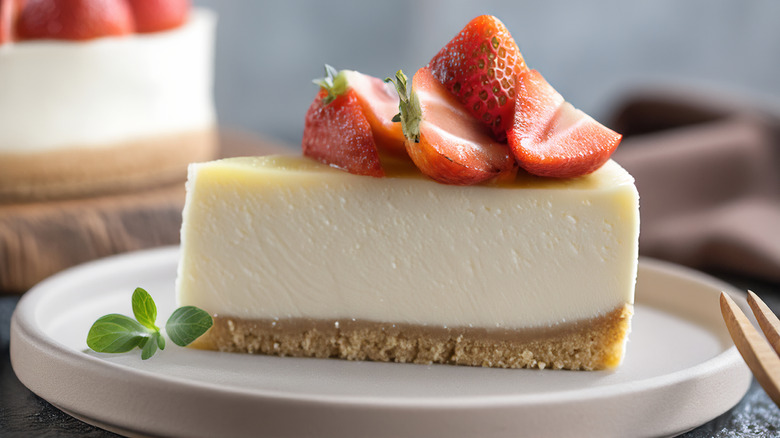
There's more to cheesecakes than just throwing everything in and hoping for the best. Great restaurant-quality cheesecakes have balanced and nuanced flavors. Chefs know how to adjust things to get the perfect balance, whereas following a recipe without question or without tasting the mixture and making the appropriate tweaks doesn't always give the best results.
"Salt and vanilla are two key ingredients," says Nikki Schaeffer. "Salt can wake up a cake," she tells us, and is integral for getting that perfect balance between sweet and salty. You're not looking for the cheesecake to be notably salty, but you need just a small amount to balance out the sweetness. Schaeffer also believes that using "real vanilla makes it taste bakery-level," so step away from the artificial flavorings.
While cheesecake isn't extremely tart, you need that slight sourness to balance the otherwise sweet dessert. Cream cheese has some tartness, but doesn't always cut through, so experts may use other ingredients. "I like to include sour cream for a subtle tang that balances the richness of the cream cheese," Beth Baumgartner tells us. Learning how to properly balance the flavors in your cheesecake will take it away from one-note territory and help you make something that's restaurant-quality.
Chefs may use a water bath to prevent cracks
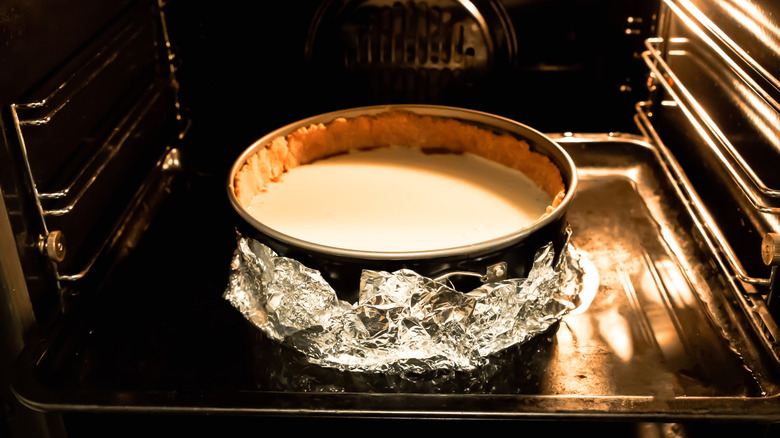
If one of the things that you envy about restaurant cheesecake is its smooth, crack-free finish, there may be an easy fix. Chefs may use a water bath to prevent cracks. This is something that home cooks often skip and one of the common mistakes everyone makes with cheesecake.
It's not technically an essential step, but when you struggle with cracks it's something you should try out. Nikki Schaeffer recommends using a water bath as insurance against cracks. "Wrap the outside of your springform pan in foil and set it inside a larger pan, then pour hot water around it before baking," she explains. "The water creates gentle, even heat and keeps the oven environment moist, so the cheesecake cooks slowly and evenly instead of puffing up, cracking, or turning rubbery around the edges."
But it may depend on the style of cheesecake you're making. Not all cheesecakes require a water bath. "If I'm making a Basque cheesecake, I don't need a water bath, but if I'm making a more classic New York-style, I like to," Katherine Sprung tells us. "I just feel it lends to a more even and controlled bake." She also recommends using an offset spatula or small knife to gently loosen the cake from the pan's sides. "This helps reduce the risk of the top cracking once it's cooled and refrigerated, which can sometimes cause it to shrink and pull from the sides, leading to cracking."
Restaurant-quality cheesecake may be cooled gradually
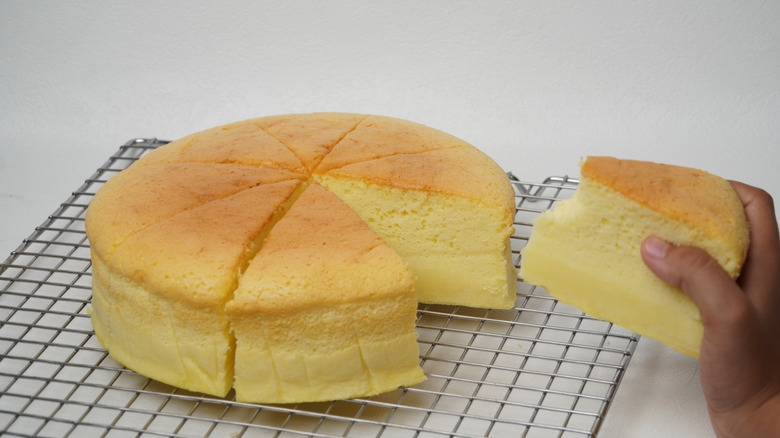
Once you've finished baking a cheesecake, you probably want to dig into it right away. But cheesecakes at restaurants are usually cooled slowly, which leads to an improved texture. At the very least, they're not served right away.
Nikki Schaeffer advises that when your cheesecake is done, you should "turn the oven off and crack the door, so it cools slowly." This is one way to help prevent cracks and lead to that perfectly smooth restaurant-quality finish. She also says that you should chill it overnight for the best results. "The hardest part of cheesecake is waiting, but that's also the secret ingredient," she remarks.
"Allowing the cheesecake to cool to room temperature before placing it in the refrigerator will prevent cracking," Melanie Underwood tells us. So, it's a good trick to have up your sleeve, alongside the option to bake in a water bath. According to Beth Baumgartner, when you let a cheesecake "cool slowly and then chill overnight," it will "improve both [the] texture and flavor."
So, you might want to crack right into that freshly baked cheesecake but try to resist the urge. Rather than attempting to make it on the day you want to eat it, bake it a day ahead of time for the best results. This isn't like a freshly baked cookie that's best warm out of the oven, it's a dessert that needs time, but it's worth the wait.