

Mistakes People Make Cooking With Bourbon
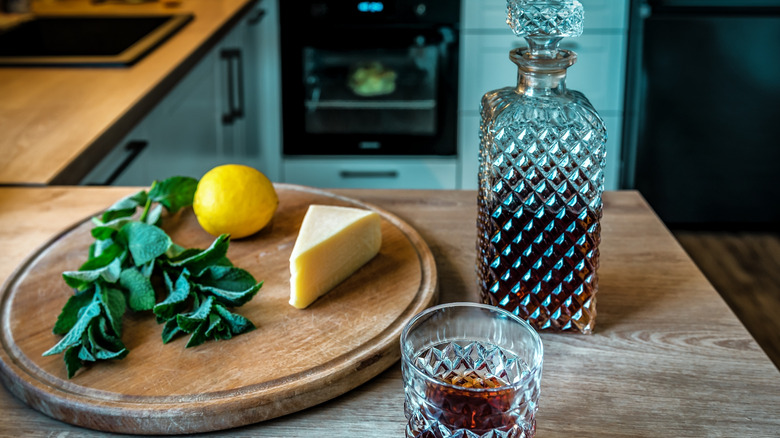
Bourbon is usually the sort of thing people sip on; it isn't as commonly found in cooking as wine or vodka are, but it absolutely has its place. However, because it isn't commonly used, there are a range of mistakes people make when cooking with bourbon. This can leave home cooks with a bad taste in the mouth, literally and metaphorically. And, because something goes wrong, they're often put off from cooking with it again in the future.
Luckily, it doesn't have to be that way. Once you learn what you're doing wrong, you can use bourbon in cooking to its full potential. I spoke with three experts with lots of experience cooking with this spirit to shed light on the matter. Katie Vine is a food blogger and recipe developer from Dinners Done Quick with extensive bourbon cooking experience. Erin Clarke is a cookbook author and recipe developer who has featured multiple bourbon-containing recipes on her blog Well Plated. Adam Gallagher is a co-founder and recipe developer at Inspired Taste, where he regularly experiments with bourbon.
Thanks to their expert insights, I was able to get to the bottom of the most common bourbon cooking mistakes and how to avoid them. Once you know what not to do, you'll be able to unlock a whole new range of dishes using this tasty spirit. If you've had bad experiences in the past, there's a chance to rewrite history and learn from the error of your ways. Read on to learn what not to do with bourbon and how to make it work for you instead.
Choosing a cheap bourbon to cook with
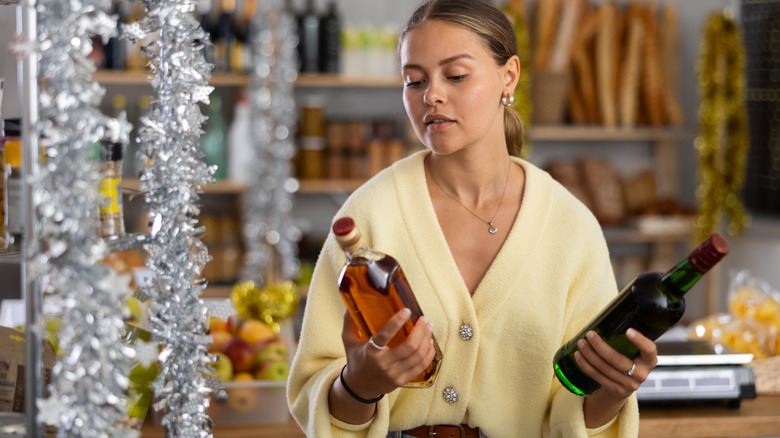
You might think of times you've bought cheap wine to cook with or used cooking wine for recipes. And, while this isn't always the best idea, it's something you can pull off alright when cooking with wine. Using cheap bourbon, on the other hand, is a recipe for disaster. Or, at least, for a disastrous dinner.
You "don't want something so cheap that it tastes like nothing but alcohol," warns Katie Vine. "You want the notes that bourbon brings to the dish to shine through," she adds. And, when you go too cheap, that's not going to happen — or, if it does, you'll wish those notes would quit shining and be more subtle.
Most of us have been in the situation where we've taken a swig of bourbon and winced. That's not the kind of booze you want in your cooking. "If you wouldn't drink it, don't cook with it," is Erin Clarke's advice. Any bourbon that doesn't taste good to drink isn't going to magically transform in food. Cooking it can take some of the harsh edges off, but if the flavor is bad, a stint on a hot stove or in an oven won't miraculously change that.
We get that food and drinks cost a lot these days, but you'll regret reaching for the cheapest bottle on the shelf. And, if you have a bad one in your liquor cabinet that you're hoping to get rid of by cooking it, that's not the right idea, either.
Choosing an expensive bourbon to cook with
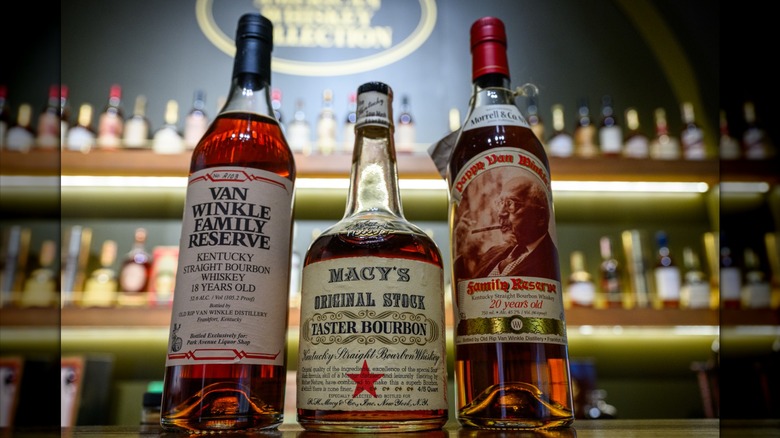
Yes, it's a mistake to use cheap bourbon, but using an expensive one isn't the way to go, either. It won't make your recipe taste bad, but you won't get the full nuance of the spirit coming through in the finished dish, so it's not the best use of a pricey variety.
"Quality definitely matters here, but that doesn't mean you have to reach for top-shelf bourbon," says Adam Gallagher, adding that "the complexity will get lost in the dish." Katie Vine agrees, telling us "you definitely don't need top shelf stuff — that's a total waste of high quality bourbon."
Rather, it's all about finding balance in your choice. "You don't need to cook with anything you'd sip neat from a crystal glass, but you do want something you'd actually enjoy drinking," remarks Erin Clarke. She recommends "a mid-range bourbon with good vanilla and caramel notes." According to Vine, you don't need to strive to use a particular brand, but choosing a solid medium option is the way to go. "I usually opt for a basic yet decent label, like Wild Turkey 101 or Maker's Mark, or sometimes Knob Creek if I'm not cooking it off totally," she says.
While a good bourbon will come through in a recipe, an exceptional one is likely to get lost, not adding much more to the party. So, save the top-shelf spirits for sipping on and choose something that you consider to be mid-range, though the specifics may depend on your budget. You might want to try some of the best bourbons for beginners.
Thinking bourbon is just for sweet recipes
As spirits go, bourbon is one of the sweeter ones. It often has honey, caramel, and vanilla notes, so this makes it a good choice for cooking into desserts. You can use it to infuse fruits for desserts, in sweet sauces, and many other sweet applications. However, if you think bourbon is exclusively for sweet recipes, you're missing out. You can also use it in all kinds of savory recipes, especially when you want to add some sweet notes for balance.
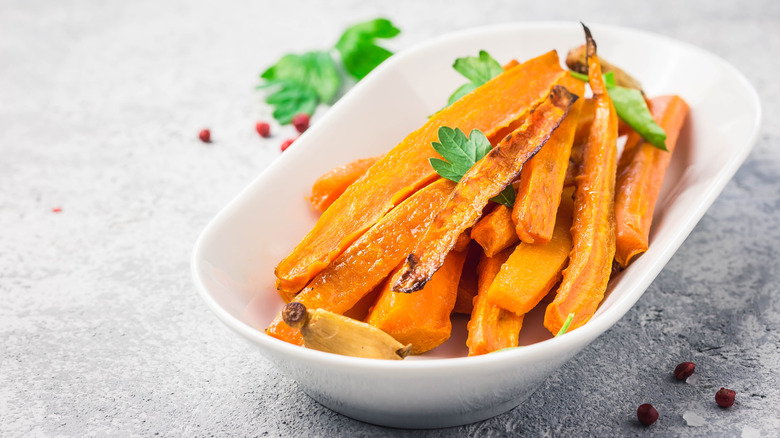
Erin Clarke recommends that people don't overlook bourbon in savory dishes. "A lot of people think of it as a dessert ingredient, but some of my favorite recipes use it in glazes and marinades where it adds a depth that's hard to replicate with anything else," she says. Some of her recommended recipes include salmon or chicken with a bourbon glaze or glazed sweet potatoes. Glazes often come up when cooking with this spirit — for instance in our bourbon glazed carrots recipe.
BBQ sauce is another common way to use bourbon, something that both Katie Vine and Adam Gallagher recommend. "Brown sugar, ketchup, vinegar, or mustard pair well with bourbon when you're whipping up a nice barbecue sauce because they all mellow the alcohol, highlighting its best notes," Gallagher tells us. "If you let it simmer some, everything comes together into smooth, layered flavors," he adds. And these are just a few of your options for cooking with bourbon in savory dishes. Once you have some in your repertoire, you won't go back.
Not cooking bourbon off for long enough
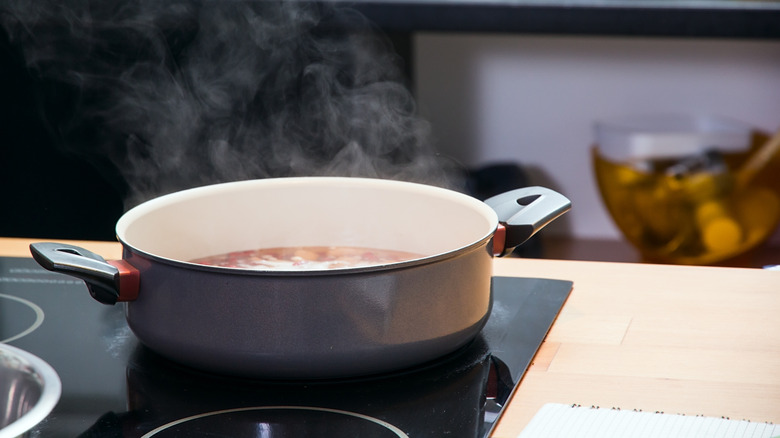
One of the issues that people often have when cooking with bourbon is that the finished dish ends up tasting overly boozy. You don't want to eat something that tastes like it has a shot of liquor poured over it. Rather, the flavors should meld with the dish so you get a complexity and depth of flavor that you wouldn't have otherwise, without a notable booziness. In many well-executed dishes, you might not guess there was bourbon in them if you didn't know.
This excessively harsh, alcohol-forward flavor usually comes from not cooking the bourbon off for long enough; one of the most common mistakes we run into. "The longer you cook it, the less harsh it will be," says Katie Vine. She explains that anyone who wants oaky, smoky, or vanilla notes of bourbon without any of the booziness should add it right at the start of cooking and give it a long time to cook down. "I make a bourbon applesauce [and] ... cook it off for an hour when I make it on the stove, which cooks out the alcohol and leaves just warm vanilla, caramel, and cinnamon notes," she tells us.
"You want to make sure the bourbon can cook off enough to take the alcoholic edge off," Adam Gallagher remarks. "I add in the bourbon early to give this some time so it leaves behind its more flavorful notes." But you can potentially cook it down for too long. "If you add it too early in a braise or slow-cooked dish, the flavor can cook off almost entirely and you lose the point of using it," says Erin Clarke.
Ignoring flambeing as an option
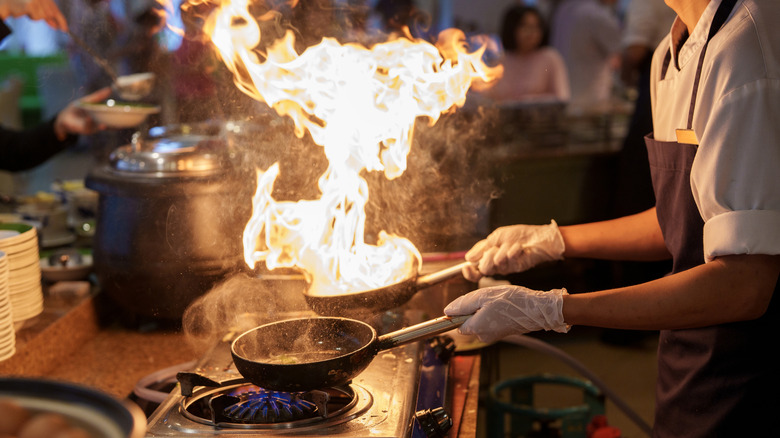
If you ignore the option of flambéing with bourbon, you're missing out on a whole other dimension of cooking. Sure, it's not the simplest technique, but if you're a confident cook, it might be something a bit different that you'd like to explore. Flambéing is when alcohol is added to a very hot pan, which ignites it, sending up a burst of flames. It's not all for show, this process quickly caramelizes sugars and cooks off alcohol, mellowing the dish but leaving more bite than a longer cook time.
Katie Vine notes that flambéing is a technique often used for desserts. However, you could try it with other dishes. "This gives you minimal cook off so you get that boozy flavor, but still add[s] the warm notes to the dish," she explains. It's an "instance where I'd grab something at least mid-tier and stay away from harsh bottom shelf options," she adds. This is because more of the boozy flavors remain, so a better bourbon will really pay off here.
Flambéing isn't a technique for the faint hearted, but that doesn't mean you should avoid it altogether. As long as you know how to set up your stove space for safe flambéing, everything should go smoothly. Of course, you should always have a fire blanket or a suitable fire extinguisher in a kitchen, just in case, but as long as you exercise some caution, you're unlikely to need it.
Over-reducing bourbon in a recipe
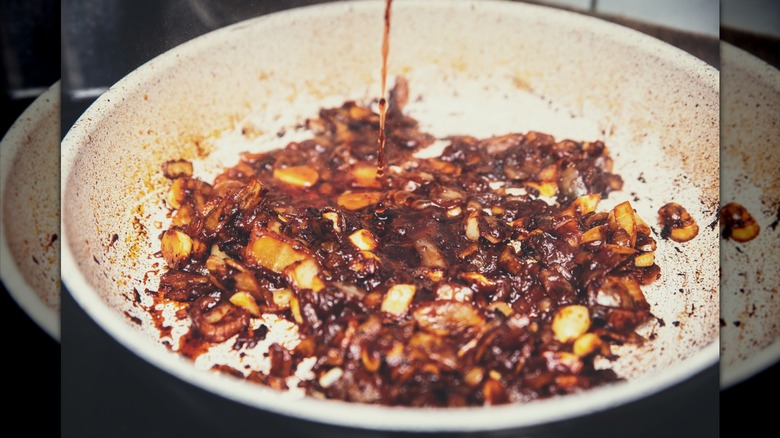
Yes, you want to cook down the bourbon in a recipe, but there is such a thing as over-reducing it. When you let it cook down for too long before adding other liquids, this affects the flavor. It can concentrate and intensify the flavors too much or it can burn. Either way, it can end up ruining the finished dish.
When you cook bourbon down too far, Katie Vine tells us, it can end up tasting bitter or burned. "If you need to add a little extra of another liquid, like stock or even water, to keep it from over-reducing, that's totally fine," she advises. This is a good way of stopping the spirit from reducing too much, but conversely, it means you shouldn't add your extra liquids too early or the flavour of the bourbon won't mellow out enough.
It's not just that it can burn or become too intense, over-reducing might have a detrimental effect on how the finished dish tastes. "If you cook the bourbon for too long, you'll lose its delicious caramel and vanilla tones," notes Adam Gallagher. Generally, when you are attempting recipes that need a dash of liquor, you should aim to reduce it by about 50% before adding other liquids. This gives it a chance to cook off while getting too thick and concentrated or starting to burn.
Cooking it in dishes where the flavor doesn't pair well
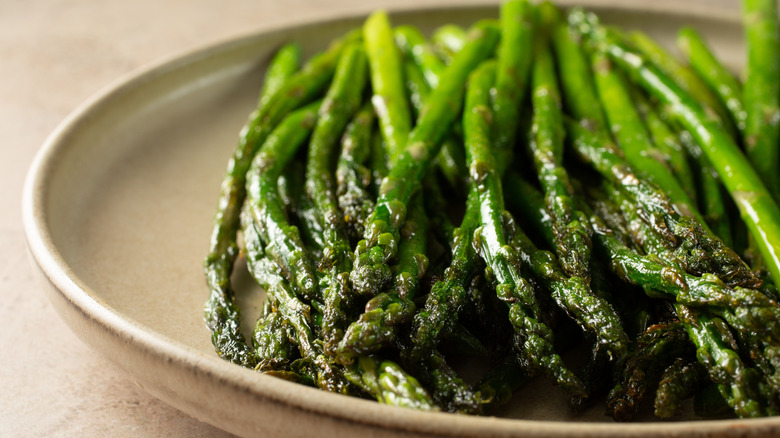
We're all for experimenting in the kitchen. There are many bourbon-containing recipes that you can find online and in cookbooks, but you can also just wing it, adding bourbon to dishes that are already in your repertoire and seeing what happens. However, one common mistake is using bourbon in dishes where it doesn't pair well with the other flavors. It's not a neutral spirit, like vodka, so it doesn't go with just any ingredients. Learning where to use it and where to avoid it is extremely useful.
"Delicate flavors tend to get steamrolled," says Erin Clarke. She avoids using it with anything too light, like white fish or certain veggies. "Bourbon is a bold flavor and it works best with ingredients that can stand up to it, like rich meats, hearty root vegetables, and anything with some sweetness already built in," she says. Adam Gallagher agrees that "lighter fish and vegetable dishes aren't the best choice for bourbon." He says that, "in these dishes, a clean and fresh flavor is what you want; the alcohol will overwhelm here." He recommends bourbon for hearty dishes that can compete with its rich flavors.
That said, you don't want to pair bourbon with another strong flavor that clashes with it. For instance, Katie Vine recommends avoiding it in tomato-forward dishes like marinara sauce and says it doesn't work with most seafood. Sure, robust flavors stand up to bourbon and won't be overwhelmed by it, but it doesn't always mean they'll taste good together.
Failing to balance flavors properly when cooking with bourbon
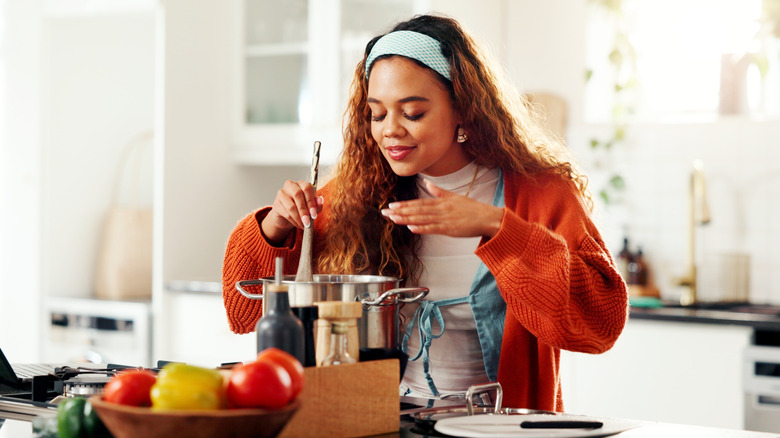
Learning to balance flavors is a big part of cooking well. When using bourbon in recipes, it can be particularly tricky. Failing to find the right balance can lead to excess sweetness or a dish that just tastes a little off. "The goal is for the bourbon to add warmth and complexity rather than barge in and announce itself loudly," says Erin Clarke, so balancing out the flavors is essential.
"Bourbon has some natural sweetness, so sweetener complements it but can also get too sweet quickly," says Katie Vine. Some recipes lean into bourbon's sweetness, like glazes or BBQ sauce, but you still need to be careful not to overdo it with other sweet ingredients and find a balance. "Brown sugar, honey, and maple syrup all play well with bourbon's notes," Vine adds.
"Bourbon loves sweetness and richness, so I usually pair it with brown sugar, maple syrup, or butter, and it gets along wonderfully with warm spices like cinnamon and smoked paprika," Clarke remarks. However, she notes that balancing the sweetness is important. "A little acid, whether that's apple cider vinegar in a glaze or citrus in a marinade, keeps it from feeling heavy," she explains.
"Bourbon works best when there's a combination of robust flavors: sweet, salty, and a bit of acidity," says Adam Gallagher. Vine makes sure to layer salt through the recipe, tasting as she goes to make sure the salt balances the sweetness but isn't overwhelming.
Using too much bourbon
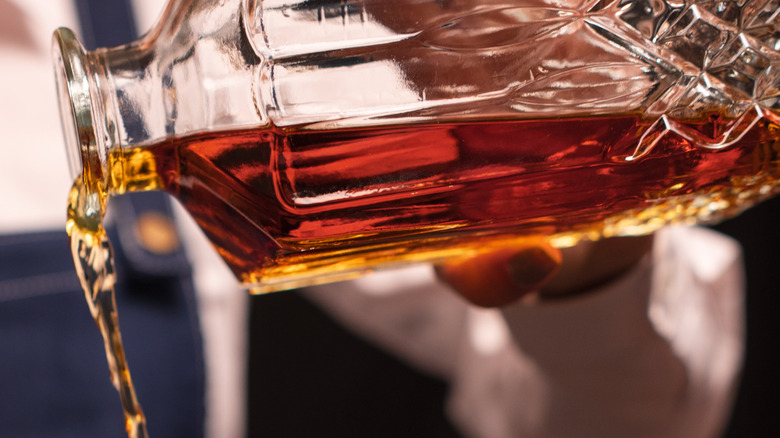
There are some underrated bourbon brands making incredible liquor, but no matter how good the alcohol you're using tastes, you can absolutely use too much of it. Overdoing it with the quantity of bourbon in a recipe is a common misstep. For many people, the experience they've had cooking with alcohol is using wine. And, while you might use half a cup or 1 cup of wine in a recipe, you only need a fraction of the amount of bourbon.
"It's easy to tell if you've used too much bourbon," says Adam Gallagher. "It'll overpower the entire dish and leave a boozy edge that overtakes the smokier flavors you're looking for." Erin Clarke agrees and says that when you use too much, "the alcohol can overpower everything else and leave a harsh, boozy edge that's off-putting."
"A little goes a long way; you only need maybe 1 tablespoon of bourbon to add noticeable flavor," Katie Vine tells us. She also notes that using too much bourbon isn't just about the exact quantities you use but also the ratio of bourbon to other liquids and ingredients. "A good sauce or dish has a balance of flavors, and you'll want to build on that bourbon note with herbs, spices, sweeteners, stock, cream or butter, and acids," she says. "Remember, bourbon should be a complement and a flavor enhancer, not your primary ingredient in most cases." So, don't just think about how much bourbon you put in a dish but how much you dilute it with other liquids.
Cooking it over too high a heat
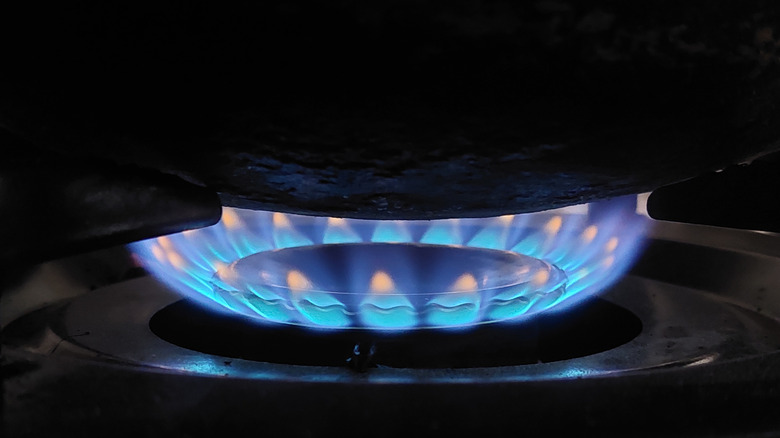
Be mindful of heat when you're cooking without bourbon. Excessive temperatures can cause you to run into issues. Sometimes it's a safety issue and other times it affects the flavor, but either way, it's a mistake to avoid.
"High heat and bourbon require a little respect, because bourbon can flame up quickly in a hot pan," explains Erin Clarke. "That can be a fun restaurant moment but a startling one at home," she adds. It's one thing if you're attempting to flambé on purpose, but if you accidentally set your pan on fire due to overly high temperatures, that's another thing altogether.
Beyond safety, Clarke notes that, when you cook bourbon too fast at high temperatures, the alcohol can burn off before the flavor has fully developed. "Low and slow lets those vanilla and caramel notes blossom into the dish," she tells us. There's a difference between reducing the spirit and just blasting it with heat. "Although you want the bourbon to cook down in any dish, don't run it on a high heat," says Adam Gallagher. "It'll burn off too quickly, and you'll still be left with a bitter taste."
Ideally, you should cook your bourbon over a medium-low to medium heat until it's reduced. Once you've cooked it down and added more liquids, it's okay to turn up the heat. But before then, cook it at a gentle simmer to keep it from burning or over-reducing.