

11 Mistakes People Make Using Honey
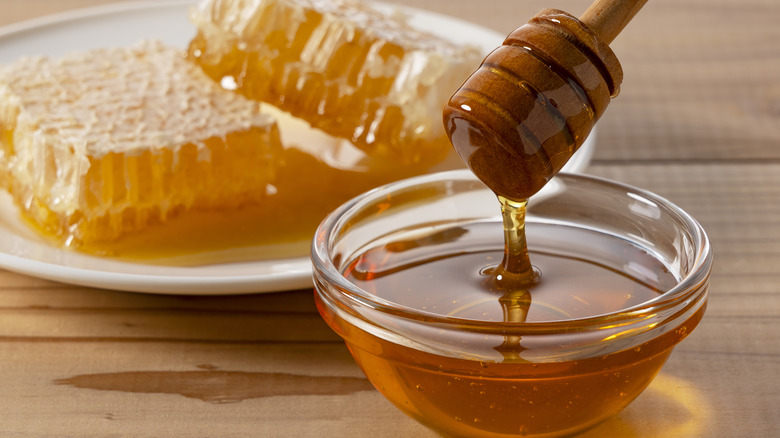
Honey can seem like a pretty everyday ingredient, but it's one that not everyone knows how to use and store properly. Perhaps you didn't grow up using honey, or maybe you assume that it plays exactly the same role as sugar. Whatever your stumbling block, there are some common mistakes people make with honey. These can lead to issues like dishes coming out too sweet, overcooked and burned tastes in finished recipes, or flavor profiles not quite working.
I spoke to four experts about honey missteps that should be avoided. Kara Brown is a recipe developer, beekeeper, and founder of Bee Inspired. Melissa Mastrianni-Oleary is a recipe developer and food blogger at Keeping It Simple and Keeping It Simple Italian, who regularly uses honey in recipes, such as her ciambella cake. Katherine Sprung is an award-winning pastry chef and founder of Squish Marshmallows, who has loads of experience baking with honey. Yumna Jawad focuses on simple, wholesome food on her blog Feel Good Foodie, and often uses honey as an ingredient.
Thanks to this excellent lineup of experts answering all my questions, I was able to get the lowdown on some of the most common honey mistakes. I'm about to share their wisdom, so you can learn what not to do with honey and ultimately make better dishes.
Assuming all honey tastes the same
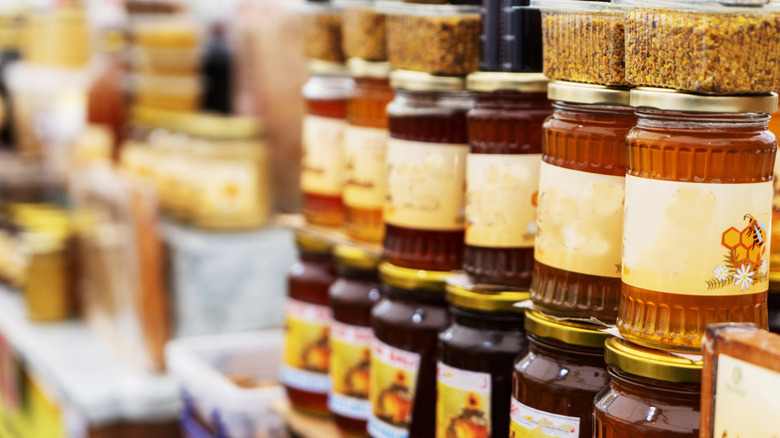
If you believe honey is honey and all of it tastes the same, you're making a mistake. The fact is, all honey has slightly different notes and a different flavor profile. Honey is made by bees from the nectar from flowers, so the plants in the vicinity of the bees make a difference to how it tastes.
"Since honey is produced by bees frequenting different flowers to make the honey, the flavor of the honey is very dependent on that," Melissa Mastrianni-Oleary tells us. "The most commonly used honey in stores is wildflower honey and this tends to be milder because the honey is coming from a mix of different flowers, so no one flavor comes through too strongly." But when bees largely frequent one type of flower, this changes.
Kara Brown explains that once you know the differences between different types of honey, this can change how you use it in your cooking. "A dark buckwheat honey is bold and earthy, almost like molasses, and works well with strong flavors like blue cheese or dark chocolate," she says. "Light orange blossom honey is delicate and floral, so it's better in a vinaigrette or over fresh ricotta, where its flavor stands out."
You can use the flavor profile of your chosen honey to your advantage in recipes, whether you want something robust or delicate. Some particularly distinctive honeys may be better stirred into tea or spread on toast than used in cooking.
Choosing a subpar honey
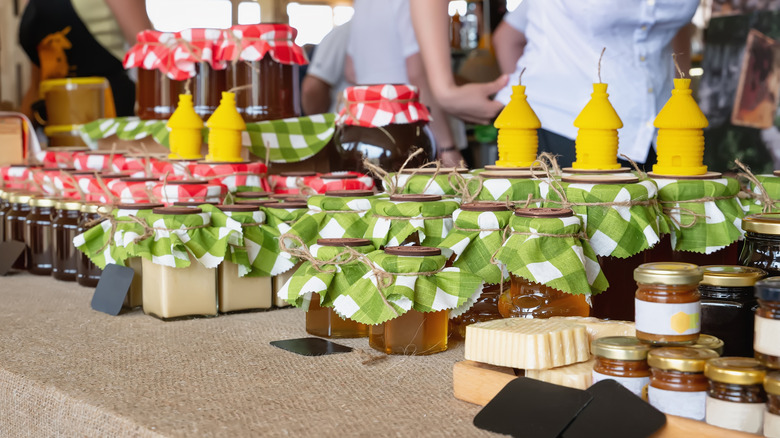
It's not just the type of flowers that went into the honey that makes a difference, but the overall quality. Many people buy basic supermarket honey expecting a nuanced honey flavor, only to be disappointed when it's one-note and overly sweet. If you're able to get your hands on high quality honey, you'll notice the difference, however you decide to use it.
"Good might be subjective, but you want to make sure that it's 100% honey," says Katherine Sprung. She explains that some cheap products mix honey with other ingredients, so this is something you should watch out for. You don't have to spend a fortune on honey, but the cheapest versions are usually best avoided.
Kara Brown suggests looking at the label to see what it can tell you about the honey inside, suggesting that raw and unfiltered honey have particular benefits. "Raw honey hasn't been pasteurized, so it keeps its enzymes, antioxidants, and pollen," Brown tells us. "Unfiltered honey still contains its pollen, which adds to its nutritional value and flavor," she adds. She recommends avoiding honey that has more than one country of origin listed, and suggests being wary of buzzwords like pure or natural.
"Single-origin honey, which tells you exactly what flowers the bees visited and where, is usually the most flavorful and interesting," Brown remarks. Going to a farmer's market and picking up honey from a local beekeeper often ends up with it being more flavorful and likely cheaper than a product of a similar quality from a supermarket. And the flavor is just one of many reasons you should buy local honey.
Thinking honey is only for cakes and desserts
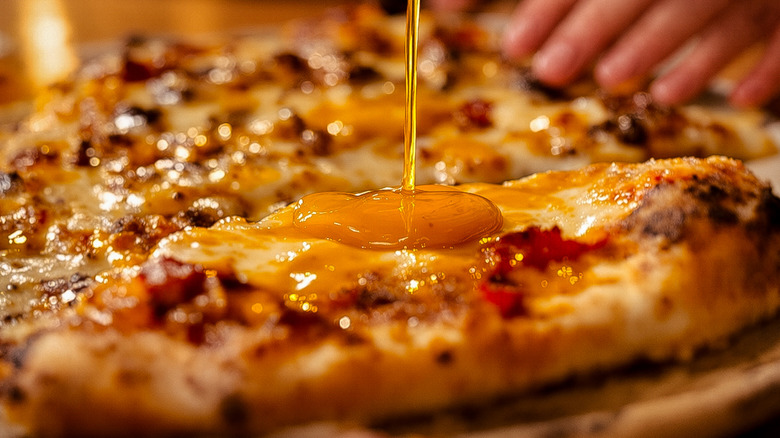
Many people think honey is only for cakes, desserts, and other sweet dishes, but this means they miss out on its savory uses. Limiting yourself in this way is a shame, because there are so many dishes that rely on a careful balance of sweet and savory. Honey can be a better choice than sugar in many cases because it has a more nuanced flavor and it's in liquid form, which works well for marinades and glazes.
"Honestly, you can use honey in almost any dish, which surprises people who see it only as a sweetener," says Kara Brown. "I add honey to savory marinades, roasted vegetables, braised meats, salad dressings, cheese boards ... It adds a sweet-tart balance to vinaigrettes, helps caramelize roasted carrots, and softens the heat in spicy sauces." She notes that these kinds of savory uses can change the way people think about honey. She also recommends using it as a glaze for all kinds of proteins after cooking to give them a shiny finish.
Ultimately, if you would add a bit of sugar to a dish, honey could work in its place. This might be in sauces for noodles, pasta dishes, curries, glazes — the list goes on. You can think about the qualities of the savory dish and what kind of honey will work well. "For dressings maybe you want something light, but for a BBQ sauce maybe you want a darker honey, which is going to have a deeper and almost bitter hint to it," says Katherine Sprung.
Using too high a heat and burning honey

It's fine to heat honey, but you need to be careful about how you do it and for how long. It caramelizes and burns quickly, which means you can easily end up with bitter burned sugar notes in your finished dish. But, once you know what to avoid, you can steer clear of this common mistake.
"Honey can burn more quickly than other sweeteners, so it helps to keep an eye on it, especially in glazes or anything cooked at high heat," says Yumna Jawad. "I like adding it closer to the end so it keeps its flavor," she adds. Kara Brown explains this further, saying that honey burns faster than sugar because it has a higher fructose content. "It starts browning at a lower temperature and quickly goes from beautifully caramelized to bitter and acrid if you're not watching it," she remarks. Being careful with honey and adding it later than you might add sugar or agave nectar to a recipe can keep it from overheating and burning. You may also find that using slightly lower temperatures helps.
While cooking honey on the stovetop requires caution with heat and duration, baking with it isn't such an issue. "You can follow the baking recipe the same way as using sugar if the honey is mixed into the batter or dough," Melissa Mastrianni-Oleary tells us. "You get a little more browning on the bottoms of the baked goods but nothing that is overly noticeable." Brown recommends countering this by lowering the oven temperature by 25 degrees.
Not making adjustments when baking with honey instead of sugar
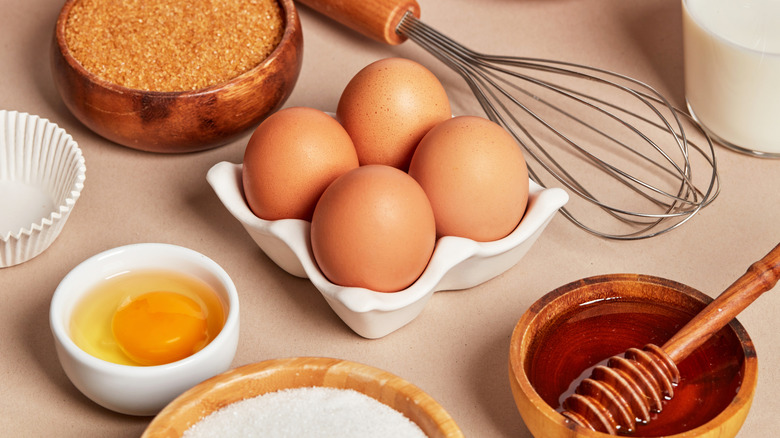
Wondering if honey is a good sugar substitute? It's possible to use it as a substitute for sugar in a recipe, whether you're trying to avoid refined sugar or you just don't have any in the house. But, the mistake people often make is trying to use honey as a 1:1 substitution for sugar. You need to make some adjustments in order for recipes to work correctly.
"Honey is much sweeter by volume, and contains about 20% water," explains Katherine Sprung, which means you can't just substitute one for the other directly. According to Yumna Jawad, "you may need a little less of it, less liquid elsewhere in the recipe, and sometimes a slightly lower oven temperature so it doesn't brown too fast."
Sprung also recommends considering why you want to make a swap, since honey won't always give the same result as sugar. "While honey on its own can crystallize, it does about the opposite in cooking and baking; oftentimes used to help prevent crystallization, where that might be needed in a recipe that calls for granulated sugar," she tells us. For example, "where you want something to be crisp, such as a shortbread cookie, or confections like brittle," she says. There's a little bit of a learning curve if you want to bake with honey instead of sugar. But, with some practice it's simple to learn.
Storing honey incorrectly
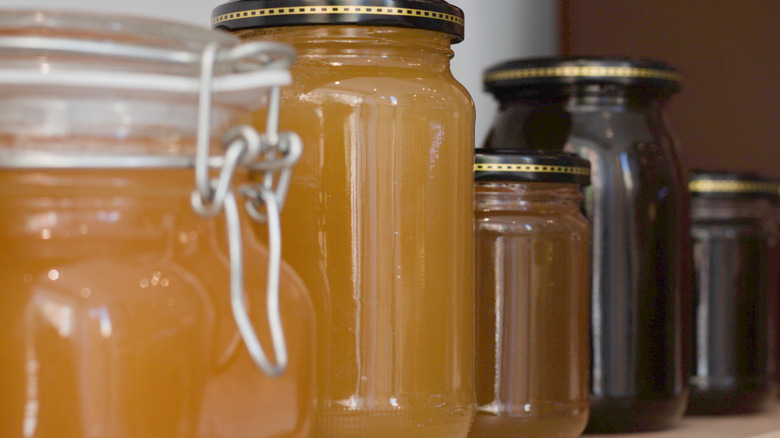
One way you might not be getting the best out of your honey is by storing it incorrectly. It doesn't need much consideration; just following a few basic tips will help keep it at its best, so it's ready to cook with or eat whenever you need it.
According to Kara Brown, you should store honey at room temperature in a tightly sealed container (the jar it came in is fine) and not in direct sunlight (though it doesn't need to be stored in the dark). She also advises keeping it away from the stove as excess heat can cause it to degrade in quality.
It's not a tricky thing to keep. "Honey doesn't spoil, and archaeologists have even found thousand-year-old honey in Egyptian tombs that was still edible," Brown remarks. Just "don't keep honey in the fridge, since cold makes it crystallize faster," she says. Crystallized honey is still totally safe to eat. In fact, it's normal, especially for raw honey, and shows that it's minimally processed. It just can be inconvenient if you want to be able to drizzle your honey. "To liquefy crystallized honey, put the jar in warm water and let it melt slowly," Brown suggests. She advises this over using a microwave to preserve its flavor and nutrients.
Not following a recipe when new to cooking with honey
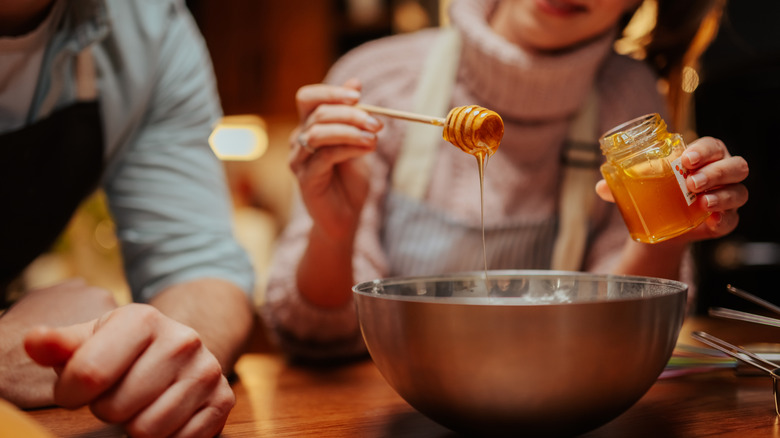
You might feel like you can start cooking with honey willy-nilly, replacing the sugar in everything from cookies to pizza dough to marinara sauce. And, while you might have some success, you're also likely to have some flops. We've already talked about how honey can behave differently in recipes, and this has real implications from burned sauces to sunken cakes. When you're new to cooking or baking with honey, it's better to follow a recipe.
Honey cooks quicker, browns and burns at lower heat, is sweeter than sugar, and contains moisture, where sugar is a dry ingredient. This means that switching them 1:1 in a recipe won't always go to plan. "I always just recommend following the recipe, from a reputable resource, and the instructions as they're written, since they've already put all of this into consideration," says Katherine Sprung. Following honey-based recipes closely until you get the hang of cooking with it can help avoid any missteps.
When it comes to baked goods, it's especially important to try recipes that specifically call for honey rather than attempt to use it in place of sugar. You can adjust sugar-containing recipes to account for the differences in sweetness and moisture, but it takes some practice. Follow official recipes until you get the hang of working with honey, then branch out and make amendments to your old favorites.
Losing the flavor of honey in the finished dish
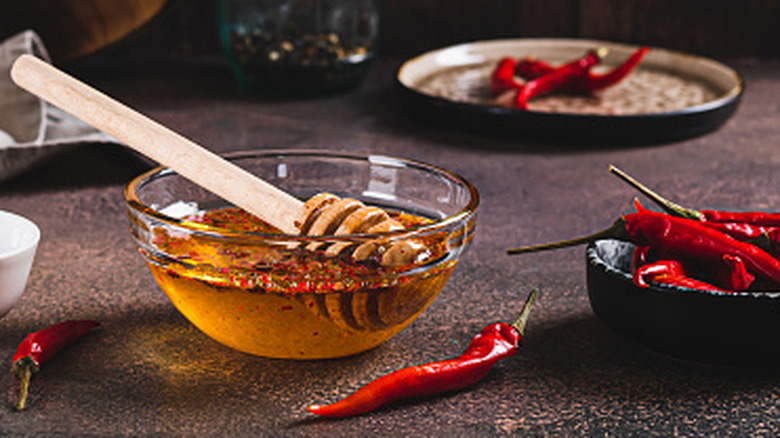
Although some types of honey are more intense than others, it's still a fairly subtle ingredient. It adds lots of sweetness, but those fruity, zesty, or floral notes and that distinctive honey flavor can easily get lost. It takes a careful approach to make sure it comes through in the finished dish, assuming you want it to.
How you choose and use the honey matters. "I think it helps to choose honey based on how you want to use it," says Yumna Jawad. "A mild honey is great for everyday use, but if honey is a big part of the flavor, a more bold variety can make the dish more interesting and make the honey stand out," she notes.
Kara Brown thinks "it's best to use honey as a finishing touch with heat, not as a main cooking ingredient." This means its flavor won't get lost from being heated or mixed with lots of strong ingredients. "People often try to cook honey into a sauce for too long, which destroys its unique floral profile," Brown remarks. As a finishing touch, it's more likely to shine through.
Of course, if you just want honey for sweetness and aren't worried about the flavor, it doesn't matter what you do with it. But, in order to preserve the nuanced flavor, cooking it gently or reserving it for the end of cooking is your best bet.
Using too much honey
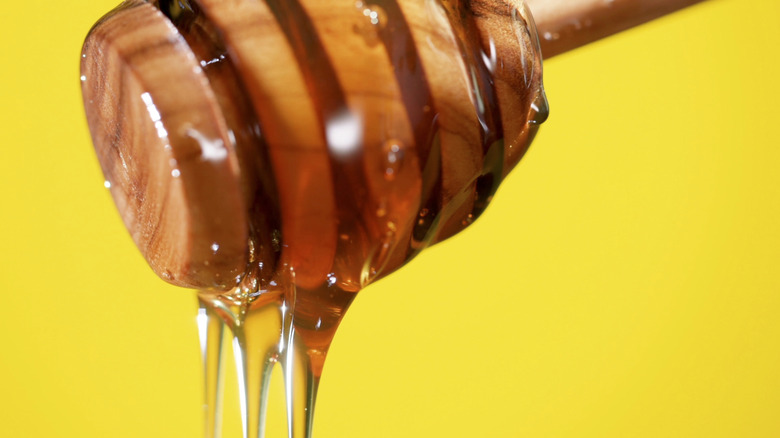
Using too much honey is a common rookie error. Even something as simple as stirring it into your tea can leave it undrinkably sweet if you try to use as much honey as you would sugar. Due to its high fructose content, we perceive honey as sweeter than sugar. And that's before you consider the flavor. The combination can end up overwhelming a dish.
"Honey has a stronger sweetness and flavor than granulated sugar, so a little can go a long way, especially in savory recipes where you still want everything to taste balanced," Yumna Jawad says. Honey is often said to taste around 1 ¼ to 1 ½ times sweeter than sugar, meaning you should use around ⅔ to ¾ the quantity of sugar you'd usually use.
Too much honey can make dishes too sweet, but in some cases, it can also make them too honey-ish, though this is largely down to preference. "Start out with recipes that need only a little bit of honey to make sure you enjoy the flavor of the honey in the food," Melissa Mastrianni-Oleary suggests. "If you are replacing sugar in a recipe, try only replacing some of the sugar at first so that you can see if you will like it without going all in," she adds. Exercising some restraint can help you get the best results. You can always add more after tasting a finished dish or the dough or batter of something you're baking.
Not incorporating honey evenly into recipes
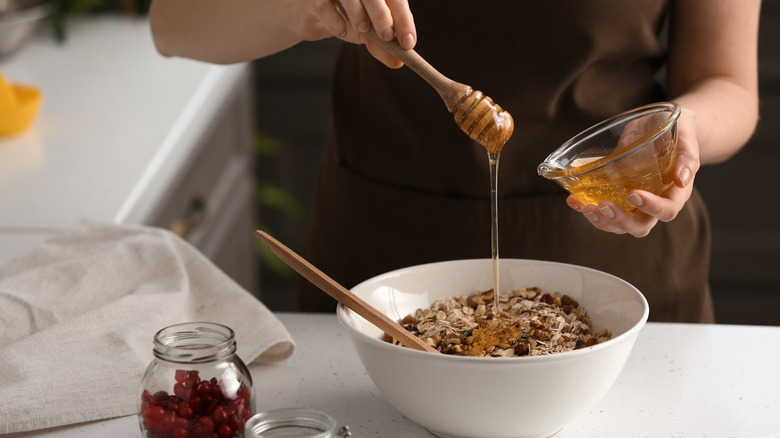
You might think that honey would mix more evenly into recipes because it's a liquid. But, this really depends on the type of honey, its consistency, and what you're making. In some cases, it is easier, but this means people can make the mistake of thinking it will mix well into everything and ending up with inconsistent results.
"I think the one thing people may not think about before working with honey is how it can be harder to mix into recipes," says Melissa Mastrianni-Oleary. "You want to get the honey mixed in with another liquid of some kind from the recipe you are making to make sure it gets incorporated into the dish evenly," she suggests. This is good advice, but how big a problem it is depends on what you're making.
Generally, if you're mixing honey into something like a sauce, glaze, or marinade, it tends to incorporate well. Though, this does somewhat depend on the style of honey. If it's relatively runny, it tends to easily dissolve and mix in — far more easily than sugar does, in fact. But, if the honey is set or has become crystallized, it may take some determined mixing to get it to dissolve fully.
When baking with honey, this can be more of an issue. Most bakers are used to mixing their sugar in with the dry ingredients or creaming it with butter, and not having to think twice about whether it has adequately mixed through. In this case, it's best to mix it thoroughly with the wet ingredients first.
Letting honey stick to measuring cups and spoons
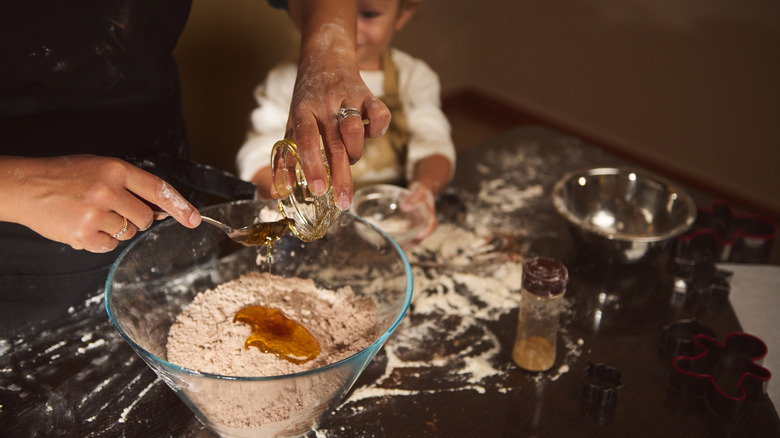
A common mistake is letting honey stick to your measuring cups and spoons when doling out ingredients for a recipe. The biggest issue isn't the mess (though it is annoying), rather it's the fact that when some honey gets left behind it can throw off the measurements. But there is an easy way to stop honey from sticking to your spoon. Once you know this, you can make cleanup easier and make sure you use the right amount in your recipes.
"If you're using measuring spoons or cups (as opposed to weighing directly into something), I always do a spritz of nonstick spray into the spoon or cup first," says Katherine Sprung. "That way, when you add in the honey to measure, all of it will come out cleanly without having to scrape it out." This increases precision and helps with mess, so it's a kitchen tip that's well worth following. If you don't have cooking spray, you can use a neutral oil or even coat the spoon or measuring cups in butter.